
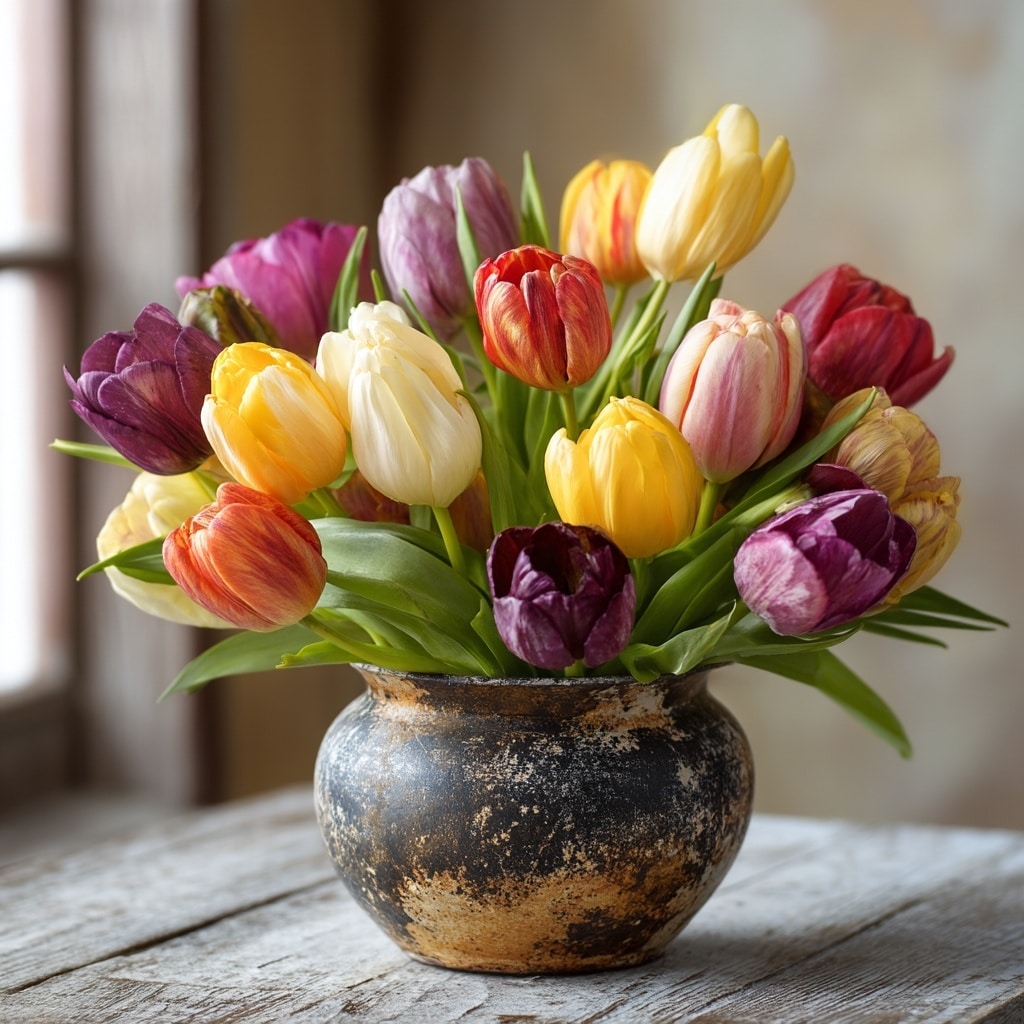
Tulips are more than just a sign that spring has arrived — they’re a living language of emotion, history, and culture. With their graceful form and vivid colors, tulips have long captured hearts across the globe. But beyond their visual charm lies a deeper significance: each color of tulip tells its own story.
From passionate reds to serene whites and joyful yellows, tulips speak the unspoken. Whether you’re expressing love, admiration, or simply sending good wishes, choosing the right tulip color can add depth and sincerity to your gesture. In this guide, we’ll explore what different tulip colors mean, highlight notable tulip varieties, and reveal how these flowers have carried symbolism through centuries and across cultures.
Table of Contents
Color Symbolism of Tulips

Every hue in the tulip’s spectrum carries a distinct emotional tone. Whether you’re arranging a bouquet or planting a themed garden, knowing what each color symbolizes can help you express the right sentiment with your tulips.
Red Tulips – Passion and True Love
Bold and romantic, red tulips are the classic messengers of deep love. Often associated with declarations of the heart, red tulips symbolize enduring passion and emotional intensity. They’re perfect for anniversaries or expressing serious romantic interest.
Yellow Tulips – Joy and Cheerfulness
Bright and sunny, yellow tulips radiate positivity. While they once represented unrequited love, today they’re more commonly linked to happiness, friendship, and uplifting energy. Send them to brighten someone’s day or celebrate a cheerful milestone.
White Tulips – Purity and Peace
Graceful and understated, white tulips carry messages of forgiveness, humility, and respect. They’re a thoughtful choice for offering condolences, celebrating new beginnings, or expressing sincere apologies.
Purple Tulips – Royalty and Admiration
Rich and elegant, purple tulips symbolize nobility, dignity, and admiration. Their regal tone makes them ideal for honoring someone you deeply respect or for adding sophistication to special events.
Pink Tulips – Affection and Kindness
Soft and sweet, pink tulips represent gentle emotions like affection, care, and happiness. They’re a versatile choice for congratulating someone, expressing gratitude, or showing appreciation in a lighthearted way.
Orange Tulips – Energy and Fascination
With their warm, vibrant glow, orange tulips convey enthusiasm, desire, and excitement. They’re ideal for expressing mutual attraction or bringing a bold burst of energy to any arrangement.
Variegated Tulips – Admiration for Beauty
Tulips with striped, streaked, or multicolored petals symbolize “beautiful eyes” — a poetic tribute to someone’s outer and inner beauty. Their unique patterns make them a standout gift for someone truly unforgettable.
Tulip Varieties and Their Unique Traits
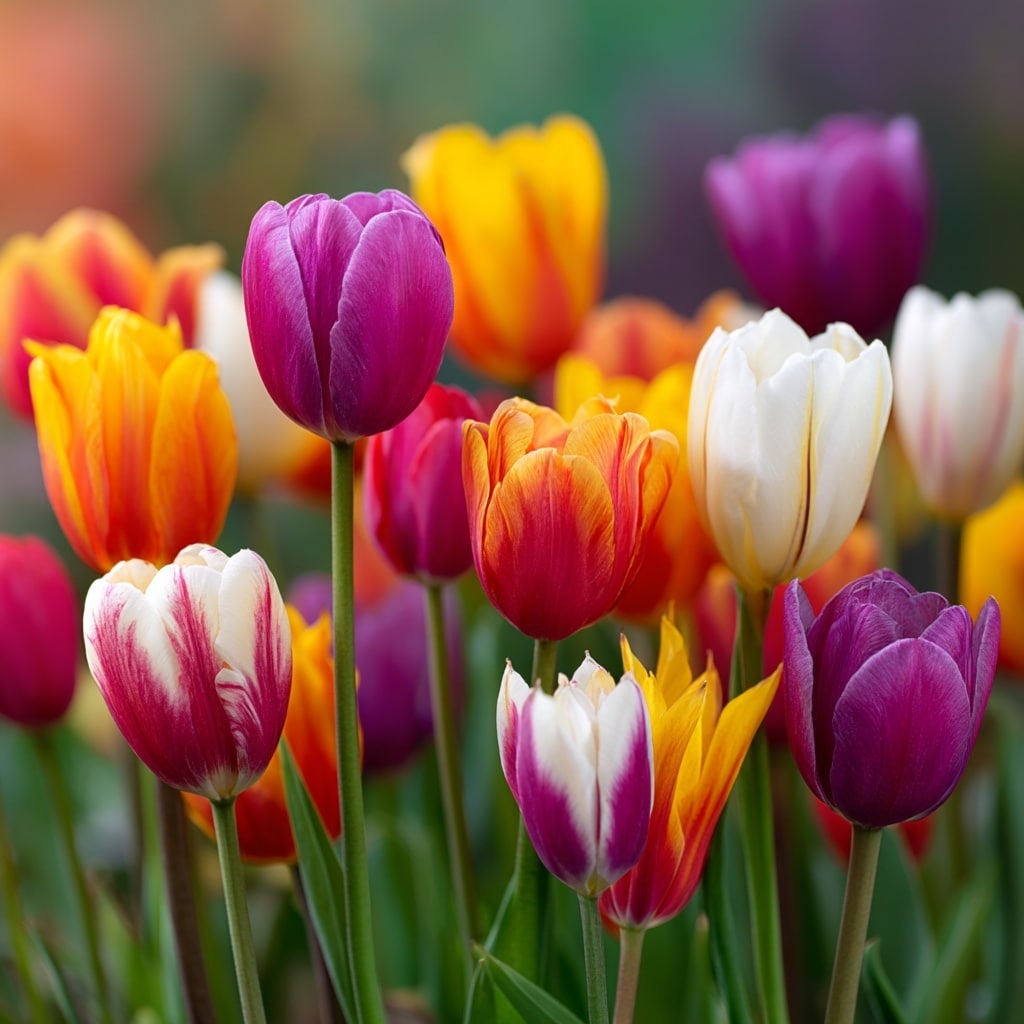
Beyond their symbolic colors, tulips also dazzle with a wide range of shapes, sizes, and blooming patterns. Whether you’re planting a garden or choosing cut flowers, understanding the different tulip types can help you select the perfect variety for your space and style.
Single Early Tulips – The First to Bloom
These classic cup-shaped blooms are among the earliest to flower in spring. Their compact size and bright colors make them ideal for borders, containers, and formal garden designs. Single Early tulips are reliable and often used to usher in the garden season.
Triumph Tulips – The Garden Workhorses
A hybrid of Single Early and Late tulips, Triumph tulips are known for their sturdy stems and traditional shape. They bloom in mid-spring and are available in a wide array of rich hues. Their wind resistance makes them perfect for exposed areas and floral arrangements.
Darwin Hybrid Tulips – Tall and Bold
These large, goblet-shaped tulips are some of the tallest available, reaching up to 24 inches in height. Their impressive blooms and robust stems make a dramatic statement in beds and borders. They’re long-lasting and well-suited for mass plantings.
Fringed Tulips – Textured Elegance
With their finely cut, serrated petal edges, Fringed tulips bring unique texture to the garden. Blooming in late spring, these tulips add visual interest and a whimsical touch. They pair beautifully with more traditional tulip shapes in mixed displays.
Parrot Tulips – Wild and Expressive
Parrot tulips feature ruffled, twisted petals that resemble a parrot’s feathers. No two blooms are exactly alike, with vibrant, multicolored patterns that make them a standout in any setting. Best for late spring color bursts and bold bouquets.
Lily-Flowered Tulips – Graceful and Sleek
Recognizable by their long, pointed petals that curve outward, Lily-Flowered tulips offer an elegant silhouette. They sway gently in spring breezes and are excellent for adding height and grace to garden borders or floral designs.
Tulips in Cultural Symbolism and Floriography
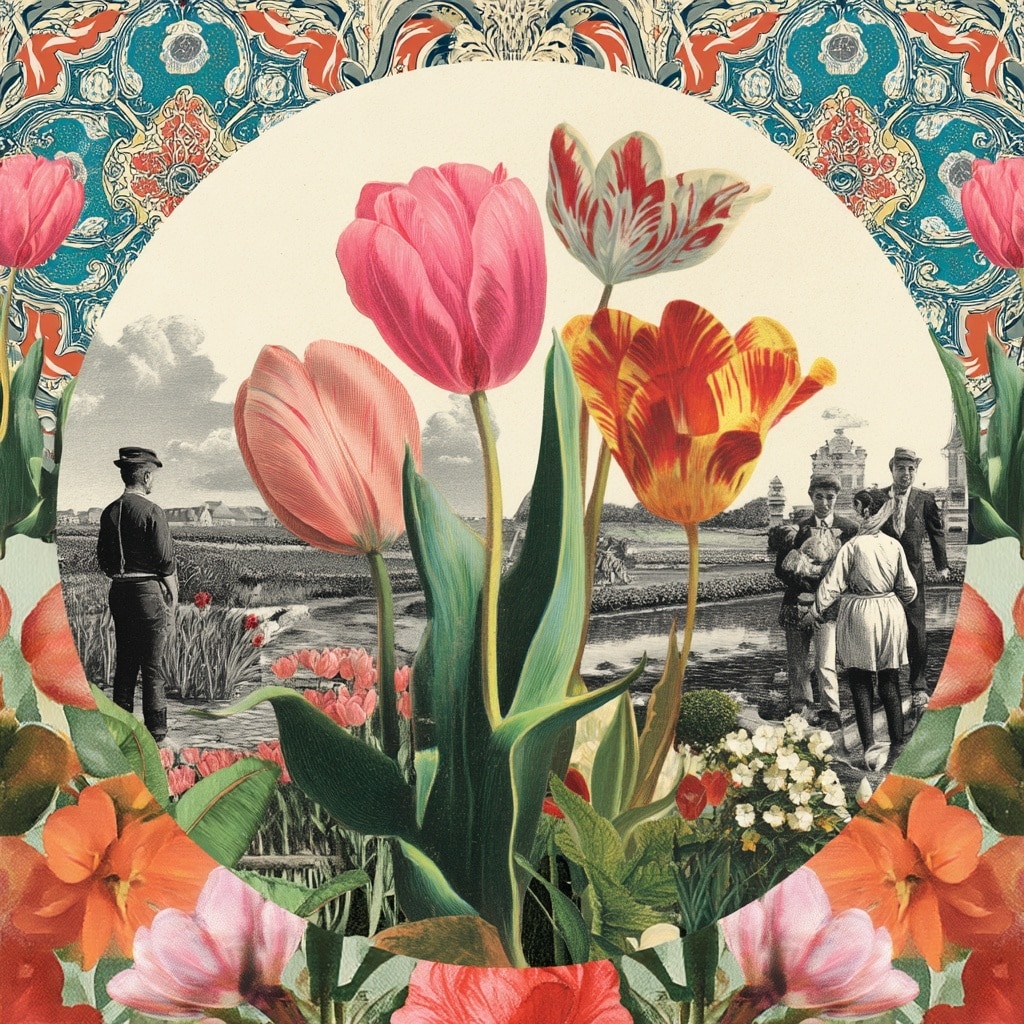
The beauty of tulips isn’t limited to their garden appeal — they’ve held powerful meaning in cultures and traditions for centuries. From ancient empires to Victorian flower language, tulips have long been a symbol of more than just spring.
Tulips in Turkish and Ottoman Culture
In Turkey, tulips are a symbol of paradise on earth. During the Ottoman Empire, these flowers became emblems of wealth, refinement, and spiritual beauty. The 18th-century period known as “Tulip Mania” in Ottoman history was marked by tulip festivals and high society’s obsession with rare tulip cultivars. Even today, tulips remain closely tied to Turkish identity and art.
Tulips in Dutch History
The Netherlands is famously associated with tulips, thanks to its own version of “Tulip Mania” in the 17th century. At the height of this economic craze, a single tulip bulb could sell for more than a house. While the bubble eventually burst, tulips became a lasting national symbol of prosperity, resilience, and the arrival of spring.
The Language of Tulips in Floriography
In the Victorian era, flowers were used to convey messages when words could not. This practice, known as floriography, assigned meanings to various blooms. In this floral language, tulips represented perfect love, and each color refined the message — red for passionate love, white for forgiveness, yellow for cheerful affection, and so on. Sending someone tulips was a thoughtful, symbolic gesture that said far more than a note ever could.
Conclusion
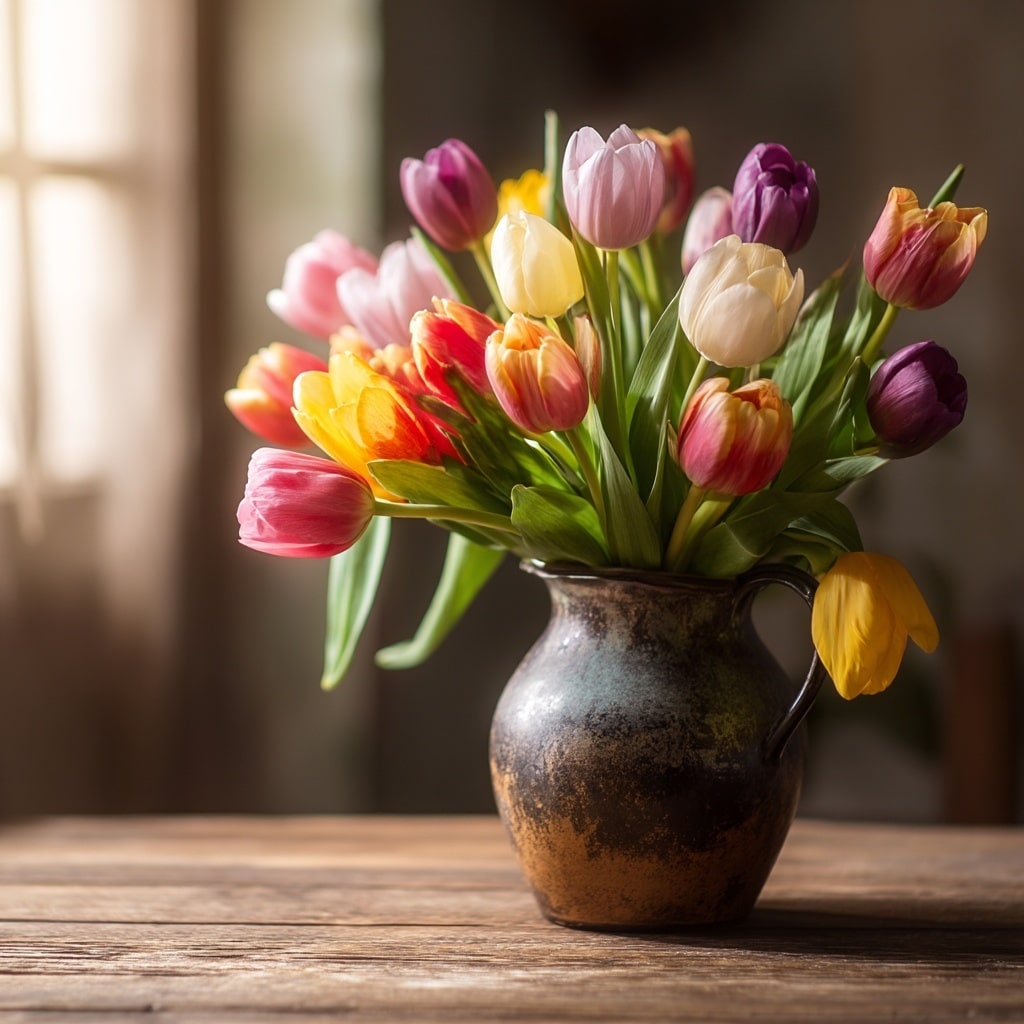
Tulips are more than just beautiful spring blooms — they’re a floral language steeped in emotion, history, and cultural significance. Whether you’re giving red tulips to express deep love, white ones to ask for forgiveness, or a mixed bouquet to admire someone’s beauty, each color carries a message that resonates far beyond the petals.
With their wide range of varieties and symbolic meanings, tulips offer endless ways to enrich your garden or bring depth to your floral gifts. Understanding what each hue represents allows you to connect more intentionally with the people you care about — through one of nature’s most elegant messengers.