
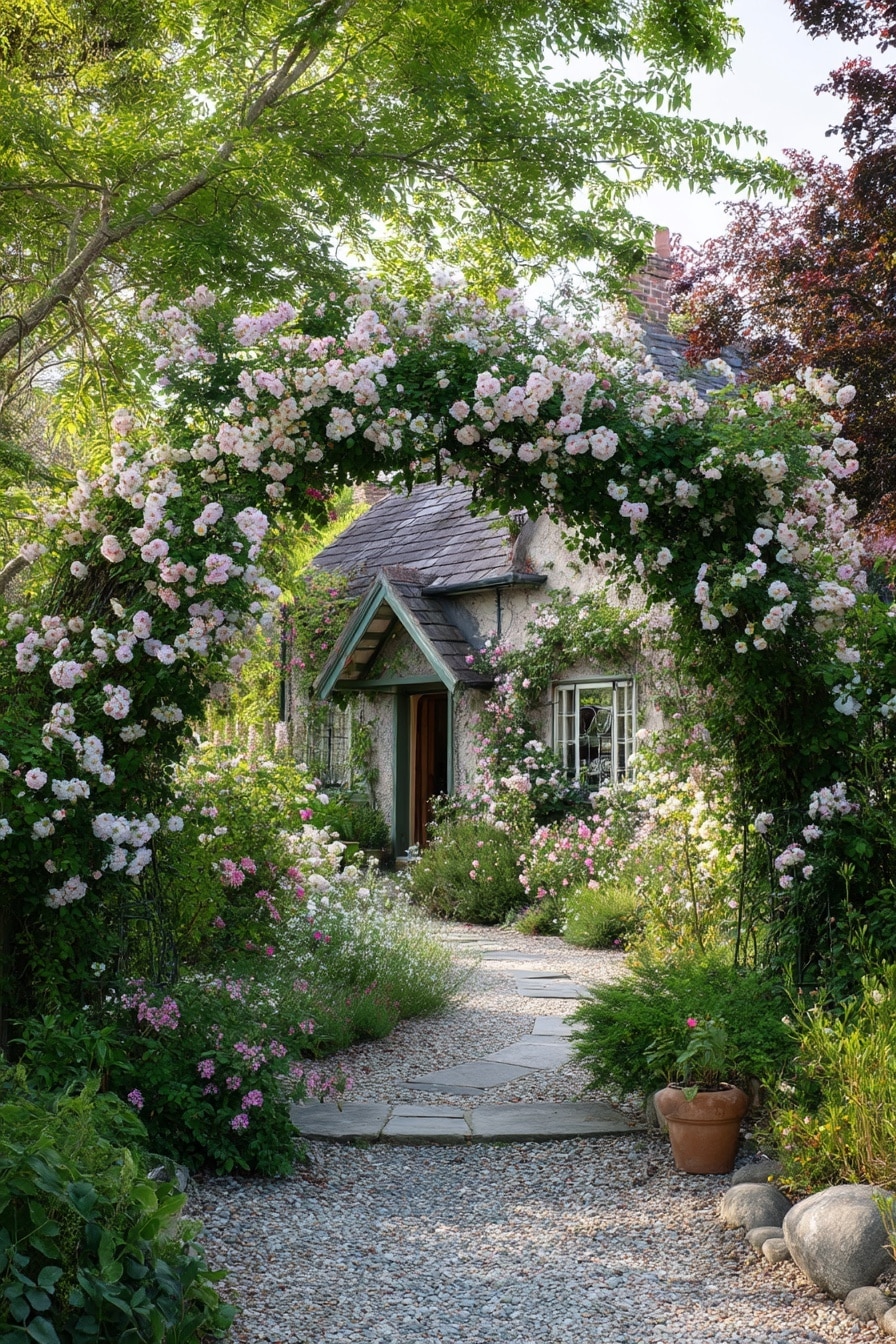
Rose garden design is all about blending timeless elegance with thoughtful layout and plant selection. Whether you’re dreaming of a formal rose border or a more relaxed cottage-style mix, the beauty of roses lies in their versatility. From climbers to shrubs and fragrant hybrids, roses can enhance nearly every style of outdoor space.
Starting your rose garden with a clear plan will ensure you get lasting color, structure, and fragrance. This guide offers 10 inspiring ideas to help you craft a backyard that’s filled with lush blooms and romantic charm—all centered around the classic rose.
Table of Contents
1. Create a Classic Rose Border

One of the most traditional ways to use roses is as a border planting, especially along garden paths, fences, or the front of your home. A well-structured rose garden border provides both beauty and formality.
- Use a mix of shrub roses and floribundas for repeated blooms
- Layer with low-growing lavender or nepeta for contrast
- Choose repeat-blooming varieties to extend color through summer
This layout works particularly well in narrow or rectangular garden spaces.
2. Add Vertical Interest with Climbing Roses
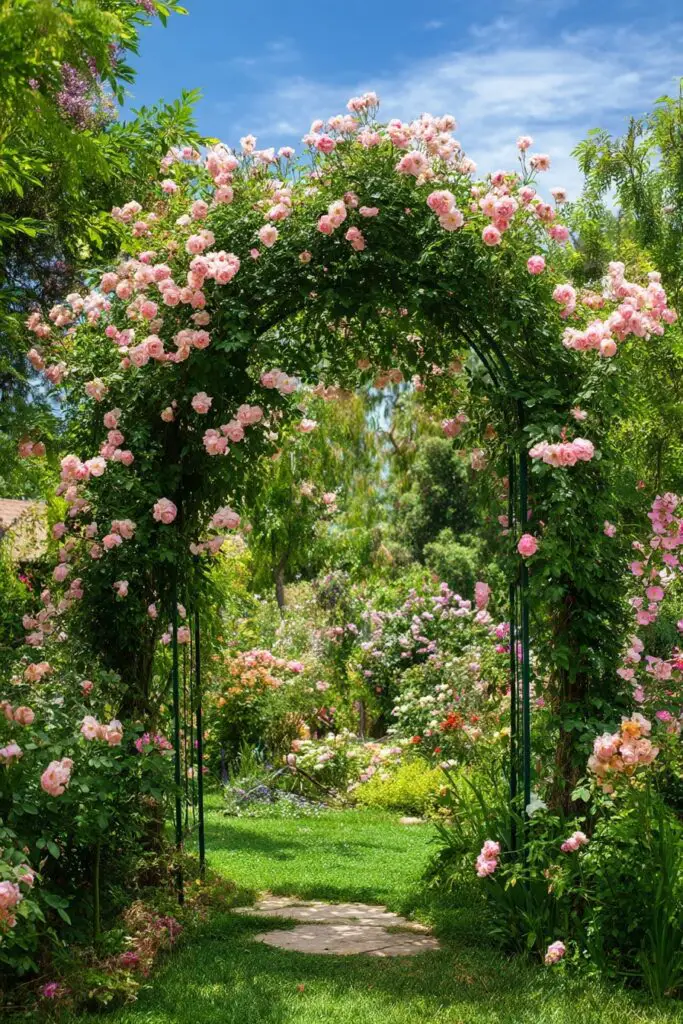
Climbing roses offer vertical drama, making them perfect for trellises, archways, or pergolas. In a rose garden, these varieties draw the eye upward and provide a romantic focal point.
- Train them on metal arches, wooden obelisks, or stone walls
- Prune regularly to encourage flower production and control shape
- Try varieties like ‘Eden’, ‘New Dawn’, or ‘Claire Austin’ for soft color palettes
Pair climbing roses with ground-covering plants to soften the base.
3. Combine Roses with Perennials for a Cottage Feel
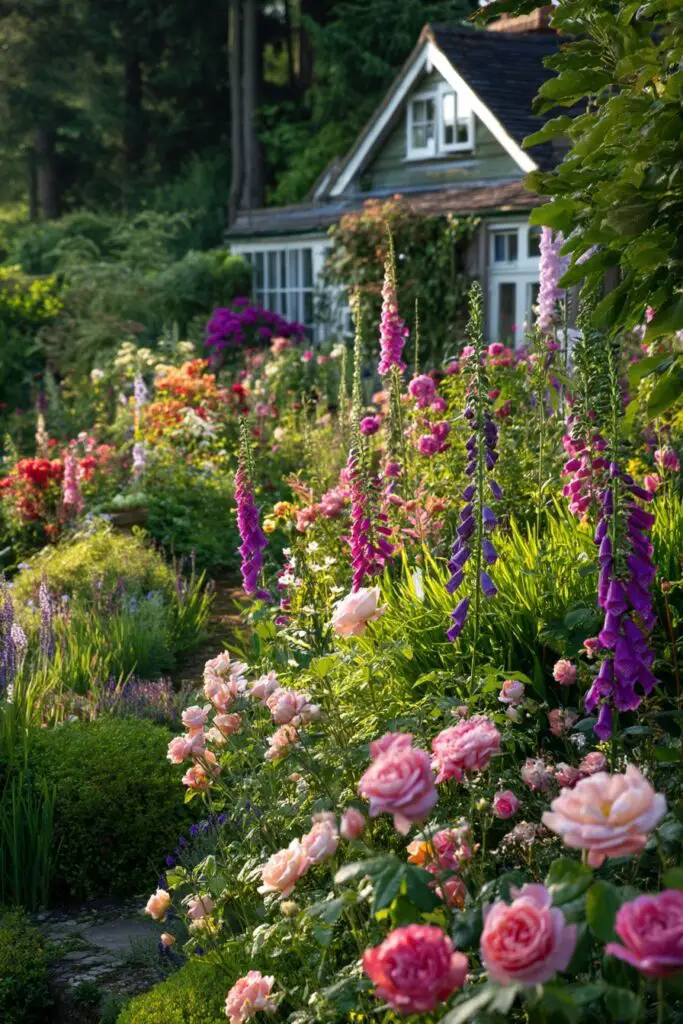
If you love the look of an informal garden, mixing roses with classic cottage-style perennials is the way to go. This approach adds layers of color and texture throughout the season while allowing your rose garden to feel more relaxed and natural.
- Pair with foxglove, salvia, delphinium, and allium
- Use soft pastel tones for a romantic effect or bolder hues for vibrancy
- Let some plants self-seed for a spontaneous look
Be sure to give roses enough space to breathe to avoid overcrowding and disease.
4. Plant a Fragrant Rose Garden Near Seating Areas
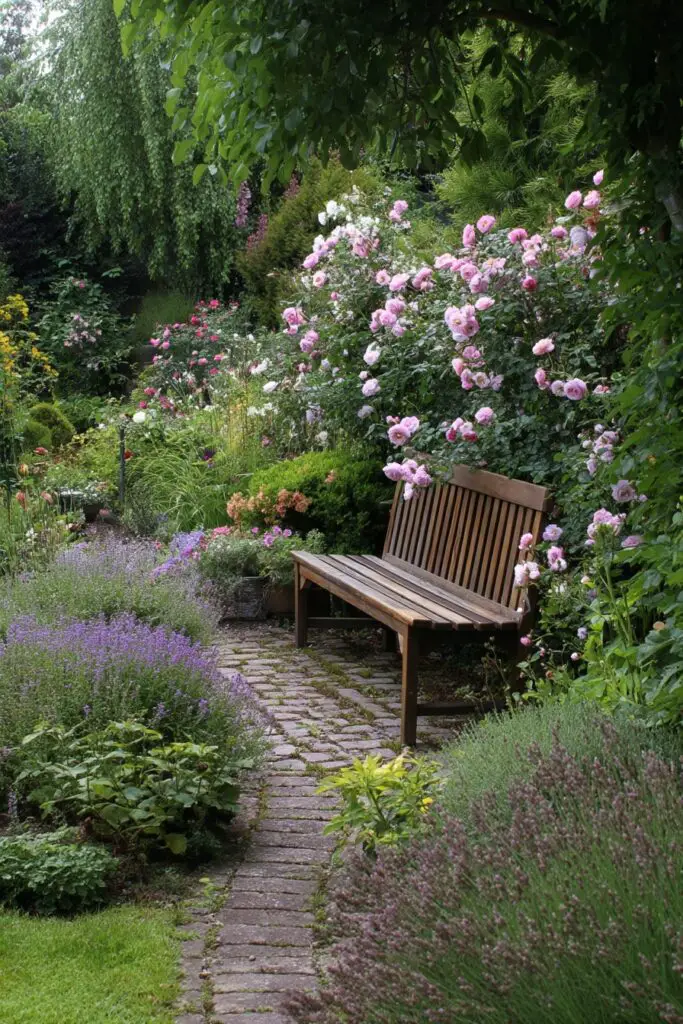
One of the greatest joys of a rose garden is the scent. Incorporate fragrant varieties near patios, benches, or entryways to enjoy the aroma during warm months.
- Choose heavily scented types like ‘Gertrude Jekyll’, ‘Madame Isaac Pereire’, or ‘Double Delight’
- Combine with fragrant herbs like thyme, mint, or lavender
- Place near windows or paths to maximize sensory appeal
Fragrant roses are often older, heritage types that also have strong visual appeal.
5. Use Roses in Large Containers
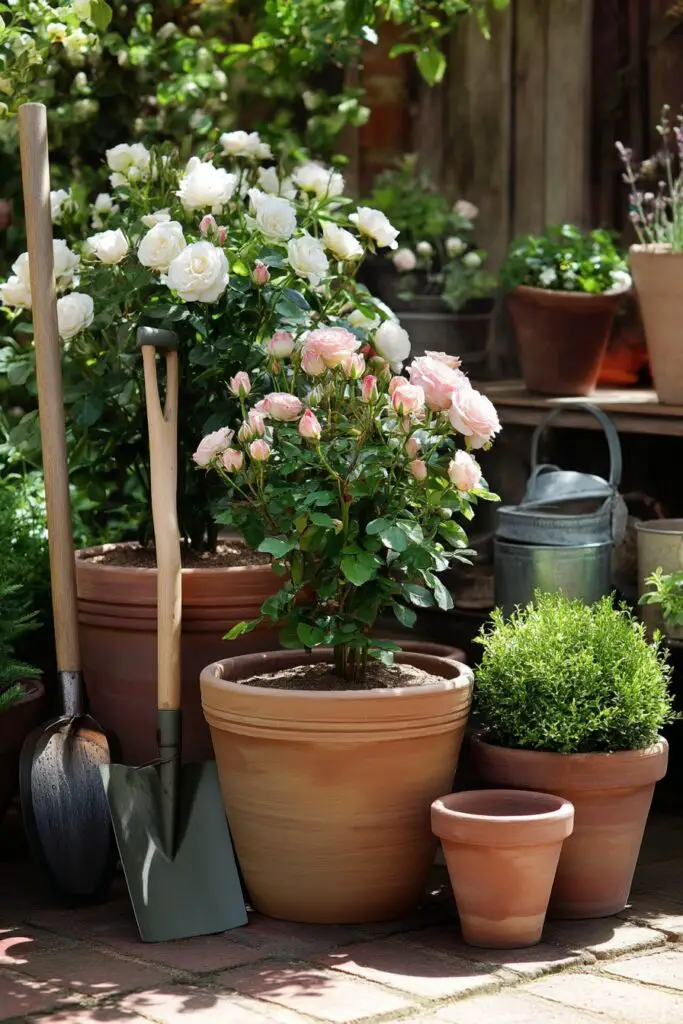
Not every garden has space for sprawling beds, but you can still enjoy the charm of a rose garden in containers. Compact rose varieties thrive in pots with the right care.
- Select patio or miniature roses for the best results
- Use high-quality potting soil and ensure excellent drainage
- Water regularly and feed with a slow-release rose fertilizer
Arrange containers around patios, balconies, or staircases for a structured yet colorful display.
6. Design a Formal Rose Garden with Symmetry
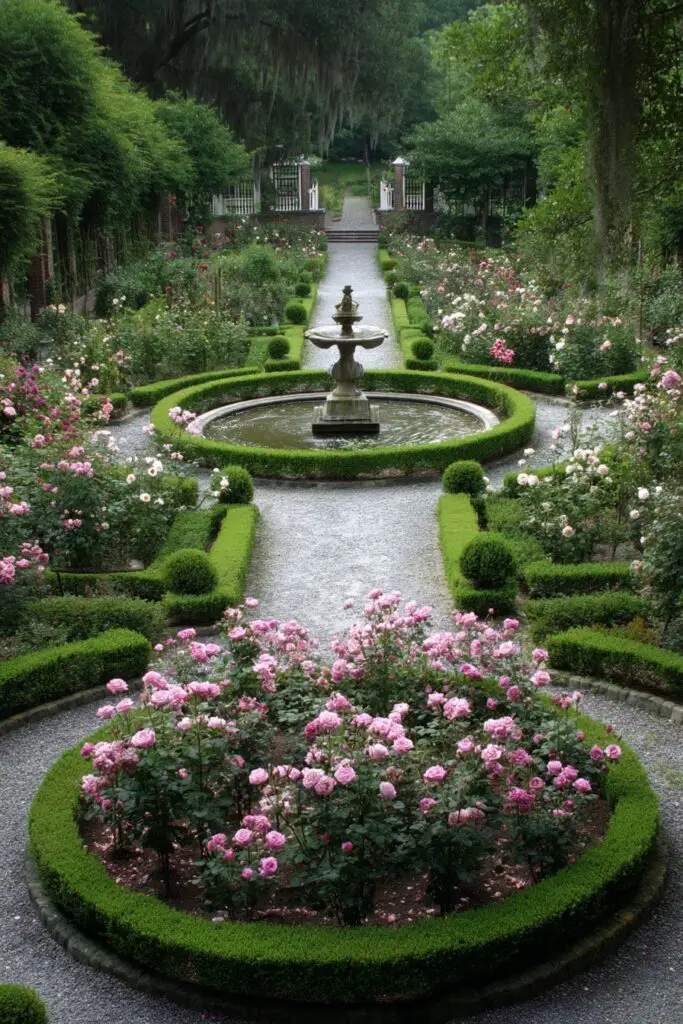
If you’re drawn to structured gardens, a formal rose garden layout with geometric symmetry and clean lines can bring elegance to your backyard.
- Use square or circular bed layouts with gravel or brick pathways
- Plant roses in mirrored patterns or concentric rings
- Add low boxwood hedging for borders and contrast
This style works especially well in larger spaces or classic architectural settings. Consider a central fountain or sculpture to complete the look.
7. Attract Pollinators with Wildlife-Friendly Roses
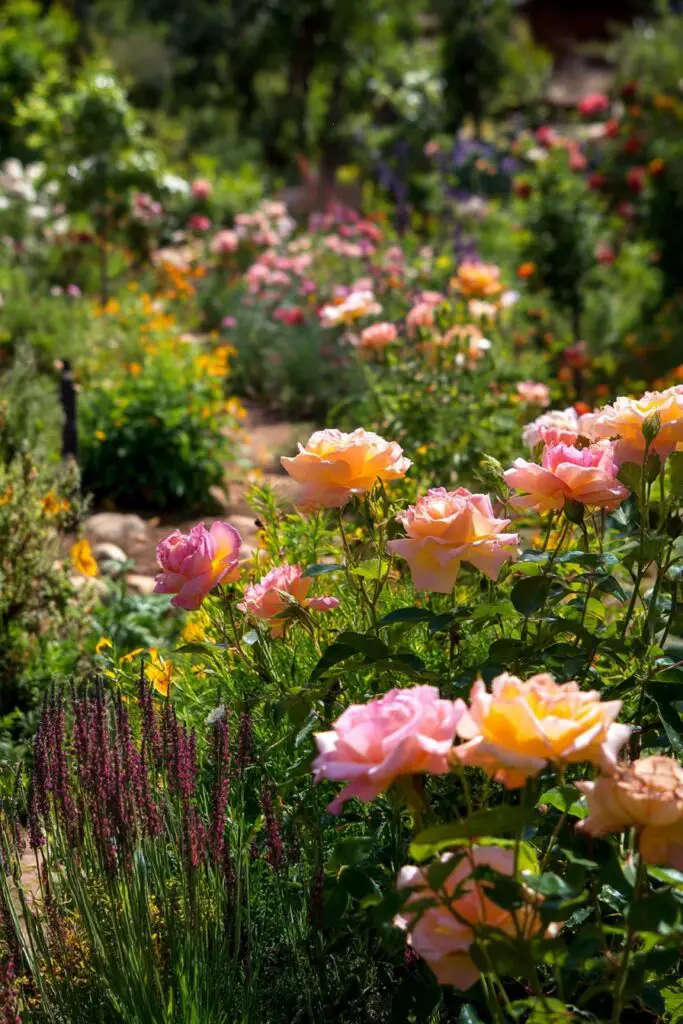
Many roses today are hybridized for show but lack pollen or scent. If you want a more eco-friendly rose garden, choose varieties that support pollinators like bees and butterflies.
- Opt for single-petal or semi-double varieties like ‘Sally Holmes’ or ‘Dainty Bess’
- Avoid overly double blooms that block access to nectar
- Mix in pollinator favorites like echinacea, yarrow, or coreopsis
This not only adds biodiversity but creates a garden buzzing with life and movement.
8. Use Roses as Structural Anchors in Mixed Beds
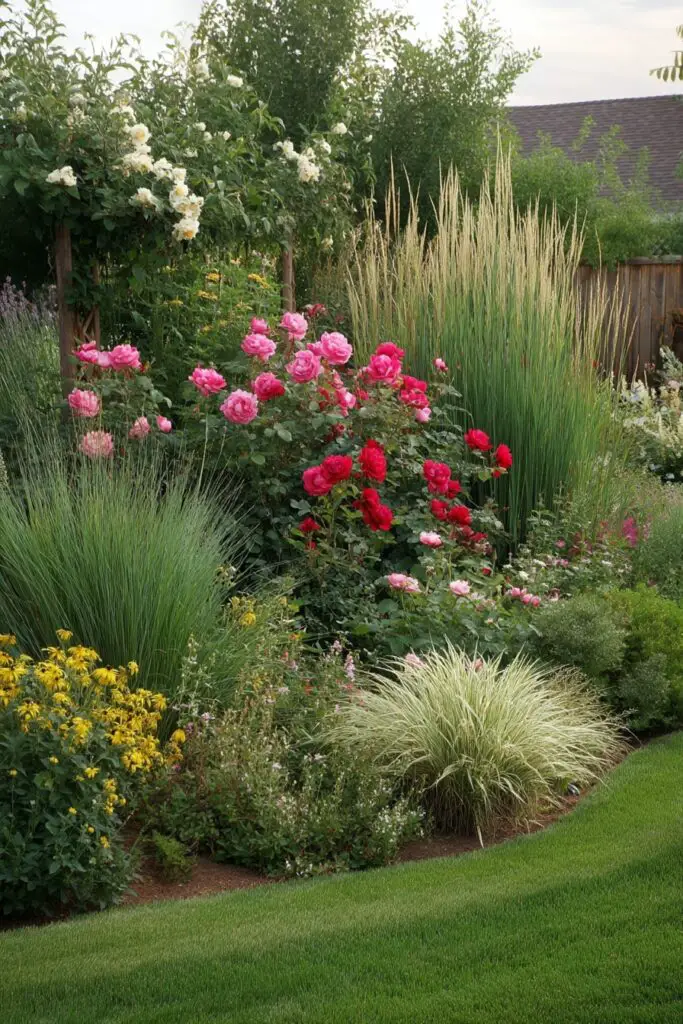
Roses aren’t just for rose-only gardens. In mixed borders, they work beautifully as anchor plants that provide height, structure, and long-lasting color.
- Position tall shrub or English roses as centerpieces
- Surround with ornamental grasses, perennials, and evergreen shrubs
- Repeat colors or textures to tie the whole design together
This is a great option for gardeners who want the romance of a rose garden without dedicating the entire space to roses.
9. Frame Entrances with Rose Arches
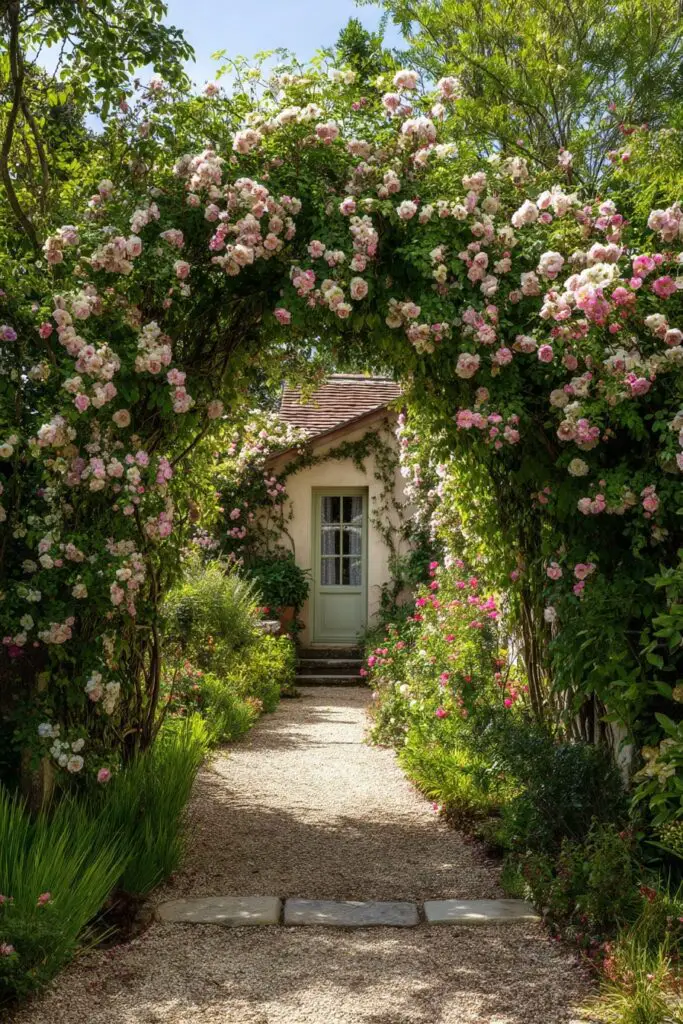
Create a dramatic and inviting entrance by framing gates, walkways, or garden entries with climbing roses. A rose-covered archway sets the tone for the entire rose garden and adds vertical charm.
- Use sturdy structures to support vigorous climbers like ‘Zephirine Drouhin’ or ‘Iceberg’
- Train stems gently over time to cover the frame evenly
- Underplant with low-growing lavender or alyssum for a soft base
This idea works beautifully in both small cottage gardens and formal landscapes.
10. Incorporate Roses into Small Urban Spaces
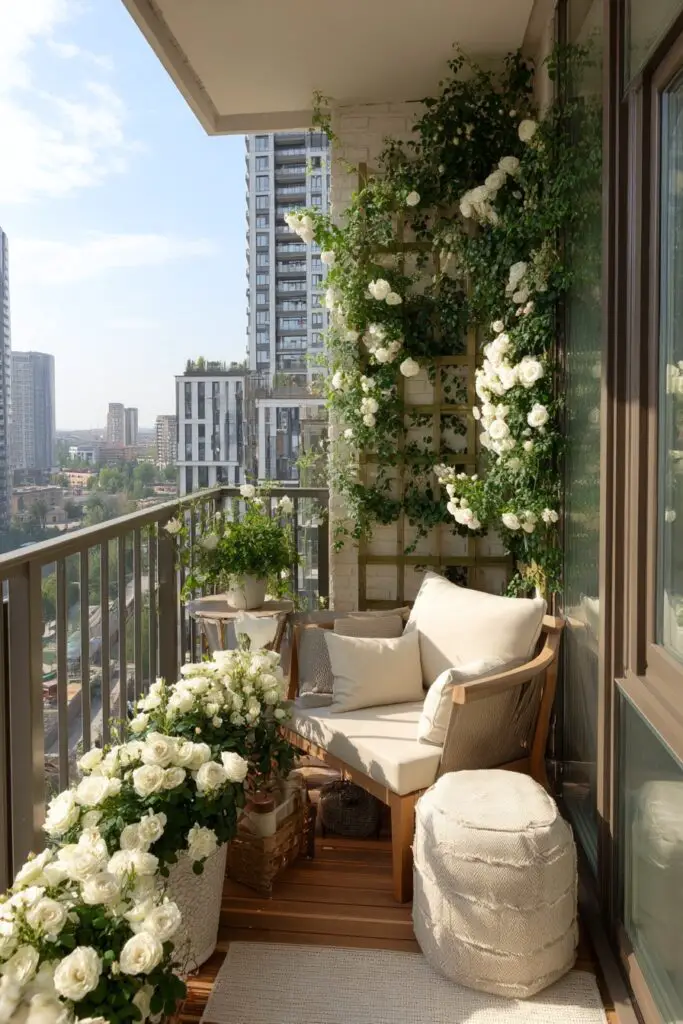
Even compact backyards, patios, or balconies can feature a blooming rose garden. With the right plant choices and layout, limited space is no barrier to enjoying lush roses.
- Choose compact varieties like ‘Little Mischief’, ‘The Fairy’, or patio roses
- Use vertical elements like trellises and wall planters
- Arrange seating nearby to enjoy close-up views and scents
Container gardening and smart layering make it easy to build a cozy, rose-filled retreat even in tight quarters.
🌹 Conclusion
Creating a rose garden is more than just planting a few pretty flowers—it’s about curating an experience that delights the senses and brings long-term beauty to your outdoor space. Whether you’re working with a spacious backyard or a city balcony, there’s a rose garden idea that fits your style, space, and gardening goals.
By combining structure, fragrance, pollinator-friendly blooms, and personal flair, you can build a garden that looks stunning throughout the season—and brings joy for years to come.