
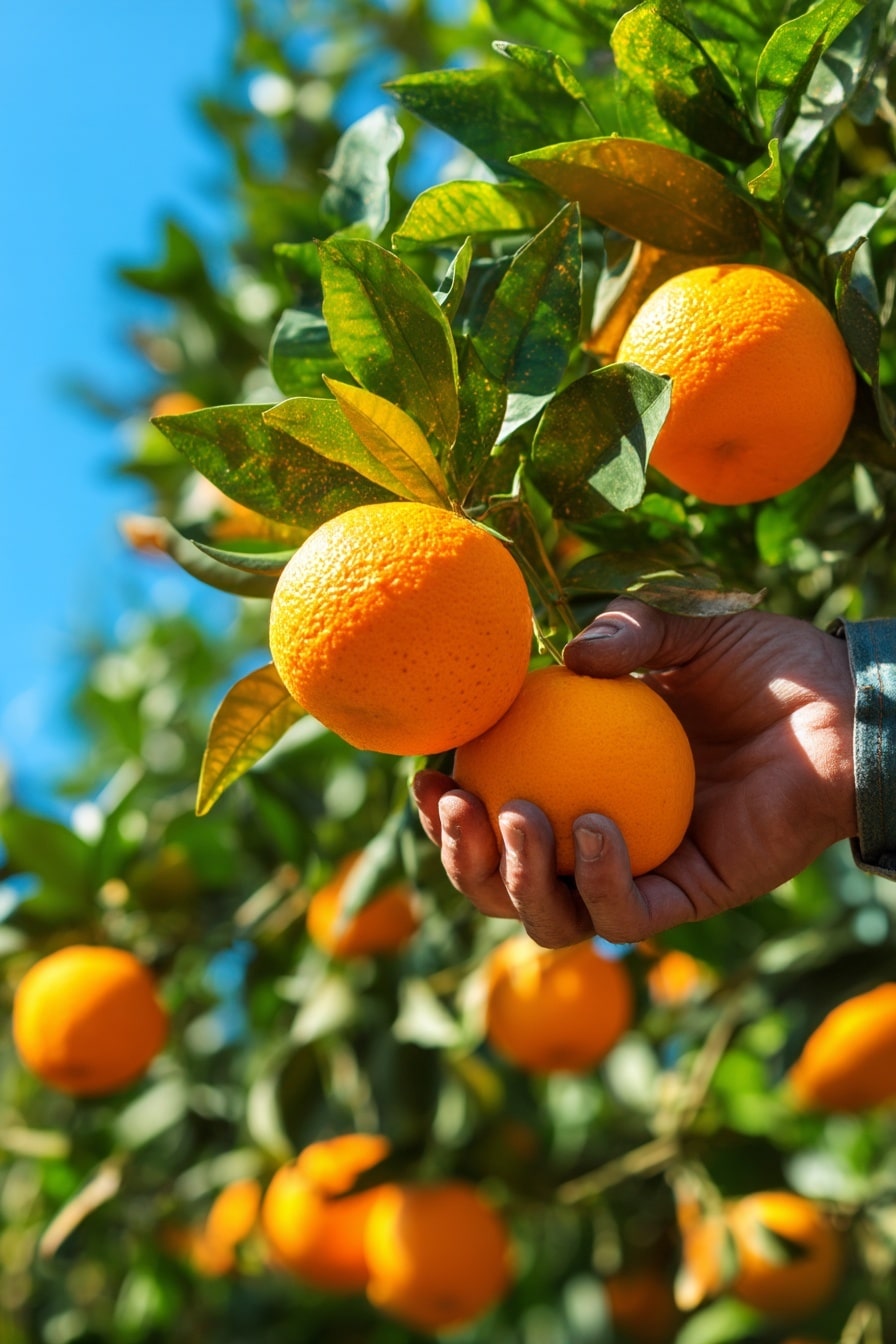
Orange trees are a favorite among home gardeners for their fragrant blossoms and sweet, juicy fruit. But getting them to thrive takes more than just digging a hole and hoping for the best. Many new growers are surprised to find that even one small mistake—like poor drainage or incorrect timing—can affect a tree’s growth for years. If you’re planting orange trees in your backyard or container garden, it’s essential to get the basics right from the start.
In this guide, we’ll walk through five critical tips that every gardener should know before planting. These practical insights will help you grow healthy, fruit-bearing orange trees that flourish for decades with minimal trouble.
Table of Contents
🌱 1. When to Plant Orange Trees

Timing is everything when it comes to planting orange trees. The best window to plant is early spring, typically between March and May, depending on your local climate. This gives your tree several months to develop a strong root system before the heat of summer arrives.
If you’re in USDA Zones 9–11, you may even start as early as February, as long as the risk of frost has passed. In cooler regions, where trees are grown in containers, wait until nighttime temperatures consistently stay above 50°F before planting outdoors.
☀️ Sunlight Is Non-Negotiable
Orange trees need at least 6–8 hours of direct sunlight daily to grow properly and produce fruit. Choose the sunniest spot in your garden—ideally one that receives gentle morning sun and is shielded from strong afternoon winds. For most homeowners, a south-facing location is ideal.
If you’re planting near a structure, keep it several feet away from walls or fences to allow for airflow and root expansion.
🌾 2. Soil Conditions for Orange Trees
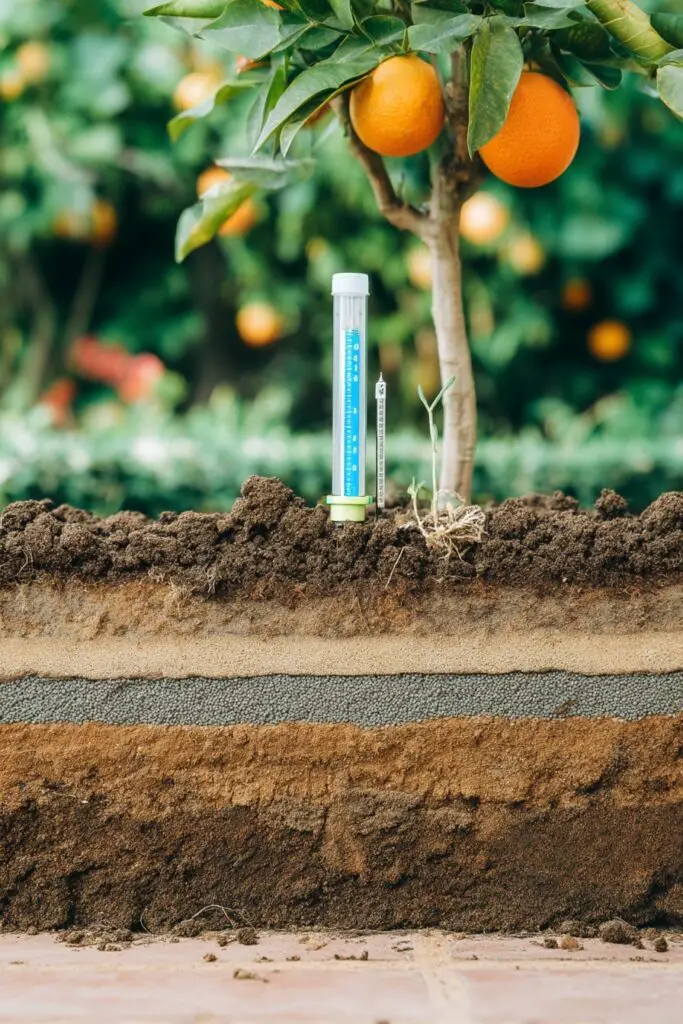
One of the most common mistakes gardeners make when planting orange trees is using the wrong type of soil. These trees hate “wet feet”—meaning their roots cannot sit in soggy or compacted soil. Doing so almost always leads to root rot and poor tree health.
🪨 Use Mineral-Based Soil, Not Organic Mixes
For container planting, use a mineral-based soil mix that drains quickly and doesn’t break down over time. Avoid peat-based potting soil or anything overly organic. A good mix might include sand, perlite, and a small amount of coco coir, with optional additives like biochar or volcanic rock dust to promote root aeration.
For ground planting, you’ll need to test the drainage first. Saturate the area and observe: if water lingers for more than an hour, improve the drainage by mixing in coarse sand or consider planting in raised beds.
🌡️ Ideal Soil pH for Orange Trees
Orange trees prefer slightly acidic soil with a pH around 6.0. This range helps the roots absorb vital nutrients like iron and magnesium, which are essential for leaf health and fruit development. If your soil is too alkaline, consider amending it with sulfur or using specially formulated citrus fertilizers.
🌱3. How to Plant Orange Trees Properly
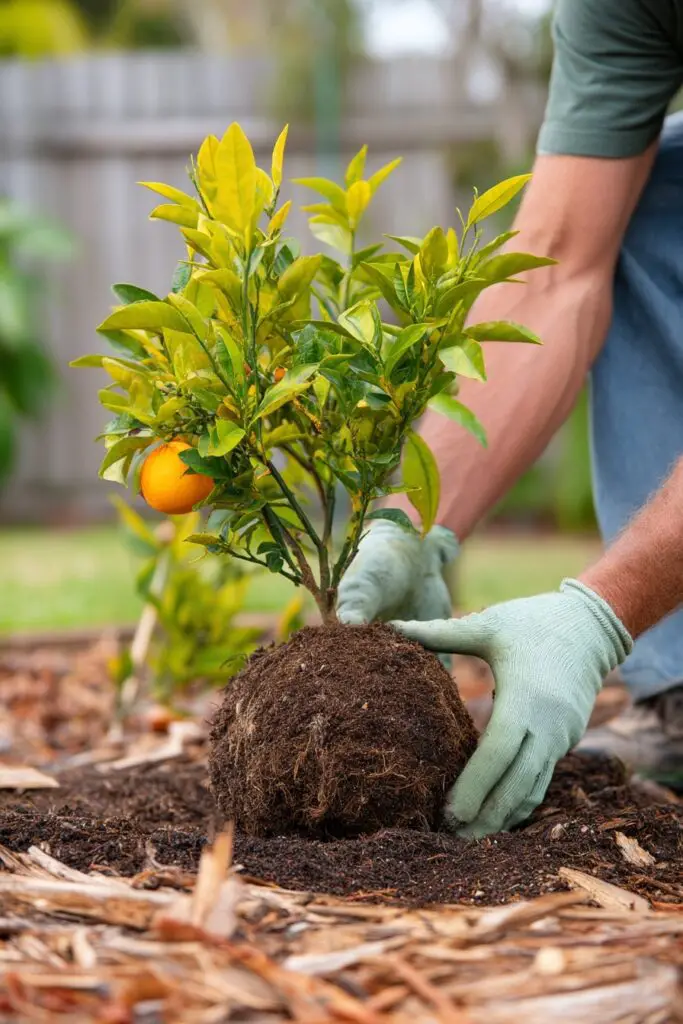
Planting your orange tree the right way sets the foundation for decades of growth and fruit production. Skipping or rushing this step can lead to issues like root suffocation, crown rot, and poor nutrient uptake.
🕳️ Dig the Right Hole
Start by digging a hole that’s twice as wide as the root ball but only as deep. The top of the root ball should sit 1–2 inches above ground level—this prevents water from pooling at the base, which can lead to rot.
🌳 Step-by-Step Planting Instructions
- Remove the tree gently from its container, keeping the root ball intact.
- Position it in the hole with the top roots slightly exposed above the soil.
- Backfill using the same soil type you dug out—don’t mix soil types, which can trap water.
- Water deeply to settle the soil and remove air pockets.
- Mulch around the base with 2–3 inches of organic mulch, keeping it at least 6 inches away from the trunk.
📐 Tree Spacing Guidelines
Spacing is crucial for light, airflow, and root development. Here’s a quick reference:
| Tree Type | Spacing Distance | Mature Height |
|---|---|---|
| Standard Orange Tree | 12–25 feet apart | 20–30 feet tall |
| Dwarf Orange Tree | 6–10 feet apart | 8–12 feet tall |
| Container Trees | 8–10 feet apart | Depends on pruning |
Giving your trees proper space helps prevent diseases and improves fruit quality by ensuring sunlight reaches all parts of the canopy.
💧 4. How Often to Water Orange Trees
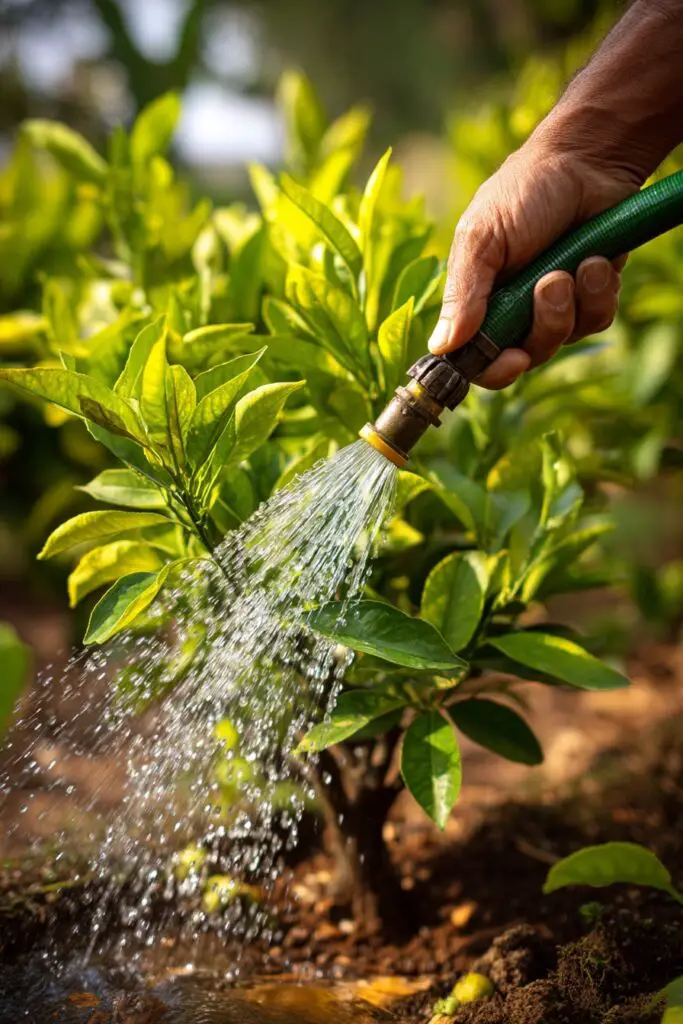
Watering is where many gardeners unintentionally go wrong with orange trees. Too little water leads to dried-out leaves and dropped fruit, while too much causes root rot and yellowing foliage. Striking the right balance is key.
✋ Use the “Top 2-Inch Rule”
The simplest way to check if your orange tree needs water is to touch the top 2 inches of soil. If it feels dry, it’s time to water. If it’s still damp, wait another day.
🥄 The Drench Method Works Best
Whether your tree is in the ground or a container, use the drench method:
- Water slowly and deeply
- Continue until water runs from the drainage holes (containers)
- Or until it penetrates 12–18 inches into the soil (in-ground trees)
This encourages deep root development and builds drought resistance over time.
📅 Watering Schedule by Season
- Spring (planting season): Every 2–3 days for the first month
- Summer: Daily in extreme heat (over 95°F), every other day in moderate temps
- Fall: 2–3 times per week as temperatures drop
- Winter: Once weekly, only if soil is dry
🔍 Signs of Proper Watering
- Leaves are firm, green, and upright
- Soil is moist 4–6 inches deep
- No standing water after 30 minutes
- Steady new growth during the growing season
⚠️ Watch for These Problems
- Overwatering: Yellow leaves, soft roots, leaf drop
- Underwatering: Crispy edges, stunted growth, small or dropped fruit
With consistent monitoring, your orange trees will stay healthy and strong through every season.
🍊 5. When to Harvest Oranges from Your Tree
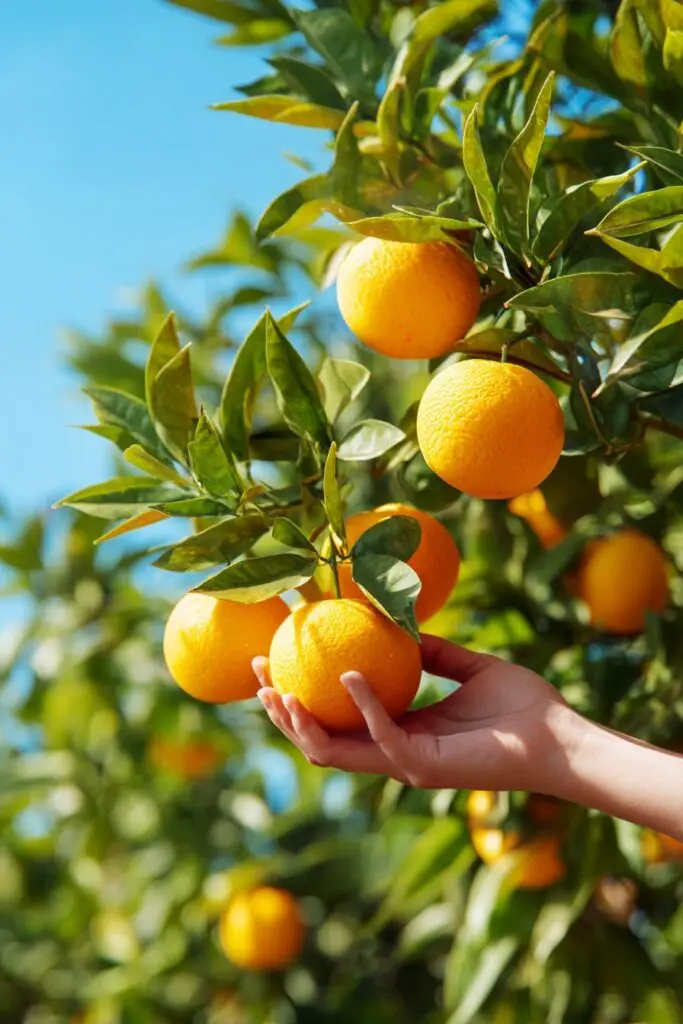
One of the biggest rewards of growing orange trees is picking fresh, sweet fruit straight from the branch. But harvest too early, and the flavor may disappoint. Oranges do not ripen after picking, so timing matters.
📆 Typical Harvest Window
Most orange varieties take 6–8 months after flowering to ripen. For many gardeners, this means a harvest season between December and March, though timing can vary slightly based on your climate and tree variety.
✅ How to Know Oranges Are Ripe
- Color: Fully developed deep orange (some varieties stay partially green)
- Touch: Slight give when gently squeezed
- Smell: Sweet citrus aroma near the stem
- Taste: Always test one fruit before harvesting the whole tree
✂️ Harvesting Tips
- Use clean pruning shears for thick stems to avoid tearing
- For thinner stems, a gentle twist-and-pull works well
- Harvest during dry weather to prevent fruit rot
- Store oranges at room temperature for up to a week, or refrigerate for 3–4 weeks
Patience during the ripening period pays off. A properly timed harvest means sweeter fruit, better storage life, and more satisfaction from your homegrown orange trees.
🌟 Conclusion
Planting orange trees successfully comes down to doing the small things right—from choosing the correct soil to knowing the exact moment to harvest. When you understand your tree’s needs at every stage, you’re not just growing fruit—you’re investing in a tree that can produce for 50 years or more.
By following these five foundational tips, your orange tree will be well on its way to producing beautiful, juicy oranges season after season.
If you’re interested in growing more citrus or fruit trees, check out our articles on [caring for citrus in containers] or [best dwarf fruit trees for small yards] to expand your backyard orchard.