
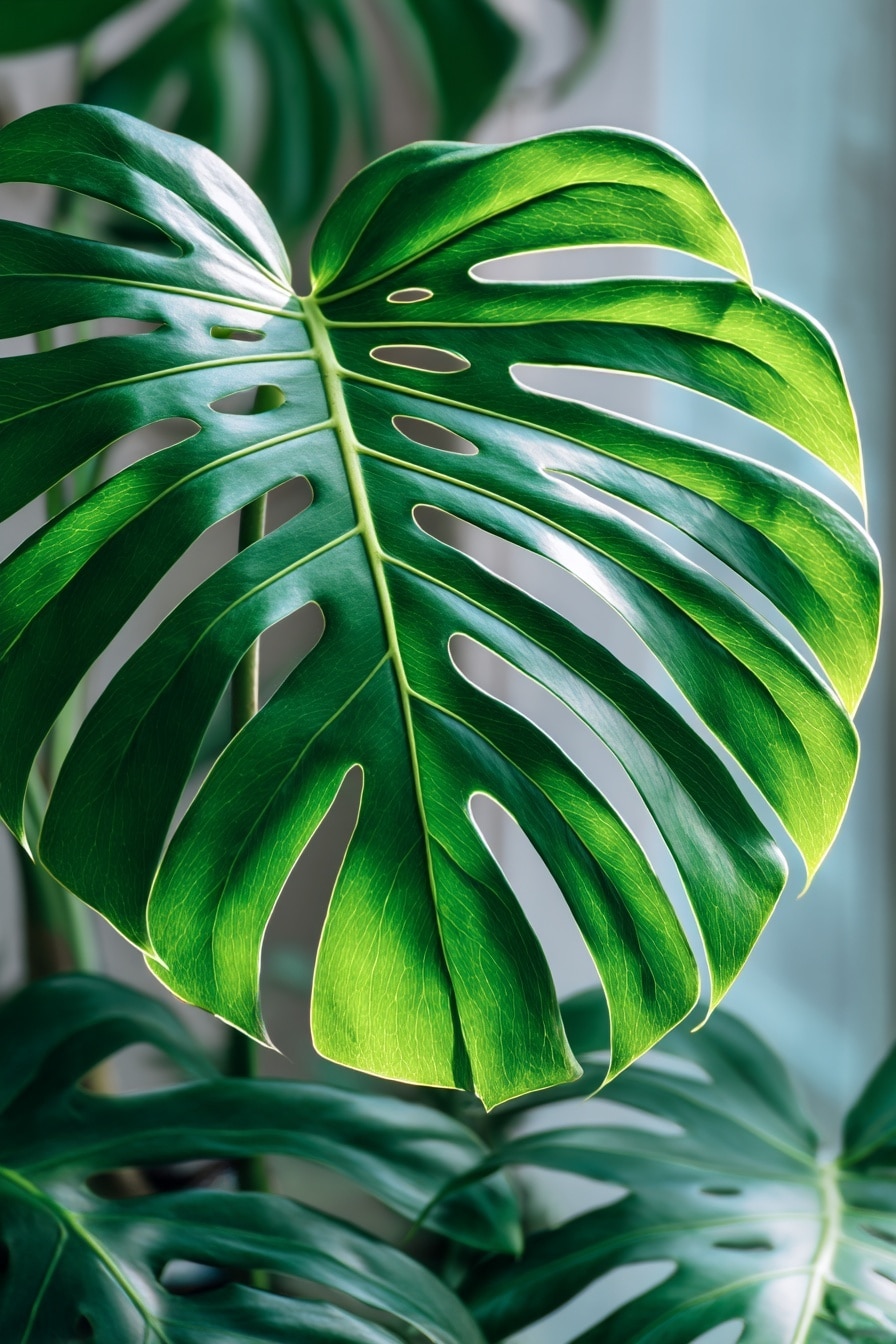
The monstera leaf is one of the most recognizable and admired foliage shapes in the plant world. With its dramatic splits and natural holes—known as fenestrations—this tropical beauty brings a bold, sculptural presence to any space. Native to the rainforests of Central and South America, Monstera deliciosa, also known as the Split Leaf Philodendron, is a favorite among indoor plant lovers for its stunning leaves, fast growth, and surprisingly easy care. Whether you’re a beginner or seasoned plant enthusiast, growing a monstera is both rewarding and simple when you follow a few key care tips.
Table of Contents
🌿 What Makes the Monstera Leaf So Iconic

The monstera leaf isn’t just visually stunning—it’s a botanical marvel. Its signature look comes from natural fenestration, the splits and holes that develop as the plant matures. These holes aren’t just decorative; in the wild, they help the plant withstand heavy rain and wind, and allow sunlight to filter through to lower leaves in dense jungle canopies.
Monstera deliciosa is often confused with philodendrons, but it’s actually part of its own genus. The large, glossy green leaves can grow over two feet wide under the right conditions, making it a true statement plant. Indoors, it gives any room a lush, tropical feel—perfect for modern, minimalist, or boho-inspired interiors.
Beyond beauty, the monstera leaf symbolizes long life and respect in many cultures, adding a deeper meaning to its ornamental appeal.
🪴 How to Pot a Monstera Successfully
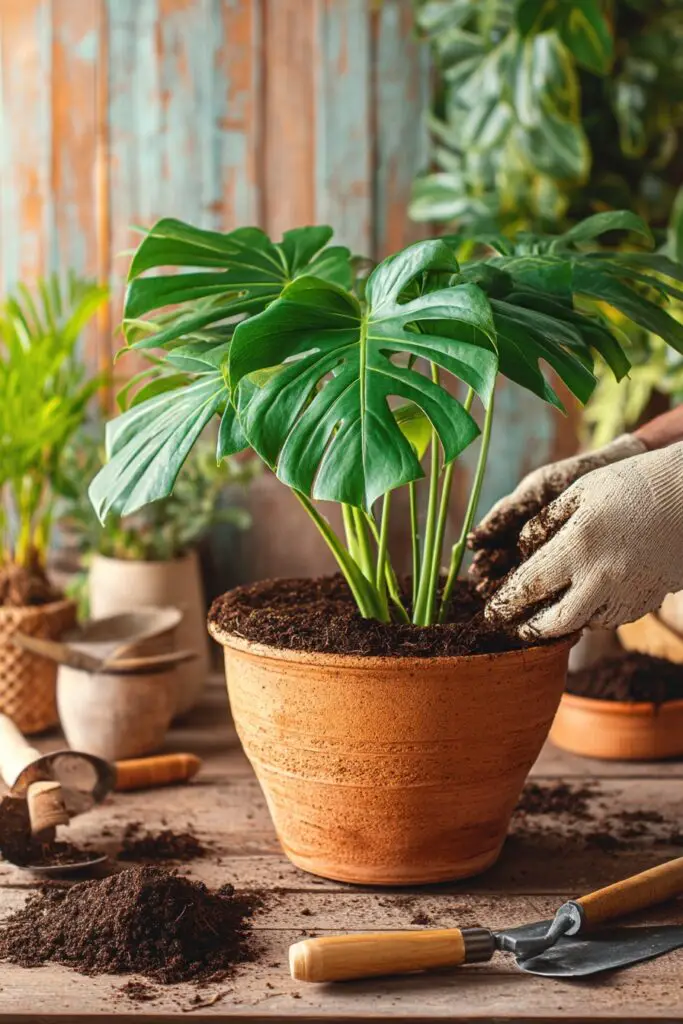
Giving your monstera leaf plant the right start begins with proper potting. This tropical climber thrives in containers that support drainage, airflow, and room for growth.
🪴 Choose the Right Soil
Use a well-draining, peat-based potting mix with added perlite or orchid bark to mimic the monstera’s native jungle soil. Avoid heavy topsoil, which can retain too much moisture and suffocate roots.
🪴 Pick a Pot with Drainage
Always use a container with a drainage hole. If your decorative pot lacks one, either drill holes or place the plant in a nursery pot that fits inside.
🪴 Potting Steps:
- Fill the container about ⅔ full with soil.
- Gently remove the monstera from its current pot and loosen the root ball.
- Place it in the new pot so the top of the root ball sits about 2″ below the rim.
- Fill in around the plant with fresh soil, pressing lightly to secure.
- Water thoroughly until water drains from the bottom.
Place your newly potted monstera in bright, indirect light to help it settle and adapt. Avoid direct sun, which can scorch its leaves.
💧 Watering Your Monstera Leaf Plant
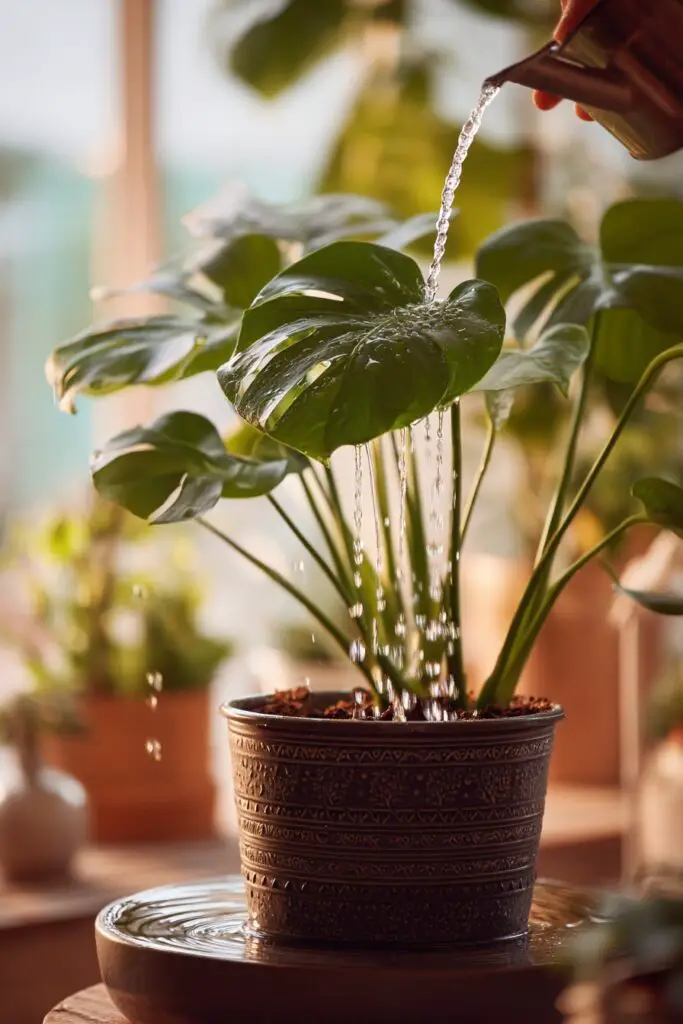
Proper watering is key to keeping your monstera leaf healthy and vibrant. While it’s a tropical plant that enjoys humidity, Monstera deliciosa prefers its roots to be moist but not soggy.
💡 When to Water
Use the finger test—stick your finger into the soil about 2 to 4 inches deep. If it feels dry at that depth, it’s time to water. Wilting or drooping leaves can also be a sign it’s thirsty, though they should perk up soon after watering.
🌱 How to Water Correctly
Always water thoroughly until you see water draining from the bottom of the pot. This ensures the entire root ball is hydrated. Try to water directly at the soil level and avoid splashing the leaves, as this can lead to leaf spots or fungal issues.
🕓 Frequency Tips
- In warmer months, water every 1–2 weeks depending on your indoor climate.
- During winter, reduce watering to every 2–3 weeks as growth slows.
Consistent overwatering is the most common cause of root rot, so when in doubt, it’s better to wait a day or two than to water too soon.
🪴 When and How to Repot
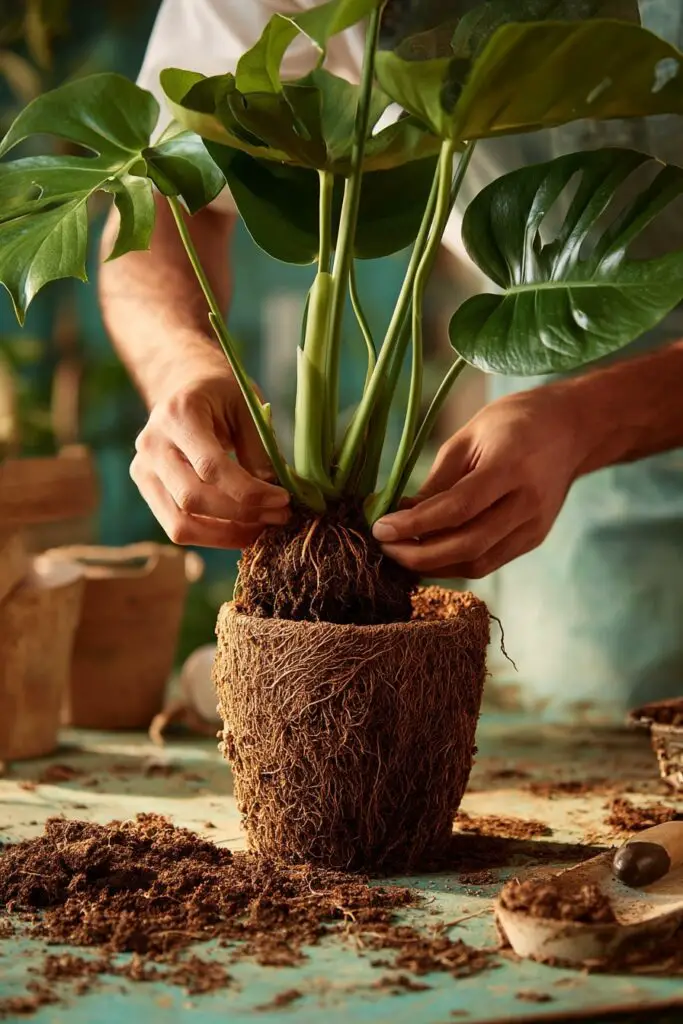
Your monstera leaf plant may start out slow, but once it settles in, it can grow quickly—often outgrowing its pot within a year or two. Repotting gives it the space it needs to develop strong roots and continue producing those iconic split leaves.
📆 How Often to Repot
Plan to repot every 2 years, or sooner if:
- Roots are growing out of the drainage holes
- The plant dries out unusually fast
- Growth has slowed despite good care
🪴 Repotting Steps
- Choose a new pot 2–4 inches wider than the current one.
- Water the plant the day before to reduce transplant shock.
- Gently remove the monstera from its pot, supporting the base.
- Loosen any circling roots and trim away any that look mushy or dead.
- Place the plant in fresh, well-draining soil at the same depth as before.
- Water thoroughly and place it in a stable, warm location with indirect light.
Repotting not only encourages growth but also gives you a chance to check the health of the roots and refresh depleted soil.
✂️ Pruning Tips for Health & Shape
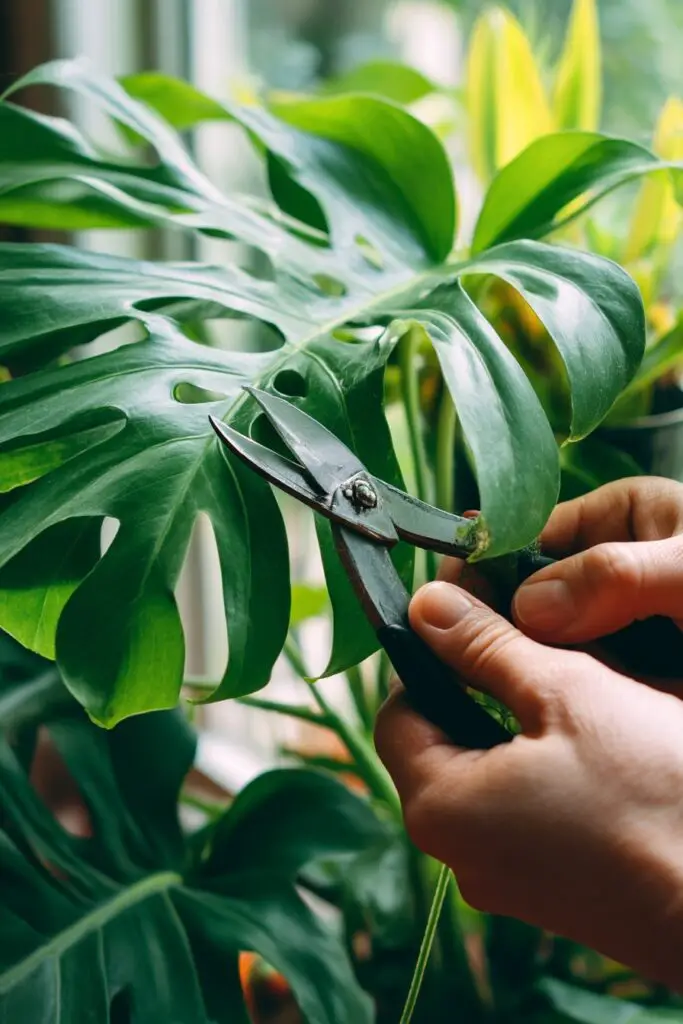
While Monstera deliciosa isn’t a high-maintenance plant, occasional pruning can help your monstera leaf grow fuller, healthier, and more manageable—especially indoors where space might be limited.
🌿 Why Prune?
- Control size in smaller rooms or containers
- Remove damaged or yellowing leaves
- Encourage side shoots and bushier growth
- Improve airflow around the plant
Pruning also helps redirect energy to newer, healthier leaves and prevents the plant from getting leggy or top-heavy.
✂️ How to Prune Properly
- Use clean, sharp scissors or garden shears.
- Cut just above a node (the joint where a leaf meets the stem) to promote new growth.
- Always remove dead, damaged, or crowded leaves first.
- For vining stems that have gotten too long, trim them back by a third.
Monstera can handle pruning well, especially during the growing season (spring and summer). You can also propagate healthy cuttings in water to grow new plants!
🌿 Fertilizing for Foliage Growth
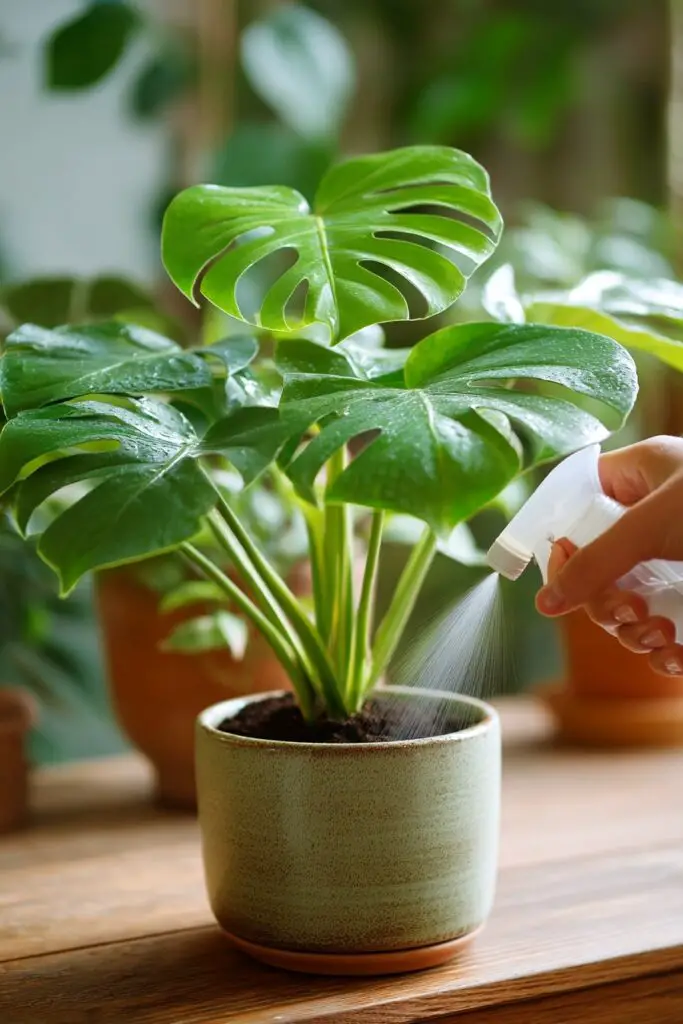
To keep your monstera leaf thriving and producing those bold, split leaves, regular feeding is essential—especially during its active growing months.
🌱 What Type of Fertilizer to Use
Monstera deliciosa benefits most from a balanced, foliage-focused fertilizer, such as a 20-20-20 or 10-10-10 formula. These numbers represent the ratio of nitrogen (leaf growth), phosphorus (roots), and potassium (overall health).
You can choose from:
- Slow-release granules (apply every few months)
- Liquid fertilizers (apply every 2–4 weeks)
- Organic options like worm castings or seaweed extract for gentle feeding
⚠️ Don’t Overdo It
Too much fertilizer can cause leaf burn or lead to salt buildup in the soil. Always follow the product label and when in doubt, err on the side of under-fertilizing. A good rule: feed during spring and summer, reduce or stop feeding in fall and winter when growth naturally slows.
With proper nutrition, your Monstera will reward you with bigger, more dramatic leaves that embody everything people love about this tropical beauty.
🌿 Conclusion
The monstera leaf is more than just a trendy interior design element—it’s a living sculpture that brings life, texture, and a touch of the tropics into any home. With just a little attention to potting, watering, and occasional pruning, Monstera deliciosa can thrive for years, growing more spectacular with time.
Whether you’re a plant enthusiast or just starting your indoor jungle, the monstera is a rewarding addition that turns any corner into a botanical statement. Respect its roots, feed it well, and it will thank you with iconic, split-leaf beauty that never goes out of style.