
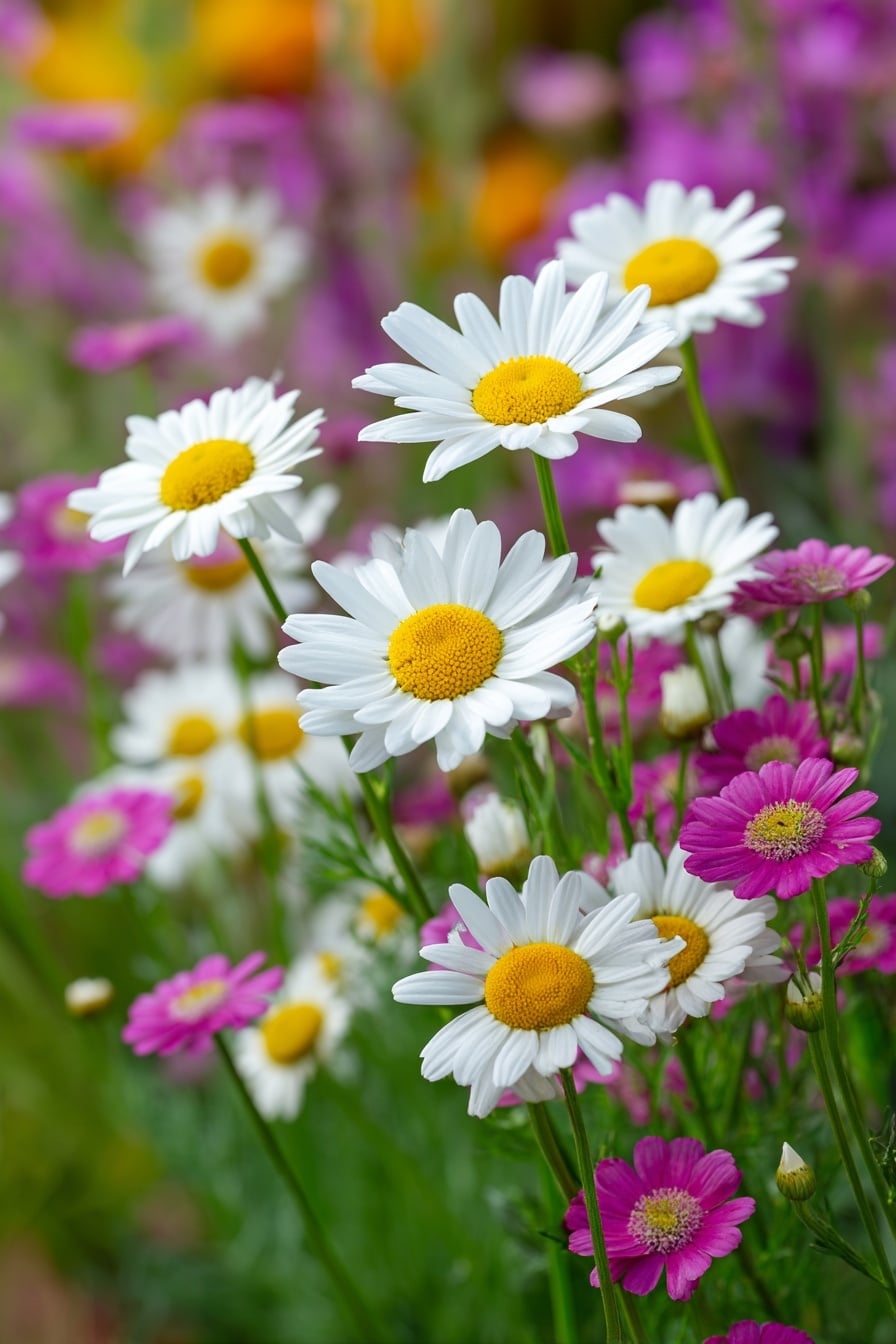
Daisy is a name that brings to mind sunny meadows, cheerful bouquets, and pure white petals with golden centers. Among the many species, the Marguerite daisy stands out for its tall, graceful stems and long-lasting blooms. It’s a timeless plant known not only for its beauty, but also for its low-maintenance nature and rich symbolism. Whether planted in garden beds or arranged in vases, this daisy variety brings a soft, natural charm to any space. In this guide, you’ll learn everything you need to know about caring for daisies—from garden planting to vase longevity.
Table of Contents
Daisy Flowers: Appearance and Blooming Season

The daisy is instantly recognizable by its clean, simple beauty. Most varieties feature crisp white petals and a bright yellow center, though you’ll also find soft pink and cream-toned cultivars. Some daisies have a classic, single-layered bloom, while others form lush, double-petal heads that resemble small sunflowers.
Marguerite daisies are known for their generous blooming season. These perennial plants typically flower from late spring through early fall, often beginning in May and continuing until October, depending on your climate. Their long flowering window makes them an excellent choice for garden borders, pollinator beds, or cheerful container arrangements.
Because the blooms hold their shape well, the daisy also makes a reliable and long-lasting cut flower—perfect for fresh summer bouquets or wildflower-inspired arrangements.
True Daisies vs Lookalike Varieties
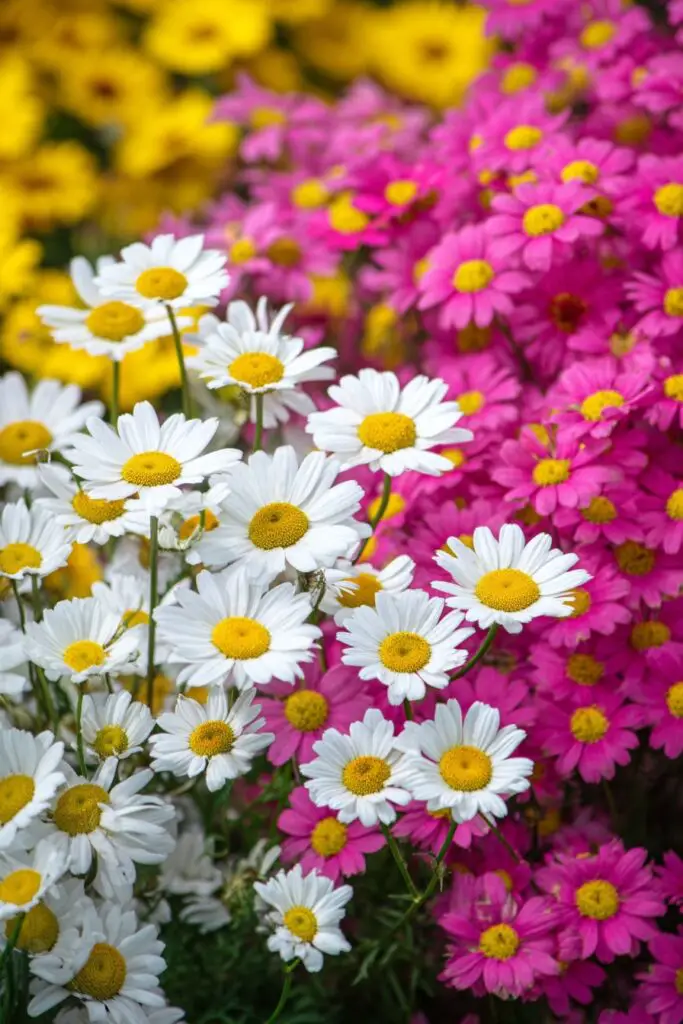
Not every flower called a daisy is technically one. The name “daisy” is often used loosely for flowers that share a similar shape—petals radiating from a central disc—but only certain species belong to the true daisy group within the Leucanthemum genus.
For example, plants like Spanish daisy and shrub daisy may look the part, but they aren’t scientifically classified as true daisies. The confusion often comes from their familiar shape and garden popularity.
In botany, there are two main types of true daisies:
- The common daisy, known for its small size and wildflower charm
- The large-flowered daisy, which offers bigger blooms and a bolder presence
If you’re looking for authentic daisy varieties to plant or gift, it’s helpful to understand which ones truly belong to the Leucanthemum family.
Common Daisy vs Large-Flowered Daisy
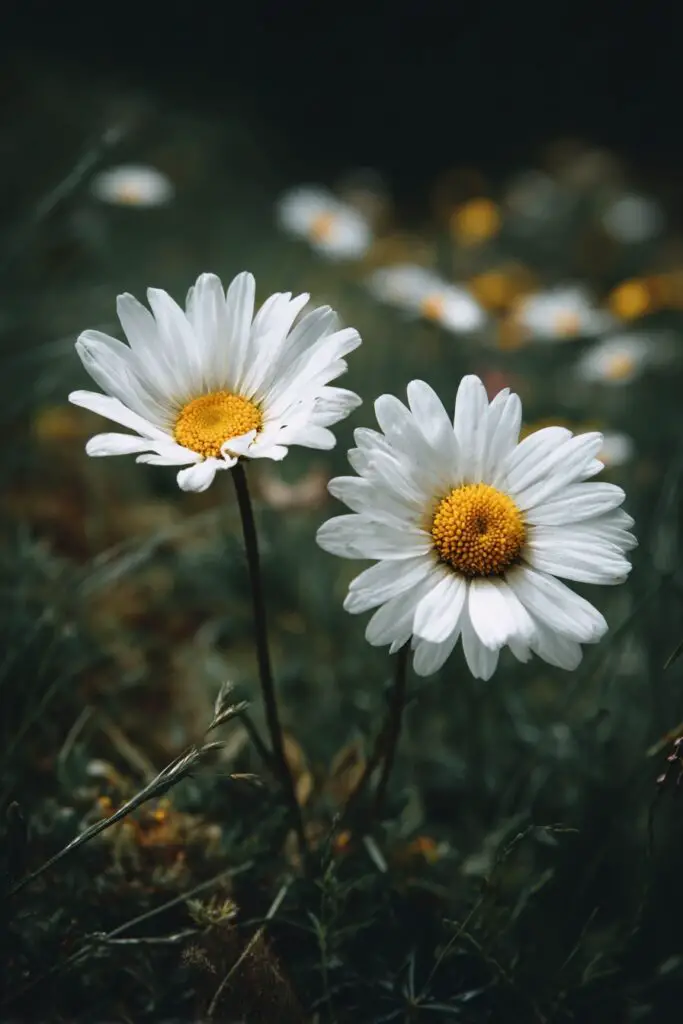
Within the world of true daisy plants, two types stand out: the common daisy (Leucanthemum vulgare) and the large-flowered daisy (Leucanthemum maximum). While they share the classic white-and-yellow look, their size and growth habits differ.
Common Daisy
Also known as wild or meadow daisy, this variety grows naturally in fields, along roadsides, and in untamed gardens. It typically reaches 40–50 cm in height and features smaller blooms. The common daisy is hardy, evergreen, and well-suited for low-maintenance planting schemes. It flowers from May to September, bringing months of simple beauty.
Large-Flowered Daisy
The large-flowered daisy is a taller, bolder perennial, often growing up to 70–80 cm. Its blooms are bigger and more striking, making it ideal for mixed flower beds or as a garden focal point. Like its smaller cousin, it thrives through the warmer months and is known for attracting bees and butterflies.
Whether you prefer the soft touch of a wild daisy or the statement blooms of a larger cultivar, both varieties offer long-lasting charm and reliable garden performance.
How to Care for Daisies as Cut Flowers
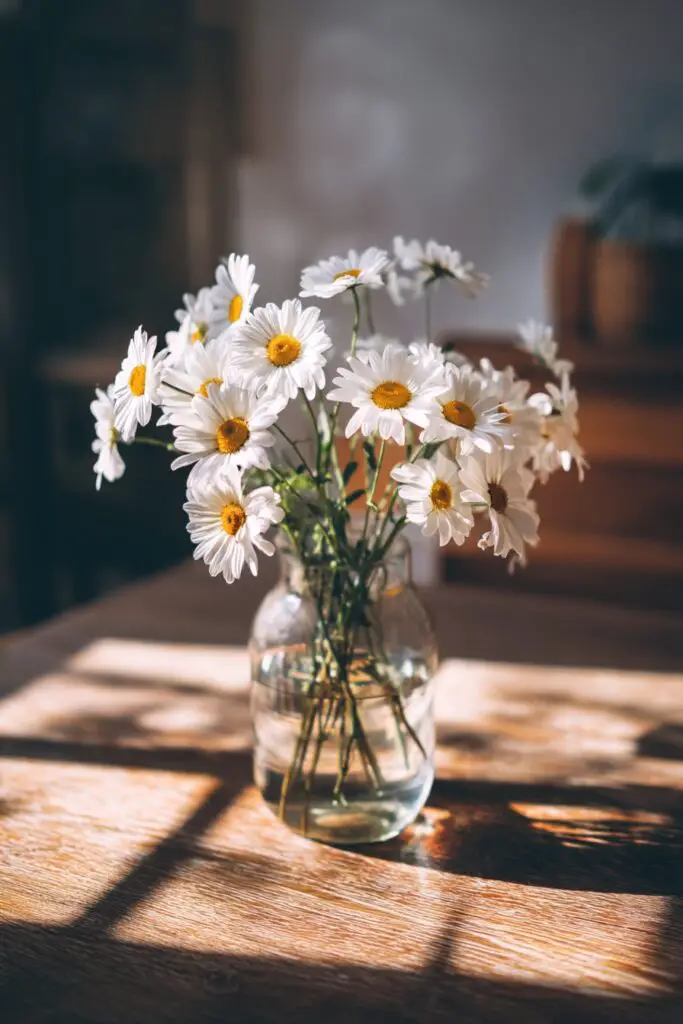
Freshly cut daisy stems bring a touch of the outdoors inside, brightening any room with their clean, sunny look. While daisies are naturally long-lasting, a few simple steps can help you get the most from your bouquet.
Cut Flower Care Tips for Daisies:
- Trim the stems at an angle with a sharp knife or clean scissors to help them absorb water better.
- Remove any lower leaves that would sit below the waterline—this prevents bacterial buildup.
- Use a clean vase and fill it with room temperature water, just a few inches deep.
- Change the water every couple of days, and clean the vase when you do.
- Add cut flower food if available to boost longevity.
- Keep the vase away from direct sunlight, heating vents, ripening fruit, and drafts—all of which shorten vase life.
With the right care, a daisy bouquet can stay fresh and cheerful for over a week, making it one of the most reliable cut flowers for spring and summer arrangements.
How to Grow and Care for Daisies in the Garden
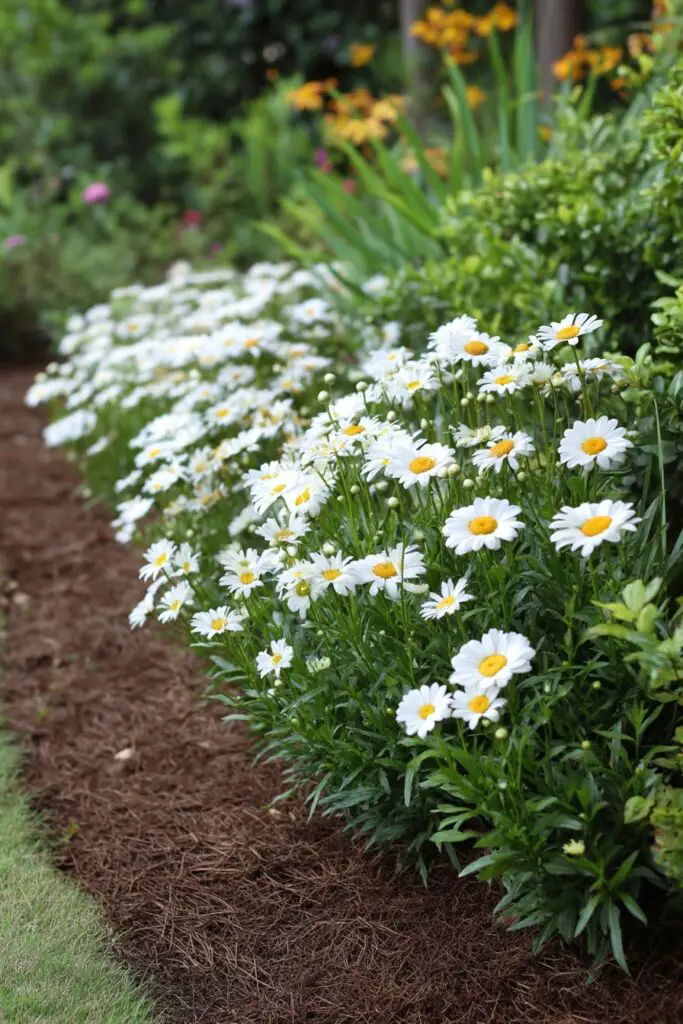
Adding daisy plants to your garden brings more than beauty—it invites pollinators, adds texture, and provides cheerful blooms all season long. Fortunately, daisies are hardy and easy to grow, making them ideal for beginner and seasoned gardeners alike.
Planting Tips:
- Best time to plant: Spring, after the last frost
- Spacing: Leave about 30 cm (12 inches) between plants to allow airflow
- Soil: Daisies tolerate a wide range of soils—clay, sandy, or loamy. They prefer well-drained, neutral to slightly acidic soil.
- Sunlight: Choose a sunny or partly shaded spot, preferably protected from strong winds.
Ongoing Care:
- Watering: Keep soil consistently moist in summer, especially during dry spells. Don’t let them dry out completely.
- Feeding: Use organic fertilizer in spring or when growth slows down.
- Mulching: Helps retain moisture and suppress weeds.
While daisy plants are hardy, they are not evergreen. In winter, the foliage dies back, but healthy roots will produce fresh growth in spring.
How and When to Prune Daisies
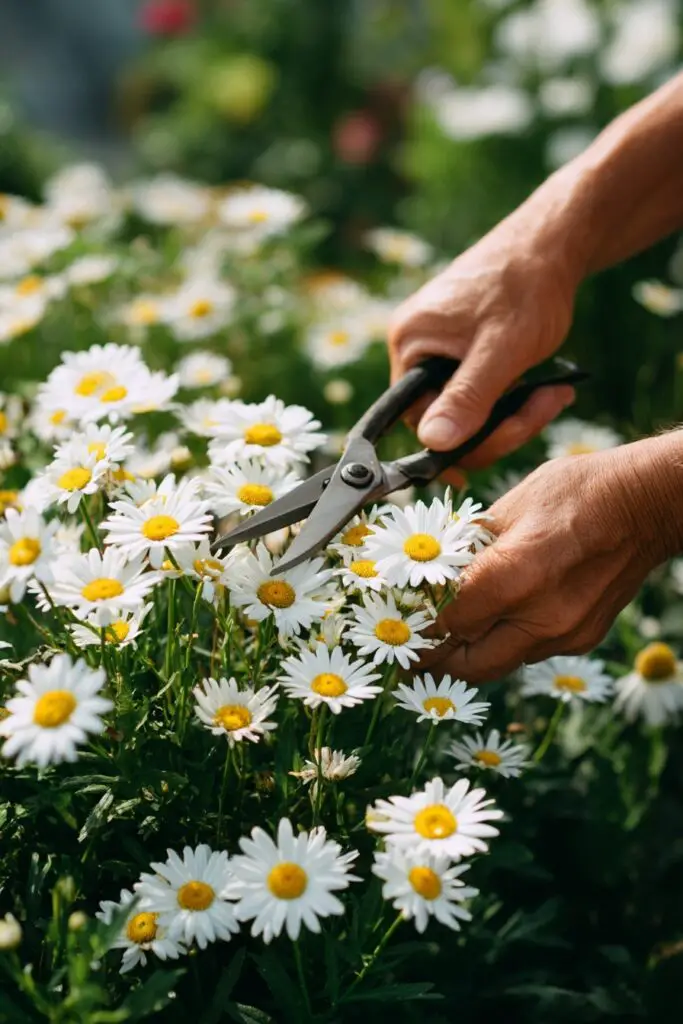
Regular pruning keeps your daisy plants healthy, full, and blooming beautifully year after year. Thankfully, pruning daisies is easy and requires minimal effort once you know when to do it.
When to Prune:
- Mid-summer: After the first wave of blooms, cut the plant back by about one-third. This encourages a second round of flowering later in the season.
- Autumn: Once the plant finishes blooming for the year and the stems begin to fade, prune it down to 10 cm (4 inches) above the ground.
Pruning Tips:
- Use clean, sharp shears to prevent disease.
- Always remove dead, damaged, or diseased stems first.
- Cut just above a leaf node to promote fuller regrowth.
- Don’t be afraid to cut back heavily in fall—your daisy will come back strong in spring.
Consistent pruning not only extends the flowering season but also keeps your plants neat and vigorous. It’s one of the easiest ways to maintain a thriving daisy patch with minimal fuss.
Daisy Meaning and Symbolism
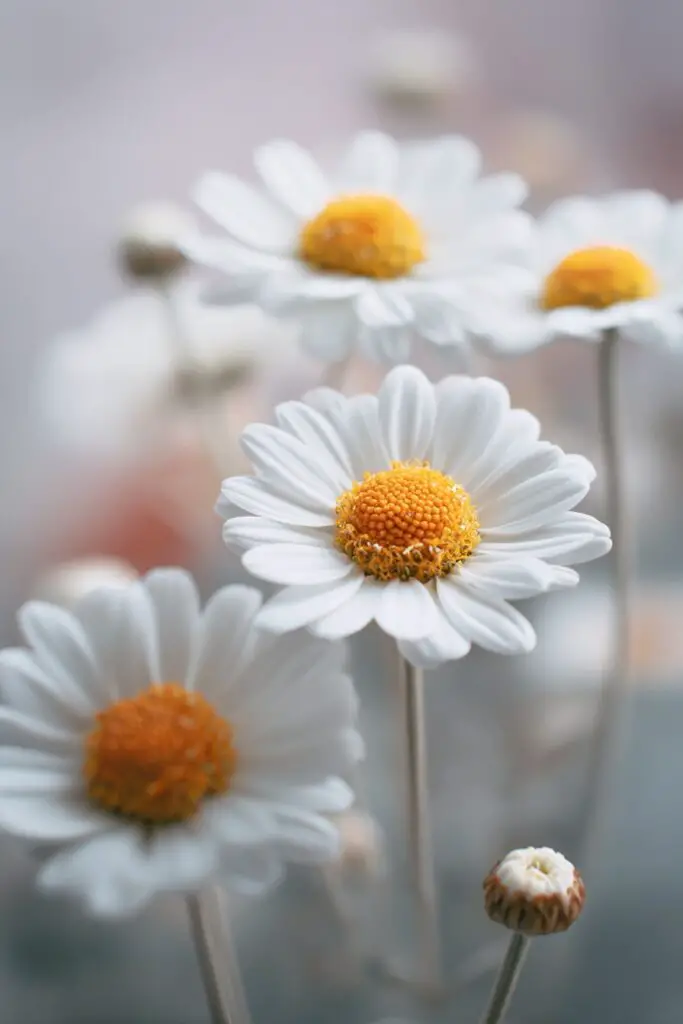
Few flowers carry as much sweet, nostalgic charm as the daisy. Its simple, sun-like shape and soft white petals have made it a symbol of purity, innocence, and love across many cultures and centuries.
You’ve probably heard the old saying: “They love me… they love me not”, whispered while plucking daisy petals one by one. This playful tradition reflects the flower’s long-standing association with romance and loyalty.
In addition to love, daisies are often linked to:
- New beginnings and fresh starts
- Childhood joy
- Hope and optimism
With their cheerful appearance and uplifting symbolism, daisy blooms are popular in bouquets meant to brighten someone’s day or celebrate meaningful milestones like births and weddings.
Whether growing in a garden or sitting in a vase, the daisy quietly conveys a message of warmth and positivity—no words needed.
Daisy Origins and Botanical History
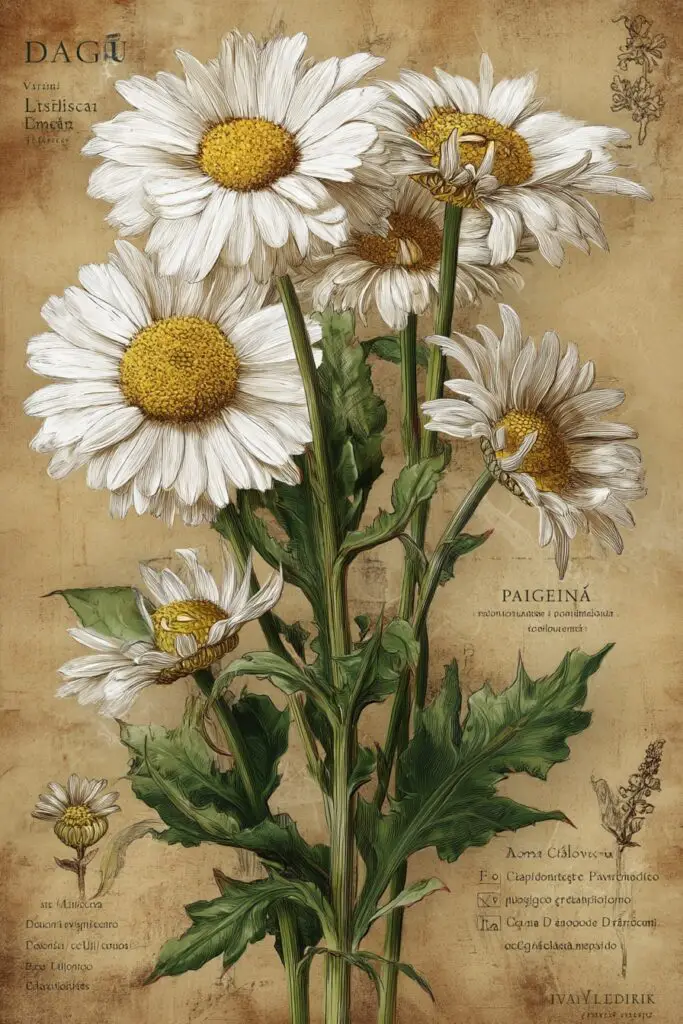
The daisy has a long and fascinating history rooted in both science and symbolism. Its name comes from the ancient Greek word “margarites”, meaning pearl, which perfectly captures the flower’s soft, white beauty. The botanical name Leucanthemum comes from “leukos” (white) and “anthemon” (flower), directly referencing the daisy’s iconic bloom.
Native to Europe, North Africa, and parts of Asia, daisies have long been admired for their simple elegance and resilience. They were widely used in ancient Greek and Roman cultures—not only for decoration but also for their supposed healing properties.
By the Middle Ages, the daisy symbolized innocence and purity, often appearing in religious imagery and folklore. In the 19th century, it became a favorite in cottage gardens and began to spread globally, eventually taking root in gardens from Australia to North America.
Today, the daisy continues to thrive as both a beloved ornamental plant and a cheerful reminder of the natural world’s quiet beauty.
Are Daisies Edible or Toxic?
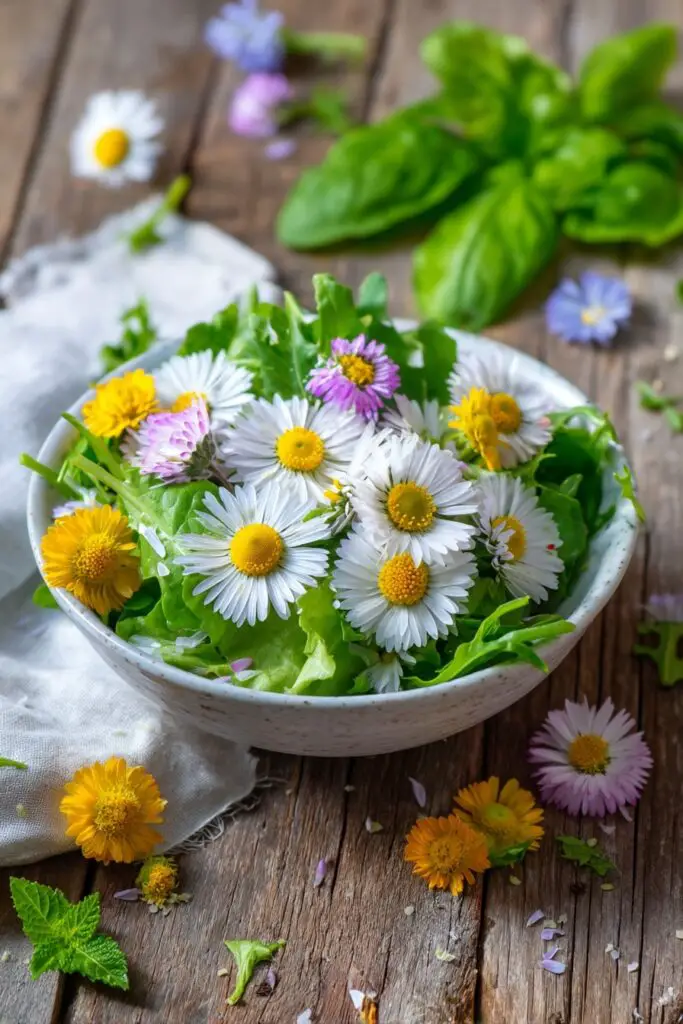
Good news for gardeners and pet owners alike: the daisy is non-toxic to both humans and animals. In fact, some parts of the plant are even edible—making it more than just a pretty face in the garden.
Edible Uses:
- Petals and young leaves can be added to salads, offering a mild, slightly bitter flavor.
- Daisy tea can be made by steeping dried petals in hot water, traditionally used for its gentle, soothing properties.
Important Note:
Only consume daisies grown specifically for culinary use or sourced from trusted edible flower suppliers. Avoid eating flowers treated with pesticides or grown in areas exposed to pollution.
While safe in small amounts, always introduce new edible flowers with caution—especially if you have allergies or sensitivities.
So whether you’re garnishing a dish or making a natural tea, the daisy adds a touch of nature’s beauty to your table—as long as it’s grown and prepared mindfully.
The Difference Between Daisy and Chamomile
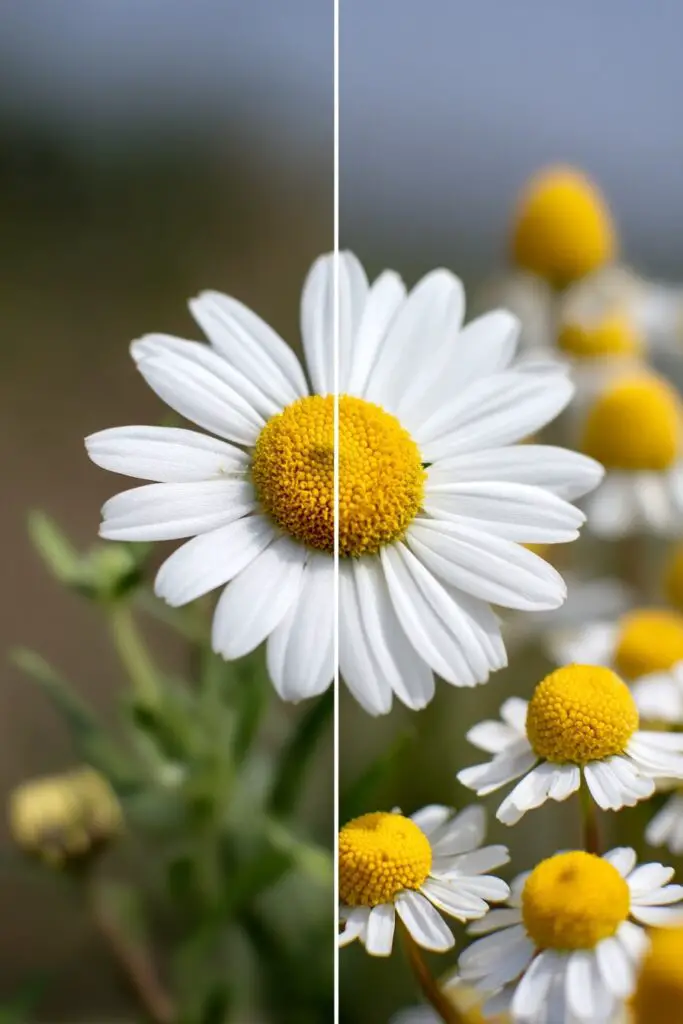
It’s easy to mistake daisy and chamomile for one another. Both have delicate white petals and yellow centers, and they often grow in similar environments. But despite their resemblance, they are different plants with distinct features.
Key Differences:
- Height: Daisies, especially Marguerite types, tend to be taller, often reaching 40–80 cm. Chamomile plants are generally more compact.
- Fragrance: Chamomile is known for its sweet, apple-like scent, while daisies are usually unscented.
- Flowers: Chamomile has a more domed, raised yellow center, while daisies typically have a flatter central disc.
- Uses: Chamomile is widely used in herbal teas and remedies, while daisies are more ornamental, though also edible in moderation.
So next time you see a patch of cheerful white blooms, look a little closer. You might be admiring a daisy—or sipping its lookalike cousin in your teacup.
🌼 Conclusion
The daisy may appear simple at first glance, but its charm runs deep—from its long flowering season to its symbolism of purity and love. Whether you’re planting it in the garden, arranging it in a vase, or even sprinkling petals on a salad, this flower brings natural joy and timeless elegance. Easy to grow, non-toxic, and incredibly versatile, the daisy is a classic that truly earns its place in any garden.