
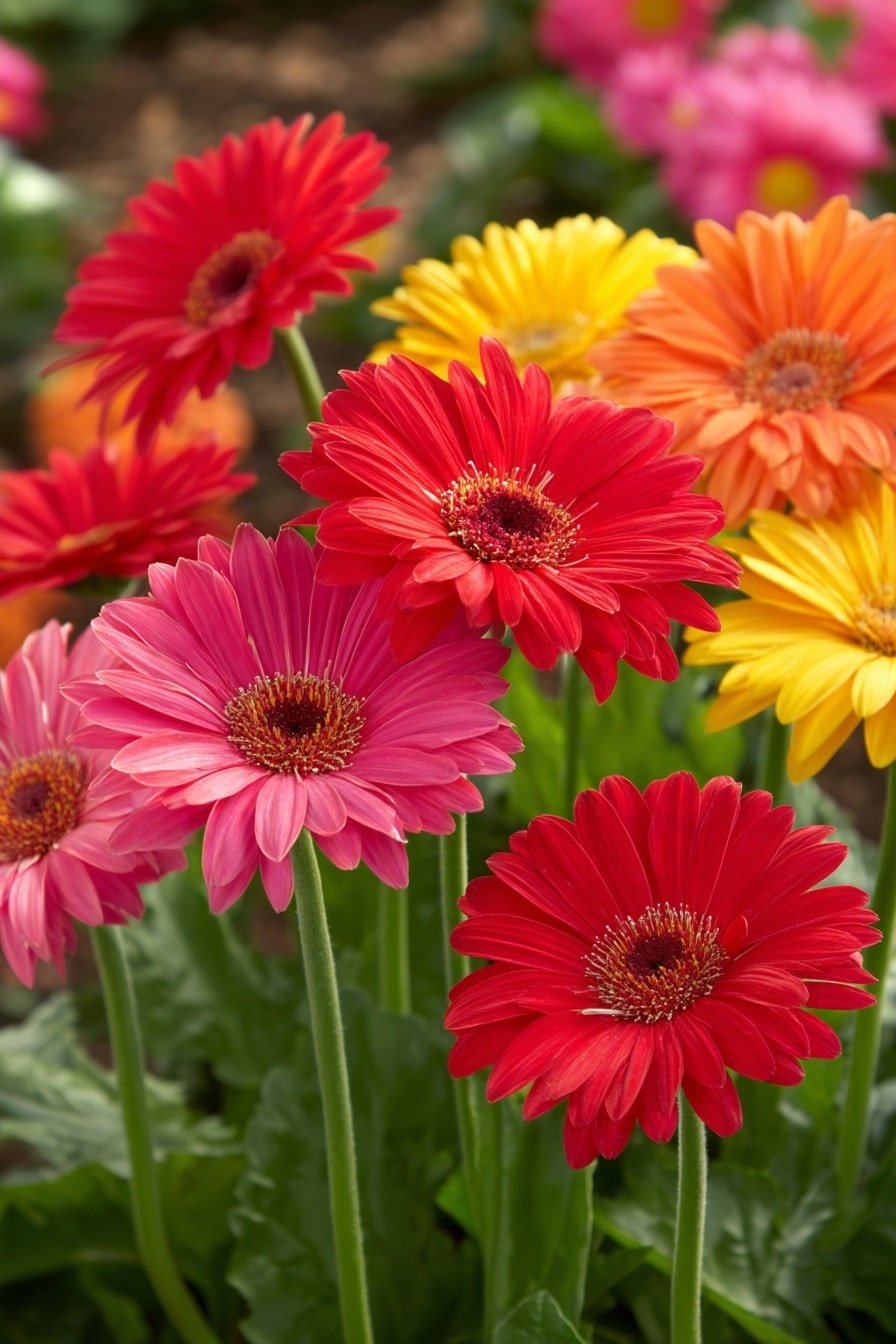
Daisies are some of the most recognizable and beloved flowers found in gardens around the world. Known for their bright centers and delicate petals, daisies symbolize purity, joy, and simplicity. With hundreds of species spread across various climates, these cheerful blooms are as versatile as they are beautiful.
From traditional white-petaled varieties to bold-colored hybrids, daisies offer something for every gardener. Whether you’re looking to attract pollinators, fill in flower borders, or create a natural meadow look, knowing the different types of daisies can help you choose the right one for your space.
This guide breaks down five common types of daisies, highlighting their key features, growing needs, and ideal uses in the garden.
Table of Contents
1. Shasta Daisy (Leucanthemum × superbum)

When most people picture daisies, they’re likely thinking of the Shasta daisy. With its classic white petals and bright yellow center, this hybrid variety is a garden staple for good reason.
Shasta daisies are hardy perennials that bloom from early summer through fall. They typically grow between 2 to 3 feet tall, forming upright clumps that work well in borders, pollinator gardens, and cutting beds. These daisies prefer full sun and well-drained soil, and they’re impressively drought-tolerant once established.
Deadheading spent blooms can encourage longer flowering. Their strong stems make them excellent for fresh arrangements, and their cheerful appearance brightens up any landscape with a timeless cottage garden feel.
If you’re seeking a low-maintenance flower with traditional charm, Shasta daisies are an excellent choice.
2. Oxeye Daisy (Leucanthemum vulgare)
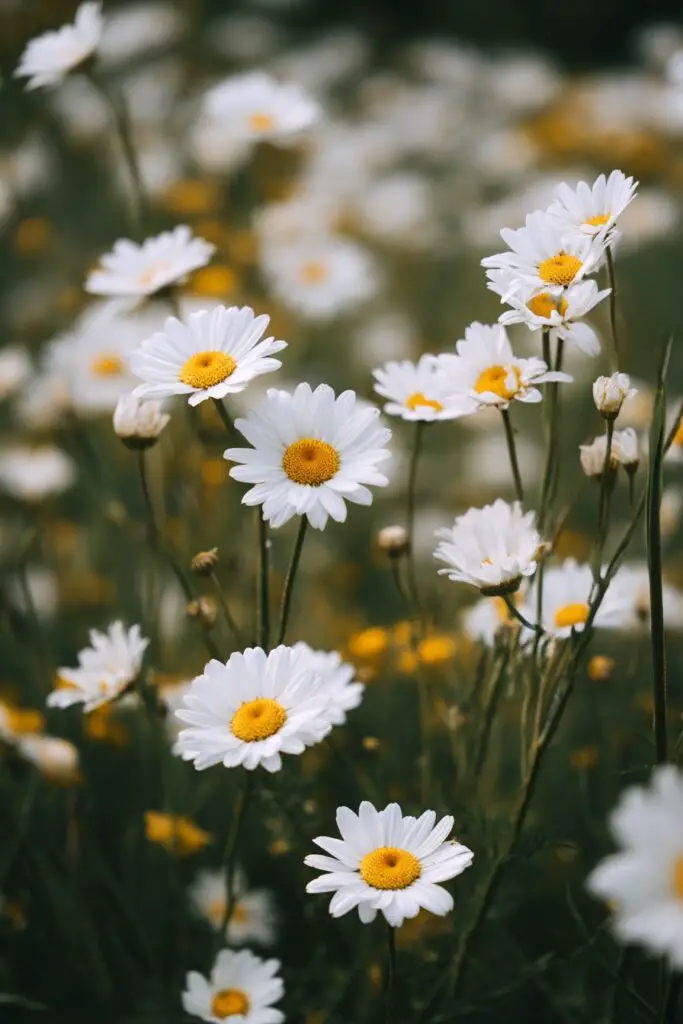
Oxeye daisies are a wildflower version of the familiar garden daisy, often seen in meadows, roadsides, and naturalized fields. Native to Europe and Asia but now widespread in North America, these cheerful blooms bring a touch of the wild to any garden.
Smaller and more delicate than Shasta daisies, Oxeye daisies grow up to 2 feet tall and produce single, white-petaled flowers with bright yellow centers from late spring into summer. They’re extremely adaptable, thriving in full sun or light shade and tolerating poor soils with ease.
While charming, it’s worth noting that Oxeye daisies can spread aggressively in some regions and may be considered invasive. Gardeners should plant them thoughtfully and manage their spread through deadheading or container growing.
For those seeking a naturalized, informal look, Oxeye daisies offer classic beauty with a free-spirited edge.
3. Gerbera Daisy (Gerbera jamesonii)
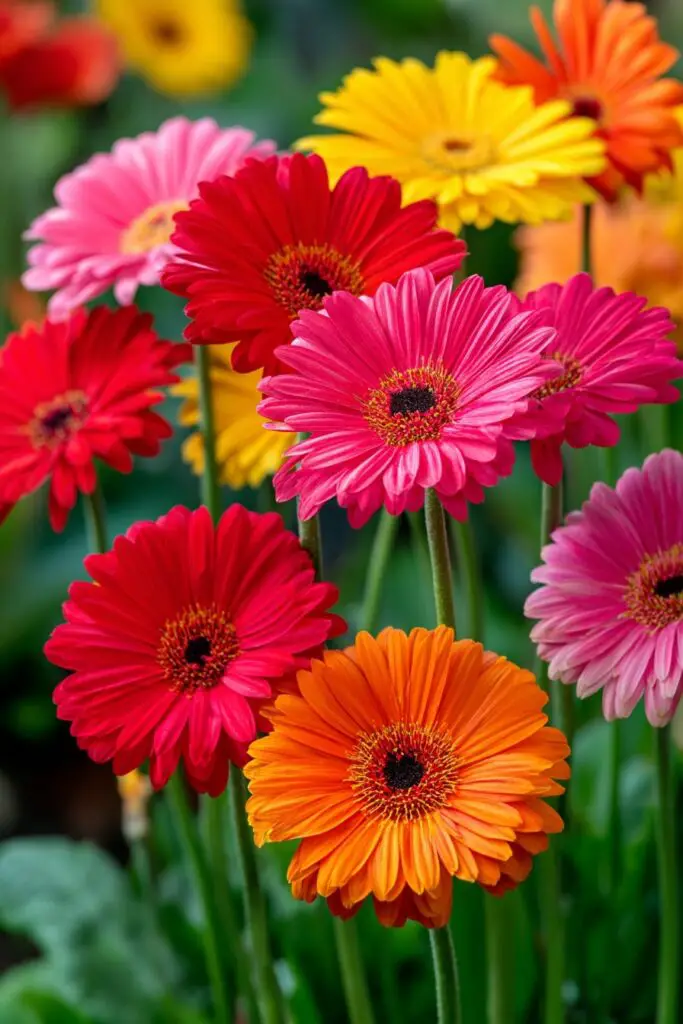
Gerbera daisies bring a bold splash of color to the garden with their large, vivid blooms and wide range of hues—red, orange, pink, yellow, and even bi-colored varieties. Unlike the traditional white-petaled daisy, these tropical natives are all about vibrant visual impact.
Native to South Africa, Gerbera daisies are typically grown as annuals in cooler climates but can be treated as perennials in USDA zones 8–11. They thrive in full sun and well-drained, slightly acidic soil. At 10 to 18 inches tall, they’re compact enough for borders, containers, or indoor pots.
These daisies are also prized as cut flowers, thanks to their sturdy stems and long vase life. While stunning, they can be a bit finicky—requiring regular watering and good airflow to prevent rot or mildew.
For gardeners looking to brighten up a space with dazzling color, Gerbera daisies are a standout choice.
4. African Daisy (Osteospermum spp.)
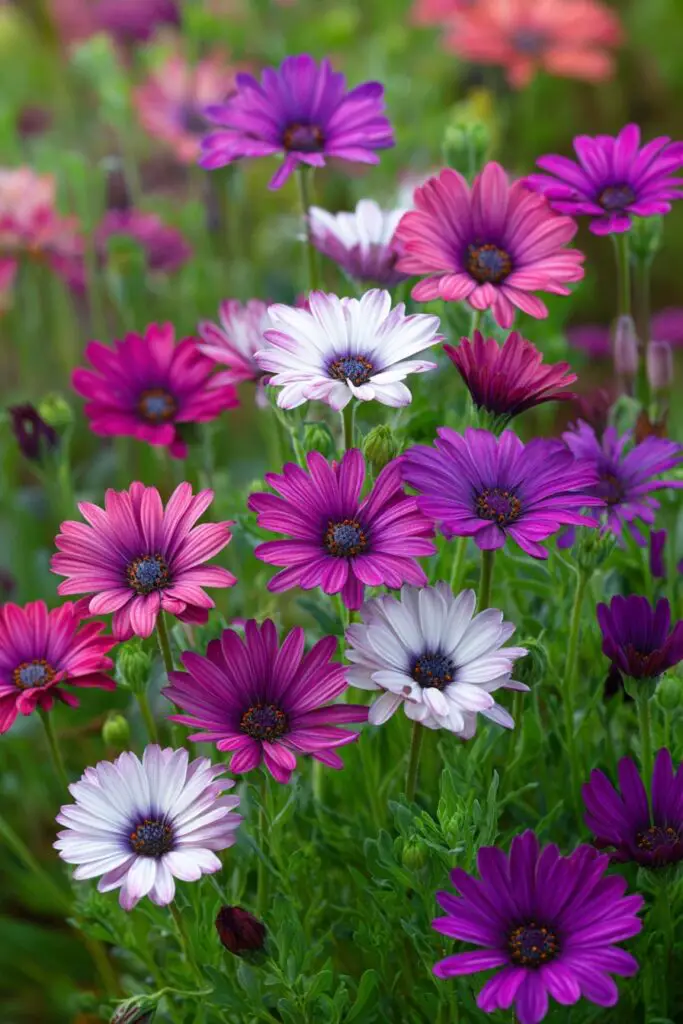
African daisies are anything but ordinary. Known for their unique, almost futuristic look, these flowers come in striking colors—purples, blues, whites, and pinks—with metallic or iridescent centers that truly catch the eye.
Native to South Africa, African daisies are grown as annuals in cooler zones but can behave as tender perennials in warmer climates (zones 9–11). They thrive in full sun and need well-draining soil to prevent root rot. Moderate watering is best; too much moisture can cause flowering to slow or stop altogether.
Unlike many other daisies, African varieties tend to close their blooms at night or on cloudy days, adding a dynamic rhythm to your garden. They’re ideal for borders, rock gardens, and container arrangements.
For gardeners who want to add an exotic flair with a low-maintenance plant, African daisies deliver color, texture, and a touch of surprise.
5. English Daisy (Bellis perennis)
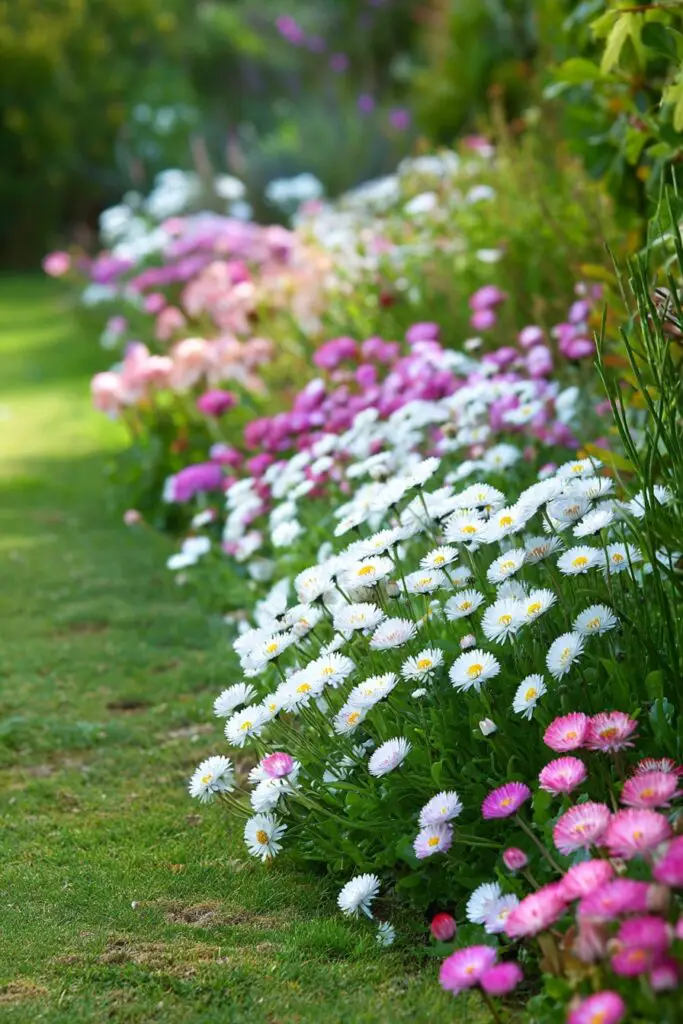
Among the most charming and classic daisies, the English daisy brings a sweet, old-fashioned feel to garden beds, borders, and lawns. With its small, button-like blooms and low-growing habit, this species is beloved for its tidy appearance and soft, rounded flowers.
Native to Europe and naturalized in many parts of North America, English daisies thrive in cooler climates and bloom profusely in spring. They come in shades of white, pink, and red, often with bright yellow centers. Growing only 4 to 6 inches tall, they’re ideal for edging paths or filling in small spaces.
These daisies prefer full sun to partial shade and moist, well-drained soil. In warm climates, they are typically grown as biennials or cool-season annuals, as they don’t tolerate heat well.
English daisies are a timeless addition to cottage gardens and traditional landscapes, offering a soft touch of color and texture wherever they’re planted.
Conclusion
Daisies are more than just a familiar face in the garden—they’re a diverse group of flowers that offer beauty, versatility, and personality in nearly every setting. From the bold Gerbera to the classic Shasta or the whimsical English daisy, each type brings something unique to your landscape.
By understanding the growing needs and visual appeal of these five common types of daisies, you can select the right variety for your climate, garden style, and personal taste. Whether you’re aiming for vibrant color, soft ground cover, or something in between, there’s a daisy that fits the bill.