
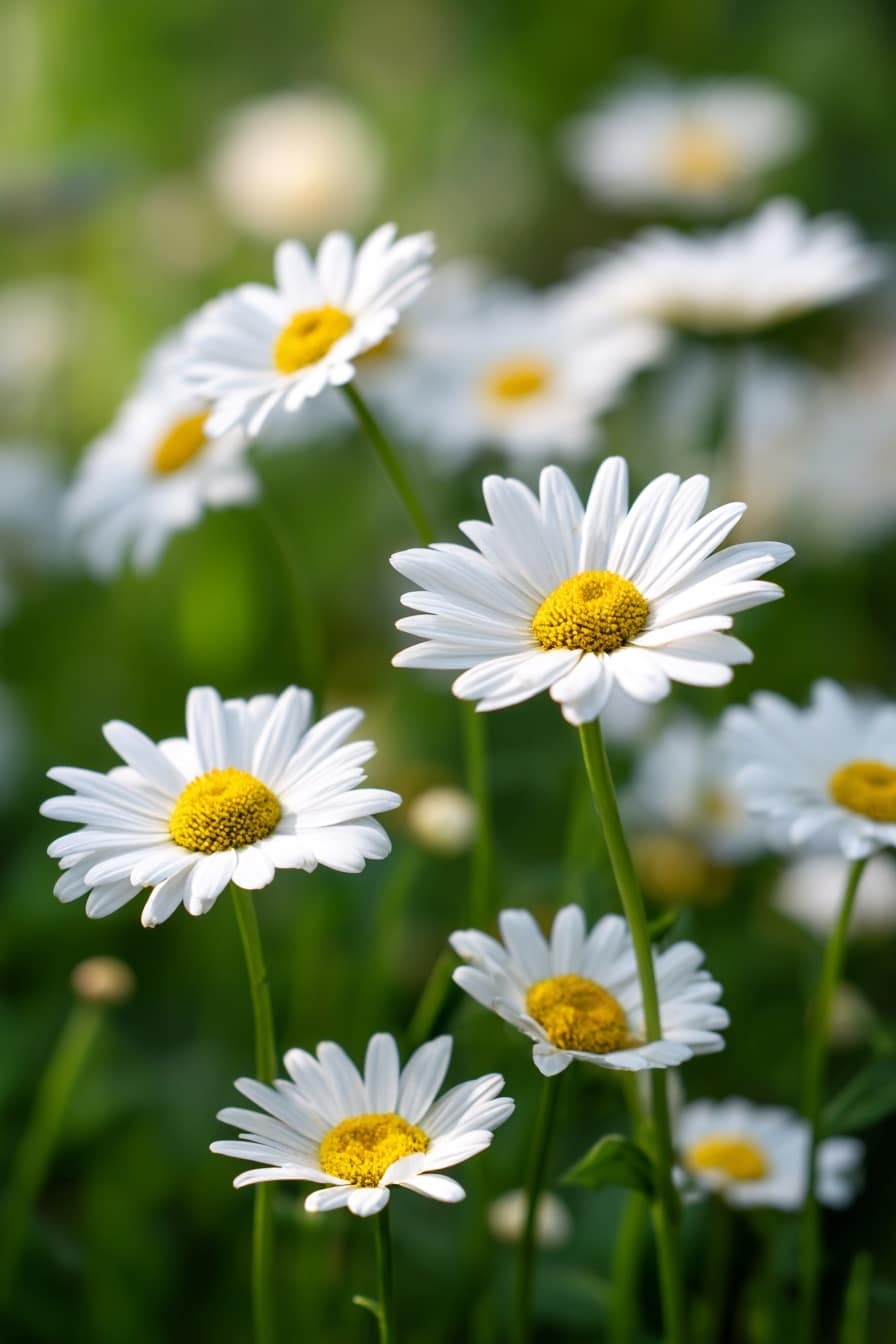
Daisy flowers have long captured hearts with their cheerful appearance and simple charm. But beyond their fresh, friendly look lies a world of deep symbolism and cultural meaning. From wedding bouquets to heartfelt gifts, daisies often speak volumes—whether or not we realize it. Their white petals and sunny centers are more than just garden favorites; they carry a rich legacy of innocence, purity, and joy. In this guide, we’ll explore everything you need to know about daisy flowers—their meanings, mythological roots, and how they’re viewed in different religions and cultures.
Table of Contents
What Daisy Flowers Represent

At the heart of every daisy flowers arrangement is a powerful message. These blooms are most commonly seen as symbols of innocence and purity, often linked to youth, first love, and fresh beginnings. That’s why they’re a favorite in wedding bouquets, baby showers, and heartfelt gifts between close friends.
Their cheerful appearance also makes them a natural symbol of positivity. Daisies bring brightness into any space—whether it’s a cozy home or a bustling office. They’re often used to represent hope, simplicity, and the beauty of everyday life.
Because daisies can grow even in less-than-ideal conditions, they also reflect quiet resilience. A single daisy pushing through a sidewalk crack becomes a powerful reminder that beauty and strength can thrive anywhere. That’s part of why these flowers are so meaningful—they carry messages of joy, perseverance, and quiet optimism.
What Daisy Flowers Symbolize in Mythology
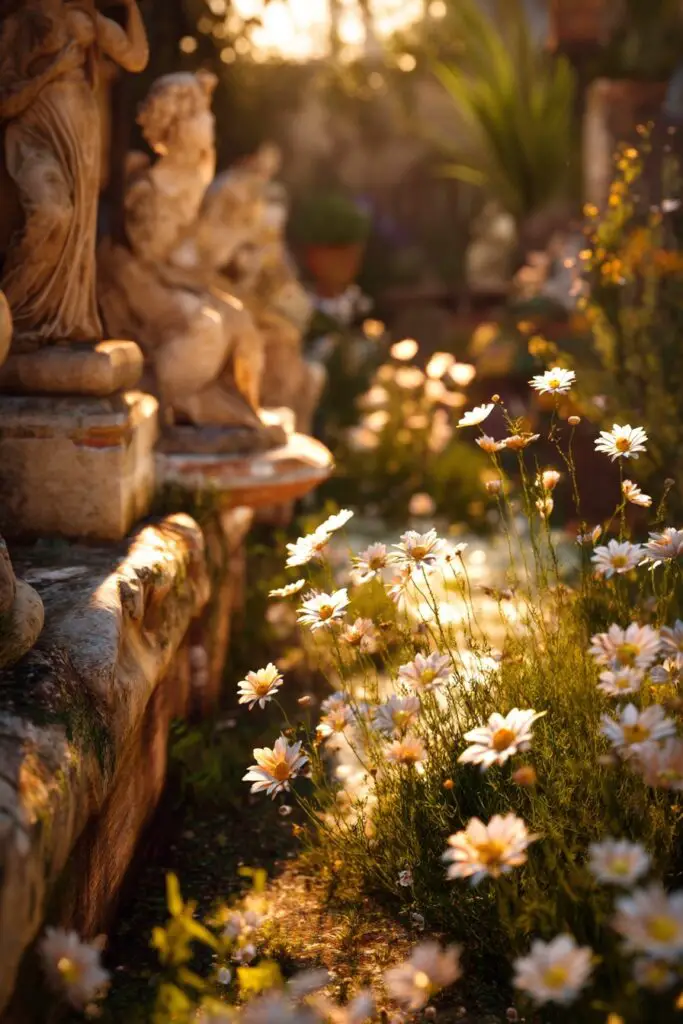
The symbolic meaning of daisy flowers stretches far beyond modern interpretations. In mythology, these humble blooms were often linked to powerful ideas of purity, transformation, and remembrance.
In Greek mythology, daisies were associated with innocence and simplicity. They were often used to represent the gentle passage of life and farewell to loved ones. This made them a comforting presence in times of loss or transition.
Roman traditions also held daisies in high regard. When combined with violets, they symbolized eternal life—a reflection of life continuing beyond death. The delicate pairing represented the blend of beauty and lasting legacy.
In modern culture, these meanings have evolved by region:
- In the United States, daisy flowers symbolize purity, innocence, and unpretentious beauty.
- In Scotland and England, they are tied to the sun, representing warmth and light.
- In Thailand, daisies express sweetness, friendliness, and a humble heart—often gifted to show goodwill or encourage better relationships.
What Daisy Flowers Symbolize in Religion
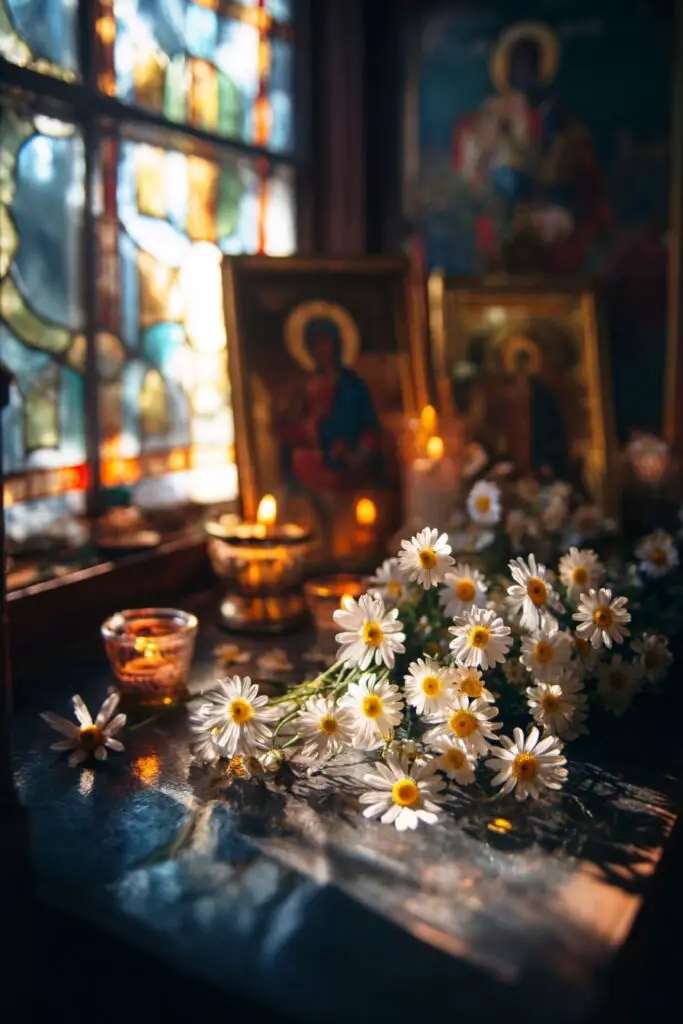
Across many spiritual traditions, daisy flowers carry powerful religious symbolism. Their pure, balanced form and short life span make them especially meaningful in contexts of faith, renewal, and moral beauty.
In Christianity, daisies are often linked to the Virgin Mary, symbolizing her modesty, purity, and innocence. They appear in religious artwork and are sometimes used in church ceremonies, particularly during spring. Daisies can also represent new beginnings and resurrection, echoing the themes of rebirth and hope after loss.
In Buddhism, the daisy takes on a different role—one of endurance and strength. Despite its delicate look, the flower represents inner resilience and the ability to thrive peacefully amid life’s challenges.
In Islamic tradition, daisy flowers are symbols of chastity, honor, and innocence. They’re often seen as representations of the spiritual purity of women and children. In some interpretations, they also reflect the idea of a new, honorable beginning.
These diverse religious meanings only add to the richness and emotional depth of daisy flowers, making them a thoughtful choice for meaningful gifts and ceremonies.
Conclusion
From ancient myths to modern celebrations, daisy flowers have remained a powerful symbol of innocence, resilience, and hope. Their simplicity is what makes them so meaningful—conveying deep emotions without the need for grand gestures. Whether gifted in a bouquet, planted in a garden, or used in religious traditions, daisies carry timeless beauty and thoughtful symbolism.
Understanding the meaning behind daisy flowers can help you choose them with greater intention—whether for a wedding, a gesture of friendship, or a symbol of renewal. These cheerful blooms do more than brighten a space; they tell a story worth sharing.