
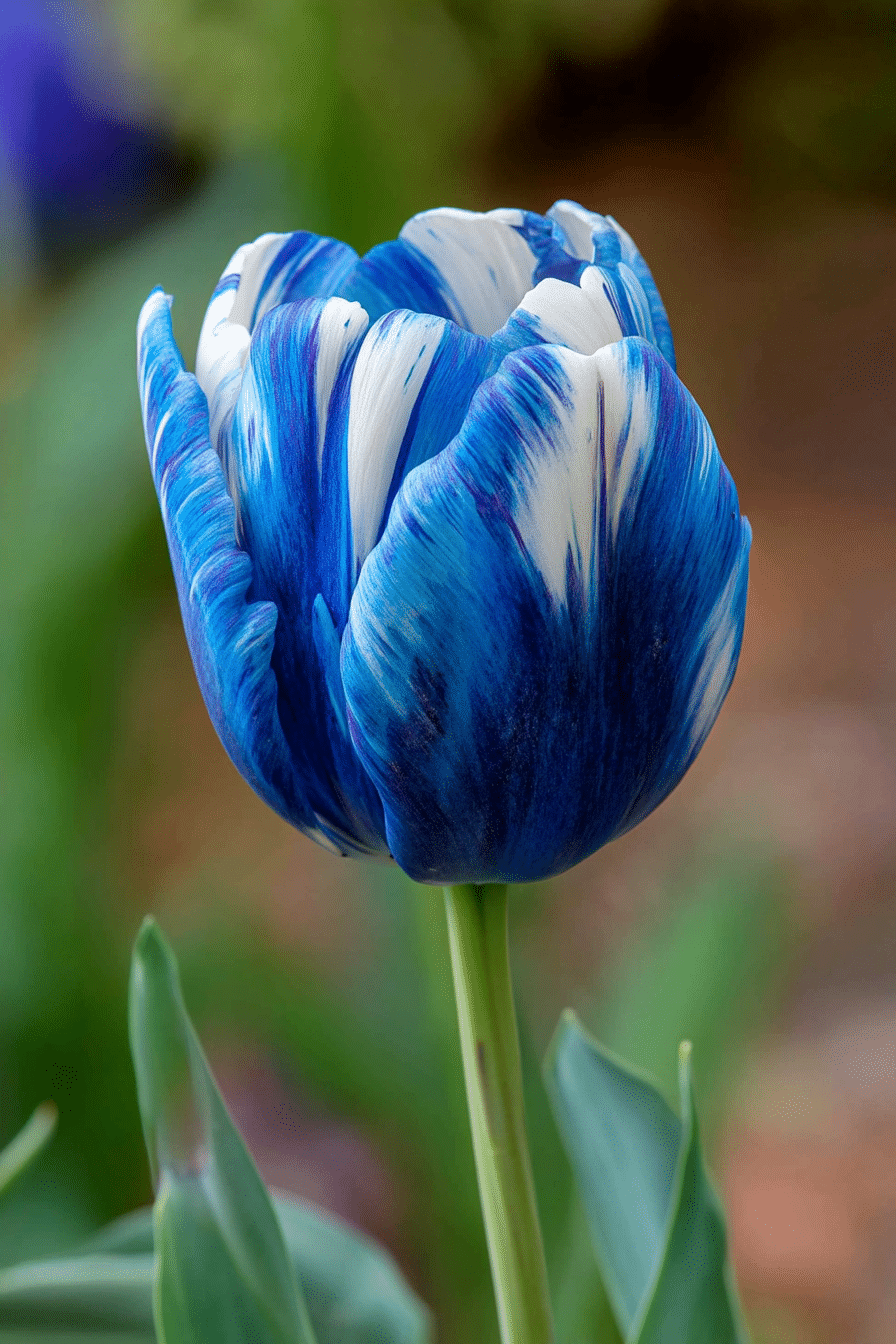
Blue tulips are often admired for their serene, almost surreal appearance. Whether seen in a bouquet, a seed catalog, or a digitally enhanced photo, these blooms tend to catch the eye with their cool-toned elegance. But do blue tulips actually grow in nature, or is the color just clever branding or artificial dye at work?
Despite the many tulip varieties with names like ‘Blue Wow’ or ‘Blue Parrot,’ a true blue tulip is something that nature has yet to produce. The chemistry behind flower pigmentation, combined with our personal perception of color, plays a big role in why these tulips aren’t what they seem. Let’s take a closer look at whether blue tulips are real, why they’re so elusive, and which varieties come closest.
Table of Contents
Are Blue Tulips Real?

The Short Answer
Although you may find tulip varieties with “blue” in their name, blue tulips do not exist naturally. The term is often used for tulips that appear blueish in certain lighting, or that lean more toward lavender, violet, or deep purple tones. Most botanists agree that true blue tulips are simply not part of the natural tulip color spectrum.
Some cut flowers or photographs may show what looks like a blue tulip, but these are typically artificially dyed or digitally enhanced to create that striking hue. So, while blue tulips are a popular concept in floristry and garden marketing, they don’t occur organically in the natural world.
The Long Answer
The reason why blue tulips don’t appear in nature lies in plant chemistry. The pigment responsible for blue coloration in flowers is known as anthocyanin, which usually produces red, purple, or violet tones. For a flower to appear blue, certain chemical conditions—such as pH levels, co-pigments, and metal ions—must align perfectly.
Some flowers like hydrangeas, morning glories, and delphiniums are able to produce blue hues because their genetics and growing conditions support that transformation. Tulips, however, lack the required combination of factors to trigger this change. That’s why, despite centuries of hybridization, no tulip has ever achieved a true blue bloom through natural means.
Color Perception and the Illusion of Blue
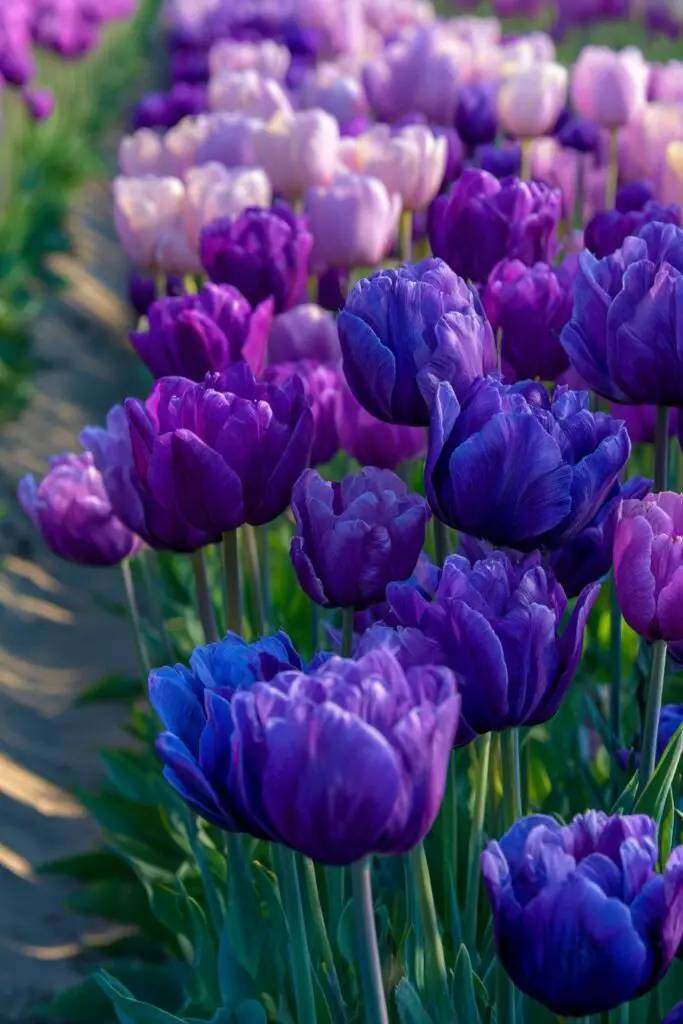
The debate over blue tulips isn’t just about botany—it’s also about how we see and interpret color. Human eyes perceive color through cone cells that respond to different wavelengths of light. But not all eyes are created equal. What one person sees as blue, another may describe as violet or purple.
This variation makes defining a “true blue” flower difficult. Even trained botanists rely on standardized tools like the Royal Horticultural Society Color Chart, which includes over 900 flower color classifications. Still, your idea of “blue” might not align perfectly with what’s been officially labeled.
Many tulips labeled as blue fall into this gray area. They may reflect certain wavelengths under bright sunlight or against a particular backdrop that tricks the eye into seeing blue. But in reality, most of these tulips are purple or lavender toned, enhanced by marketing or garden context.
So when you see a photo or plant tag claiming “blue tulip,” it might just be an illusion—one shaped as much by light, camera filters, and perception as by petal pigment.
Why Are Tulips Marketed as Blue?
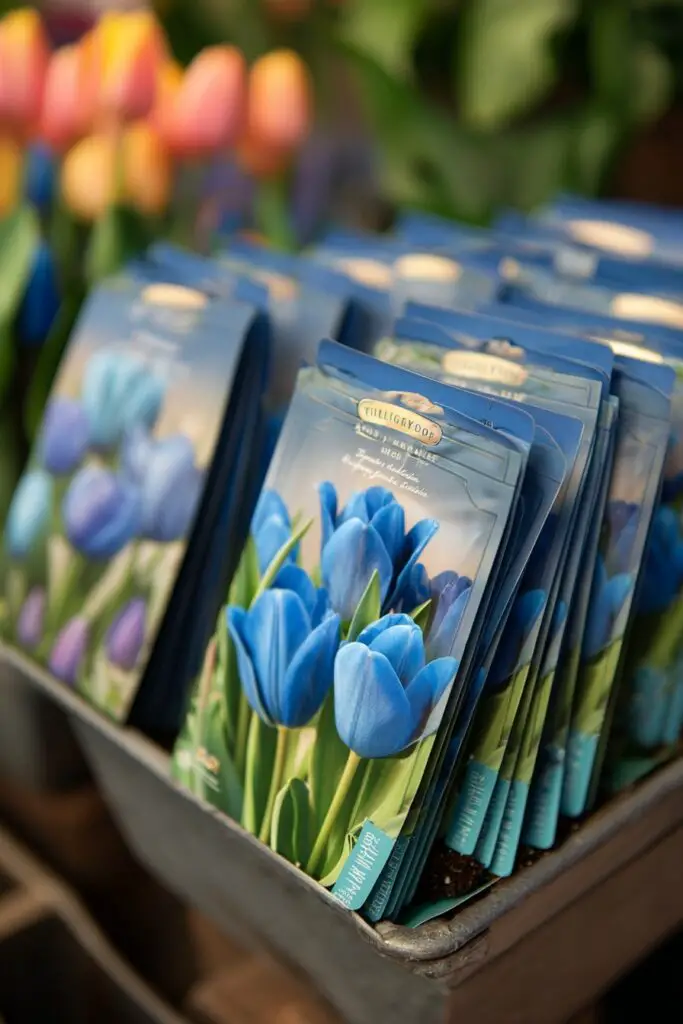
The allure of blue tulips is powerful. Blue is one of the rarest flower colors found in nature, and gardeners often seek it out to add cool-toned contrast and visual calm to their plantings. Tulip breeders and sellers understand this demand—and sometimes stretch the truth to meet it.
That’s why many tulip cultivars include “blue” in their names, even if the blooms are actually shades of violet, lavender, or plum. Names like Blue Diamond or Blue Wow sound more desirable and exotic, even if the flower doesn’t qualify as truly blue by botanical standards.
This kind of labeling isn’t necessarily deceptive—it’s more about creative interpretation. Because color naming in horticulture isn’t strictly regulated, there’s room for subjective naming. And since our perception of color is so individual, the word “blue” can feel justified even when the petals lean purple.
At the end of the day, it’s marketing—and it works. Gardeners intrigued by the idea of blue tulips often purchase these near-blue varieties, knowing they offer a unique hue that’s hard to find elsewhere in the spring garden.
Tulip Varieties That Appear Blue
🌷 Tulipa ‘Blue Wow’
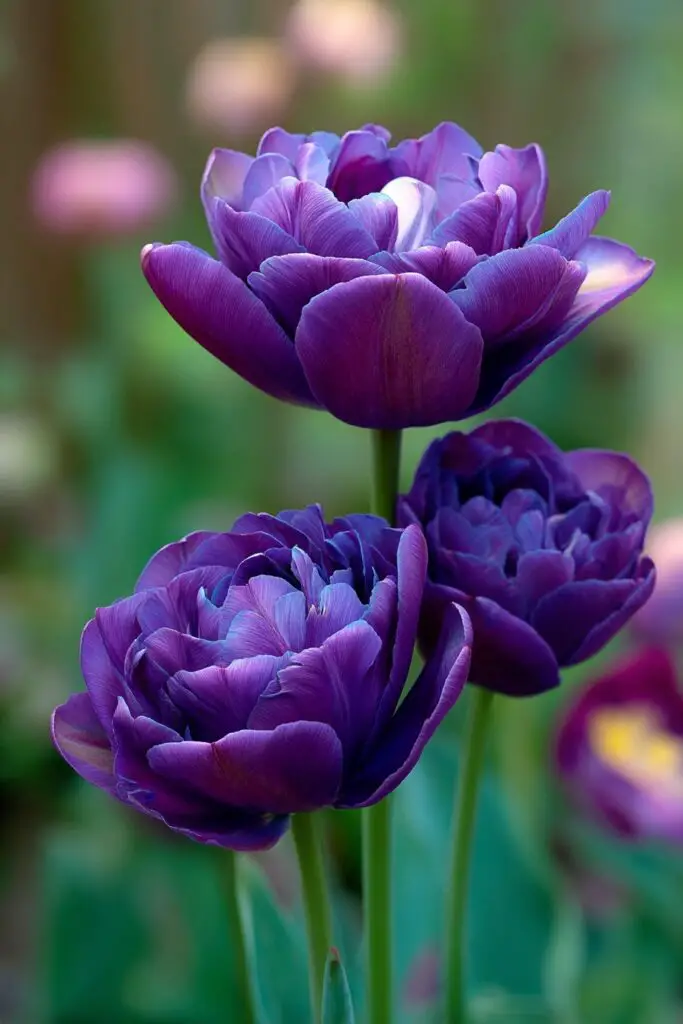
Despite its name, ‘Blue Wow’ is more of a deep grape or rich violet hue. This tulip features densely layered, artichoke-like blooms that deepen in color as they mature. Under full sun, its cool undertones can give off a slightly bluish impression—especially in photographs or shaded gardens.
- Bloom Time: Mid to late spring
- Height: 18–24 inches
- Best Use: Focal point in sunny beds or large containers
🌷 Tulipa ‘Blue Beauty’
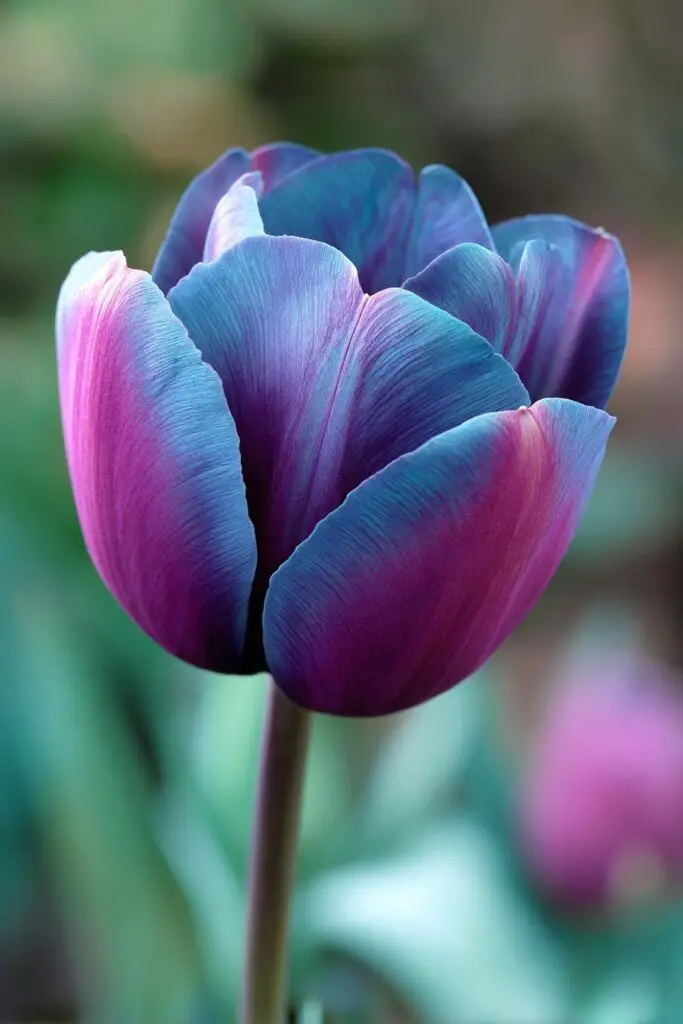
‘Blue Beauty’ is a Triumph tulip that begins with deep rose-colored petals. In bright light, these petals reflect bluish highlights, especially when seen from a distance. While the base color leans purple, its satin finish can trick the eye into seeing a blue tint.
- Bloom Time: Mid-spring
- Height: 16–18 inches
- Best Use: Mid-border planting or cut flower arrangements
🌷 Tulipa ‘Blue Aimable’
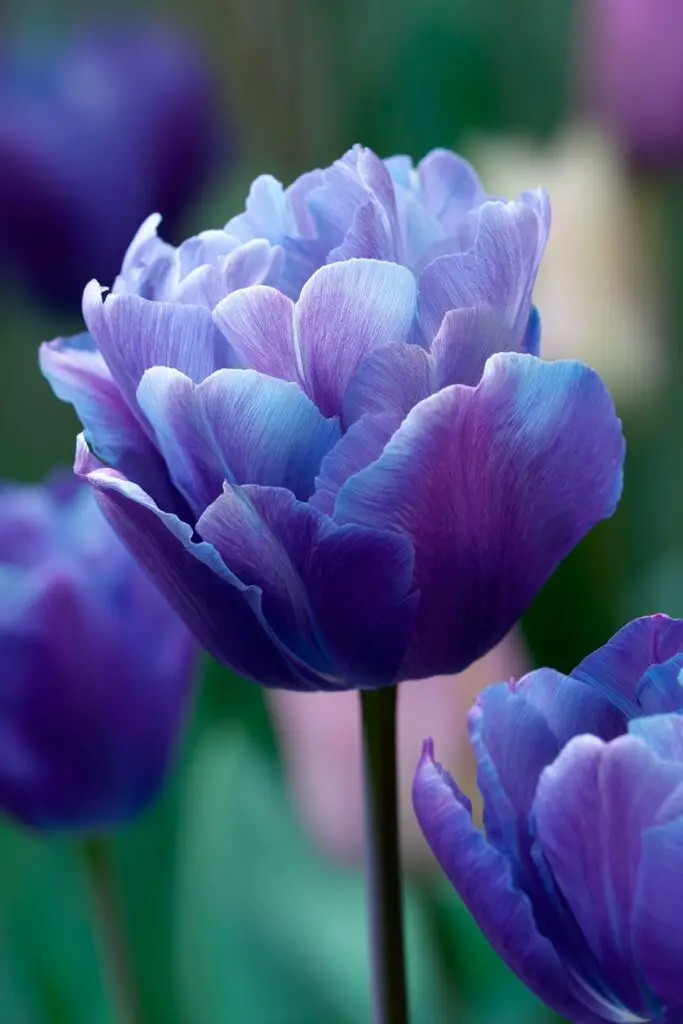
A long-stemmed Single Late variety, ‘Blue Aimable’ is known for its lavender-violet petals that sometimes resemble cornflower blue in specific light. This tulip is a favorite among those looking for cooler tones that blend well with pastels.
- Bloom Time: Mid to late spring
- Height: 22–24 inches
- Best Use: Cut flowers, soft pastel-themed borders
🌷 Tulipa ‘Blue Diamond’
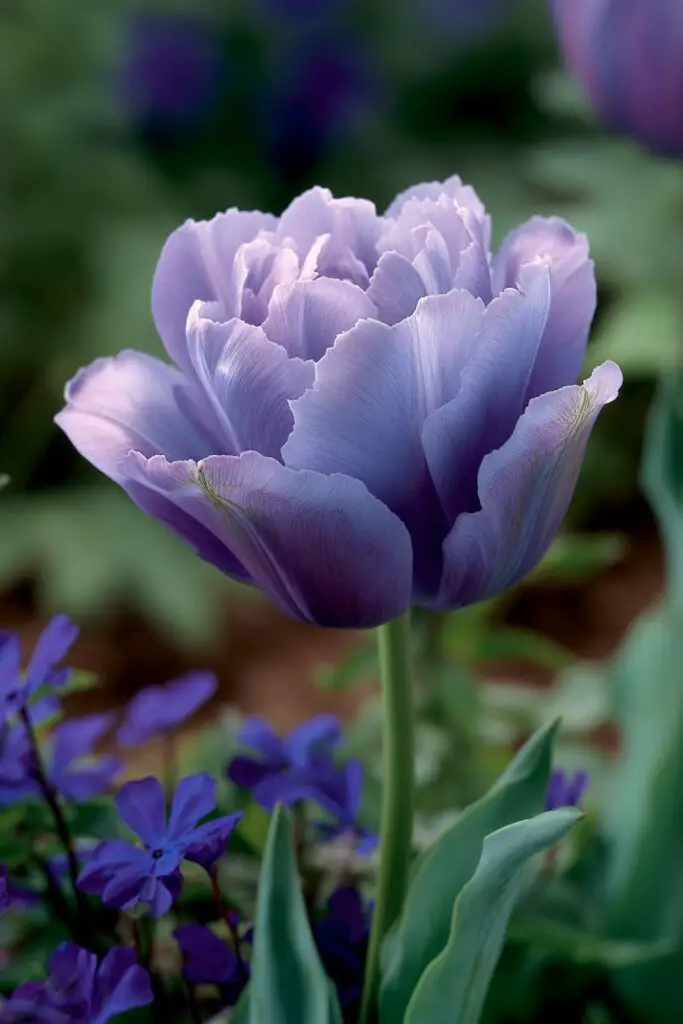
This peony-form tulip has large lilac-colored blooms that may display faint blue tones, especially when planted alongside complementary blue-toned companions like pansies or creeping phlox. White feathered edges also enhance its cool appearance.
- Bloom Time: Mid to late spring
- Height: 16–20 inches
- Best Use: Mass plantings or mixed-color spring beds
🌷 Tulipa ‘Blue Parrot’
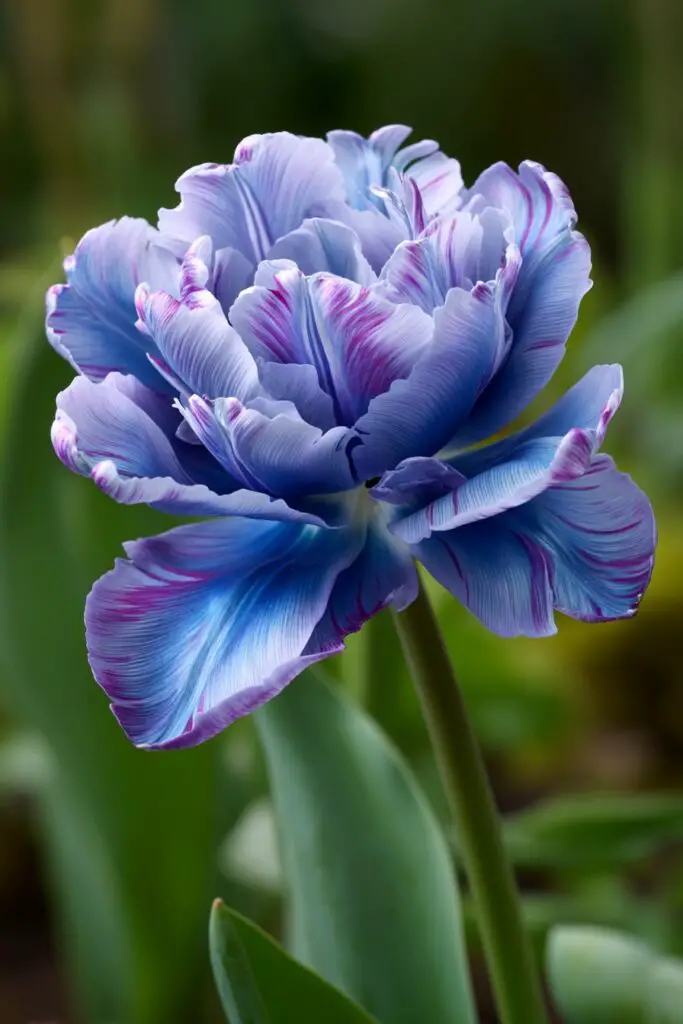
‘Blue Parrot’ is a bold and ruffled Parrot group tulip. It features lilac petals with streaks of cornflower blue, especially on the outer petals. Though not a perfect blue, it has a dramatic, airy presence in the garden.
- Bloom Time: Late spring
- Height: 16–24 inches
- Best Use: Accent plant in protected beds (sensitive to wind and rain)
🌷 Tulipa ‘Cummins’
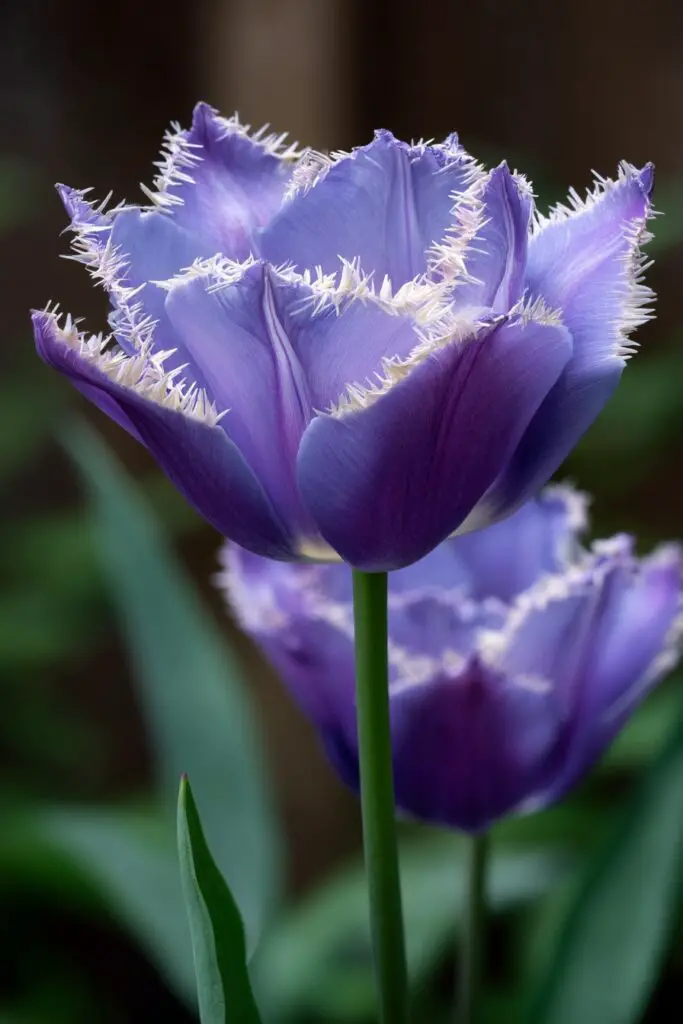
From the Fringed tulip group, ‘Cummins’ blends royal lavender-blue tones with fringed white petal edges. In full sun, the petals can take on a blue sheen. Its unique form and vibrant color make it popular in both formal beds and fresh bouquets.
- Bloom Time: Mid to late spring
- Height: 18–20 inches
- Best Use: Massed plantings or decorative containers
🌷 Tulipa ‘Blueberry Ripple’
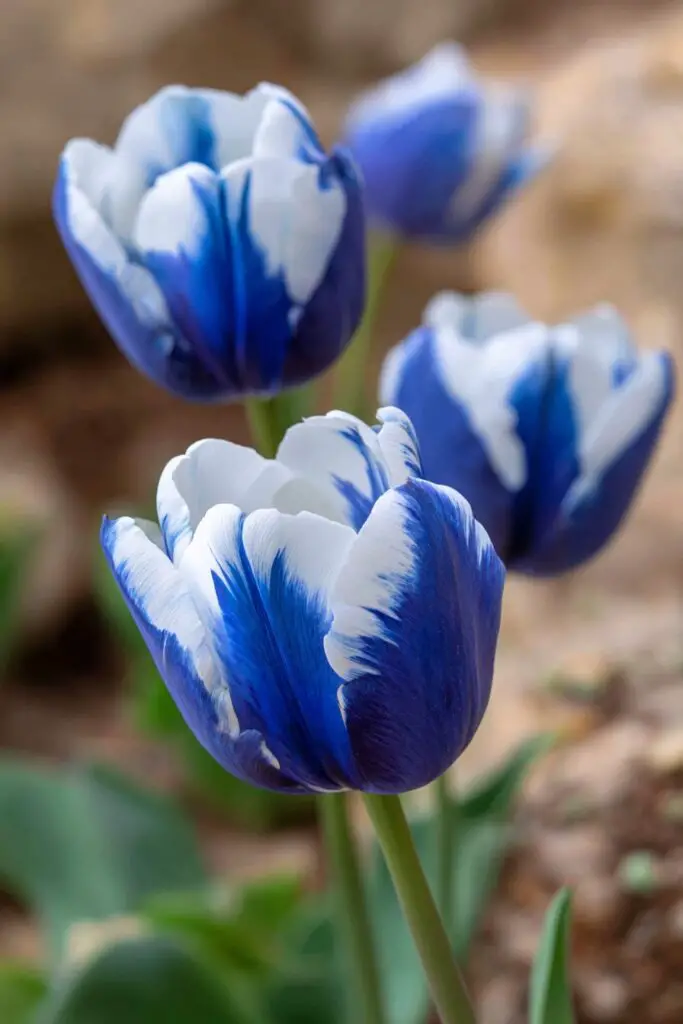
A striking bi-color tulip, ‘Blueberry Ripple’ has deep cobalt and burgundy streaks across white petals. Its bold contrast creates the illusion of blue, especially when viewed up close. A light fragrance makes it even more appealing.
- Bloom Time: Late spring
- Height: 16–20 inches
- Best Use: Walkways, porch planters, or indoor forcing
Conclusion: The Truth About Blue Tulips
Blue tulips have captured the imagination of gardeners for generations. Their calm, cool tone offers a visual escape from the warmer reds and yellows typical of spring blooms. But the truth remains: there are no truly blue tulips in nature. What we often call “blue” is typically a shade of violet, lavender, or even digitally enhanced or dyed.
Still, that doesn’t mean you have to give up on the dream. Many tulip varieties—like Blue Aimable or Blueberry Ripple—come close enough to satisfy the desire for blue in the garden. With careful placement and lighting, these blooms can give off just the right cool-toned impression.
Until plant breeders unlock the secret to true blue tulip pigmentation, these near-blue varieties remain the next best thing. And in the end, their beauty speaks for itself—even if the color is more of a suggestion than a reality.