
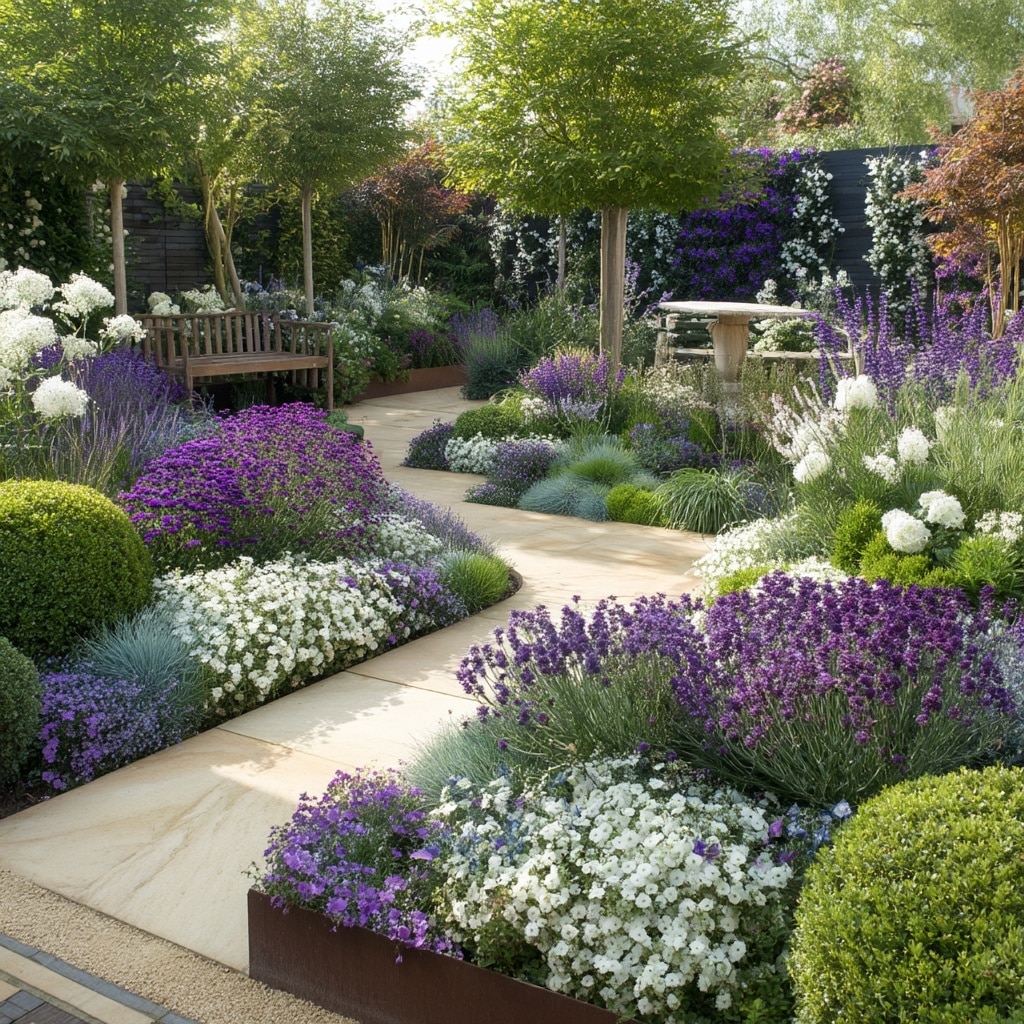
Purple flowers bring a touch of elegance, mystery, and royalty to any garden. Their striking hues—ranging from soft lavender to deep violet—offer more than just visual appeal. These blooms attract pollinators like bees and butterflies, boost biodiversity, and provide year-round colour in a wide range of climates. Whether you’re building a low-maintenance garden, designing a colorful border, or looking for resilient plants with personality, purple flowers are a versatile and beautiful choice. In this guide, we’ll explore ten stunning plants that feature purple blooms and offer tips to help you grow them successfully.
Table of Contents
Table of Contents
1. Allium (Ornamental Onion)

Allium is a standout among purple flowers, loved for its globe-shaped blooms that resemble bursts of fireworks. These tall, striking plants belong to the onion family but offer an ornamental twist.
- Bloom type: Ball-shaped clusters of starry purple flowers
- Height: 2 to 4 feet, depending on variety
- Sunlight: Full sun
- Soil: Well-drained, sandy or loamy soil
Why grow it?
Allium adds height and texture to garden beds. It’s drought-tolerant, pest-resistant, and a pollinator favorite. Plant bulbs in autumn for spring to early summer blooms.
2. Alpine Betony (Stachys monieri)
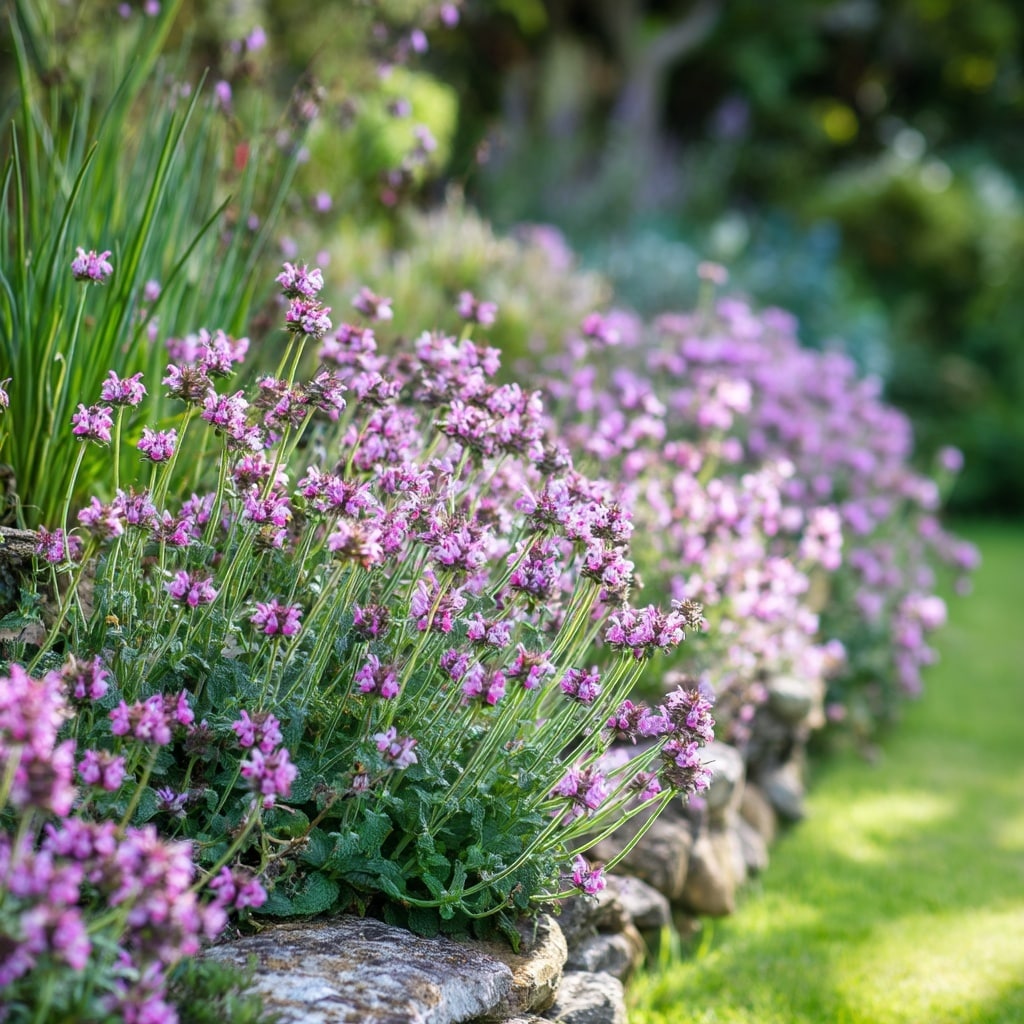
Alpine Betony is a reliable perennial that produces compact spikes of warm pink-purple flowers from spring to autumn. It’s perfect for borders or containers, bringing structure and colour.
- Bloom season: Late spring through early fall
- Height: 18–24 inches
- Light: Full sun to partial shade
- Maintenance: Low; occasional watering and summer feeding
Bonus: It’s deer-resistant and beloved by bees—but ignored by rabbits. The textured foliage also adds charm when not in bloom.
3. Purple Anemone (Anemone coronaria)
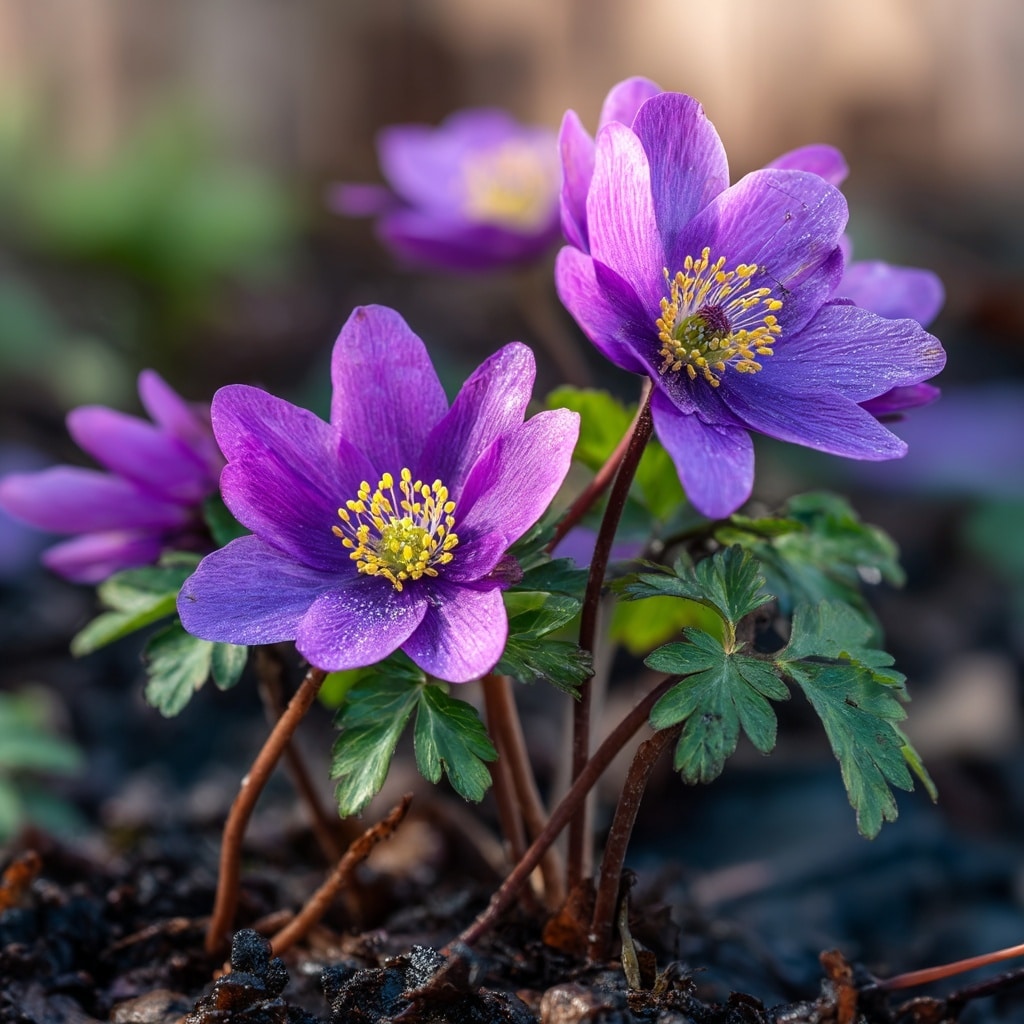
If you love soft, romantic purple flowers, Purple Anemones are a perfect pick. Their silky petals come in shades of lilac and violet, blooming in early spring before many other plants awaken.
- Ideal conditions: Partial to full shade
- Soil: Rich, slightly acidic soil
- Size: Up to 12 inches tall
- Bloom time: Spring
Note: They can be slow to establish and are sensitive to transplanting, so patience is key. Add compost in autumn to encourage future blooms.
4. Anise Hyssop (Agastache foeniculum)
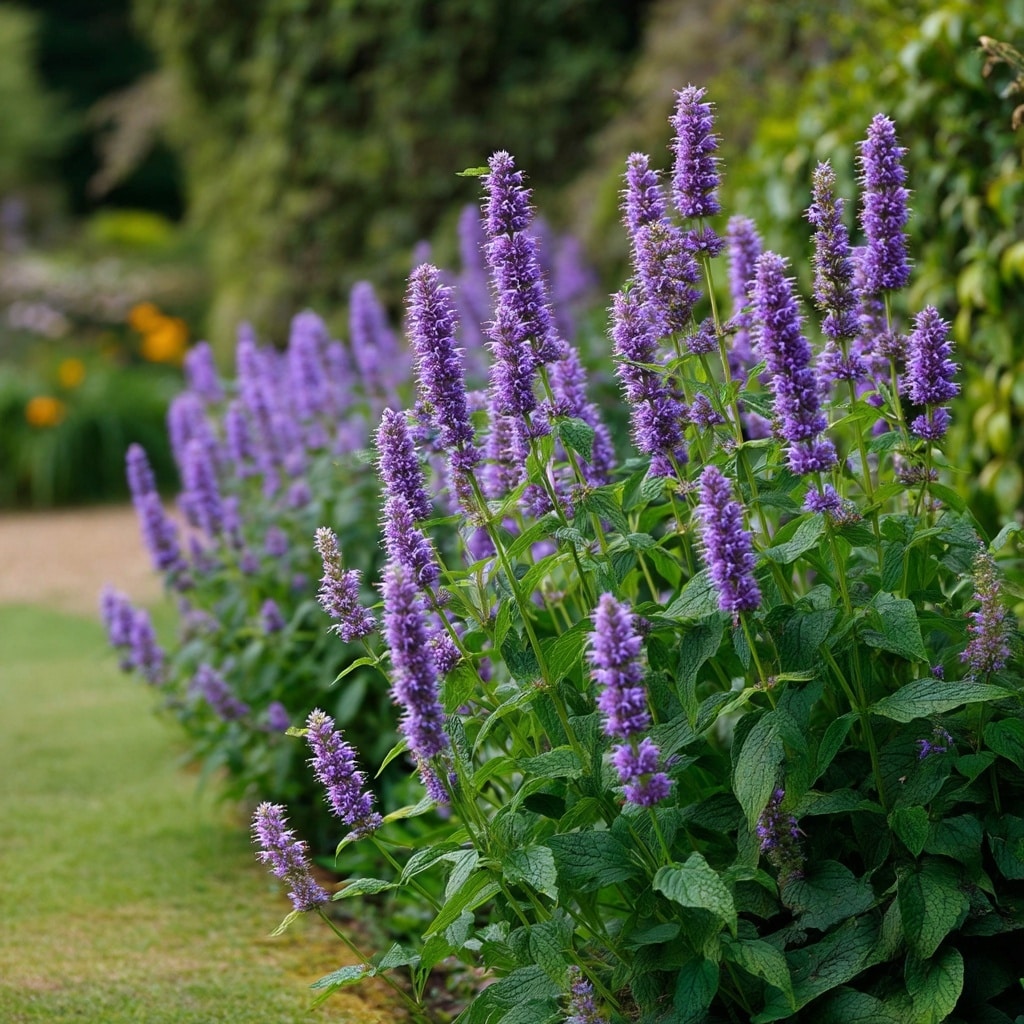
Anise Hyssop stands tall with lavender-like purple flowers and fragrant foliage that smells like licorice. This hardy perennial is a pollinator magnet and a sensory delight.
- Height: Up to 4 feet
- Light: Full sun or partial shade
- Soil: Well-drained
- Features: Edible flowers and leaves
Perks:
- Drought-tolerant
- Resistant to deer
- Blooms mid to late summer
- Excellent for butterfly gardens
Just be sure to give it room—its vertical growth needs space and airflow to avoid root issues.
5. Purple Aster (Symphyotrichum spp.)
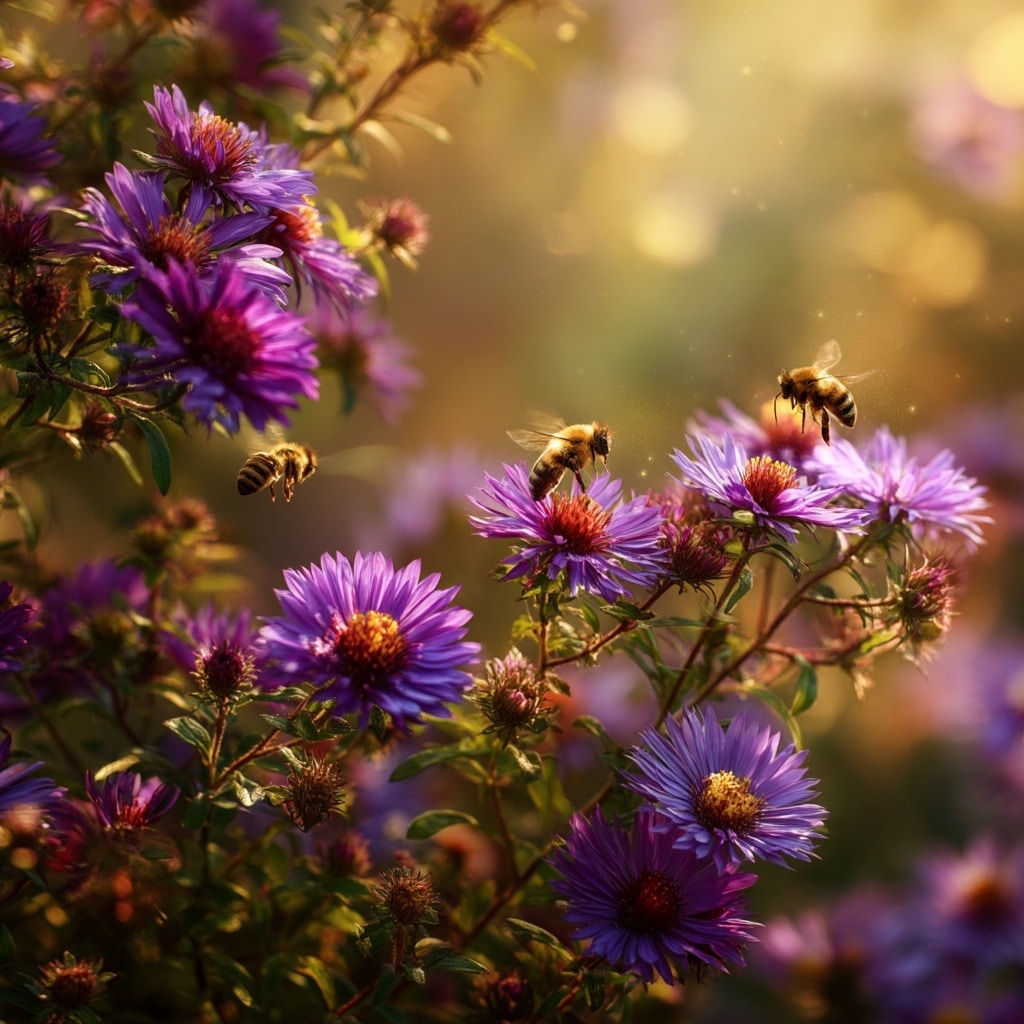
Asters bring vibrant purple flowers to life just when the garden starts winding down. These daisy-like perennials bloom in late summer and fall, supporting pollinators when few others do.
- Bloom colours: Amethyst, lavender, burgundy
- Hardiness: Zones 5–8
- Size: 18 to 24 inches tall
- Sun: Full sun to partial shade
Why gardeners love it:
- Attracts hummingbirds, bees, and butterflies
- Tolerates drought once established
- Available as perennials, biennials, or annuals
Great for mass plantings or naturalized areas.
6. Balloon Flower (Platycodon grandiflorus)
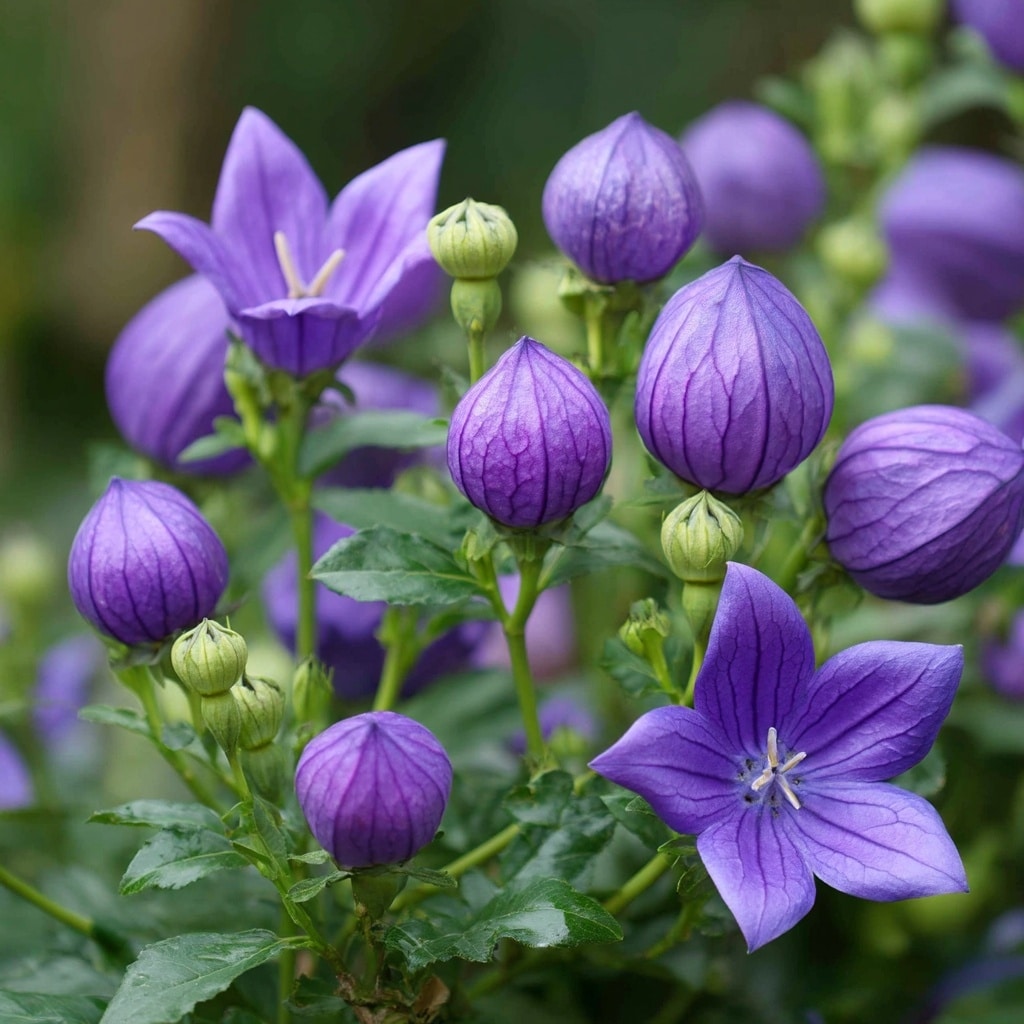
The Balloon Flower adds whimsy to any garden with its unique balloon-shaped buds that pop open into star-like purple flowers. Native to East Asia, this perennial is both tough and graceful.
- Height: 1 to 2.5 feet
- Bloom time: Mid to late summer
- Light: Full sun to partial shade
- Soil: Well-drained, rich soil
Why grow it?
Balloon Flowers are drought-tolerant, easy to maintain, and a beautiful companion to other purple blooms like salvia and clematis. Their tidy growth makes them perfect for borders or small gardens.
7. Bear’s Breeches (Acanthus mollis)
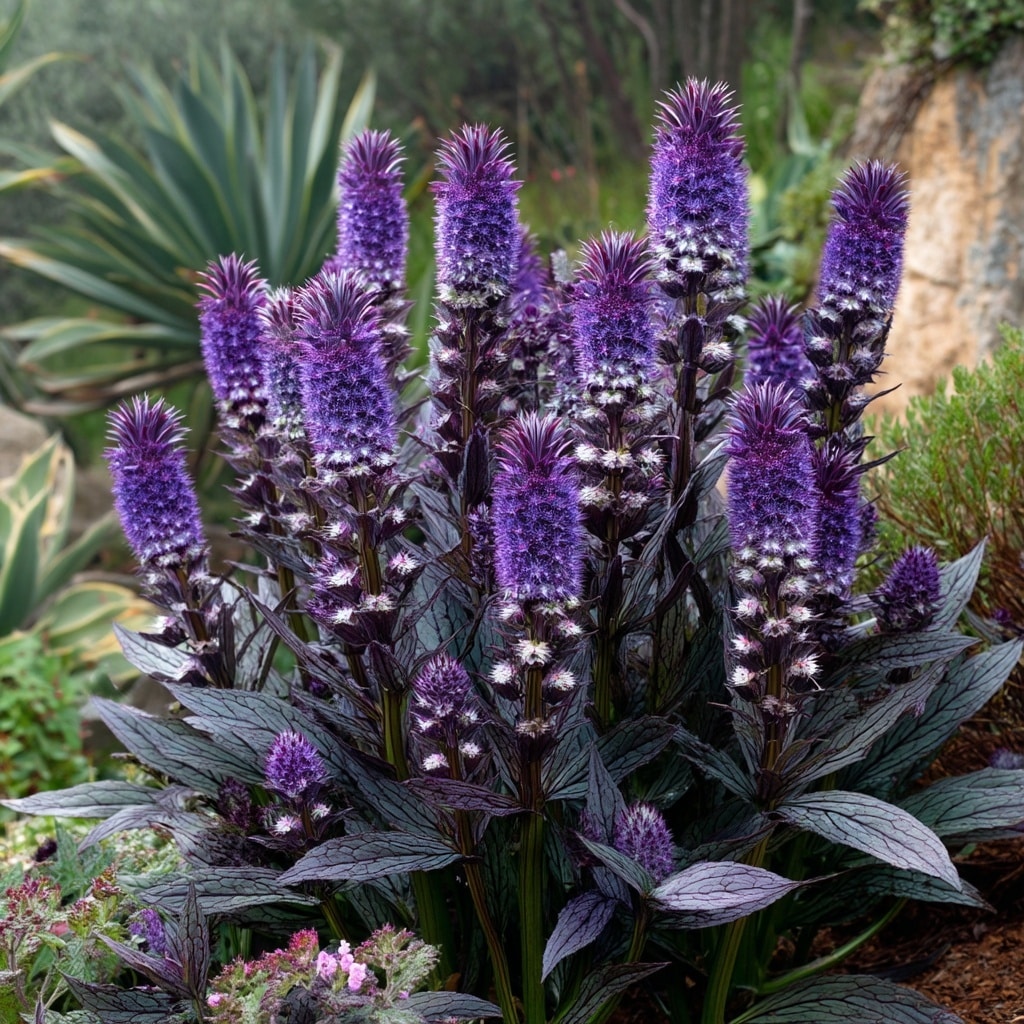
Looking for architectural drama? Bear’s Breeches deliver tall, dramatic spires of purple and white flowers above bold, spiny leaves. This Mediterranean native makes a bold statement.
- Height: 3 to 5 feet
- Hardiness: Down to -20°F (zone 6)
- Sun: Full sun
- Bloom period: Summer through early fall
Perks:
- Long-lasting blooms
- Deer and rabbit-resistant
- Adds height and structure to garden beds
Its bold foliage also makes it a year-round interest plant even when not in bloom.
8. Bee Orchid (Ophrys apifera)
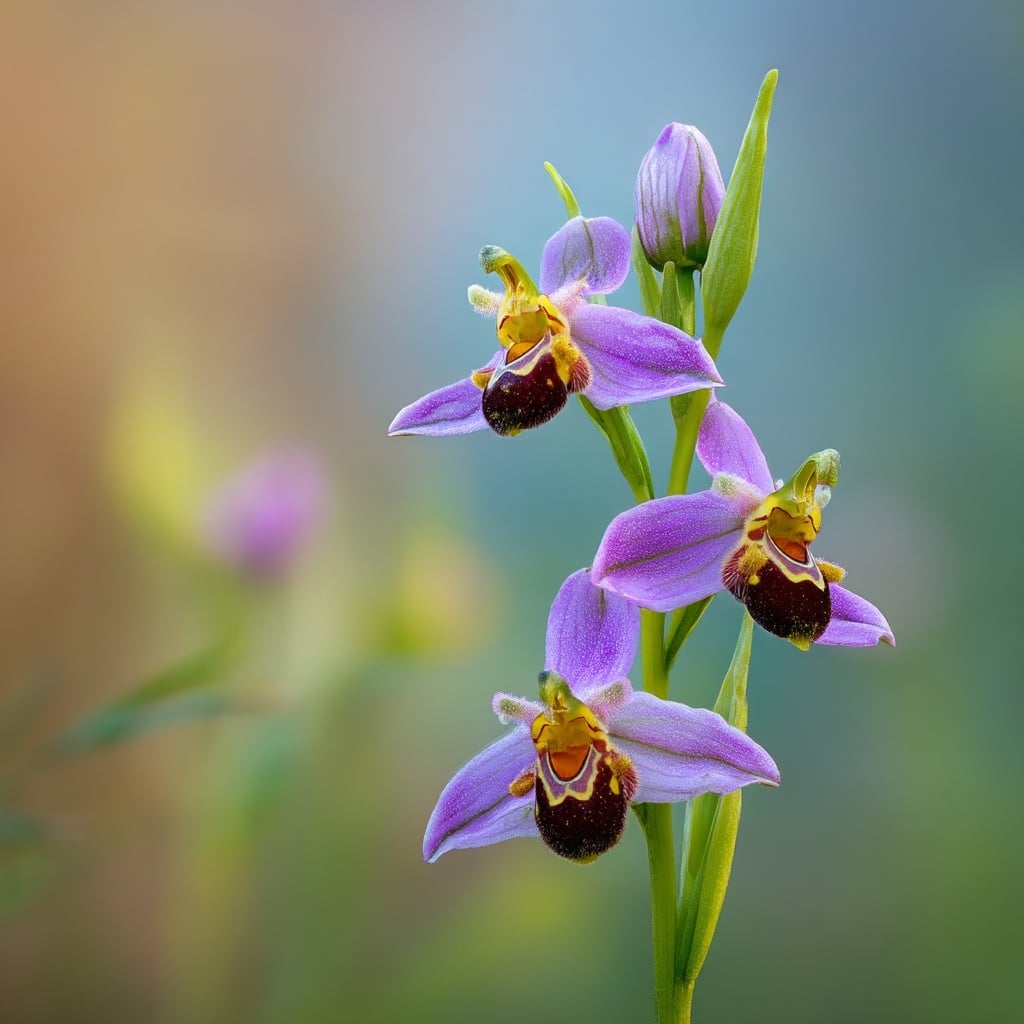
The Bee Orchid is one of the most fascinating purple flowers, mimicking the look of a bumblebee to attract pollinators. It’s a rare gem with deep purple petals and a quirky personality.
- Zones: 6 to 9
- Light: Partial sun or light shade
- Soil: Moist, well-drained
- Bloom season: Late spring to early summer
Symbolism: Beauty, love, elegance, and mystery.
This orchid prefers undisturbed ground and is best for wildflower gardens or rockeries.
9. Bell Heather (Erica cinerea)
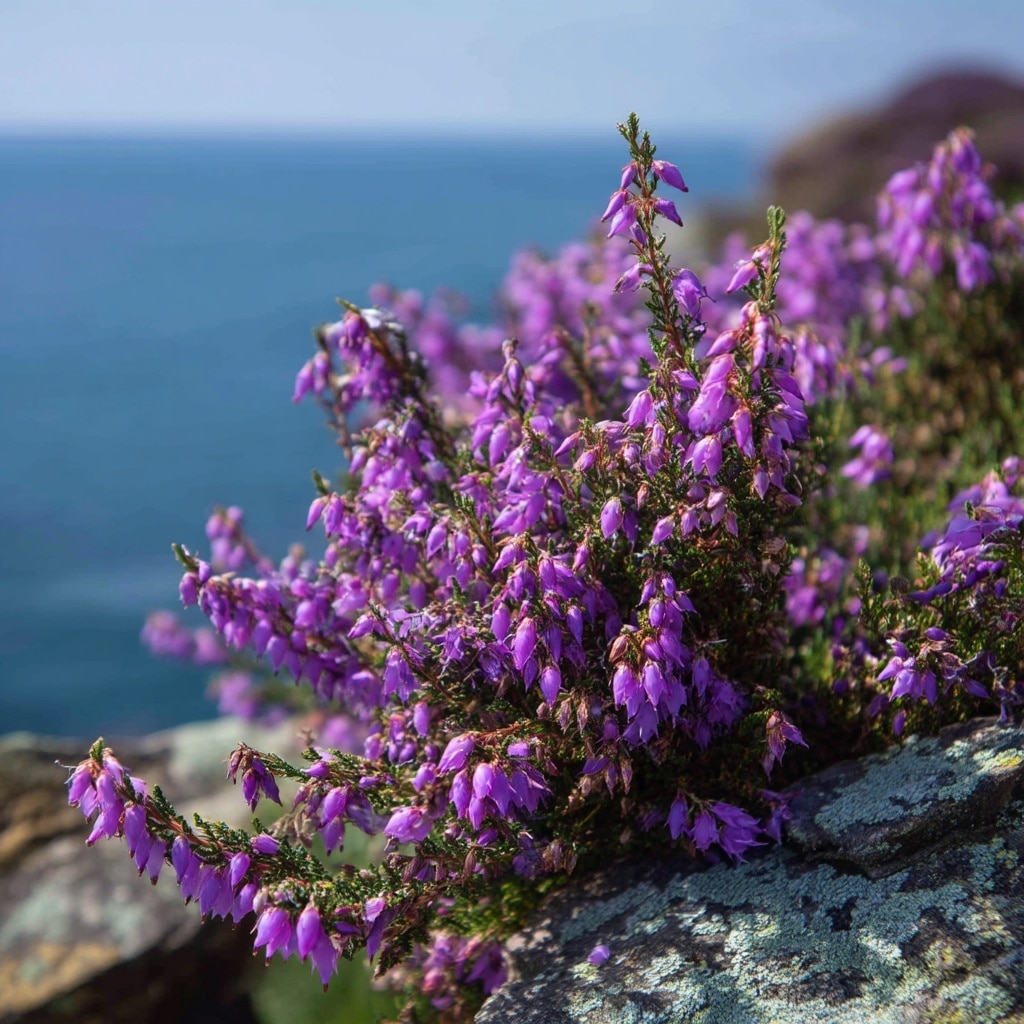
A great choice for coastal or rocky landscapes, Bell Heather produces clusters of bell-shaped purple flowers from early spring through fall. It’s compact, tidy, and largely pest-free.
- Height: About 20 inches
- Light: Full sun
- Soil: Acidic and well-drained
- Zones: 6–8
Benefits:
- Deer-resistant
- Low-maintenance
- Thrives in drought
- Attractive for bees and other pollinators
Just give it an annual prune to prevent legginess.
10. Purple Cosmos (Cosmos bipinnatus)
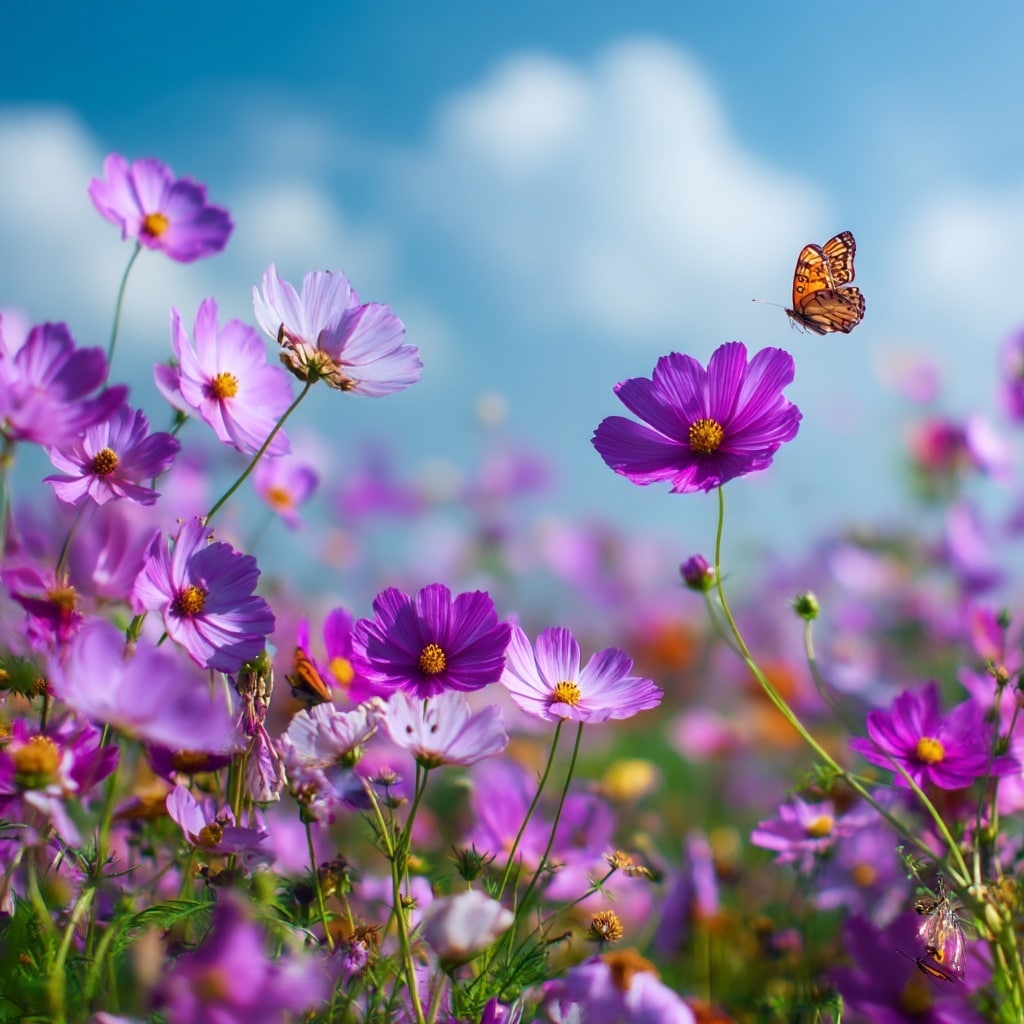
Cosmos are airy, fast-growing annuals that bloom in rich shades of purple and thrive with little attention. They’re a top pick for beginners and cottage garden lovers alike.
- Bloom period: June to November
- Height: 2 to 4 feet
- Light: Full sun
- Soil: Poor to average, well-drained
Why gardeners love it:
- Self-sows easily
- Drought-tolerant
- Attracts birds and butterflies
- Ideal for cut flower arrangements
Avoid over-fertilizing, which can reduce blooming. Support may be needed in windy spots due to their height.
Benefits of Growing Purple Flowers in Your Garden
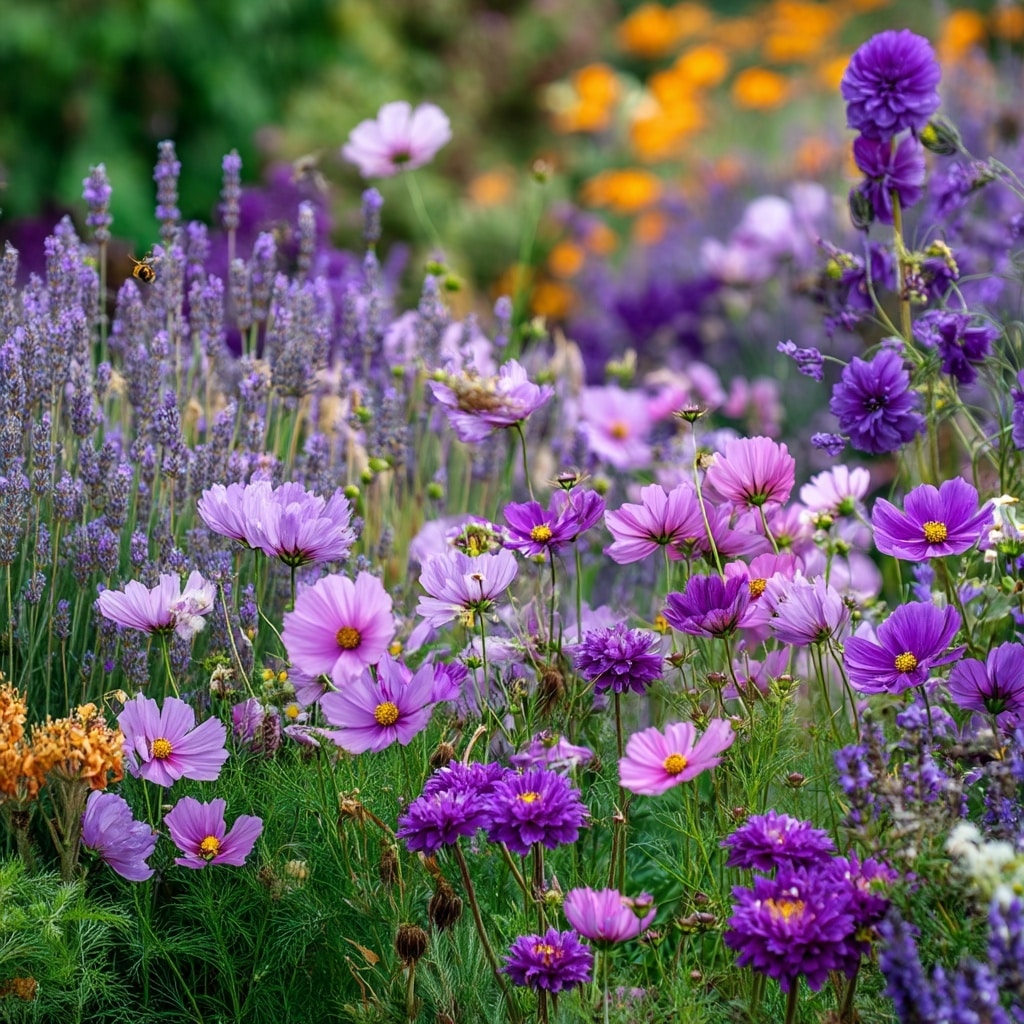
Adding purple flowers to your landscape is more than just a visual upgrade—it’s a smart and strategic choice for a vibrant, healthy, and well-balanced garden. Here’s why these regal blooms are a favourite among seasoned gardeners and designers alike:
1. Visual Drama and Elegance
Purple flowers create instant impact. Their deep, rich hues add contrast to lighter blooms and greenery, giving your garden dimension and a luxurious feel. Whether you prefer pastel lavenders or bold violets, the color purple commands attention without overwhelming.
- Use them to anchor garden beds
- Pair with white or yellow flowers for striking contrast
- Great for both modern and cottage garden styles
2. Wide Variety of Shapes and Sizes
From tall spires to ground-hugging mounds, purple flowers come in every form imaginable. You’ll find compact plants like Alpine Betony, airy annuals like Cosmos, and statuesque perennials like Bear’s Breeches—all in purple.
- Choose from bulbs, shrubs, vines, and wildflowers
- Add texture and movement by mixing forms
- Ideal for borders, containers, or layered beds
3. Natural Pollinator Magnets
Bees, butterflies, and even hummingbirds are naturally drawn to purple hues. Planting a variety of purple flowers helps support local pollinator populations and encourages biodiversity in your garden.
- Anise Hyssop and Purple Asters are top performers
- Boosts veggie and fruit garden productivity
- Creates a buzzing, thriving ecosystem
4. Year-Round Colour Possibilities
With smart plant selection, you can enjoy purple flowers in every season.
- Spring: Anemone and Columbine
- Summer: Lavender, Cosmos, Balloon Flower
- Autumn: Asters, Salvia
- Winter: Hellebores (Winter Rose) add subtle beauty even in snow
This staggered blooming schedule ensures your garden stays lively year-round.
5. Symbolism and Emotional Impact
Purple has long been associated with royalty, wisdom, and creativity. Soft purples can evoke calm and romance, while deeper tones bring mystery and power.
- Symbolizes dignity, luxury, and admiration
- Enhances garden ambience and emotional connection
- Great for creating themed spaces like meditation or memorial gardens
6. Hardy and Adaptable Options
Many purple flowers are remarkably low-maintenance and hardy. Plants like Lavender, Cosmos, and Bell Heather are drought-tolerant and thrive in a variety of climates and soil conditions.
- Ideal for beginner gardeners
- Less watering and fewer pests
- Easy to naturalize in wildflower meadows or rock gardens
Growing and Caring for Purple Flowering Plants
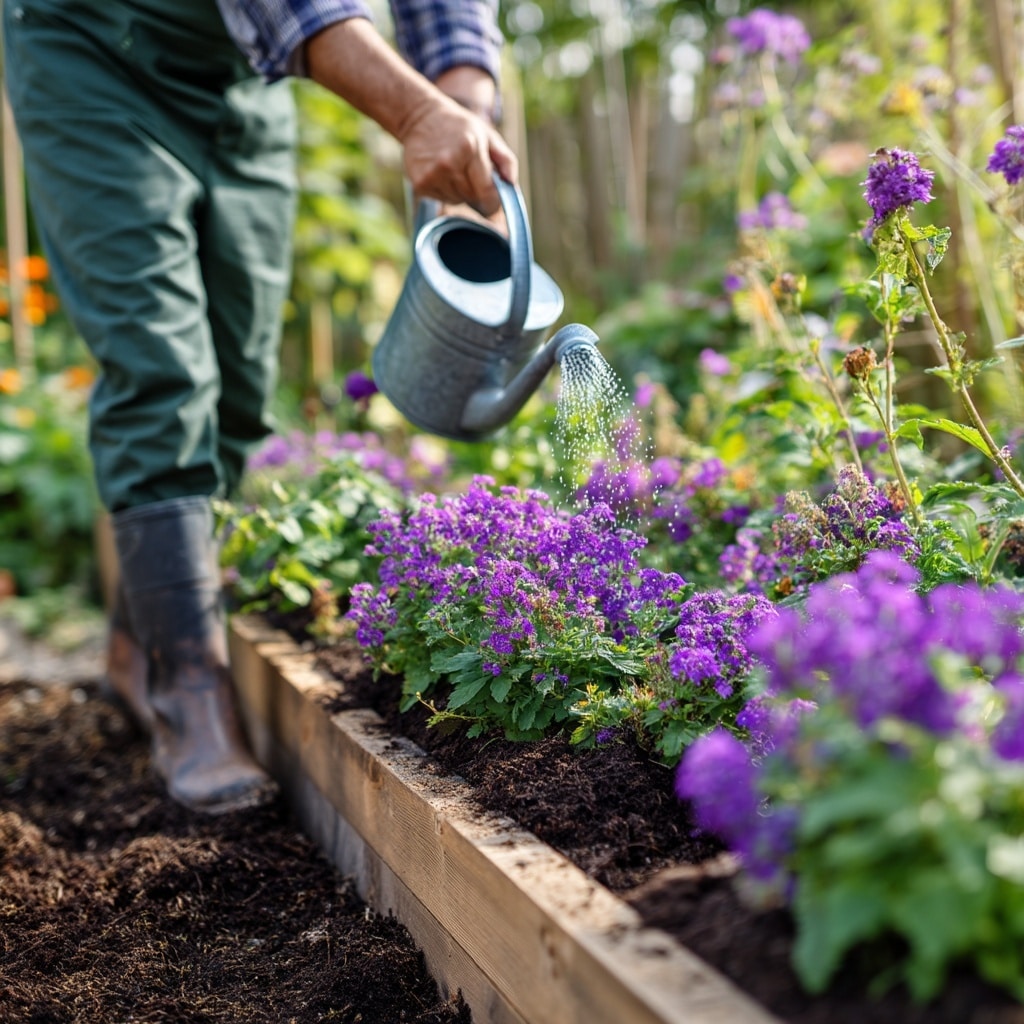
Whether you’re a beginner or a seasoned gardener, growing purple flowers successfully comes down to understanding their needs. From soil and sunlight to watering and feeding, here’s how to keep your purple blooms thriving season after season.
1. Choose the Right Soil
Most purple flowers prefer well-drained soil. Poor drainage can lead to root rot, especially for perennials like Anise Hyssop or Lavender.
- Improve drainage by mixing in organic compost, bark, or sand
- Raised beds are ideal for plants that dislike wet roots
- Check pH levels—many purple bloomers thrive in slightly acidic soil
Pro Tip: Lavender and Salvia prefer sandy, low-nutrient soil, while Anemones and Asters do better in richer loam.
2. Light Requirements: Sun vs. Shade
Light exposure can make or break your garden. Some purple flowering plants need full sun, while others thrive in dappled light.
- Full Sun Lovers: Allium, Cosmos, Bear’s Breeches
- Partial Shade Tolerant: Anemones, Bee Orchid, Bell Heather
- Filtered Light: Great for woodland gardens or under tall trees
Check plant tags or nursery guides to match sunlight to the plant’s natural habitat.
3. Smart Watering Practices
Watering needs vary, but the key rule is: avoid overwatering. Most purple flowers prefer consistent moisture without soggy roots.
- Deep watering is better than frequent shallow watering
- Water early morning or evening to reduce evaporation
- Let soil dry out slightly between waterings for drought-tolerant varieties
Watch out for signs of stress: Yellowing leaves = overwatering; wilting in sun = underwatering.
4. Fertilizing for Richer Blooms
Proper nutrition boosts the color and longevity of your purple flowers.
- Use a balanced fertilizer (e.g., 10-10-10) in spring for perennials
- Feed container plants every 2–4 weeks during the growing season
- Compost or organic fertilizers improve soil structure and add nutrients
Avoid over-fertilizing. It can lead to lots of green growth with fewer flowers—especially with Cosmos or Balloon Flowers.
5. Preventing Pests and Diseases
Healthy purple flowers can still fall prey to common garden pests and fungal diseases.
- Pests to watch for: Aphids, spider mites, whiteflies
- Diseases: Powdery mildew, root rot, leaf spot
Tips to prevent problems:
- Space plants for air circulation
- Avoid overhead watering
- Inspect leaves regularly (especially undersides)
- Use neem oil or insecticidal soap for organic pest control
6. Pruning and Deadheading
Regular care keeps your purple blooms looking their best.
- Deadhead spent blooms to encourage continuous flowering
- Cut back perennials in late fall or early spring
- Prune leggy plants like Bell Heather to maintain shape
Deadheading also helps prevent self-seeding if you want to control where plants like Cosmos spread.
7. Match Plants to Your Growing Zone
Always choose plants suited to your USDA hardiness zone or local climate.
- Cool zones: Allium, Aster, Bell Heather
- Mild/Mediterranean climates: Lavender, Anise Hyssop, Bee Orchid
- Tropical/subtropical: Purple Orchids, Tibouchina
- Desert-friendly: Purple Sage, Penstemon
Knowing your zone ensures your purple flowers will bloom year after year.
Enhancing Garden Design with Purple Flowers
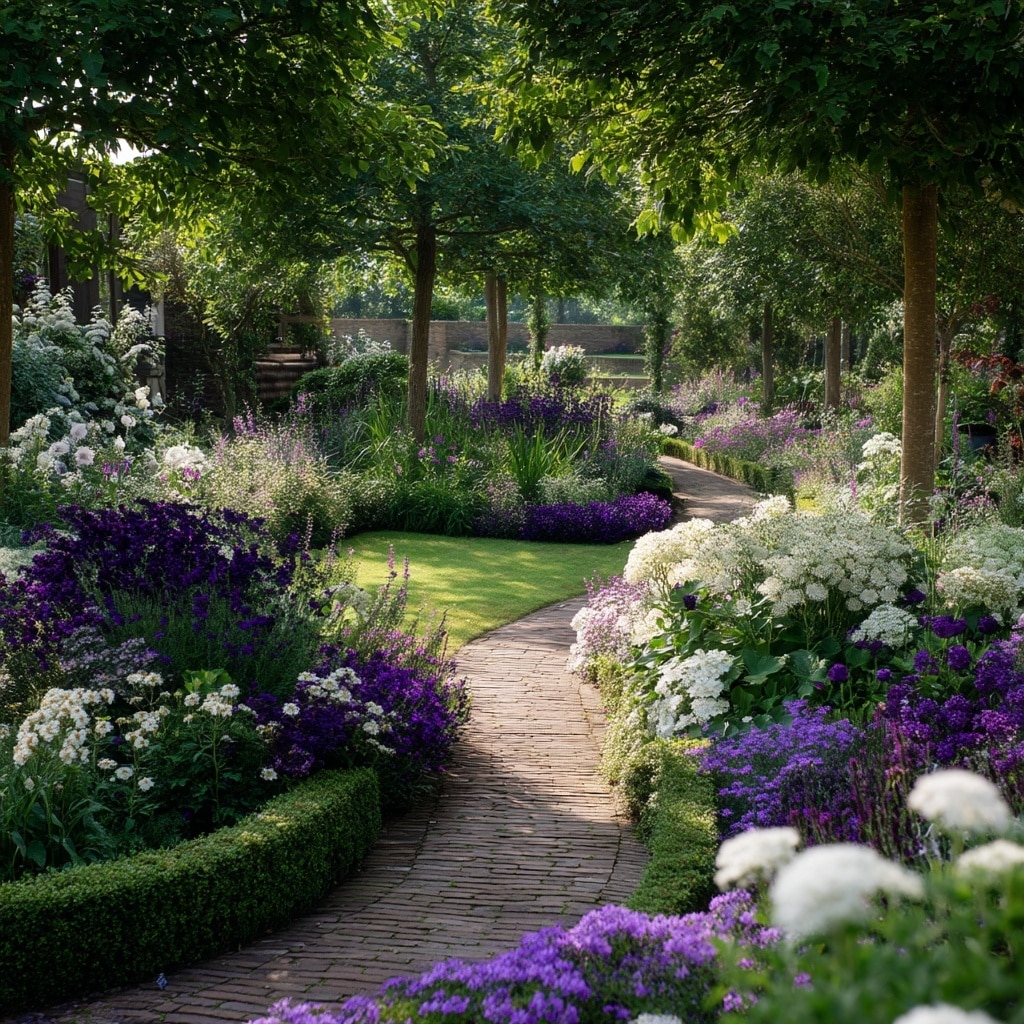
When thoughtfully arranged, purple flowers can turn an ordinary garden into a striking, cohesive space. Their rich tones pair beautifully with a range of colours and textures, offering endless design opportunities.
1. Use Purple as a Focal Point
The bold and royal character of purple flowers naturally draws the eye. Use them to create visual anchors in your landscape.
- Place taller varieties like Bear’s Breeches or Allium in the center or back of beds
- Cluster mid-height blooms like Balloon Flower in repeating patterns
- Frame walkways or borders with low-growing options like Alpine Betony or Bell Heather
Design Tip: Limit your color palette to purple, white, and green for a sophisticated, calming effect.
2. Play With Contrasting Colors
Purple pairs well with several other hues on the color wheel:
- Yellow (complementary): Pair Purple Asters with Yellow Coreopsis
- White: Combine Purple Cosmos with white daisies for a clean, elegant look
- Soft Pink or Blue: Mix Anemones or Bee Orchids with bluebells or pink Echinacea for a cottage-style blend
These combinations create balance and highlight the deep richness of purple tones.
3. Layer Plants by Height and Texture
Create depth and movement in your garden by layering purple flowers:
- Back row: Tall growers like Cosmos or Anise Hyssop
- Middle layer: Bushy varieties such as Asters or Alpine Betony
- Front edge: Compact forms like Bell Heather or creeping groundcovers
Add texture contrast with spiky, daisy-shaped, or bell-like blooms for a more dynamic effect.
4. Design for Season-Long Colour
Use a mix of early, mid, and late-blooming purple flowers to keep your garden colorful all year.
- Spring: Purple Anemone, Columbine
- Summer: Cosmos, Bear’s Breeches, Lavender
- Autumn: Purple Asters, Salvia
- Winter: Hellebore (Winter Rose) for frosty charm
Plant strategically so when one variety fades, another begins to bloom—maintaining flow and visual interest.
5. Companion Planting for Performance and Aesthetics
Some plants enhance each other’s growth, while others provide lovely aesthetic contrast.
- Great companions for purple flowers:
- White roses
- Silver-leaf plants like Artemisia
- Pollinator-attracting herbs like thyme and oregano
- Lupine (adds nitrogen to soil)
Bonus: Purple flowering plants often deter deer and pests—making them perfect protectors for more vulnerable species.
6. Try Themed Gardens with Purple Blooms
Build garden sections around a unifying idea:
- Butterfly Garden: Use Anise Hyssop, Cosmos, and Aster
- Zen or Meditation Garden: Focus on soft lavenders and low-maintenance varieties like Bell Heather
- Cut Flower Garden: Grow Cosmos, Asters, and Allium for fresh bouquets
- Drought-Tolerant Garden: Combine Lavender, Bear’s Breeches, and Purple Sage
Purple’s emotional and visual appeal makes it ideal for both relaxing and energizing spaces.
Conclusion
Adding purple flowers to your garden is a simple yet powerful way to elevate its beauty, attract beneficial pollinators, and enjoy a rich spectrum of color throughout the seasons. With so many varieties to choose from—whether you’re looking for bold focal points, delicate accents, or low-maintenance bloomers—there’s a purple plant perfect for every garden style and skill level.
From the tall elegance of Bear’s Breeches to the charming simplicity of Bell Heather, these blooms bring personality and performance to your outdoor space. With proper planting, thoughtful design, and a bit of ongoing care, your garden will flourish in vibrant shades of violet, lavender, and plum for years to come.