
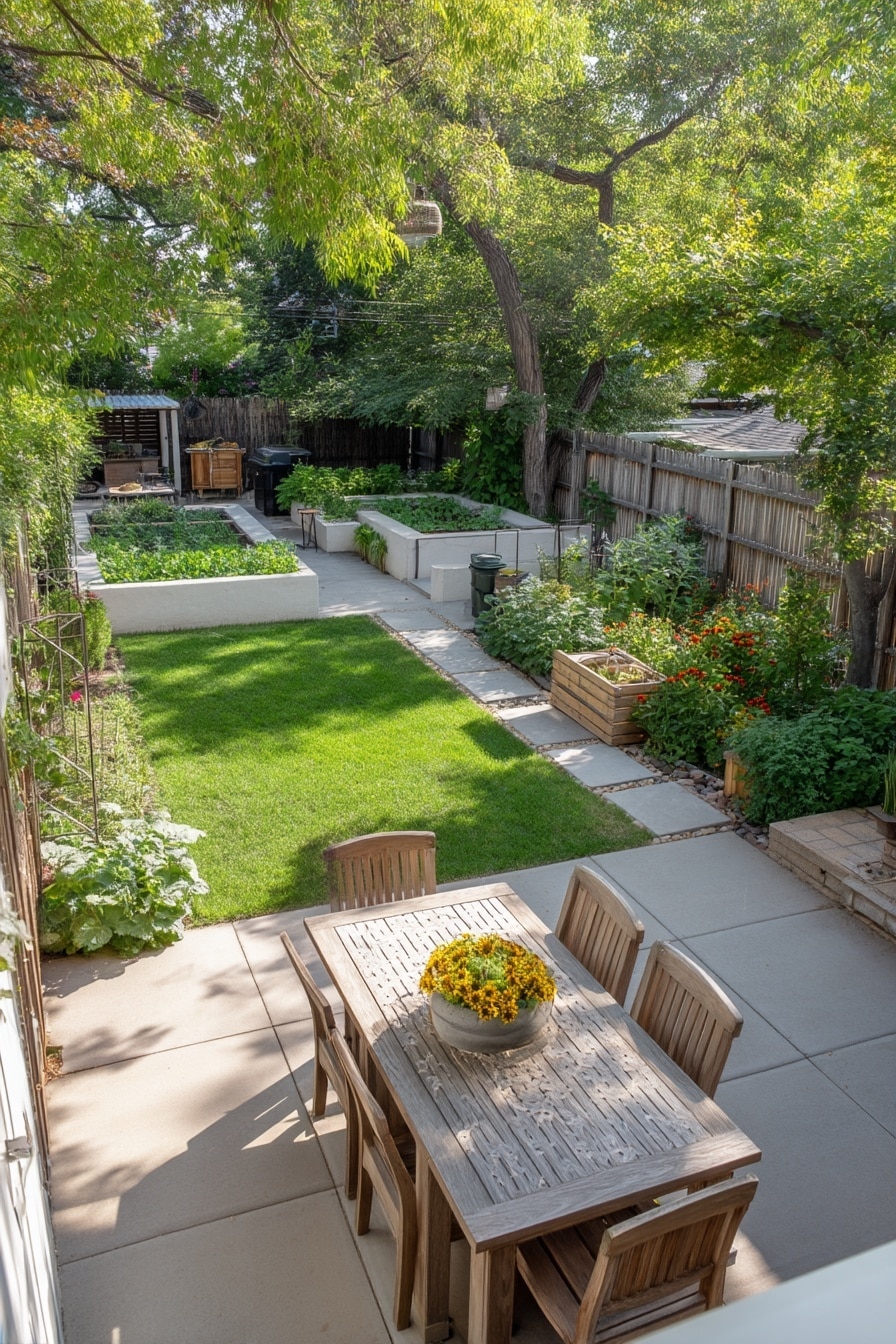
Backyard garden layout planning can be the difference between a cramped outdoor area and a thriving, efficient green space. With thoughtful design, even the smallest yard can become a productive and inviting garden that feels spacious and well‑organized. A smart backyard garden layout doesn’t just cram plants into every available inch — it maximizes space by balancing plant placement, accessibility, and aesthetics so you enjoy both form and function.
Whether you’re working with a narrow suburban plot, an irregularly shaped yard, or simply want to squeeze more growing area into limited real estate, applying key layout principles early will save you trouble later. In this article, we’ll build from simple space‑saving concepts (like grid‑based planting and vertical elements) to more structured layout ideas that help you get the most out of every square foot.
By focusing on a backyard garden layout that prioritizes efficient use of space, good circulation, and plant harmony, you’ll create an outdoor retreat that’s as enjoyable to tend as it is to behold. Thoughtful structure also makes future tasks — watering, harvesting, pruning — easier and more intuitive.
Table of Contents
Raised Bed Grid Layout

A raised bed grid layout is one of the most efficient methods for maximizing garden space in a backyard. This approach divides planting areas into manageable, clearly defined zones, often using the square-foot gardening method. It helps you grow more in less space while maintaining order and accessibility.
Benefits of the Raised Bed Grid Layout
- Ideal for small and medium-sized backyards
- Prevents soil compaction by keeping foot traffic out of beds
- Enhances drainage and soil control
- Easier to manage pests and weeds
- Organizes crops for easier rotation and harvesting
This layout also encourages intensive planting, which helps shade out weeds and keeps the soil moist. You can use wooden frames, bricks, or galvanized metal to create raised beds, then fill them with high-quality soil and compost for optimal growth.
Pro Tip: Group crops by size and growth habits to avoid overshadowing smaller plants. Place taller plants (like tomatoes or trellised beans) on the north side to minimize shading.
Vertical Garden Layout
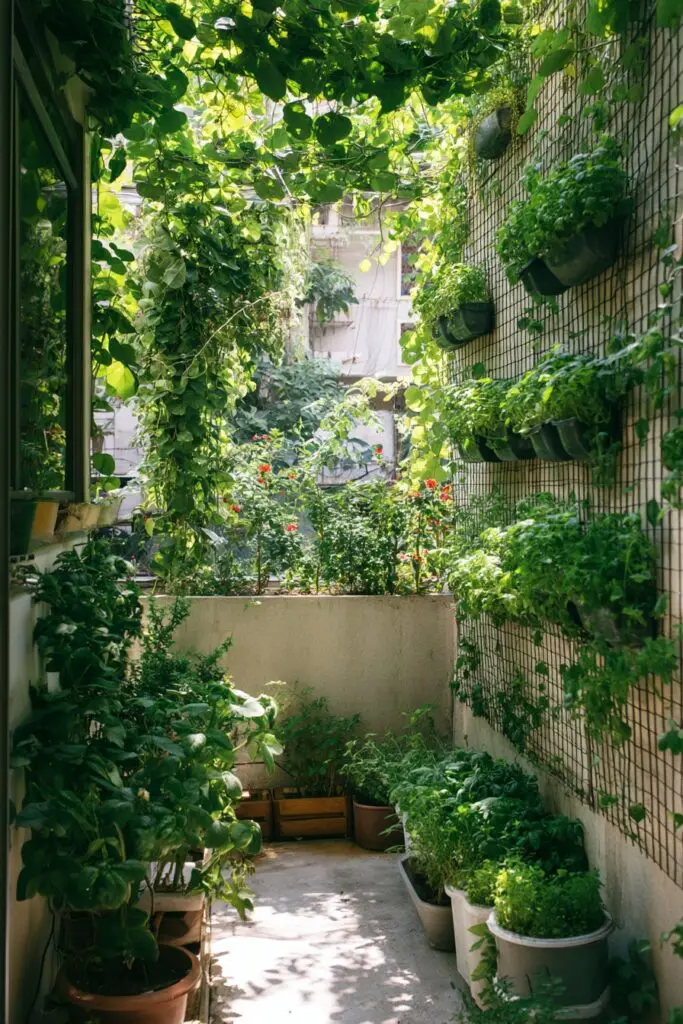
If your backyard garden layout suffers from limited ground space, going vertical is a game-changer. Vertical garden layouts take advantage of walls, fences, and vertical structures to grow upwards instead of outwards, freeing up floor area for movement or additional planting.
Key Features of a Vertical Garden
- Uses trellises, wall planters, hanging baskets, or garden towers
- Perfect for climbing crops like cucumbers, peas, and pole beans
- Works well with herbs, leafy greens, and even strawberries in pockets or stacked containers
- Provides visual interest and a lush backdrop
A vertical garden not only saves space but also improves air circulation, reducing the risk of disease. It adds a lush green feel to otherwise unused vertical surfaces, turning bland fences or walls into productive green zones.
Pro Tip: Anchor your vertical supports well and choose lightweight, high-yield crops for the upper levels. Drip irrigation or self-watering systems work particularly well in these setups.
L-Shaped Garden Layout
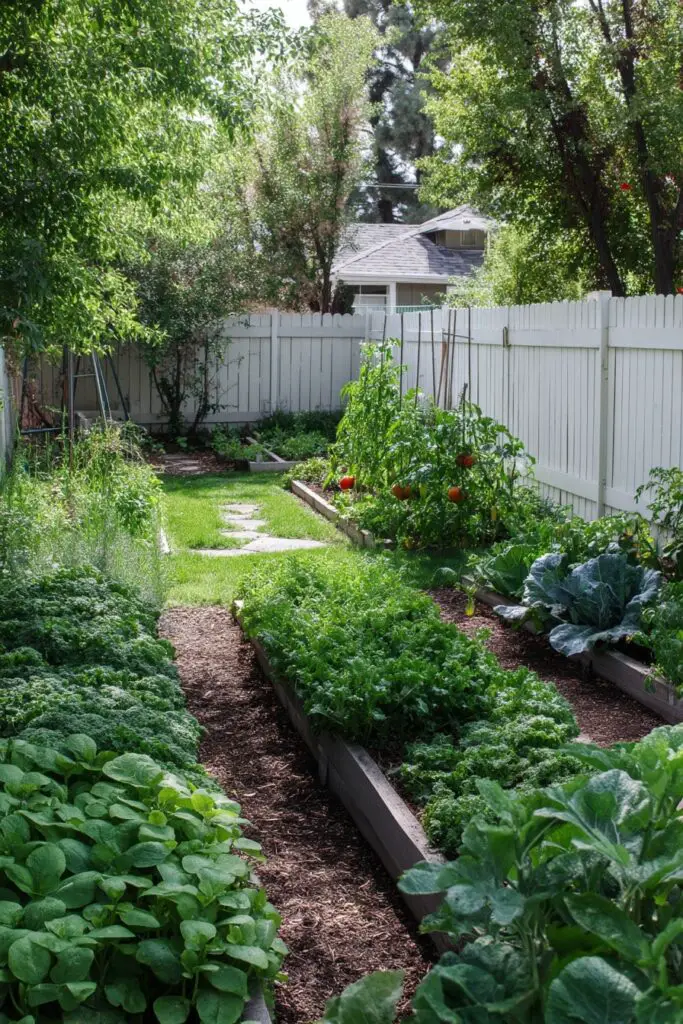
The L-shaped backyard garden layout is ideal for corner spaces or narrow side yards, making efficient use of what might otherwise be underutilized areas. This layout design frames the garden around the edge of the space, leaving a central open zone for relaxing, moving, or installing decorative features.
Why Choose an L-Shaped Layout
- Excellent for defining garden zones without crowding the yard
- Perfect for companion planting or grouping plants by sun requirements
- Offers a natural flow and easy access from two sides
- Visually opens up tight or awkwardly shaped spaces
The L-shape also pairs well with edging materials like stone or brick to give definition, and it’s highly adaptable—great for raised beds, in-ground plots, or container gardens. It allows gardeners to keep things tidy and symmetrical, while maximizing growing space.
Pro Tip: Use one side of the L for taller crops and the shorter leg for herbs or low-growing vegetables to maintain sun exposure across the garden.
H2: Container-Based Layout
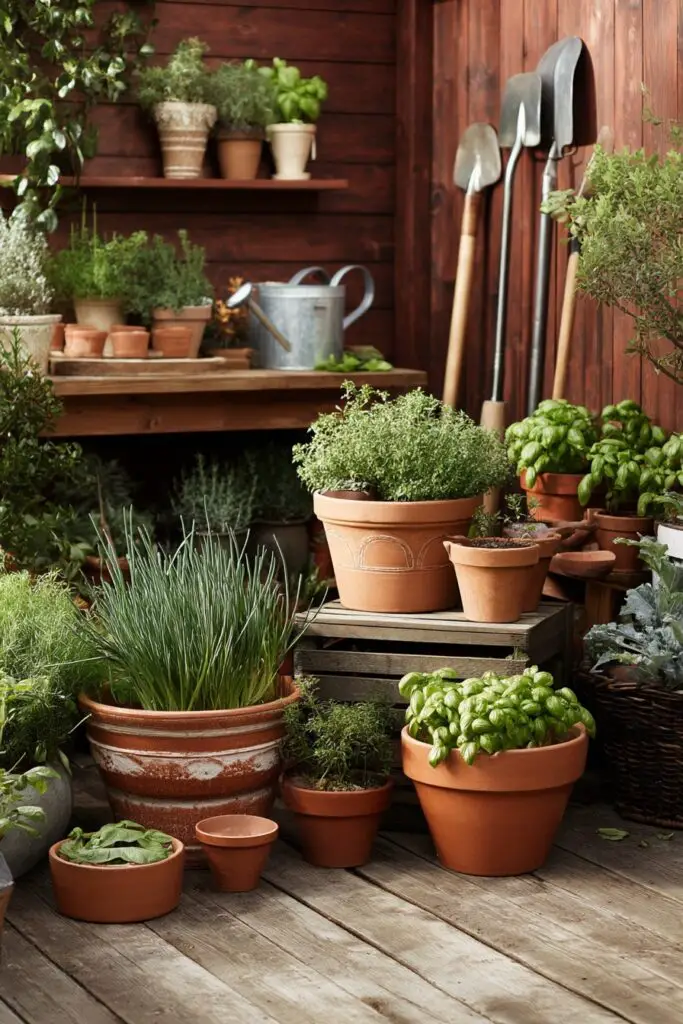
A container-based backyard garden layout offers the most flexibility, especially for renters, those with hardscape-heavy yards, or gardeners who like to rearrange their space seasonally. Containers can be grouped in clusters, lined along paths, or arranged in tiers to maximize growing potential in a compact footprint.
Advantages of Container Gardening
- Easily movable for seasonal sun or aesthetic shifts
- Ideal for patios, decks, or paved backyards
- Suitable for a wide range of plants—herbs, flowers, vegetables, and small fruit trees
- Controls soil quality and moisture precisely
- Reduces weed and pest issues
Containers come in various shapes and sizes—clay pots, grow bags, vertical towers, even repurposed barrels. By choosing the right size container and pairing it with well-draining soil and proper spacing, you can grow an impressive variety of crops with minimal ground space.
Pro Tip: Use rolling platforms for heavier containers to allow easy movement and better access to sunlight.
Mixed Garden Layout (Hybrid Approach)
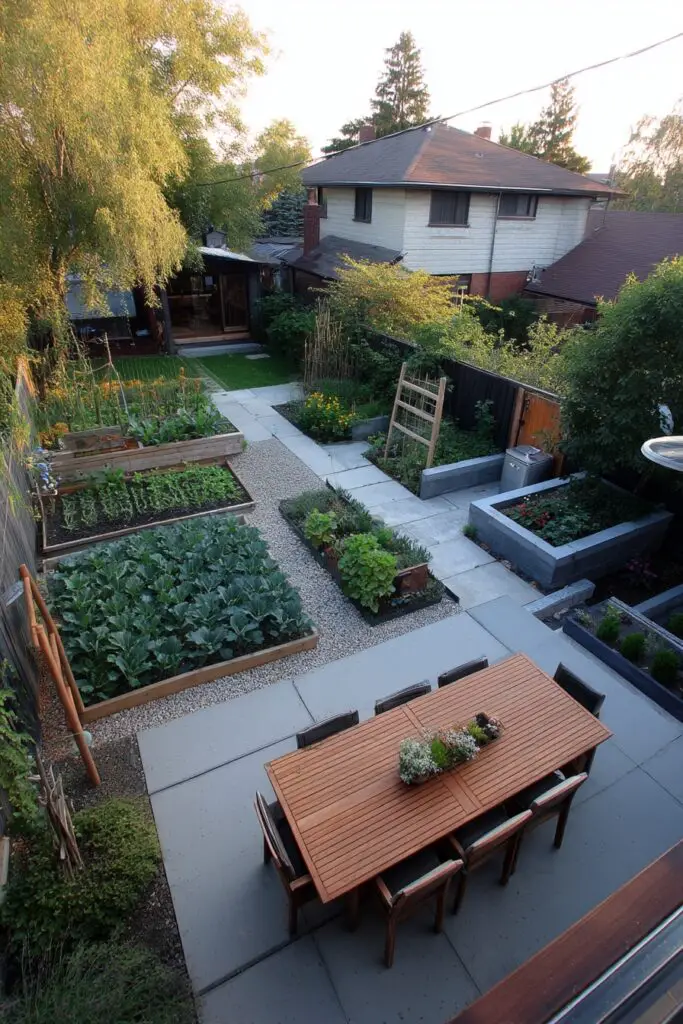
For gardeners who want the best of all worlds, a mixed garden layout combines multiple styles—raised beds, vertical elements, containers, and traditional in-ground planting—into a cohesive, space-optimized design. This hybrid approach is highly customizable and lets you tailor the layout to your backyard’s unique shape, sun patterns, and soil conditions.
Features of a Mixed Garden Layout
- Utilizes different layout types to fit available space creatively
- Encourages crop diversity and aesthetic variation
- Ideal for sloped or irregular backyards
- Enhances microclimates by combining sun and shade areas
- Accommodates changes in gardening goals year to year
A successful mixed layout balances structure and flow. Raised beds can anchor the space, vertical gardens add height and greenery, and containers offer seasonal flexibility. Mixing textures and plant heights also improves visual appeal while supporting healthy growth conditions.
Pro Tip: Plan pathways or stepping stones between zones to maintain access and prevent soil compaction. Consider companion planting to boost productivity and repel pests naturally.
Conclusion
Choosing the right backyard garden layout can dramatically transform even the smallest outdoor space into a lush, organized, and productive haven. Whether you opt for raised beds, vertical structures, container groupings, L-shaped designs, or a combination of all these approaches, the key is to tailor your layout to your space, lifestyle, and plant preferences.
Efficient layouts don’t just save space—they also make gardening more enjoyable, reduce maintenance, and allow for better crop management. Start with one layout type and expand as you learn what works best for your garden’s conditions. With thoughtful planning, your backyard can flourish into a space that brings joy and nourishment season after season.