
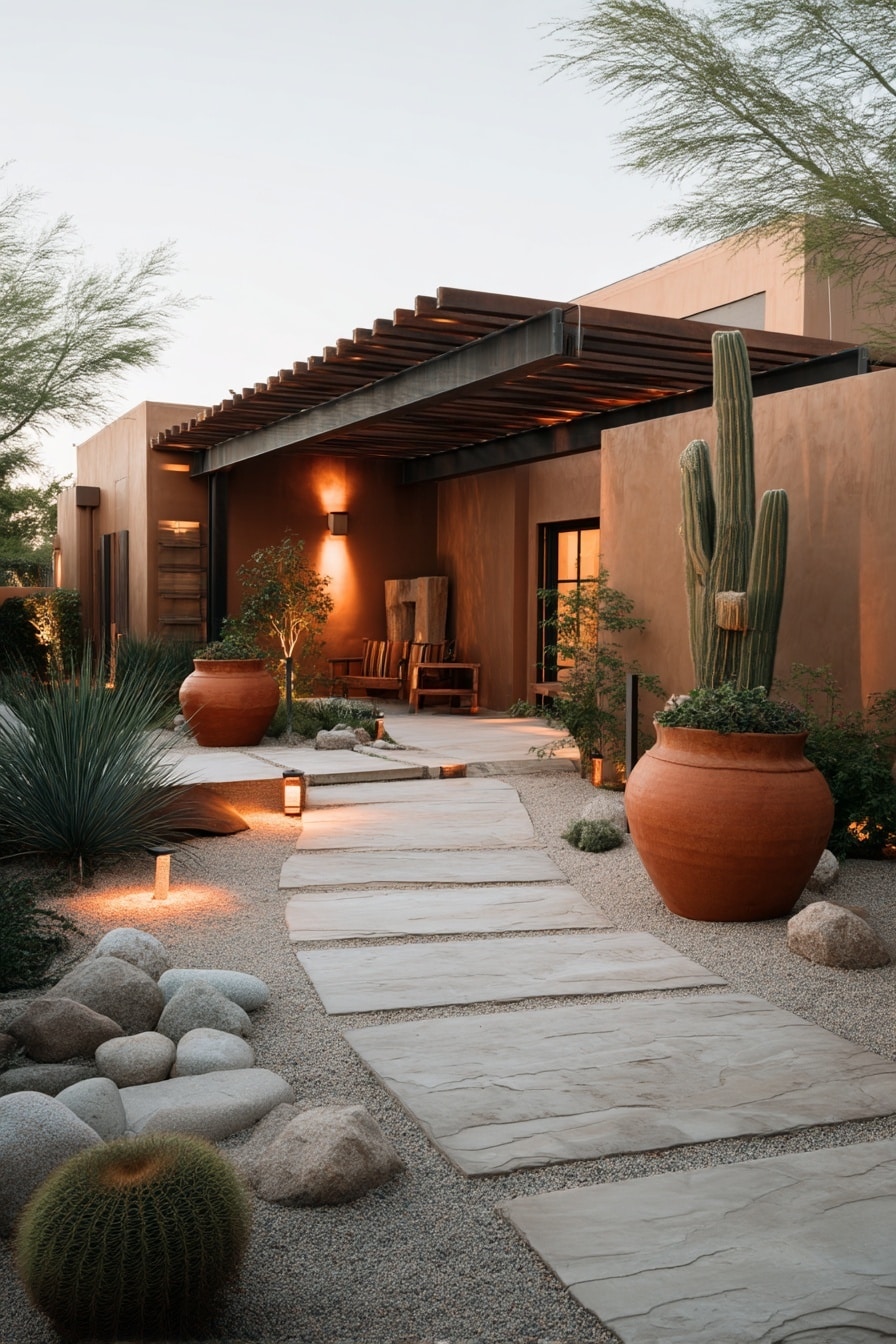
Small backyard landscaping in a desert climate doesn’t mean settling for boring or bare. In fact, limited space can inspire some of the most creative and rewarding garden designs. Whether you’re working with a tight patio or a compact patch of dirt, thoughtful planning and a few smart design choices can turn your outdoor space into a personal oasis. With the right materials, native plants, and layout tricks, your small yard can feel open, functional, and full of life—without the need for lush grass or sprawling square footage.
Table of Contents
Create Separated Spaces

One of the best strategies for small backyard landscaping is to break the space into distinct, functional zones. Instead of leaving the yard as a single open area, use natural dividers like gravel paths, boulders, low walls, or clusters of desert plants to carve out separate “rooms.” For example, you might have a cozy seating nook in one corner, a succulent garden along another edge, and a small water feature or fire pit centered on a patio.
Creating the sense of multiple destinations makes the yard feel larger and more purposeful. It encourages movement and discovery, even in a limited footprint. Each zone can have its own mood or function—just be sure they flow together using complementary colors and materials.
Stick With Large Scale
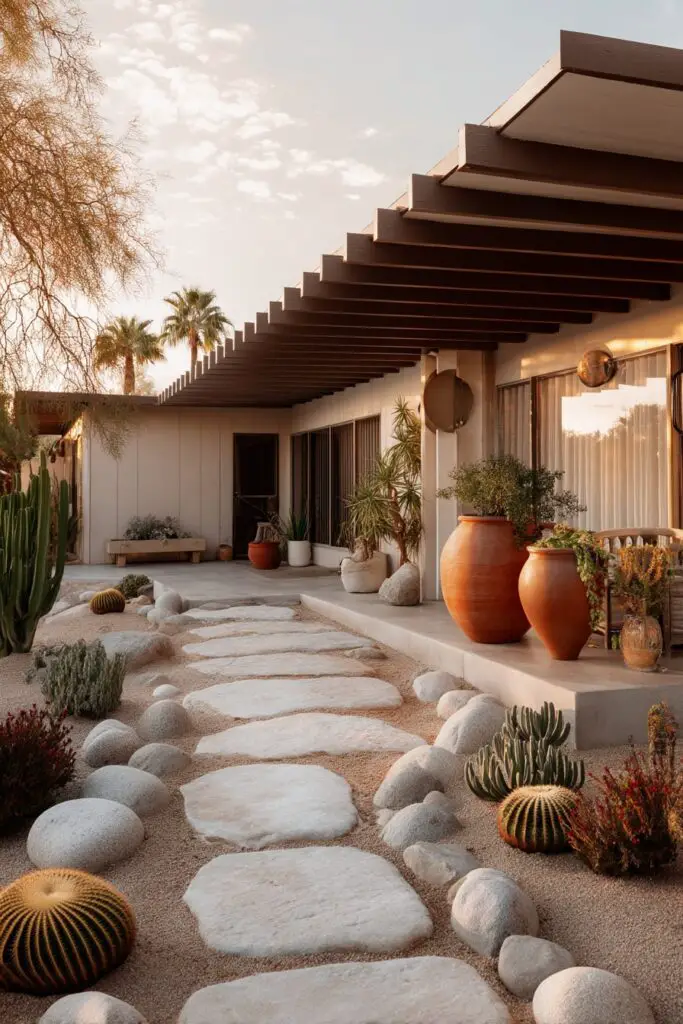
It might seem counterintuitive, but using large-scale features in small backyard landscaping can actually make the space feel more expansive. Instead of filling your yard with tiny walkways or miniature decor, opt for bold, full-sized elements that match the scale of your home. A wide stone pathway or a substantial pergola draws the eye outward and gives the impression of space and balance.
Avoid cluttering your yard with too many small decorations or mismatched furniture. Large pavers, generously sized pots, and sturdy outdoor seating create visual cohesion and help the area feel intentional—not cramped. Think less about shrinking everything to fit, and more about how each feature can serve the space with purpose and proportion.
Extend From the House
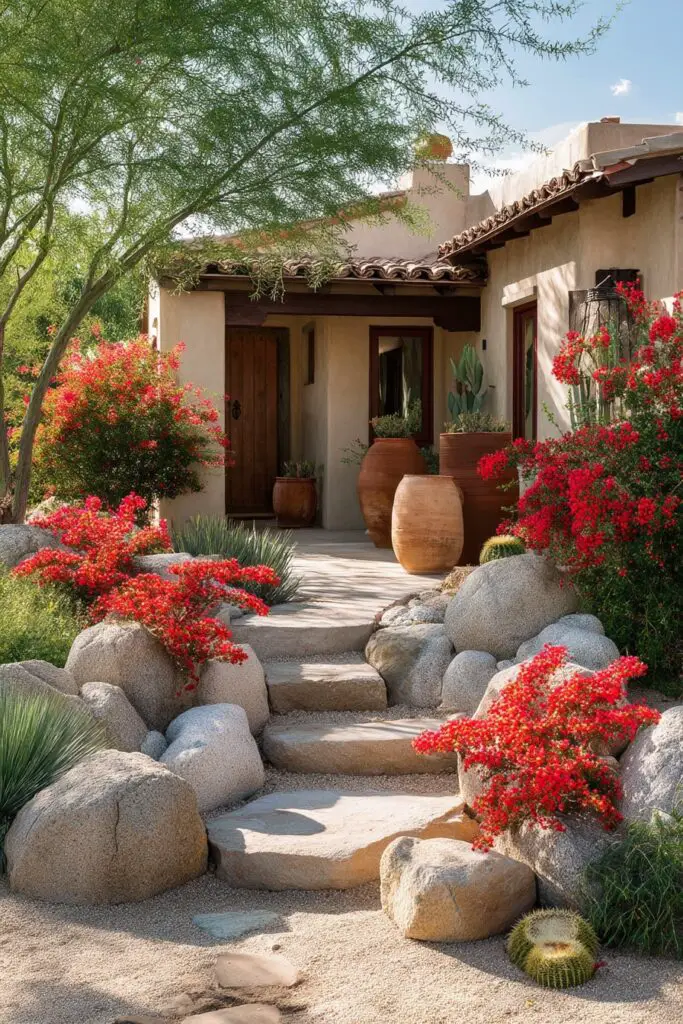
A key principle in small backyard landscaping is making your yard feel like a natural extension of your home—not a separate, disconnected space. When you blur the line between indoor and outdoor living, the entire area feels larger and more cohesive.
Use similar colors, textures, and materials found on your home’s exterior within your landscaping. For example, if your home features warm-toned stone or stucco, carry those shades into your patio pavers, retaining walls, or planter materials. If your roof is tile, echo its hues with clay pots or red-flowering desert plants like crimson hedgehog cactus.
Incorporating matching elements—such as trim colors, tile accents, or even lighting fixtures—creates visual continuity and invites the eye to see your yard as an extension of your living space, not a confined add-on.
Create a Trick of the Eye
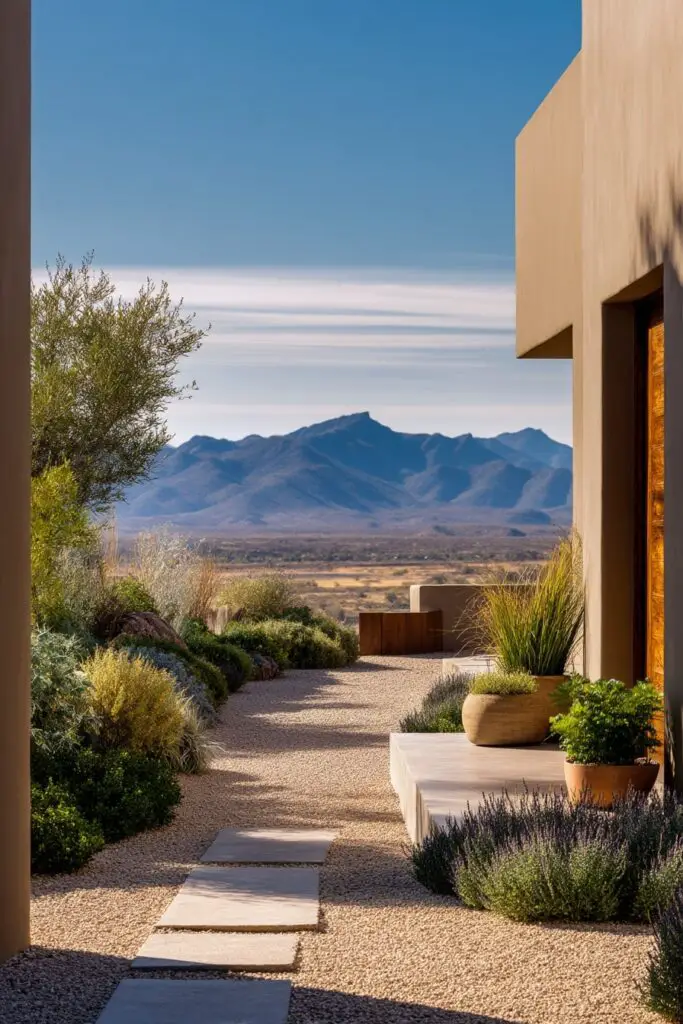
One of the most effective visual techniques in small backyard landscaping is to make the space appear larger than it is. This can be achieved by minimizing hard boundaries like tall fences or solid walls that close off the yard. Instead, consider using low walls, shrubs, or open fencing to gently define borders without cutting off the view.
If you’re lucky enough to have scenic surroundings—like desert mountains, neighboring gardens, or open land—use them to your advantage. Removing obstructive barriers and blending your landscaping with the horizon can give your yard a seamless, expansive feel. Even a few carefully placed plants that echo those in the distance can help trick the eye and extend the visual boundary.
This technique works especially well in desert settings, where the natural environment already provides a stunning backdrop. Let your landscaping feel connected to the wider world.
Create Height Instead of Depth
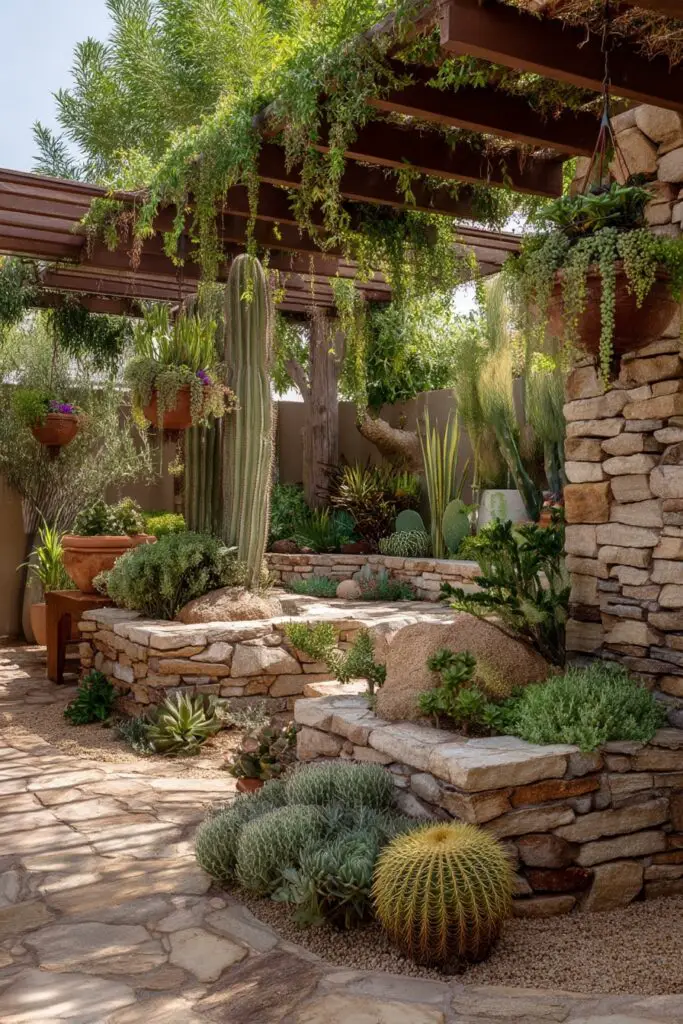
When space is limited, think up instead of out. Vertical design elements are essential in small backyard landscaping, especially in desert environments where layering texture and height can add richness without taking up precious ground space.
Raised garden beds, stacked stone planters, and terraced slopes not only add dimension but also create a feeling of elevation and movement. Incorporate desert plants of varying heights—like low-growing barrel cacti paired with tall saguaro or ocotillo—to build vertical interest. Hanging baskets, trellises, and even pergolas with cascading vines or ornaments can further enhance the sense of upward flow.
You can also use changes in elevation, like a few steps leading to a raised patio or a sunken fire pit area, to visually break up the space and create the illusion of depth. These subtle shifts make the yard feel more dynamic and thoughtfully designed.
Draw the Eye
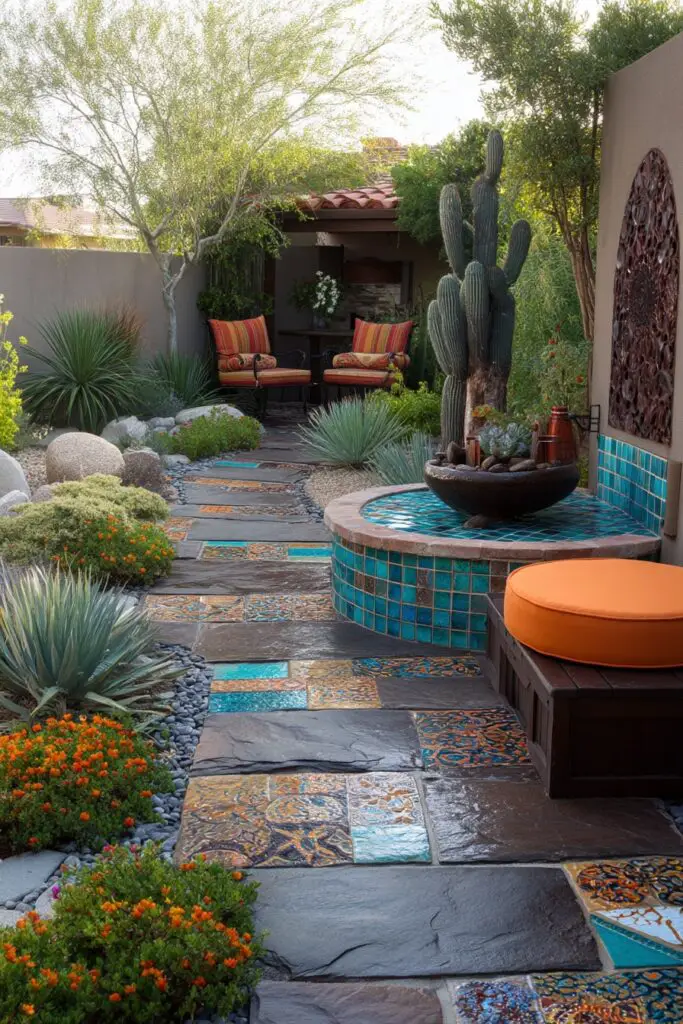
In small backyard landscaping, guiding the viewer’s attention can have a big impact on how spacious and engaging the yard feels. Instead of highlighting the size of the space, shift the focus toward intentional focal points that create interest and flow.
Curved or zig-zagging pathways—made from flagstone, decomposed granite, or wood—encourage movement and exploration. These indirect lines make the yard feel less linear and more layered. Strategic focal points like a sculptural cactus, a bubbling fountain, or a cozy seating area on a raised deck naturally pull the eye and invite people to linger.
Don’t be afraid to incorporate vibrant Southwestern colors like turquoise, terracotta, or burnt orange. A few well-placed pops of color among neutral desert tones can energize the landscape and draw attention exactly where you want it. The key is to keep it balanced—every visual element should serve a purpose in creating harmony and depth.
Conclusion
With a thoughtful design approach, small backyard landscaping can feel anything but limited. By using smart zoning, bold features, and natural desert elements, you can turn even the smallest outdoor space into a personal retreat. Think vertically, guide the eye with purpose, and connect your landscape to your home and surroundings. Your desert escape doesn’t need a sprawling lawn—just creativity, intention, and a deep appreciation for the beauty of the Southwest.