
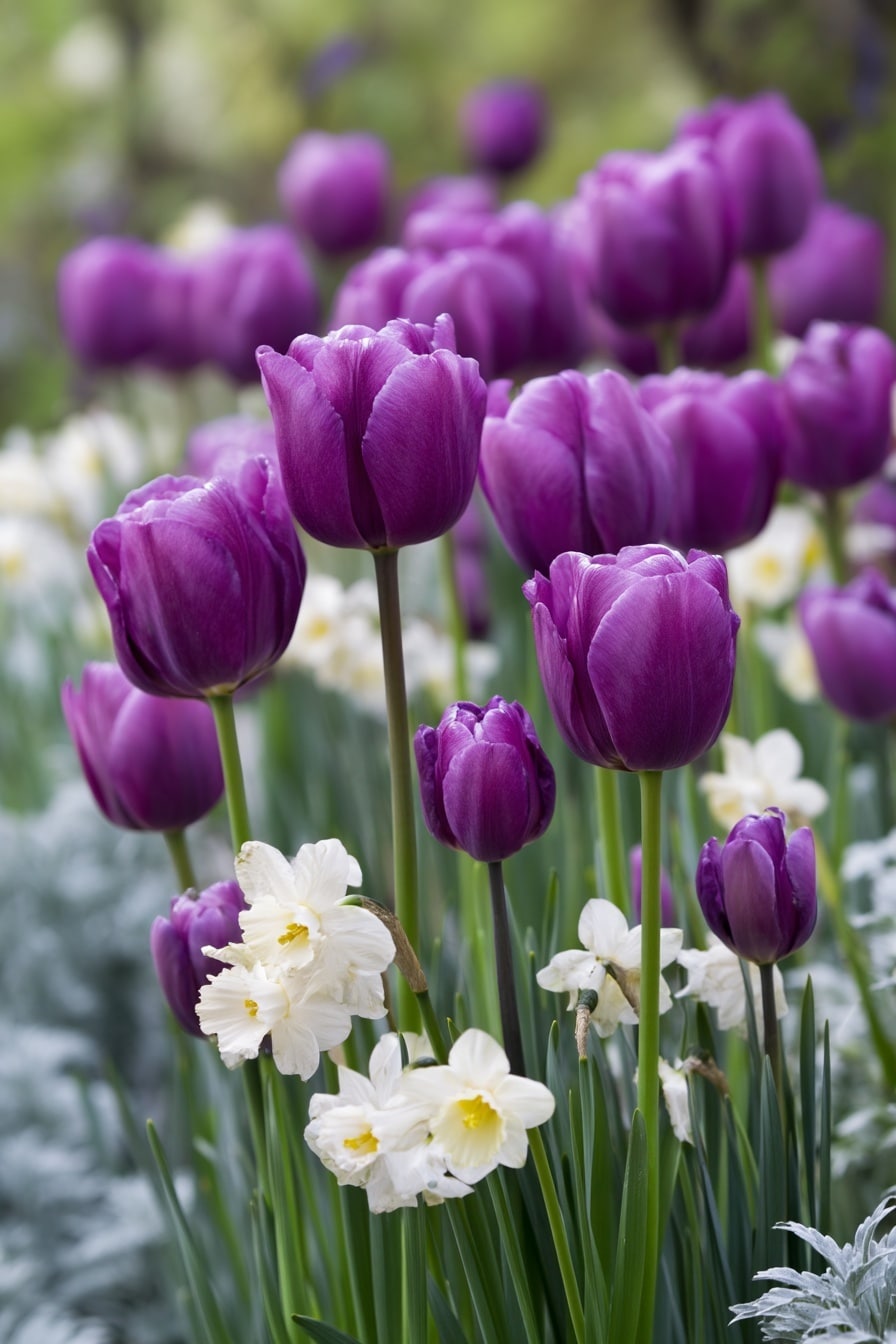
Purple tulips bring a sense of royal elegance to spring gardens, captivating with their rich hues and graceful form. Known for their velvety petals and noble symbolism, these tulips stand tall among spring bloomers, offering color, contrast, and timeless charm. From deep plum tones to soft lavender shades, purple tulips add drama to borders, containers, and floral arrangements alike. Their striking appearance isn’t just visual—these flowers carry centuries of cultural meaning tied to royalty, admiration, and devotion. Whether you’re designing a classic flower bed or creating a modern spring display, purple tulips are a regal choice for any gardener.
Table of Contents
1. Quick Facts About Purple Tulips

If you’re thinking of adding purple tulips to your garden, it’s helpful to understand their growing habits and preferences. These spring-flowering bulbs are part of the lily family and thrive in climates with a cool winter chill. While they’re technically perennials, many gardeners treat them as annuals, especially in warmer or wetter regions where reblooming can be inconsistent.
- Botanical Name: Tulipa spp. and hybrids
- Hardiness Zones: USDA 3–8 (pre-chill in warmer zones)
- Bloom Time: Spring (March to May)
- Sun Requirements: Full sun preferred; light afternoon shade may extend bloom
- Soil: Well-drained, sandy or loamy soil—avoid soggy conditions
- Height & Habit: Upright, clump-forming growth; varies by variety
- Toxicity: Bulbs are toxic to cats and dogs (contains tulipalin A & B)
For the best results, plant bulbs in the fall, 6–8 inches deep and 4–6 inches apart. Water well after planting and during spring growth, but allow the soil to remain dry during dormancy.
2. Aesthetic Appeal of Purple Tulips
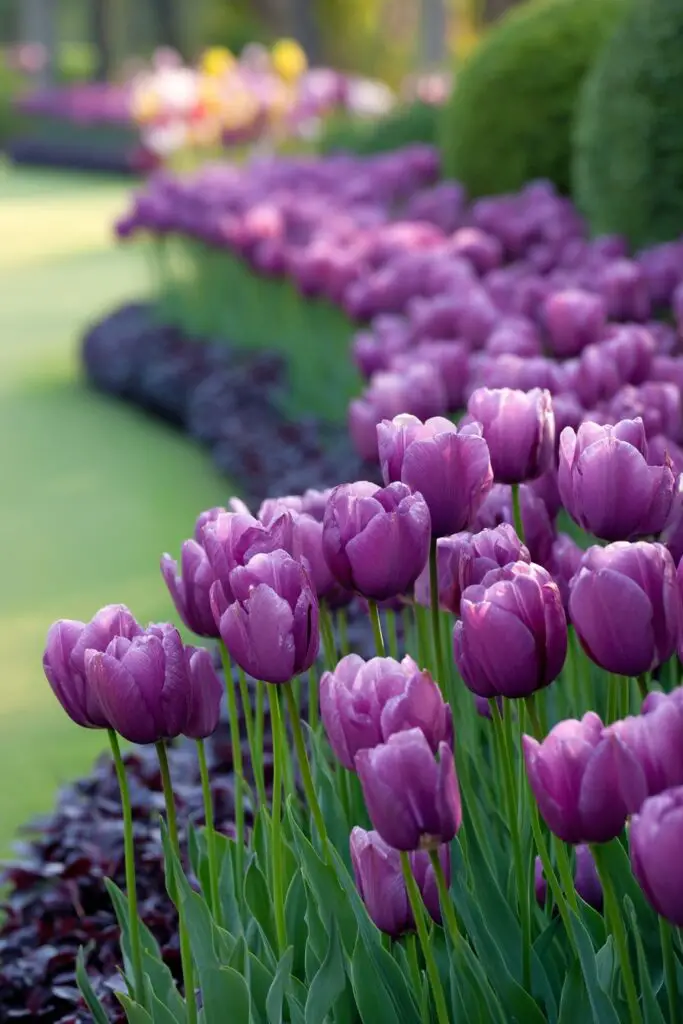
The visual impact of purple tulips is nothing short of stunning. Their rich, velvety tones range from pale lavender to deep royal purple and even near-black varieties. These dramatic shades bring depth and elegance to spring landscapes, instantly drawing attention whether planted alone or among other blooms.
Their smooth, cup-shaped petals and upright stems create a clean, classic silhouette that pairs well with almost any garden style—from formal borders to naturalized cottage beds. In cut arrangements, purple tulips hold their shape beautifully and provide a bold pop of color that balances softer-toned flowers like white daffodils or blush hyacinths.
Grouped in clusters or lined along a pathway, purple tulips make a refined yet powerful statement in any spring garden.
3. Symbolism and Meaning of Purple Tulips
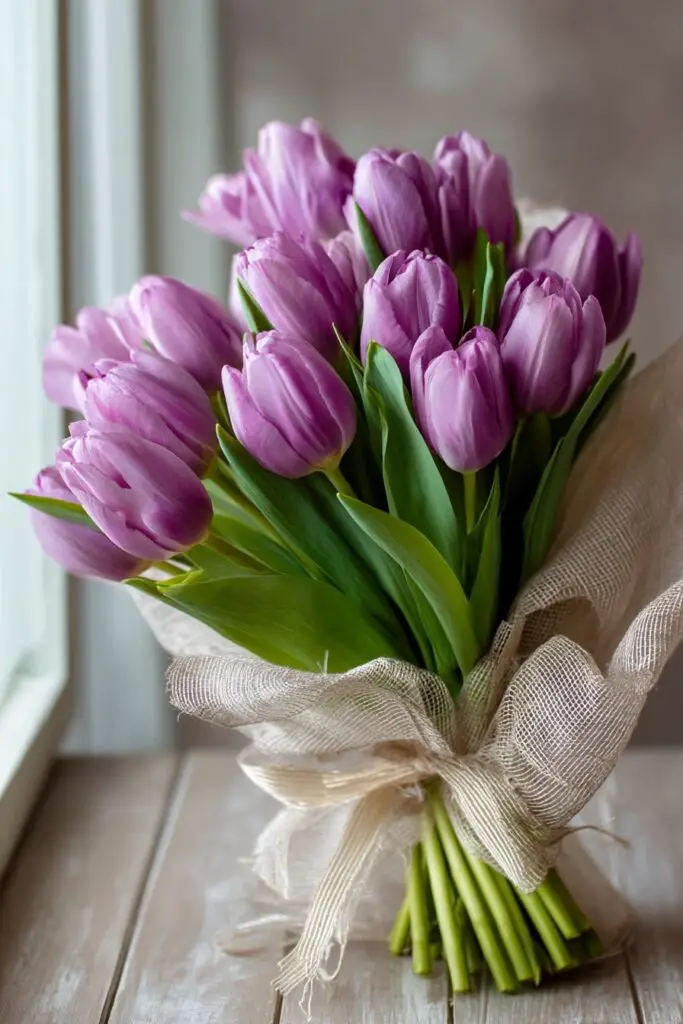
Throughout history, purple tulips have carried a deep and regal symbolism. Their rich color has long been associated with royalty, luxury, and power—traits that stem from the era when purple dye was rare and reserved for the elite. Today, gifting or planting purple tulips still conveys a sense of admiration and high regard.
In the language of flowers, they represent respect, spirituality, and devotion, making them a thoughtful choice for both joyful celebrations and more reflective moments. Their mysterious undertones also add a sense of intrigue and sophistication to garden designs and bouquets alike.
Whether used to express emotion or simply to elevate your garden’s aesthetic, purple tulips are a meaningful and stylish choice.
4. Planting & Care Tips for Purple Tulips
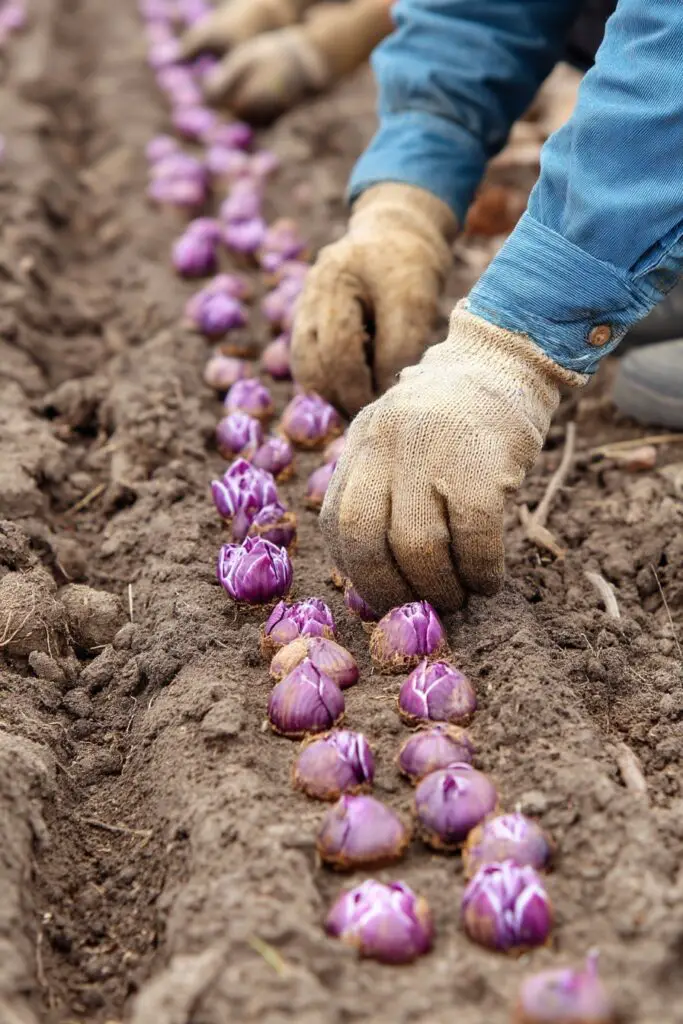
To enjoy a vibrant display of purple tulips in spring, proper planting and care are key. These bulbs are typically planted in the fall, allowing them to establish roots before winter sets in. Choose a sunny location with well-drained soil—tulips dislike soggy ground, which can lead to rot.
- Planting Depth: 6–8 inches deep, pointed end up
- Spacing: 4–6 inches apart for fuller displays
- Watering: Water after planting and during active spring growth; keep soil relatively dry during summer dormancy
- Fertilizer: Apply a balanced fertilizer (10-10-10) at planting and again as shoots emerge—avoid putting fertilizer directly in the hole
- Warm Climates: In USDA zones 9 and above, pre-chill bulbs for 12–16 weeks in a refrigerator before planting
After blooming, deadhead spent flowers but leave the foliage intact until it yellows naturally—this helps the bulb store energy for the next season. With just a little care, purple tulips will reward you with a royal bloom each spring.
5. Design Ideas & Companion Plants for Purple Tulips
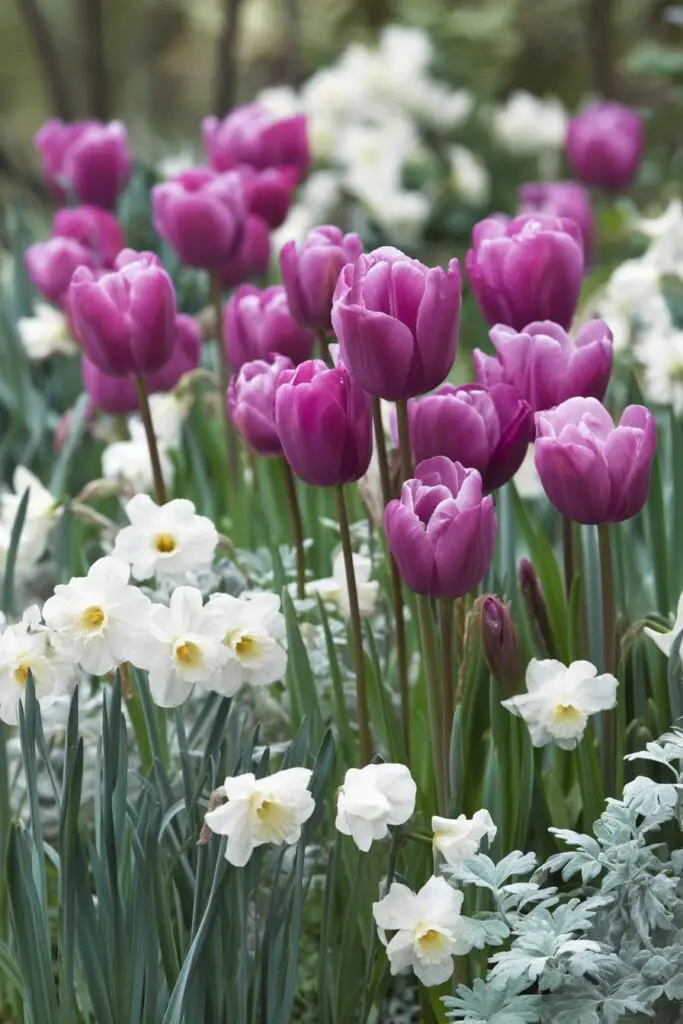
When designing with purple tulips, think contrast and texture. Their bold hues pop beautifully against softer or lighter-toned spring flowers, creating dynamic and elegant garden displays. Whether you’re planting in formal rows or natural-looking drifts, purple tulips instantly add depth and sophistication.
Companion Plants That Pair Well:
- White Daffodils: Create a crisp, classic contrast
- Blush or Pink Hyacinths: Add soft, romantic tones
- Silver-leaved Perennials: Like lamb’s ear or artemisia, to enhance the richness of the purple
- Evergreen Hedges: Provide a timeless backdrop and structure
Try grouping different purple tulip varieties together—mixing lighter lavender tones with deep plum or near-black cultivars—for a layered, tonal effect. Raised beds, containers, and borders all benefit from these vivid blooms. For maximum impact, plant in odd-numbered clusters and repeat the pattern throughout the garden.
Purple tulips are not just flowers—they’re a statement of style and season.
Conclusion
Purple tulips bring a sense of royalty and refinement to spring gardens. Their luxurious color, elegant form, and meaningful symbolism make them a standout choice for gardeners looking to add depth, emotion, and timeless beauty to their landscapes. With the right care, planting techniques, and thoughtful companions, purple tulips can be the crown jewel of any spring garden design—whether in a formal border, rustic container, or modern mix.