
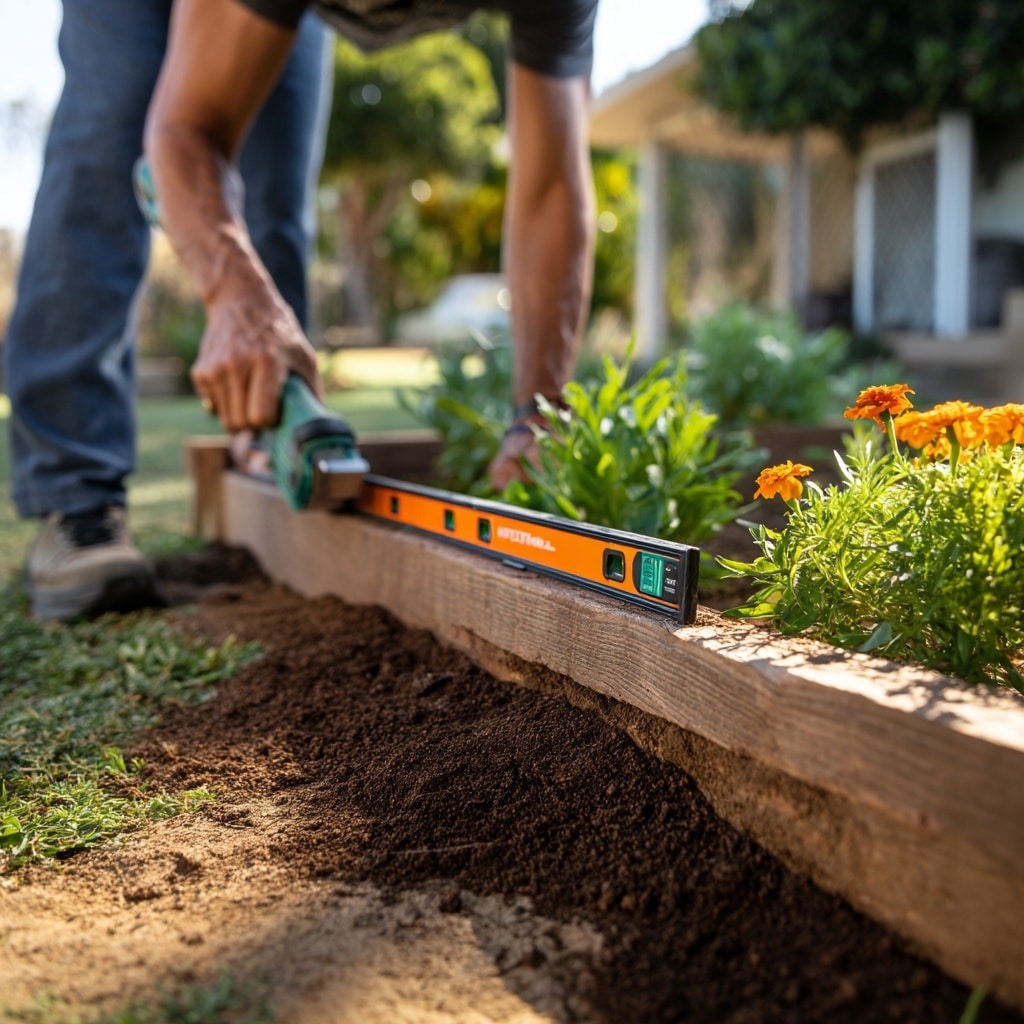
Raised garden beds are a game-changer for anyone who wants to grow vegetables, herbs, or flowers without battling poor soil, back pain, or invasive weeds. Whether you’re a first-time gardener or someone looking to upgrade their outdoor space, raised garden beds offer better drainage, easier maintenance, and improved yields. In this guide, you’ll learn exactly how to build your own raised garden bed from scratch — no complicated tools or experience needed. Just five straightforward steps and you’ll be planting in no time, with a bed built to last season after season.
Table of Contents
🪚 Step 1: Cut Your Boards to Size

Before you begin assembling your raised garden beds, you’ll need to prepare your lumber. The most common and manageable size for a raised bed is 4 feet by 8 feet, which offers plenty of growing space without being too wide to reach into from either side.
For each bed, you’ll need:
- 6 boards, each 8 feet long (1 inch thick cedar is ideal for durability and food safety)
- A circular saw or miter saw
- Measuring tape and pencil
- Safety gear (gloves, safety glasses)
Start by cutting three of the 8-foot boards in half, creating six 4-foot boards. These will serve as the short sides of your raised bed. The remaining three full-length boards will be the long sides.
💡 Tip: Measure twice, cut once. Ensuring accurate cuts now will save time and headaches during assembly.
Once your boards are cut, set them aside in pairs — two long boards and two short boards for each layer of your raised bed.
🔩 Step 2: Drill Pocket Holes for Clean, Strong Joints
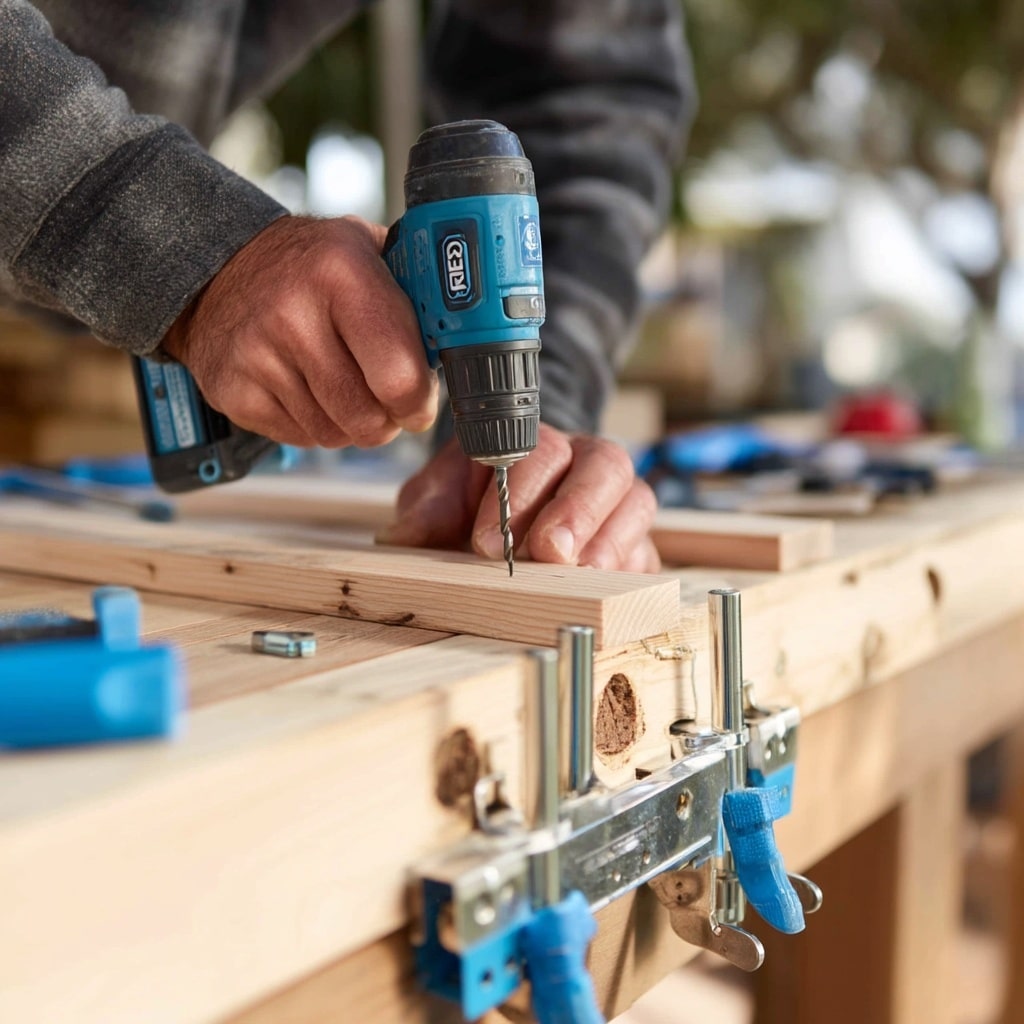
Now that your boards are cut, it’s time to prep them for assembly by creating pocket holes. These angled holes allow you to join boards securely without visible screws on the outside — giving your raised garden beds a clean, finished look.
What You’ll Need:
- Pocket hole jig (such as a Kreg Jig)
- Drill with driver bit
- Wood screws (1½ to 2 inches, exterior-grade)
- Clamps (optional but helpful)
Drill three pocket holes on each end of the shorter boards (the 4-foot pieces). This ensures a strong connection when they’re fastened to the longer sides during assembly. Keep the holes spaced evenly, about 1 to 2 inches from each edge and one in the center.
💡 Pro Tip: Use cedar-specific or stainless steel screws to prevent corrosion over time, especially if your garden gets plenty of moisture.
🧱 Step 3: Assemble the Raised Garden Bed Frame
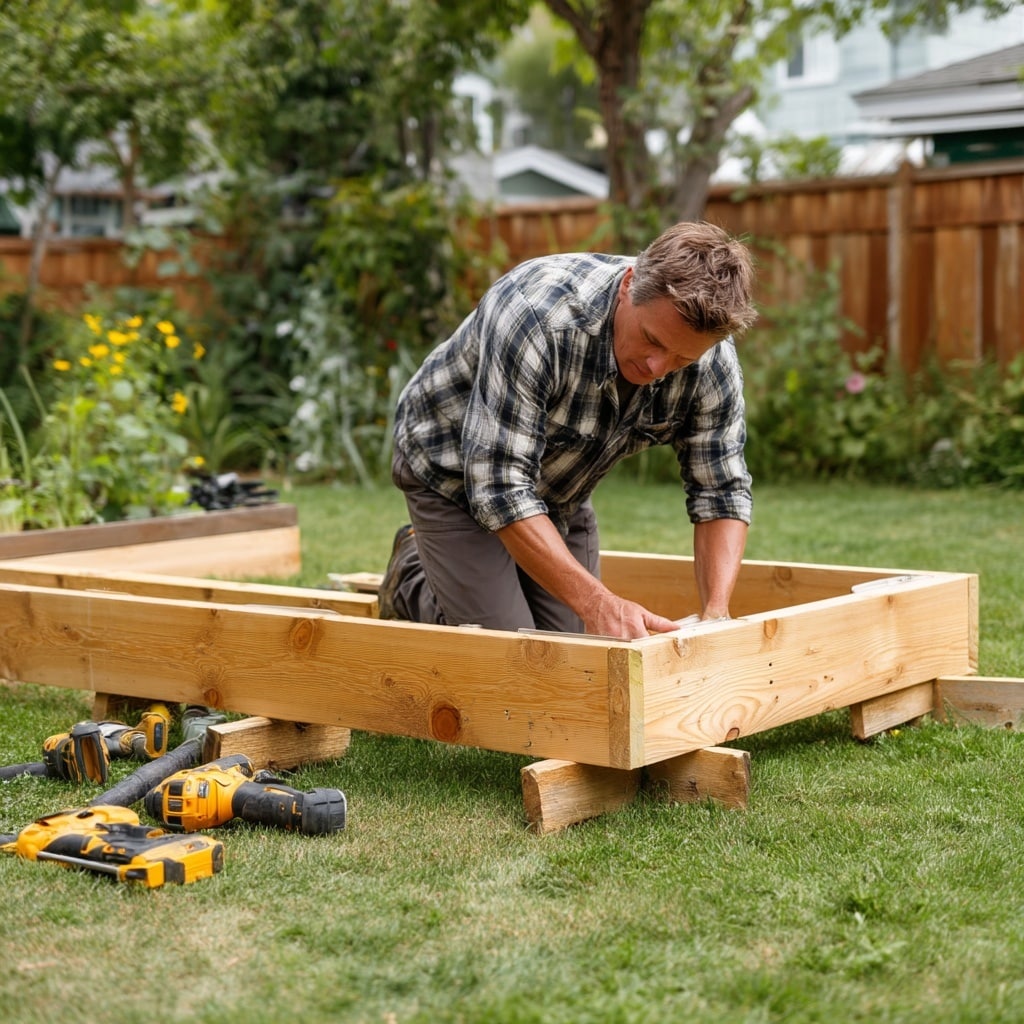
With your boards cut and pocket holes drilled, it’s time to bring your raised garden bed to life. The assembly process is simple and doesn’t require a second pair of hands if you use clamps or sawhorses for support.
Assembly Instructions:
- Lay out your boards: Set two long boards parallel on a flat surface, and position a short board at each end to form a rectangle.
- Clamp for stability: If you’re working alone, secure the boards using corner clamps or sawhorses to hold everything in place.
- Join the boards: Drive screws through the pocket holes in the short boards and into the ends of the long boards. Check that each corner forms a tight 90° angle.
- Repeat for additional tiers: If you’re stacking layers for more height (16″ or taller), repeat the process to build additional frames and stack them securely.
💡 Tip: If your yard has uneven ground, don’t worry about perfect leveling just yet — you’ll handle that in Step 5.
For best results, build your raised garden beds in a shaded area or garage, then move them into place once assembled.
🪓 Step 4: Secure the Frame with Corner Stakes
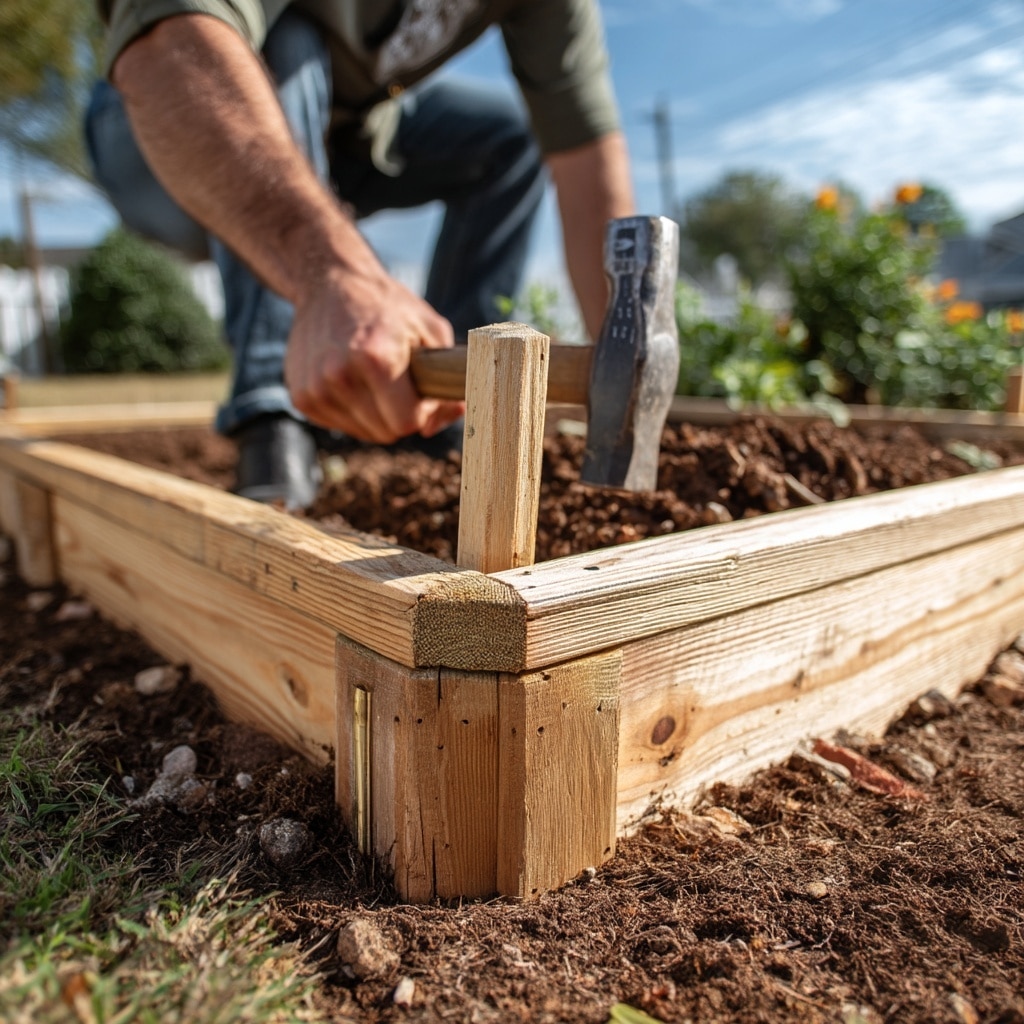
Once your garden bed frame is assembled, the next step is to make sure it stays put — especially when filled with heavy soil. Installing corner stakes will anchor your raised garden beds and help keep them square and stable over time.
What You’ll Need:
- Four wooden stakes (2″ x 2″ cedar or pressure-treated, at least 18″ long)
- Hammer or mallet
- Drill with pilot bit
- Exterior-grade screws
How to Do It:
- Position the bed: Set the frame in its final location. Make sure it’s aligned the way you want.
- Drive in stakes: At each corner, hammer a stake into the ground on the inside of the frame. Drive them at least halfway down for strong support.
- Drill pilot holes: This prevents the cedar from splitting when you screw into the stake.
- Screw the frame to the stakes: Use 2–3 deck screws per board at each corner to lock everything in place.
💡 Optional: For extra support, you can add two more stakes at the midpoints of the longer sides — especially helpful if your bed is over 8 feet long.
Stakes not only prevent shifting but also help keep your raised garden beds level once filled with soil.
🧰 Step 5: Level and Finalize Your Raised Garden Bed
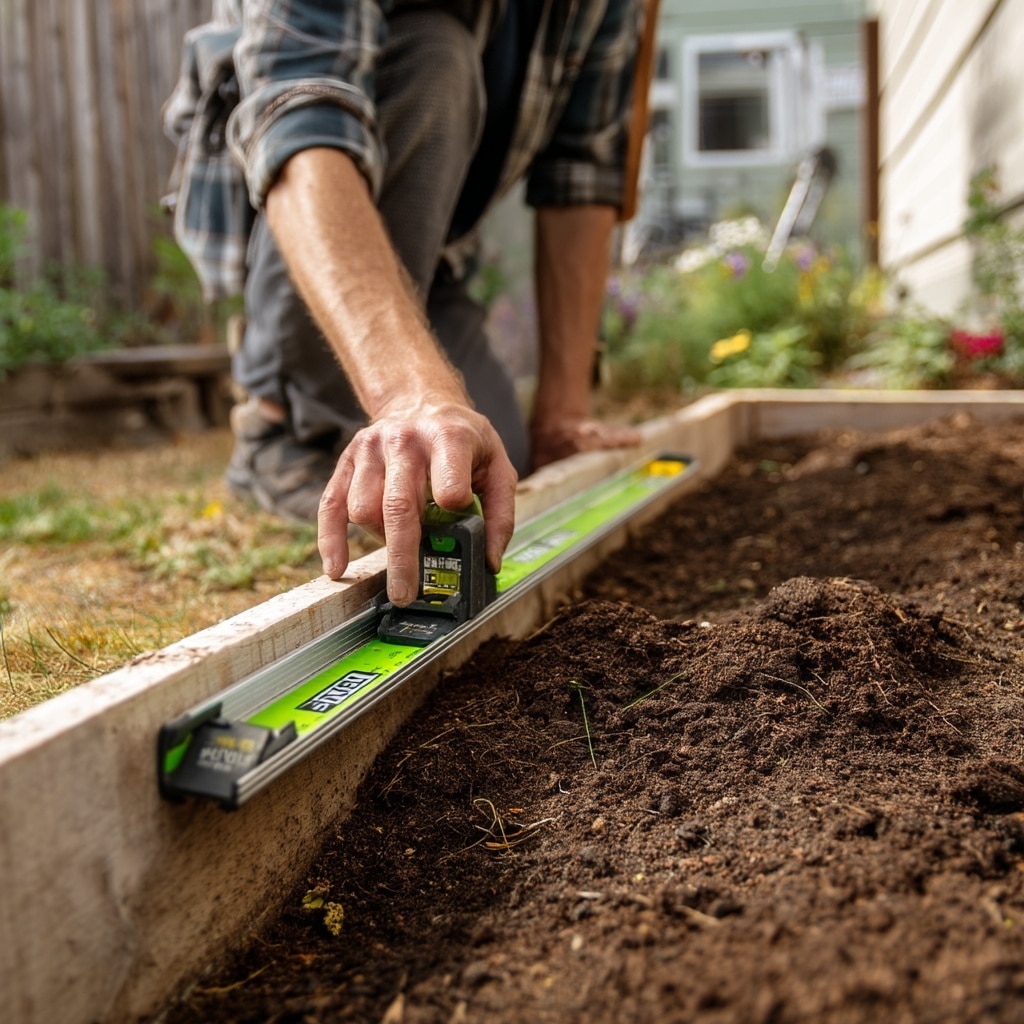
Before filling your raised garden beds with soil, it’s important to make sure the frame is properly leveled and secured. A sloped bed leads to uneven water drainage, soil erosion, and poor root development — none of which your plants will appreciate.
What You’ll Need:
- Carpenter’s level (at least 2 feet long)
- Shovel or hand trowel
- Additional stakes (optional)
- Drill and exterior screws
Steps to Level and Secure:
- Check the level from side to side and front to back. Place your level across the top edges of the bed.
- Adjust the ground beneath the frame. If one side is too high, remove a bit of soil. If too low, add and tamp down soil underneath until the bed is level.
- Re-check all corners. Once level, ensure all four corners are square and fully secured to the stakes.
- Add center stakes (optional). For longer beds (over 8 feet), install stakes at the midpoint of each long side for added support against soil pressure.
💡 Pro Tip: Once filled with soil, it’s difficult to make changes. Taking your time here saves future hassle.
With your raised garden bed leveled and secured, it’s ready to be filled with the right soil mix — and you’re just about ready to plant!
🌱 How to Fill Your Raised Garden Bed with the Right Soil Mix
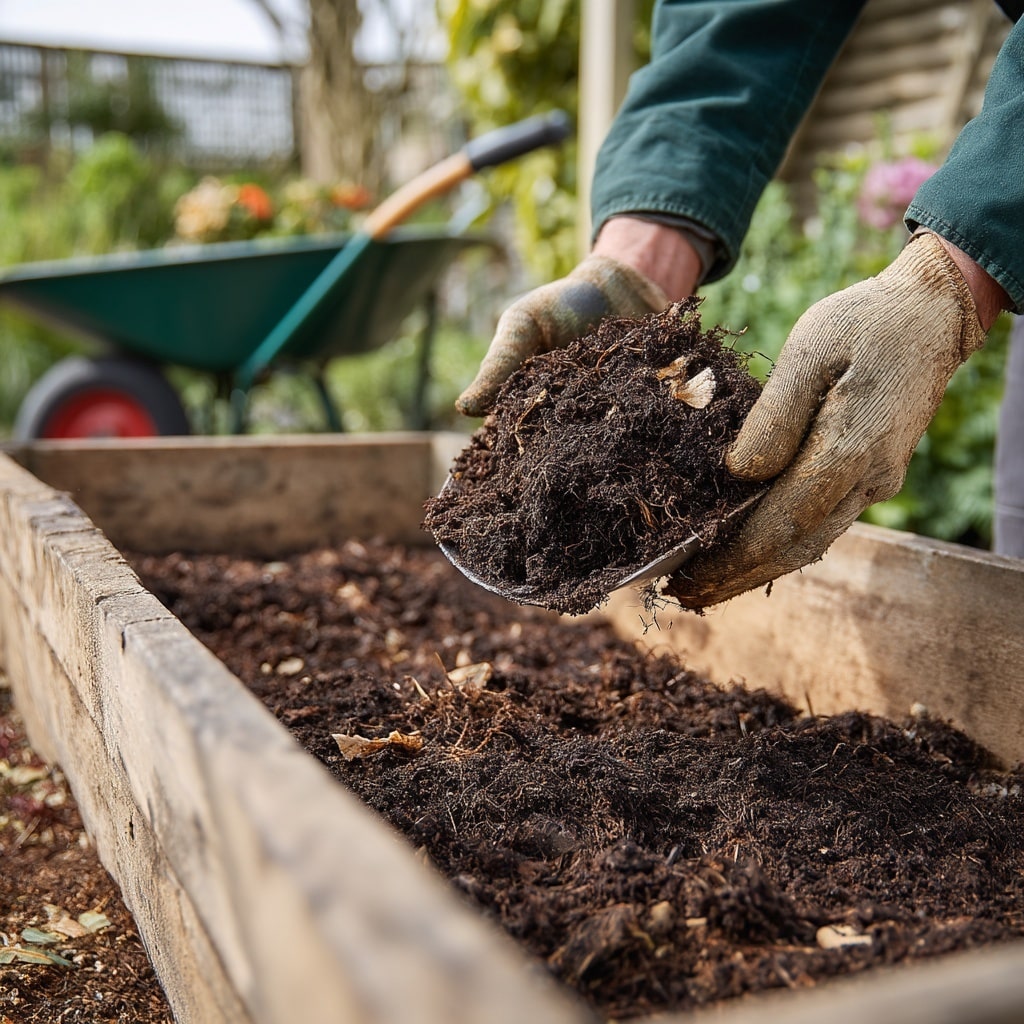
Now that your raised garden beds are assembled and level, it’s time to fill them with a nutrient-rich blend that promotes healthy root growth and retains moisture without getting soggy.
Recommended Soil Mix (per bed):
- 40% topsoil – Provides structure and bulk
- 40% compost – Adds organic matter and nutrients
- 20% peat moss or coconut coir – Improves aeration and moisture retention
Optional Additions:
- Perlite or vermiculite – For lighter texture and drainage
- Aged manure – Extra boost of nitrogen and microbes
- Worm castings – Enhances fertility and plant vigor
Tips for Success:
- Mix your ingredients thoroughly before filling the bed to ensure even distribution.
- Water the mix lightly as you add it to help it settle and remove air pockets.
- Leave about 1–2 inches of space at the top to prevent soil from spilling out when watering.
💡 Budget tip: If you’re building multiple raised garden beds, consider using a lasagna method (layering cardboard, twigs, leaves, and compost) to reduce costs while building rich soil over time.
Once filled, your bed is ready for planting — whether you’re growing tomatoes, lettuce, root crops, or herbs.
🌼 Conclusion: Enjoy Gardening Without the Strain
Building your own raised garden beds isn’t just a satisfying DIY project — it’s an investment in easier, more productive gardening. With better drainage, fewer weeds, and less back strain, raised beds let you focus on what really matters: growing healthy, delicious plants. And with just five simple steps, you’ve created a long-lasting structure that will serve you for years to come.
So grab your seeds, roll up your sleeves, and enjoy the satisfaction of growing from the ground up — just not in the ground.