
Garden design is no longer just about pretty flowers or trimmed hedges—it’s about creating a functional, year-round outdoor space that works for the whole family. A well-thought-out design can turn your backyard into a true extension of your home, offering areas for play, relaxation, entertaining, and quiet moments of reflection. Whether it’s sunny summer afternoons or crisp winter evenings, a seasonal garden layout ensures every part of your space has purpose and appeal. With the right balance of plants, structure, and comfort, you can achieve a garden that feels fresh and inviting in every season.
Table of Contents
Summer – Creating the Ultimate Outdoor Entertaining Space

When it comes to garden design in summer, the focus naturally shifts to outdoor living. A thoughtfully designed entertaining zone becomes the heart of the backyard, inviting family and friends to gather, relax, and enjoy the long, warm days.
A pergola with a high-pitched roof offers essential shade while allowing air to circulate freely. Underneath, a setup of weather-resistant lounge seating and a built-in outdoor kitchen makes this area perfect for weekend barbecues or evening meals. Adding water features—such as shallow ponds or bubbling fountains—brings a refreshing ambiance and a subtle cooling effect to the space.
Incorporating hardy plantings around the pergola not only softens the hard surfaces but also visually connects the structure to the rest of the garden. Choose evergreen shrubs and low-maintenance perennials that can withstand the heat while keeping the space lush and green.
For families, leaving room for open lawn near the entertaining area means kids can stay active and visible while the adults unwind. This balance between usability and comfort is what defines smart summer-focused garden design.
Autumn – Celebrating Colour and Seasonal Change
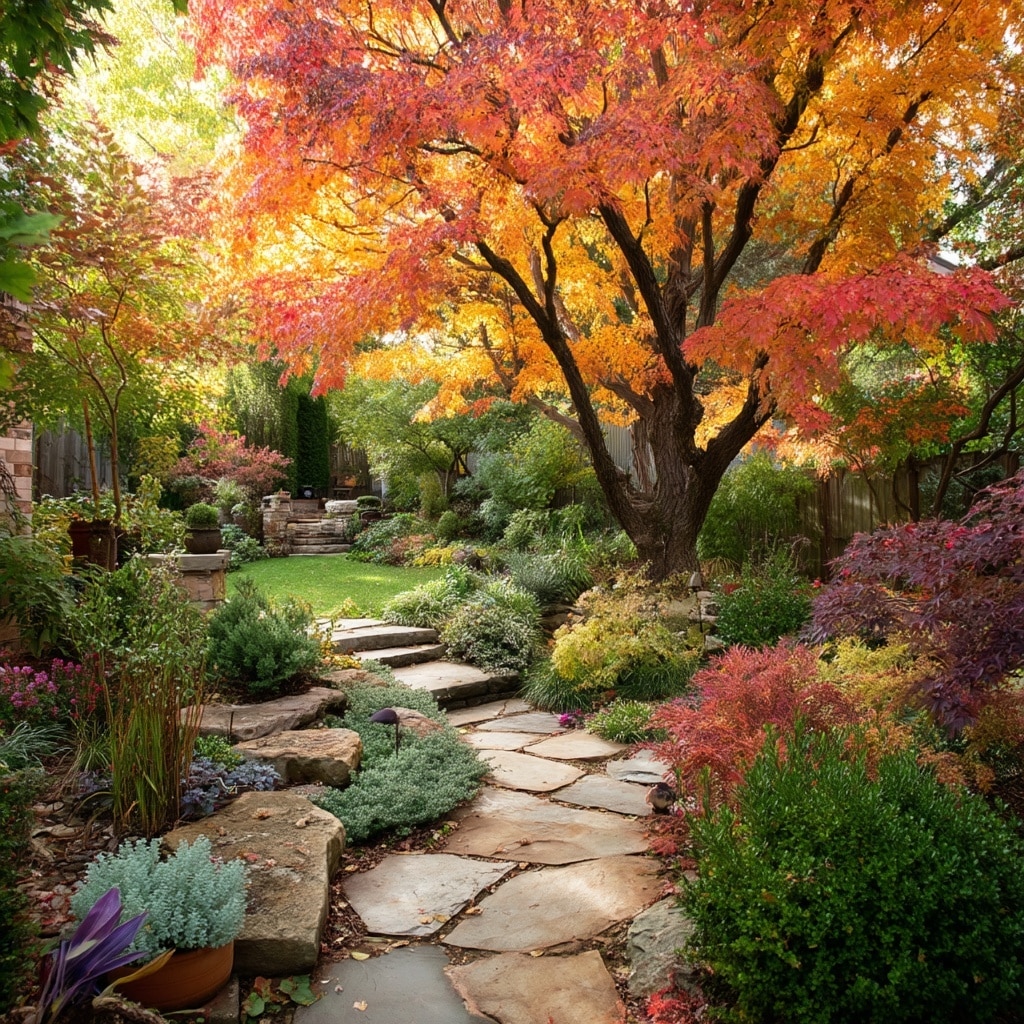
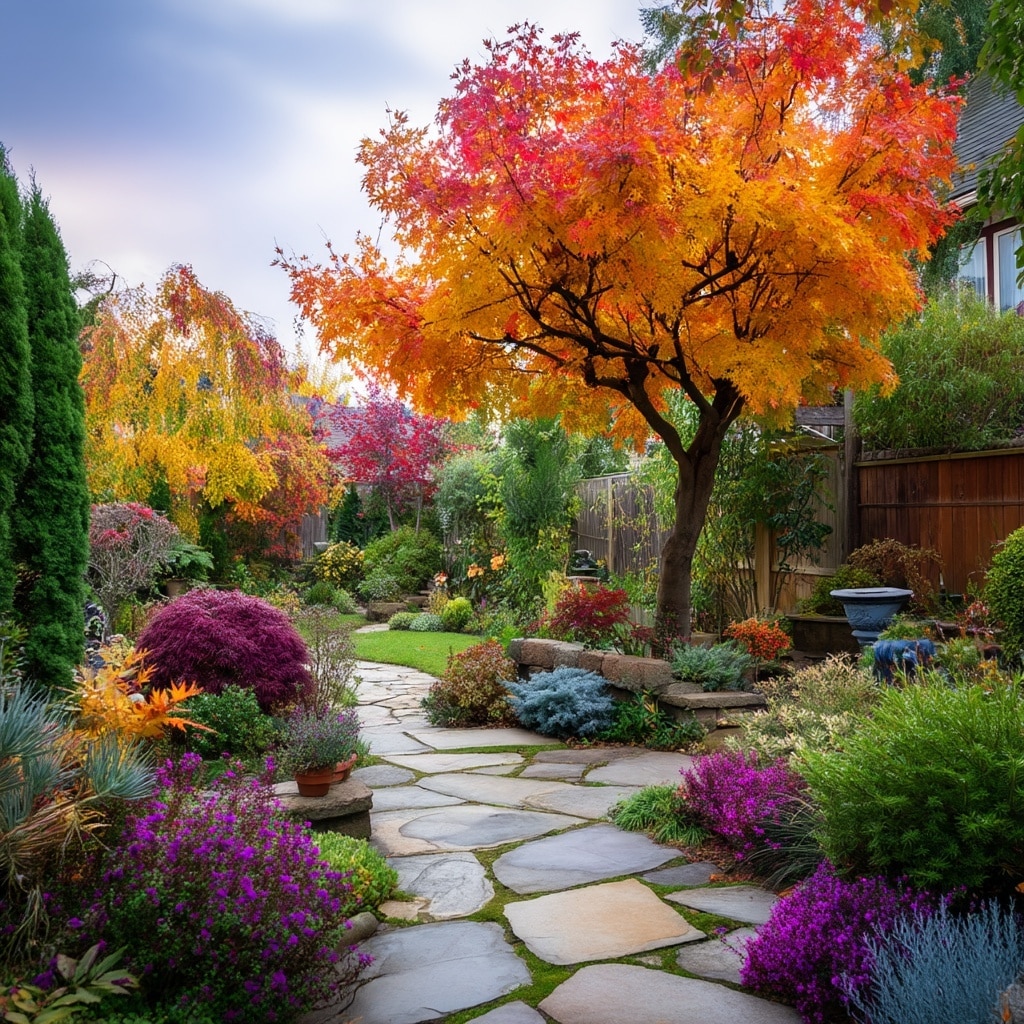
As temperatures cool and the light softens, garden design in autumn shifts its energy from play to pause. This is the season when colour takes centre stage, and the right plant choices can turn your garden into a breathtaking canvas of reds, oranges, and golds.
Deciduous trees like maples are a standout feature in any autumn garden. A mature specimen, such as an ‘Autumn Blaze’ maple, makes a bold statement and helps anchor the space, especially when positioned to contrast built elements like a pergola or deck. Smaller deciduous trees and shrubs can be staggered along fence lines or garden borders, building layers of interest and drawing the eye throughout the space.
Underplanting with compact varieties—think hydrangeas, gardenias, or ornamental grasses—adds texture without crowding the view. Using perennials in strategic groupings ensures there’s still greenery and structure after the leaves fall.
Autumn is also a great time to highlight the transitional qualities of your garden. Curved pathways, natural stone paving, and soft lighting help guide movement while reflecting the peacefulness of the season. A well-balanced garden design in autumn makes the most of nature’s drama, turning your outdoor space into a living artwork.
Winter – A Warm and Inviting Garden Retreat
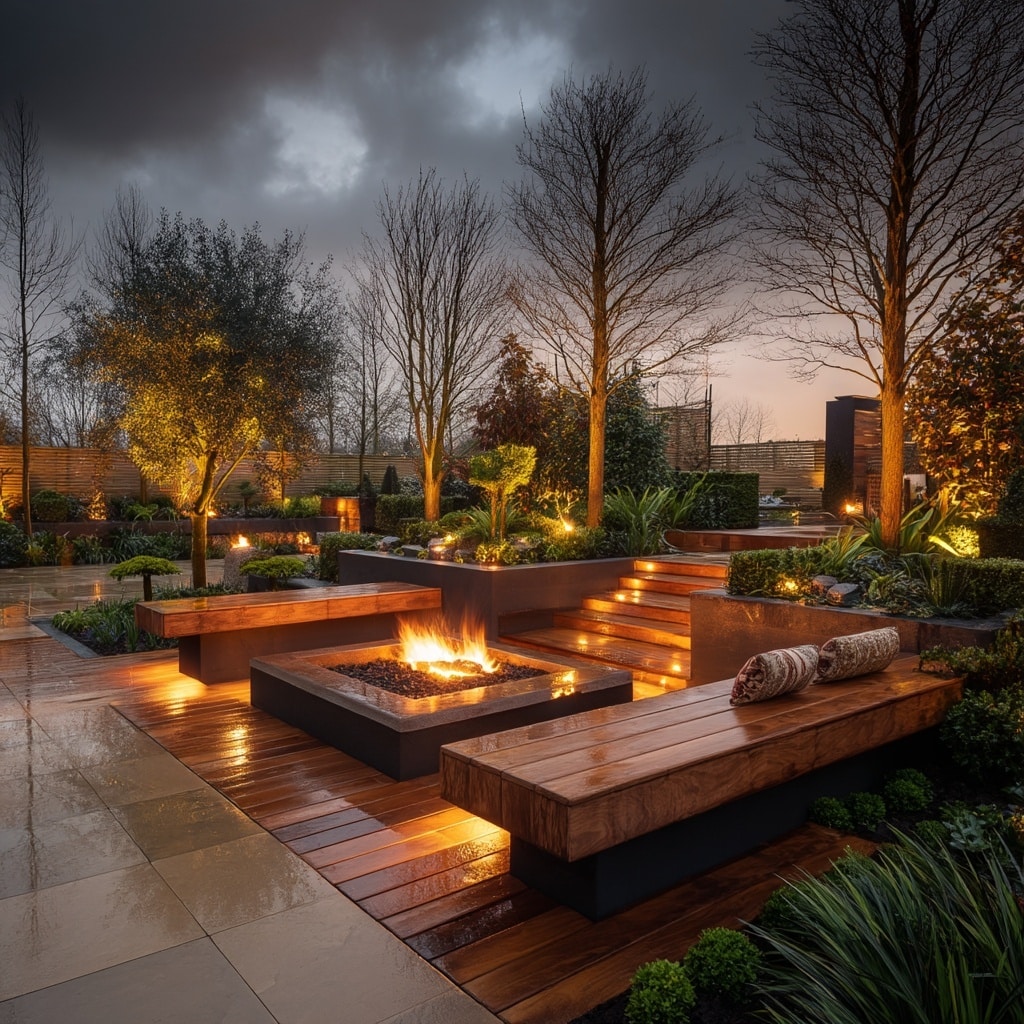
Winter doesn’t have to mean retreating indoors. With thoughtful garden design, the colder months can bring a sense of intimacy and calm to your outdoor space—especially when warmth and lighting are built into the layout.
A sunken fire pit becomes a natural gathering spot in winter, offering both heat and atmosphere. Surrounded by built-in bench seating and durable paving, this feature creates a cozy nook that encourages connection even when the air is crisp. Using materials like bluestone underfoot provides a slip-resistant, weather-hardy surface, while timber or cypress finishes add visual warmth and contrast.
Strategically placed lighting is essential in winter garden design. Uplighting feature trees or using recessed strip lighting under seats adds depth, safety, and a soft glow that transforms the garden at dusk. These subtle touches enhance the experience of being outdoors, even on short days.
Plant choices for winter should include evergreens and structured forms, such as clipped hedges or sculptural shrubs, to maintain visual interest when flowers are sparse. By designing for winter use, your garden becomes a true four-season space—where comfort, beauty, and function remain front and centre.
Spring – Bringing the Garden to Life with Colour and Texture
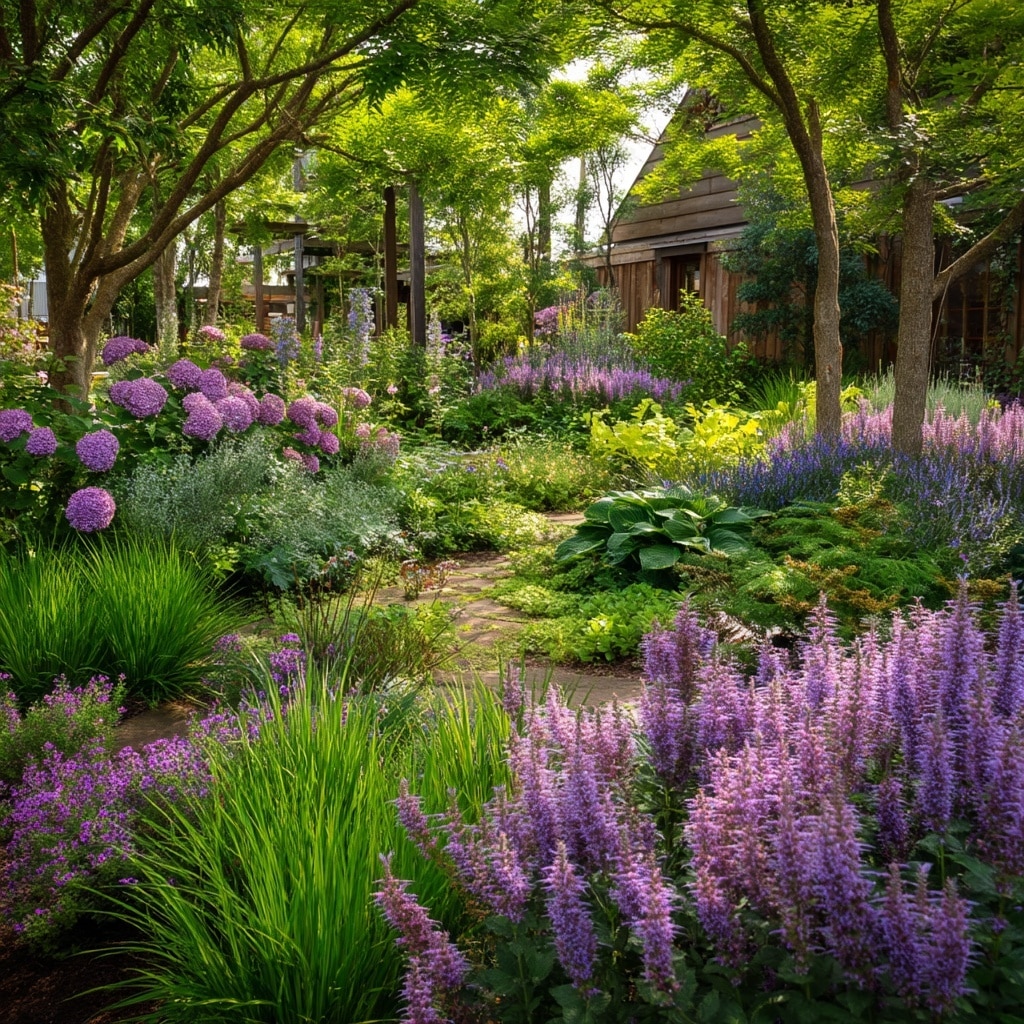
Spring is when a well-planned garden design truly comes alive. After the stillness of winter, this season delivers a burst of colour, fragrance, and fresh growth that revitalizes every corner of your outdoor space.
Incorporating flowering perennials like Agastache and Penstemon ensures a vivid display, while classic shrubs such as gardenias and hydrangeas add both structure and softness. When planted in layers—tall behind, medium in the middle, and low-growing varieties in front—these selections create a visually rich, balanced look that draws people in.
Spring is also the ideal time to highlight texture and form. Ornamental grasses like Miscanthus provide movement and contrast, especially when paired with clipped evergreens such as camellia balls. These contrasting elements offer rhythm and flow, helping to guide the eye across the garden without overwhelming it.
The transition from hard surfaces to planting zones should feel seamless. Use curved beds or raised planters to gently soften edges, while maintaining visual structure. And remember: spring growth can be fast and wild, so a clear design helps contain the energy while showcasing its beauty.
A spring-ready garden design creates joyful, welcoming spaces that invite families outdoors to reconnect with nature.
Design Features That Balance Function and Beauty
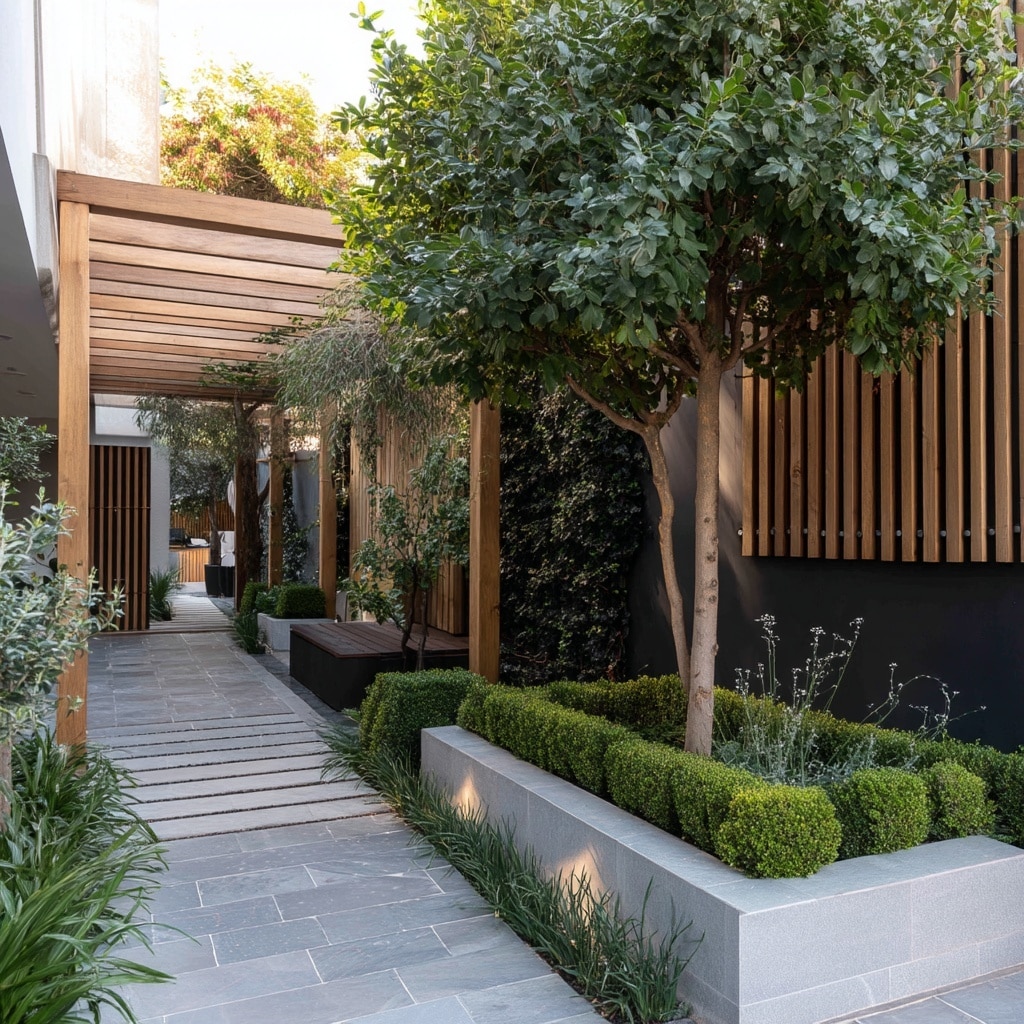
A successful garden design isn’t just about seasonal beauty—it’s about creating a space that works for real-life use. For families, that means combining comfort, privacy, safety, and flexibility without sacrificing visual appeal.
Start by establishing a strong layout. Pathways made from natural materials like bluestone help guide movement between zones and define the garden’s structure. These surfaces are not only durable and slip-resistant but also add contrast and texture, grounding the softer plant elements.
To maintain privacy without closing off the garden, hedging plants like Ficus hillii work beautifully. They provide a lush, green backdrop and act as a natural fence, blocking unwanted views while contributing to the overall landscape. In smaller spaces, slimline screening with timber battens—such as rough-sawn cypress—offers a stylish alternative that blends into plantings and feels organic.
Built elements like pergolas and fire pits should be designed with scale in mind. A mature tree, such as a maple, can help visually balance taller structures, creating harmony between architecture and planting. Likewise, choosing plantings that don’t obstruct sightlines—like compact hydrangeas or low-growing perennials—ensures the space feels open and connected.
Every element in a functional garden design should serve a purpose: visual interest, comfort, or flow. When these features work together, the result is a garden that feels natural, inviting, and lived-in—exactly how a family garden should be.
Lighting – Enhancing Mood and Safety in the Garden
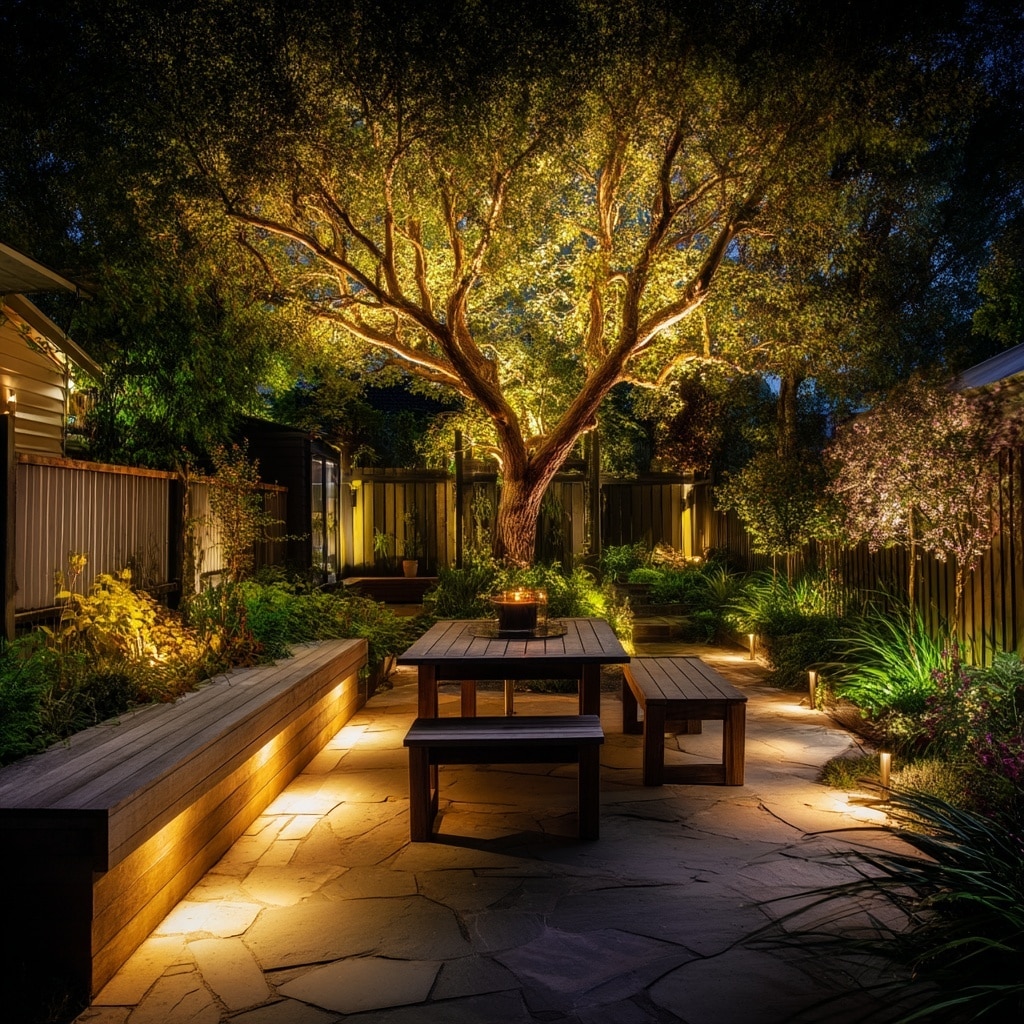
Good lighting elevates any garden design, extending its use into the evening while creating atmosphere and enhancing safety. It’s not just about visibility—it’s about highlighting the right features, setting the mood, and supporting how the space is used.
Start with focal points. Uplighting feature trees like maples or large shrubs adds drama and draws attention to the garden’s natural structure. In areas like the fire pit or pergola, use soft strip lighting under seating or along pathways to define spaces without harsh glare.
Lighting can also improve navigation and comfort. Low-level garden lights placed near steps, level changes, or plant borders make movement safer and easier at night, especially for children or older family members. Choose warm white LEDs for a cozy feel, and ensure all fixtures are weather-rated for long-term durability.
Don’t overdo it—too much lighting can wash out the garden’s textures and create visual noise. Instead, keep the lighting scheme subtle and strategic. The goal is to complement the natural beauty of your outdoor space, not compete with it.
When well-planned, lighting becomes an invisible yet powerful part of garden design, helping your garden function beautifully from sunrise to long after sunset.
Conclusion
A thoughtful garden design can transform an ordinary backyard into a dynamic, year-round sanctuary for the entire family. By tailoring your space to the rhythm of the seasons—whether it’s a shaded lounge in summer, fiery autumn foliage, a cozy winter fire pit, or the fresh bloom of spring—you create a garden that’s as functional as it is beautiful.
Blending structure with softness, privacy with openness, and practicality with style ensures your garden doesn’t just look good—it works for your life. Whether you’re entertaining guests, relaxing solo, or watching the kids play, a well-designed garden becomes part of your everyday joy.