
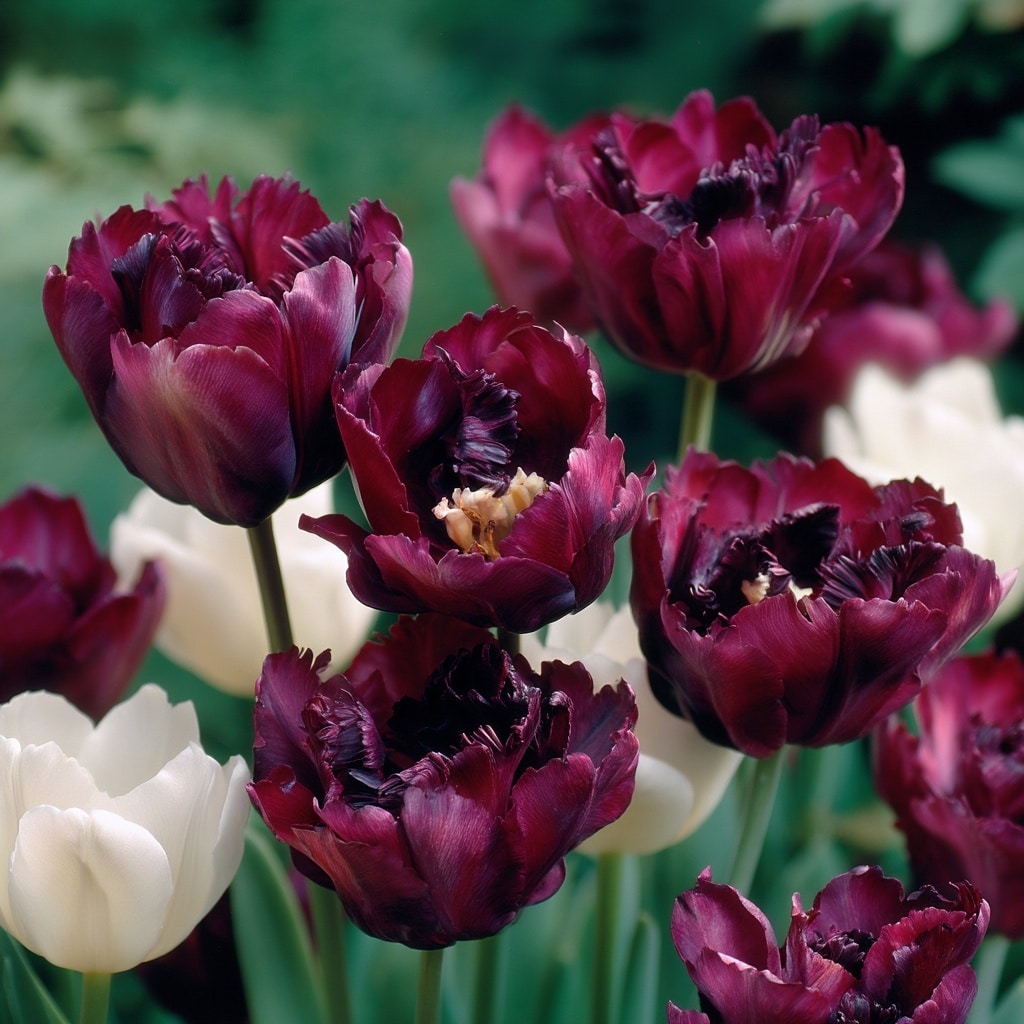
Purple tulips bring elegance, depth, and drama to spring gardens like no other flower can. Ranging from soft lavender hues to nearly black petals, these captivating blooms add rich contrast and pair beautifully with both bold and pastel plantings. Whether you’re aiming for a moody monochrome bed or mixing them with whites, yellows, or even fiery oranges, purple tulips elevate your design with sophistication and flair.
With so many stunning varieties available, it’s easy to find one that fits your garden style—whether you want frilly textures, bicolors, or bold, velvety petals. In this guide, we’ll walk you through seven striking purple tulip cultivars and offer growing tips to keep your spring display unforgettable.
Table of Contents
Why Gardeners Love Purple Tulips

There’s something undeniably captivating about purple tulips. Their deep, rich tones add depth and contrast that can’t be matched by brighter hues alone. In garden design, purple acts as a visual anchor—it balances bold colors and soft pastels, making it a favorite among both traditional and modern gardeners.
A Versatile Color in the Landscape
Purple pairs beautifully with:
- Bright greens like euphorbias or lady’s mantle
- Soft whites such as daffodils, camassias, or anemones
- Bold tones like orange or red tulips for high contrast
Their wide color range—from dusty lavender to velvety maroon—means purple tulips can shift between romantic, moody, modern, or whimsical themes depending on what you plant alongside them.
Symbolism and Emotional Appeal
Purple is historically associated with:
- Royalty and luxury
- Mystery and creativity
- Spiritual calm and reflection
When planted en masse, these tulips can feel like a soft, regal carpet. As focal points, they’re bold without being overwhelming.
It’s this blend of beauty, symbolism, and versatility that keeps purple tulips at the top of must-grow lists for spring gardeners everywhere.
7 Stunning Purple Tulip Varieties to Grow
Not all purple tulips are created equal—some are nearly black, others have frilly edges, and a few are beautifully bi-colored. Below are seven must-grow cultivars that bring unique style and impact to any spring garden.
🌷 Tulip ‘Queen of Night’
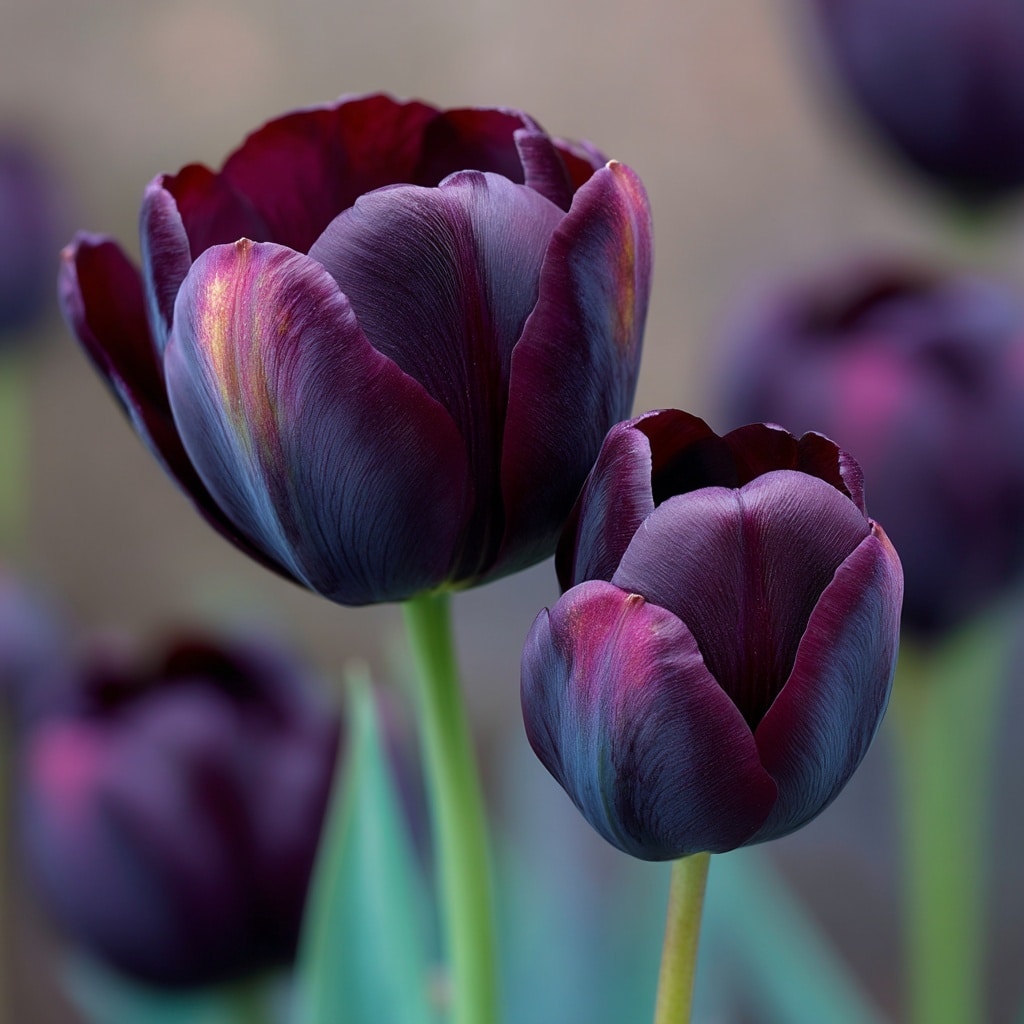
Color: Deep, velvety maroon—so dark it’s almost black
Type: Single late tulip
Height: 24–26 inches
Bloom Time: Late spring
Often called the darkest tulip in existence, ‘Queen of Night’ is a timeless classic. Its rich, saturated color adds moody elegance to beds and borders. Pair it with pale blooms like white tulips or daffodils for contrast, or cluster it with other dark varieties for a gothic, dramatic display.
Gardeners love it for its height and reliable bloom, making it perfect for the back of borders or as a centerpiece in a container arrangement.
🌷 Tulip ‘Arabian Mystery’
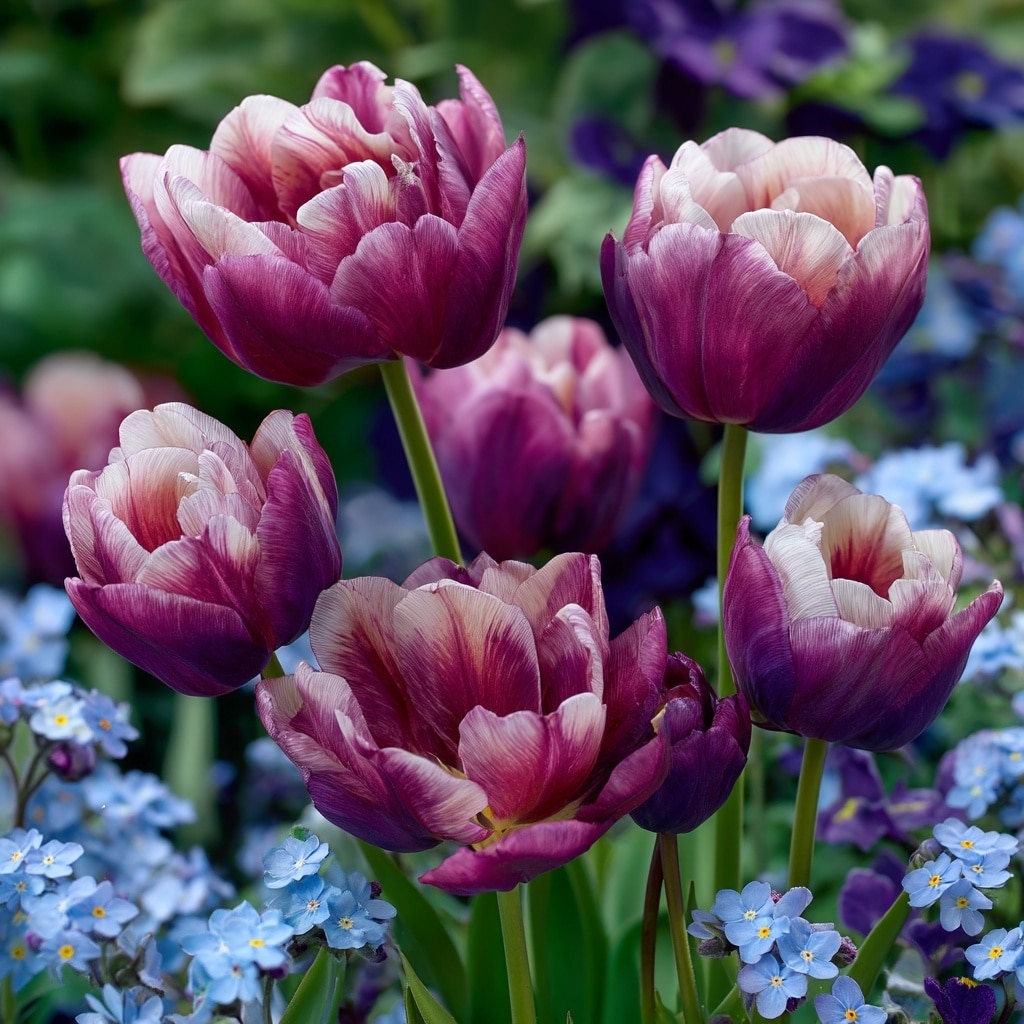
Color: Plum-purple petals edged in crisp white
Type: Single late tulip
Height: 20–22 inches
Bloom Time: Late spring
‘Arabian Mystery’ stands out with its striking contrast—each petal features a rich purple base rimmed in bright white. This elegant bi-colored tulip brings sharp definition to garden beds and pairs beautifully with cool-toned companions like forget-me-nots or hardy geraniums.
Use it to create eye-catching accents among solid-colored tulips, or mass-plant for a dazzling two-tone wave through your spring display. It’s a great choice for formal gardens and cottage borders alike.
🌷 Tulip ‘Black Parrot’
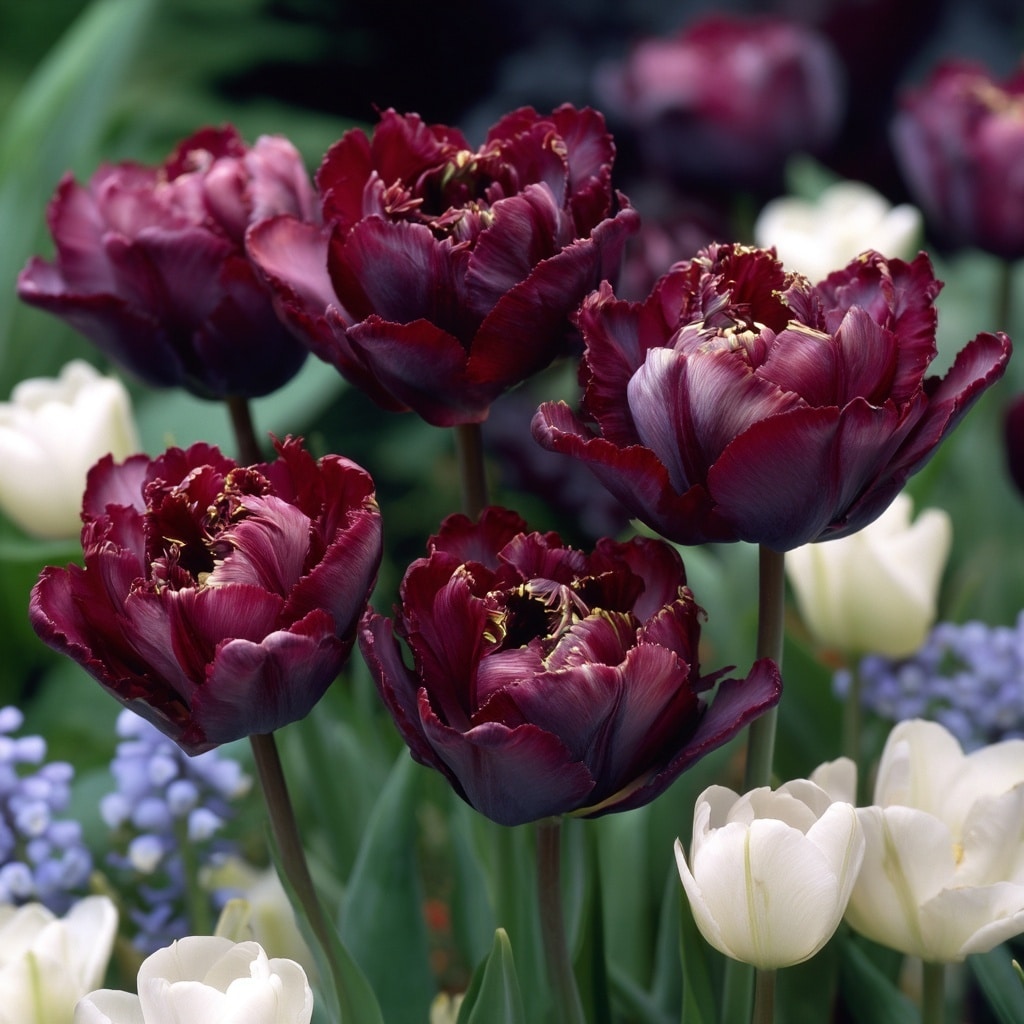
Color: Deep maroon to purple-black with frilled, feathered petals
Type: Parrot tulip
Height: 20–24 inches
Bloom Time: Mid to late spring
‘Black Parrot’ is a showstopper. Its dramatic, ruffled petals give it a wild, exotic look that sets it apart from classic tulips. The color leans toward a dark, reddish-purple—almost black in some lights—and the texture adds movement and flair to any garden bed.
Use ‘Black Parrot’ where you want drama: in front-of-house displays, focal containers, or layered with clean-edged white tulips like ‘Spring Green’ for bold contrast. It also makes a stunning cut flower, holding up well in vases.
This variety is ideal for gardeners who want to add texture and theatrical color to their spring planting scheme.
🌷 Tulip ‘Rems Favourite’
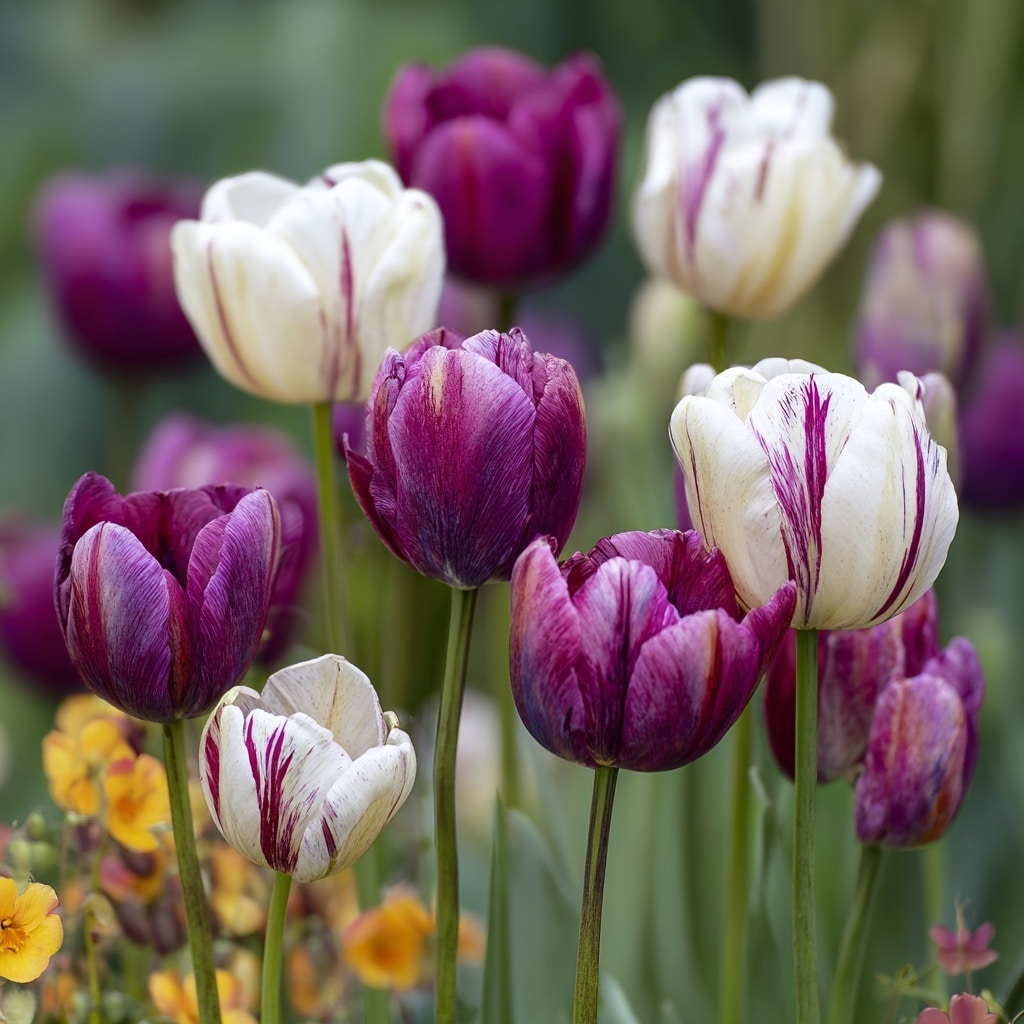
Color: White petals streaked with rich purple flames
Type: Triumph tulip
Height: 18–22 inches
Bloom Time: Mid spring
Cheerful and full of personality, ‘Rems Favourite’ brings a playful yet elegant touch to spring gardens. Its creamy white petals are boldly marked with deep purple flames, creating a striking bi-colored effect that looks hand-painted.
This variety pairs well with solid-colored tulips—especially dark purples like ‘Queen of Night’ or deep reds—and adds vibrancy when planted among Persian fritillaries or soft spring perennials. ‘Rems Favourite’ is also a strong performer in containers, where its unique coloring can shine.
It’s a perfect choice for gardeners who love patterned blooms or want to break up solid blocks of color in their displays.
🌷 Tulip ‘Uncle Tom’
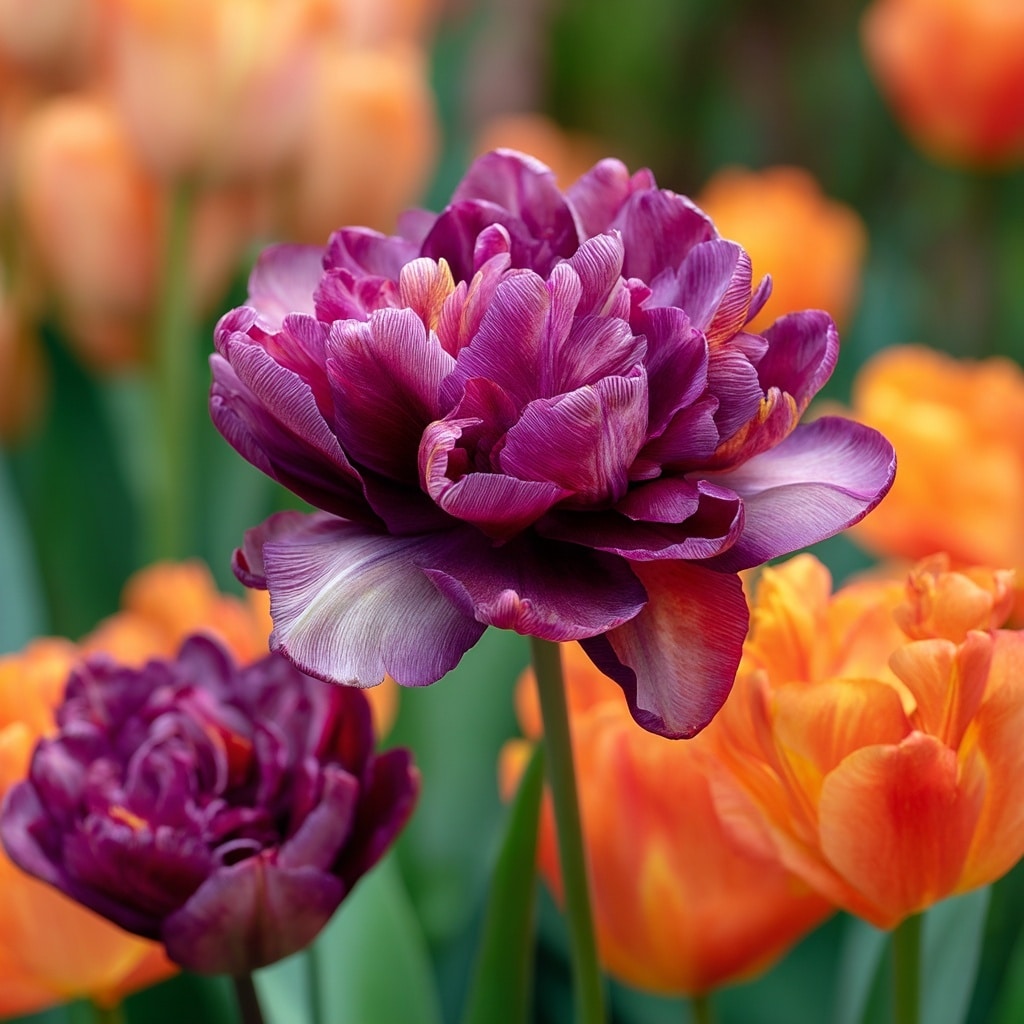
Color: Deep cardinal purple with a velvety texture
Type: Double late tulip (peony-flowered)
Height: 14–18 inches
Bloom Time: Late spring
With its rich, wine-red petals and full, layered shape, ‘Uncle Tom’ resembles a small peony more than a traditional tulip. The flowers are lush, globular, and deeply saturated—ideal for romantic gardens or dramatic spring centerpieces.
‘Uncle Tom’ pairs beautifully with orange tulips like ‘Orange Princess’ for a fiery combo, or with paler shades for a soft, moody contrast. It’s also a fantastic cut flower—each stem offers a long-lasting bloom with old-world charm.
This tulip is perfect for those who want luxurious texture and bold color packed into a compact, refined form.
🌷 Tulip ‘Cafe Noir’
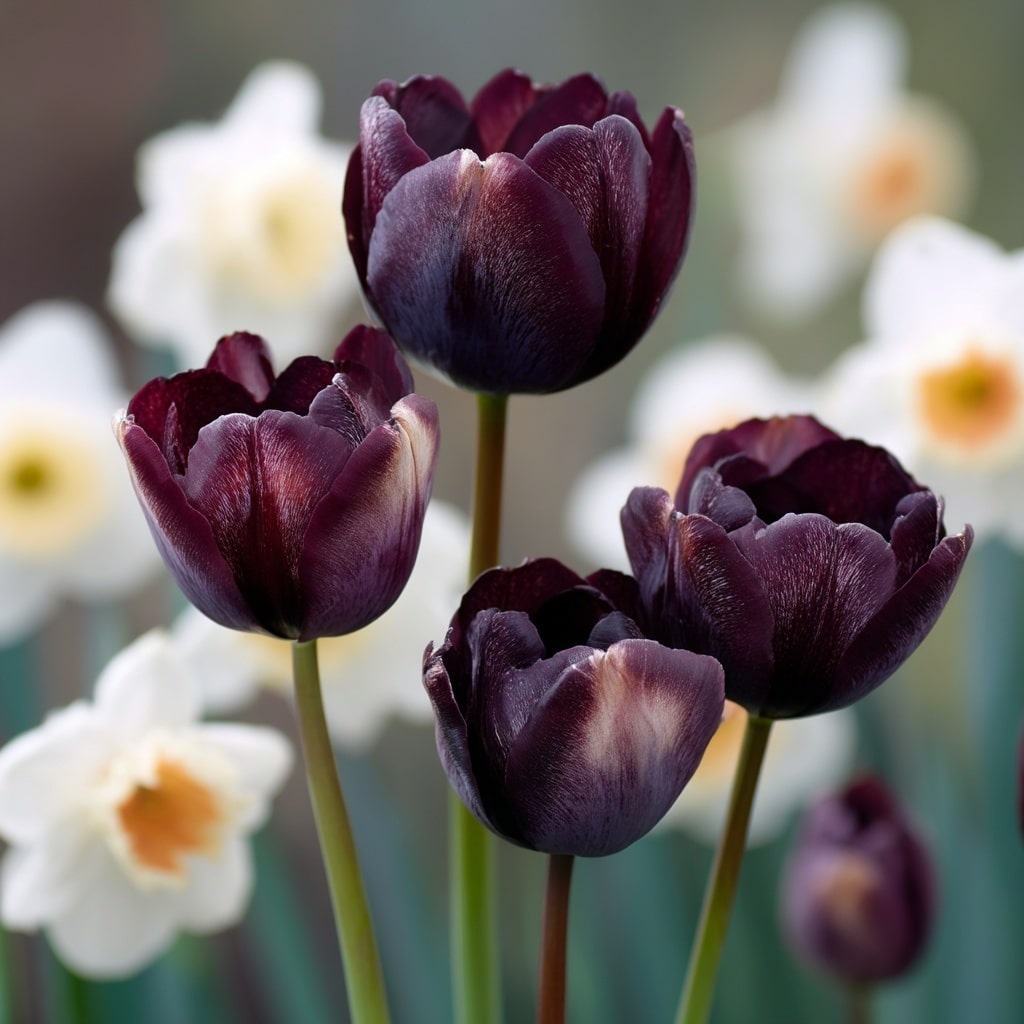
Color: Deep chocolate-purple with a satin finish
Type: Single late tulip
Height: 22–24 inches
Bloom Time: Late spring
‘Cafe Noir’ is one of the darkest tulips you can grow, offering a rich, smoldering shade of chocolate-purple that brings depth and intensity to garden compositions. Its sleek, single-flowered form and smooth petals create a clean, modern silhouette that fits seamlessly into contemporary or minimalist landscapes.
Use ‘Cafe Noir’ to contrast with white tulips, ivory daffodils, or pastel spring perennials for maximum visual impact. It also shines in moon gardens or in black-and-white planting schemes.
If you’re looking to add bold, mysterious tones to your spring display, ‘Cafe Noir’ is a must-have.
🌷 Tulip ‘Magic Lavender’
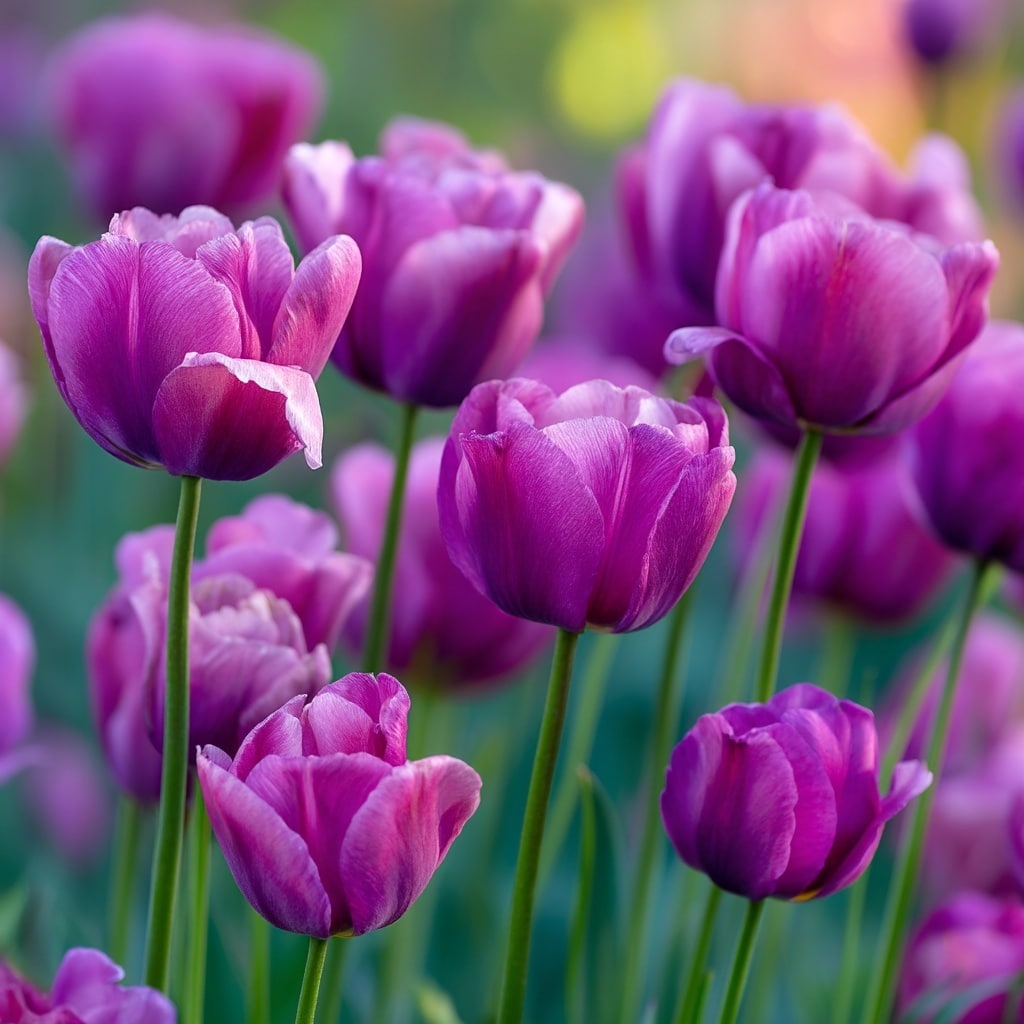
Color: Vibrant pinkish-purple with a soft lavender hue
Type: Single late tulip
Height: 20–24 inches
Bloom Time: Late spring
Bringing brightness and a touch of whimsy to the purple palette, ‘Magic Lavender’ is known for its glowing, pinkish-purple petals that light up any garden bed. Its cheerful color reads as soft lavender in some lighting and more vibrant magenta in others, making it especially eye-catching in mass plantings.
Plant ‘Magic Lavender’ in large swathes or scattered through lawns for a naturalized look. It also pairs wonderfully with fresh spring greens, like ornamental grasses, or crisp white blooms for a clean, uplifting design.
This variety is a great choice for gardeners who want a softer, more romantic tone within the purple tulip spectrum.
Tips for Growing and Replanting Purple Tulips
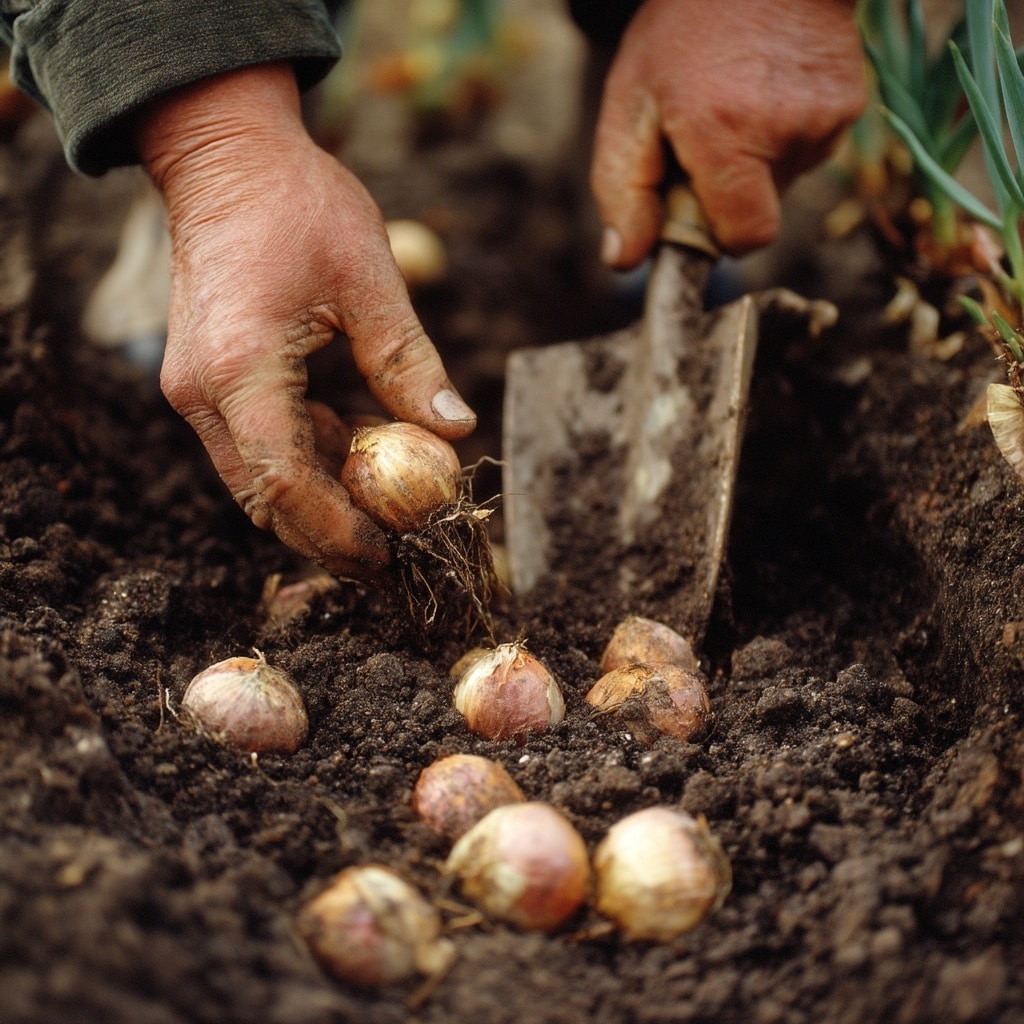
While purple tulips are stunning, they can be a bit fussy when it comes to returning year after year. With the right planting strategy and care, though, you can maximize their bloom performance and extend their presence in your garden.
🌱 Planting Tips
- Plant in late autumn: Wait until November or even early December to plant tulip bulbs. Cooler soil reduces the risk of fungal diseases like tulip fire.
- Depth matters: Plant bulbs about 6 to 8 inches deep, pointed end up, in well-draining soil.
- Spacing: Space bulbs 4 to 6 inches apart to give them room to grow and avoid overcrowding.
- Choose a sunny location: Tulips thrive in full sun to partial shade, especially in climates with cold winters and cool springs.
🌿 Soil and Drainage
- Well-drained soil is essential. Tulips don’t like to sit in wet soil—raised beds, sandy loam, or compost-amended clay work best.
- If your garden has heavy soil, consider planting tulips in pots or bulb baskets for better drainage and easier lifting.
♻️ Replanting and Bulb Longevity
- Most hybrid tulips, including many purple tulips, don’t reliably rebloom year after year. Their flowering declines after the first season.
- To maintain strong displays:
- Treat them as annuals—dig up and compost after bloom, then replant fresh bulbs in fall.
- Or try lifting and storing: After the foliage dies back (don’t cut it while green), lift the bulbs, dry them, and store in a cool, dark place until next season.
- For naturalizing or perennial tulips, look for species tulips—though they’re usually not available in true purple shades.
With thoughtful planting and regular replanting, you can keep your purple tulip displays vibrant and reliable every spring.
Conclusion
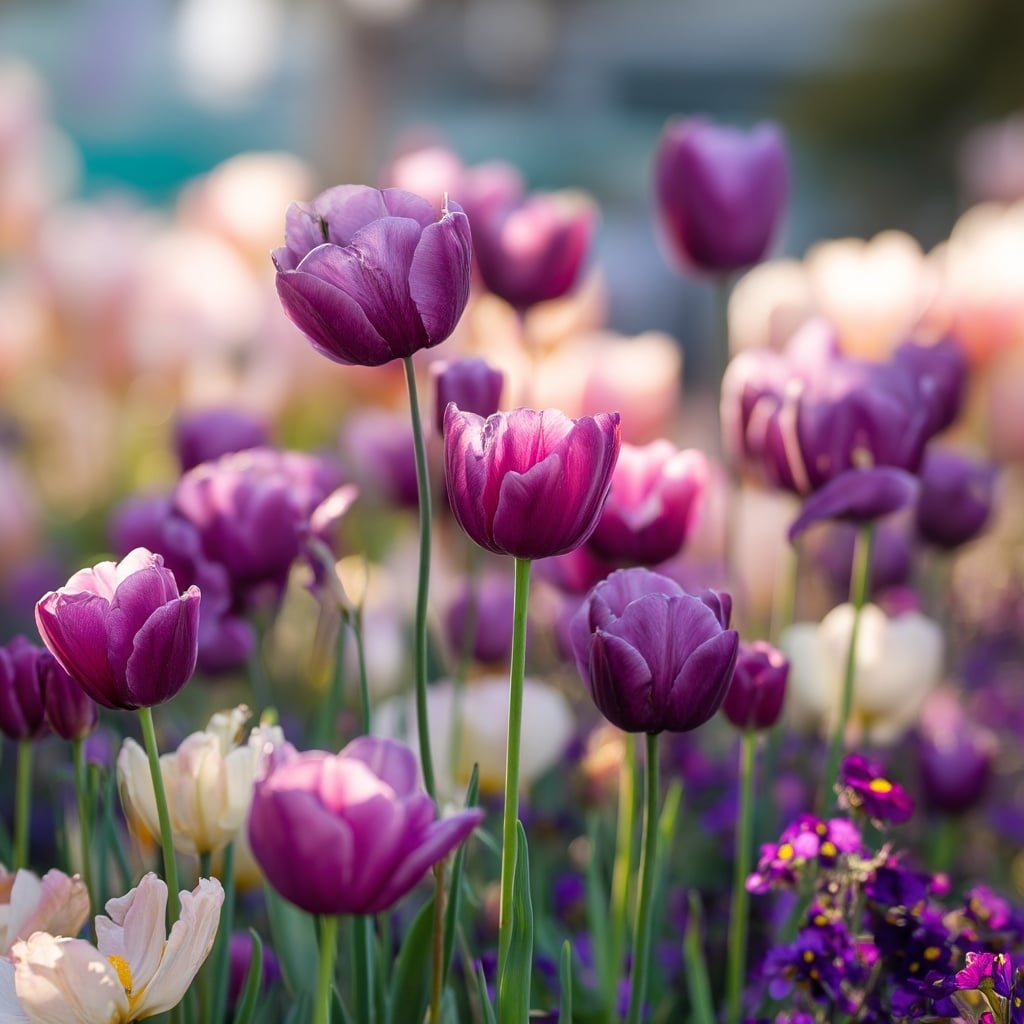
Whether you prefer deep, velvety hues or bright lavender tones, purple tulips offer unmatched elegance and drama to spring gardens. From the frilly flair of ‘Black Parrot’ to the soft charm of ‘Magic Lavender,’ each variety brings its own personality to beds, borders, and containers.
With proper planting, thoughtful pairings, and a willingness to replant bulbs each year, you’ll enjoy a fresh burst of color and sophistication every spring. Purple tulips aren’t just beautiful—they’re unforgettable.