
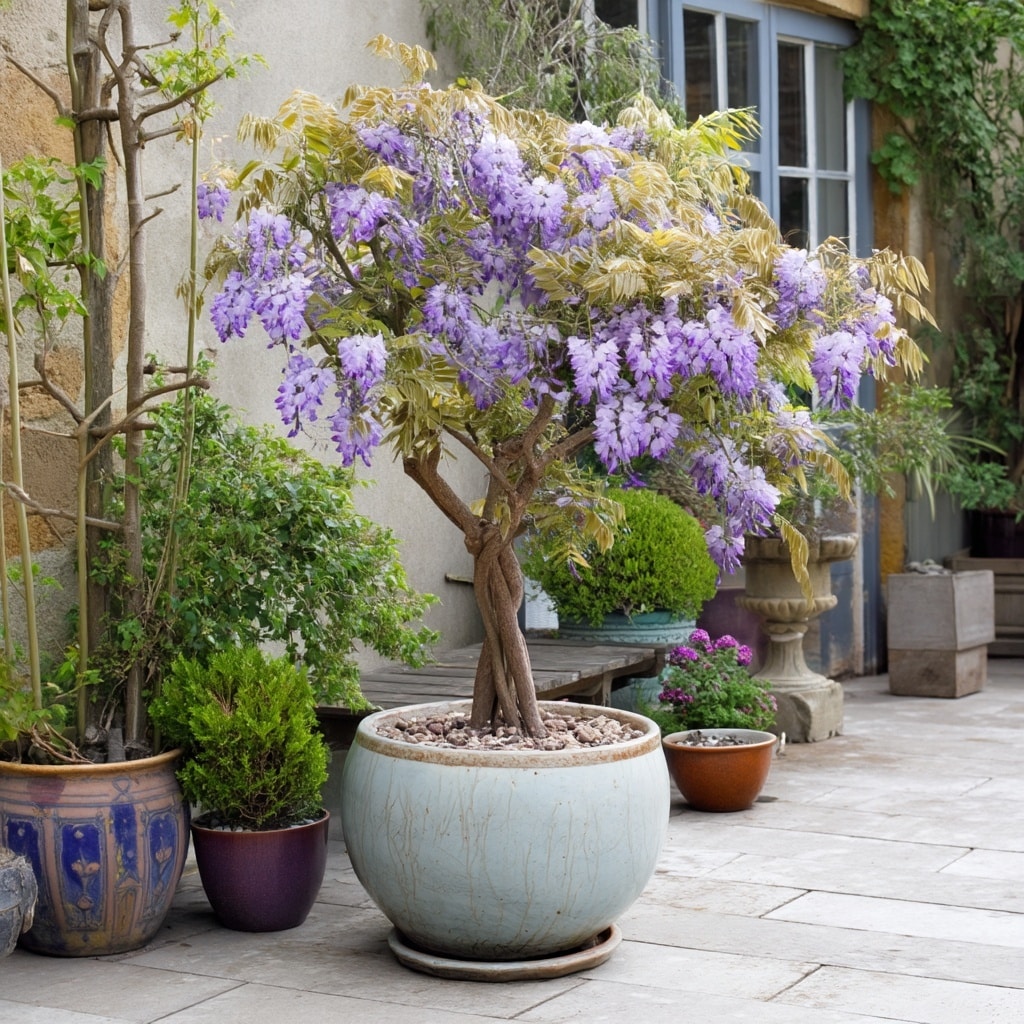
Wisteria flower vines are among the most breathtaking additions to any garden, known for their cascading blooms and sweet fragrance that signal the arrival of spring. Whether draped across a trellis or climbing the edge of a porch, these vigorous climbers bring an old-world charm that’s hard to resist. But as stunning as they are, wisteria vines require thoughtful care and structure — especially when dealing with non-native varieties like Japanese and Chinese wisteria, which are considered invasive in many regions.
The good news? With proper planning, the wisteria flower can thrive without overtaking your garden. Choosing native alternatives like American or Kentucky wisteria makes a big difference in ease of maintenance and environmental impact. This guide walks you through everything you need to know — from planting and pruning to training your wisteria into tree form or a container vine — to help you grow a healthy, blooming vine that stays beautifully under control.
Table of Contents
Wisteria Care

Growing a thriving wisteria flower vine starts with giving it the right conditions and consistent attention. While these plants are hardy and adaptable, they flourish best when their basic care needs are met. Here’s how to ensure your wisteria becomes a garden showpiece rather than a maintenance nightmare.
Light Requirements
For the most abundant blooms, plant your wisteria flower vine in full sun. It needs at least 6 hours of direct sunlight daily to produce its signature fragrant clusters. While it can tolerate partial sun, shaded vines often result in lush foliage with few or no flowers. Choose a spot away from large trees or buildings that could block sunlight and force the vine to stretch and climb in search of light.
Soil Conditions
The wisteria flower prefers moist, well-draining soil with a slightly acidic pH between 6.0 and 6.5. While American and Japanese varieties are tolerant of various soil types — from clay to loam — drainage is crucial to avoid root rot. Before planting, amend heavy soil with organic compost to improve aeration and nutrient content.
Watering Needs
Once established, the wisteria flower is relatively drought-tolerant. During the first growing season, keep the soil consistently moist by watering when the top inch feels dry. After that, deep soakings during dry spells are usually enough. Avoid overwatering, which can promote fungal issues and reduce flowering.
Temperature and Humidity
Different species of wisteria flower thrive in varying climates:
- American wisteria grows best in USDA Zones 5–9
- Japanese wisteria can handle colder areas (Zone 4)
- Chinese wisteria performs well in Zones 5–8, including parts of the South
These vines appreciate humidity but will also tolerate drier climates if watered well. Protect young plants from harsh frosts and extreme heat until they are well established.
Fertilization
Wisteria is a low-maintenance feeder. In most garden soils, it won’t need regular fertilization. However, if you’re trying to encourage more blooms, apply a high-phosphorus fertilizer once in early spring. Avoid nitrogen-heavy formulas, as they stimulate leaf growth at the expense of flowers. For container-grown vines, use a balanced, slow-release fertilizer suited for blooming plants.
Types of Wisteria
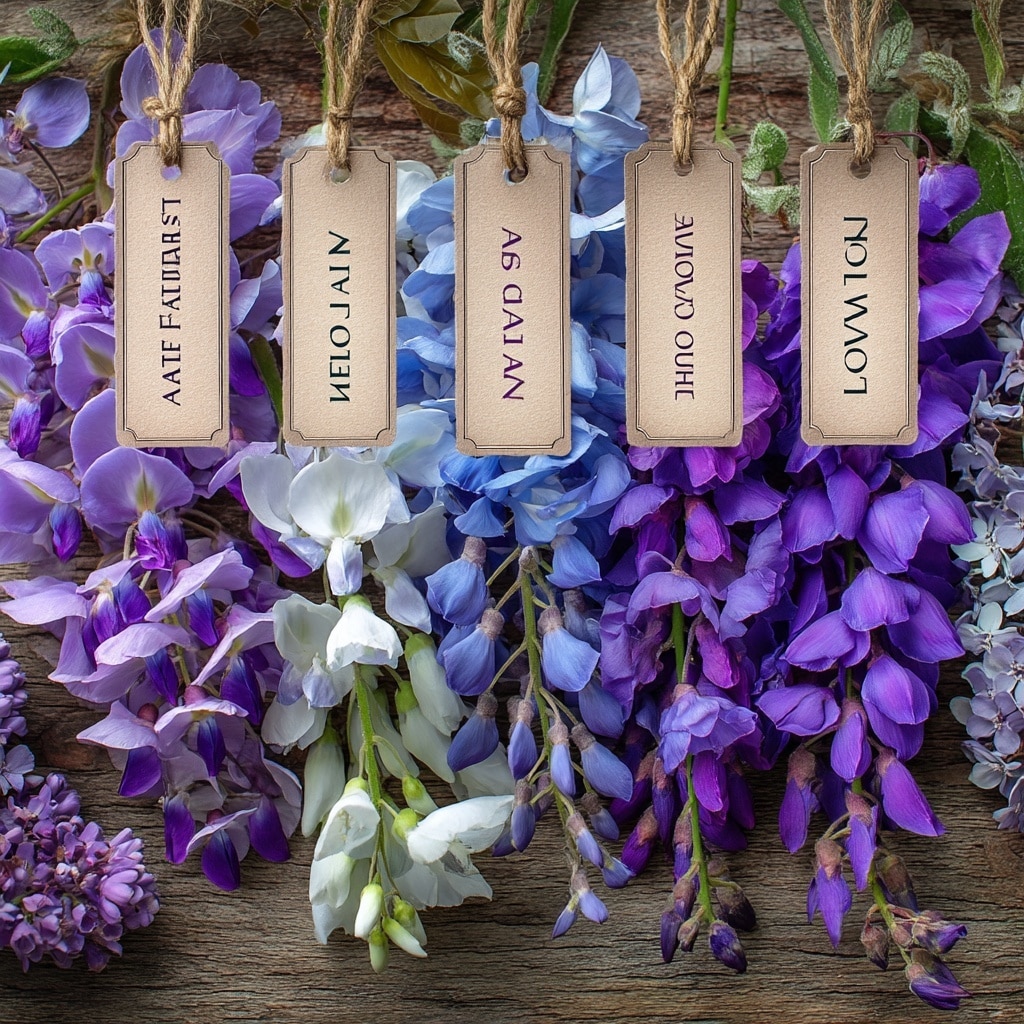
When choosing a wisteria flower vine for your garden, it’s essential to understand the differences between species. Not all wisteria is created equal — some are well-behaved natives, while others are aggressive invaders. Choosing the right type not only simplifies maintenance but also helps preserve local ecosystems.
American Wisteria (Wisteria frutescens)
Native to the southeastern U.S., American wisteria is a non-invasive option that still offers show-stopping blooms. Its vines are less aggressive, making it suitable for smaller spaces or container growing. This species typically blooms later than Asian varieties, reducing the risk of frost-damaged buds.
Popular Cultivars:
- ‘Amethyst Falls’ – A compact grower with lightly fragrant, lavender-purple blooms. Ideal for trellises and small gardens. It flowers in its first year and is both deer-resistant and drought-tolerant.
- ‘Nivea’ – Produces beautiful white flowers in early summer. It needs strong support and does not transplant well, so choose its final spot carefully.
- ‘Longwood Purple’ – Features deeper purple flowers and denser foliage. It’s a bushier, shorter variety, maxing out around 10 feet.
Kentucky Wisteria (Wisteria macrostachya)
Also native to the U.S., Kentucky wisteria is cold-hardy and often recommended for Northern gardeners. It’s more restrained in growth and has excellent reblooming potential.
Notable Varieties:
- ‘Blue Moon’ – Known for blooming up to three times per year in cooler climates. Hardy to Zone 4, it grows 15–25 feet and handles heat and cold well.
- ‘Clara Mack’ – A vigorous white-flowering cultivar. It can be trained into a small tree and is tolerant of drought and heat once established.
Why Avoid Japanese and Chinese Wisteria?
Although breathtaking, Japanese (W. floribunda) and Chinese wisteria (W. sinensis) are highly invasive in many states. These species can smother trees, damage structures, and are nearly impossible to remove once established. Unless you have experience managing aggressive vines, it’s best to stick with native varieties of the wisteria flower.
Pruning Wisteria
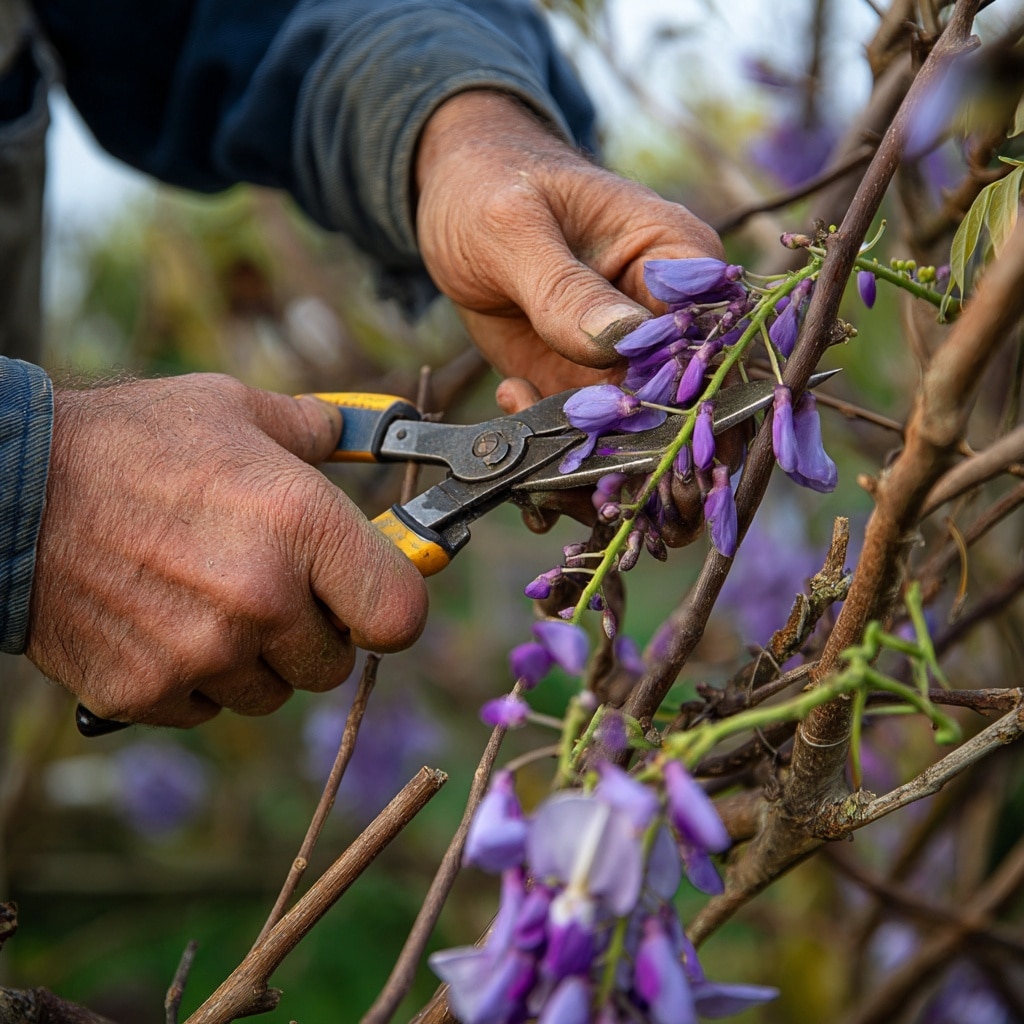
Pruning is one of the most critical steps in keeping your wisteria flower vine both beautiful and under control. Without regular pruning, wisteria can quickly become a tangled mess, smothering nearby plants and structures. The key is understanding how different species bloom — and tailoring your pruning to their growth habits.
When to Prune
Timing matters. The wisteria flower typically blooms on either old wood or new wood, depending on the variety:
- Asian varieties (Japanese and Chinese wisteria) bloom on last year’s growth. Prune after flowering in late spring or early summer, and again lightly in winter if needed.
- American and Kentucky wisteria, such as ‘Amethyst Falls’ and ‘Blue Moon’, bloom on new wood. These can be pruned more aggressively in late winter or early spring before new growth appears.
How to Prune
- After flowering: Cut back long shoots to about 6 inches to maintain shape and control size.
- In winter: Remove unwanted suckers and thin out any dense areas to allow more light and airflow.
- For American varieties: Focus on shaping and shortening runners. These plants respond well to harder pruning.
Be sure to leave a few buds on each trimmed shoot — this is where next year’s wisteria flower clusters will form. If your vine becomes unruly over summer, you can lightly shape it again, but avoid excessive trimming, especially for reblooming types like ‘Blue Moon’.
Managing Invasive Growth
If you’re growing an older or Asian species of wisteria, you’ll likely need to prune twice a year to keep it manageable. Remove seed pods promptly to prevent self-seeding and cut back any shoots trying to escape their supports or invade nearby plants.
✂️ Pro Tip: To prevent root spread in invasive types, plant your wisteria in a bottomless container buried in the ground — this restricts lateral root growth while allowing drainage
How to Train Wisteria
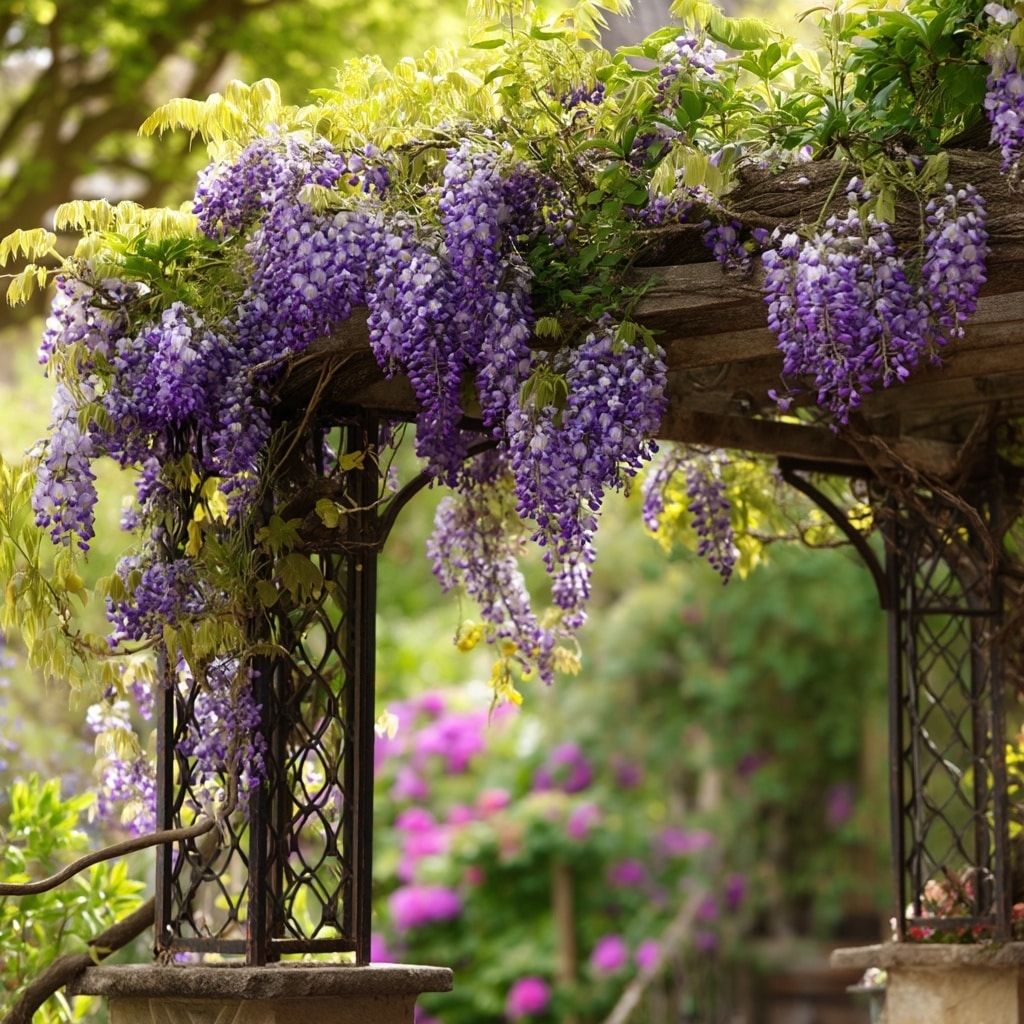
Training your wisteria flower vine correctly not only improves its appearance but also prevents structural damage and promotes better blooms. Whether you’re aiming for a cascading arbor, a porch accent, or a tree-like focal point, giving the vine proper support and direction from the start is essential.
Training on a Porch or Trellis
To safely frame a porch with wisteria flower vines:
- Install a strong metal support — Run a horizontal metal pole between posts, around 18 inches below the porch crossbeam.
- Let the vine’s runners twine around the pole, not the wooden structure itself. This keeps your porch safe from damage.
- After the vine flowers, prune regularly to maintain sightlines and airflow.
Wisteria’s vines are woody and heavy, so avoid wrapping them around gutters or wooden beams that can’t support their weight over time.
Creating a Wisteria Tree (Standard Form)
Yes — you can grow a wisteria flower like a tree!
Here’s how:
- Select one strong central stem, and remove all others.
- Stake the stem securely using a tall, firm support.
- As it grows, tie the stem to the stake with soft plastic ties at intervals.
- When it reaches the desired height, pinch or prune the tip to force lateral branching.
- Train and shorten the side branches to form a rounded canopy.
- Remove any buds or suckers forming below the “head.”
This form requires yearly shaping but results in a stunning focal point with cascading blooms.
Training on an Arbor or Pergola
If you’re training your wisteria flower over an arbor:
- Use a sturdy, preferably metal structure that can withstand the vine’s mature weight.
- Let the vine climb one side post, then guide it across the top, tying gently with garden tape.
- Focus the growth across the top surface rather than allowing it to choke the posts.
- Once established, train runners to wrap around themselves for a thick, floral canopy.
Regular pruning is critical for all training types to maintain the desired shape and prevent overgrowth.
Propagation: How to Grow More Wisteria
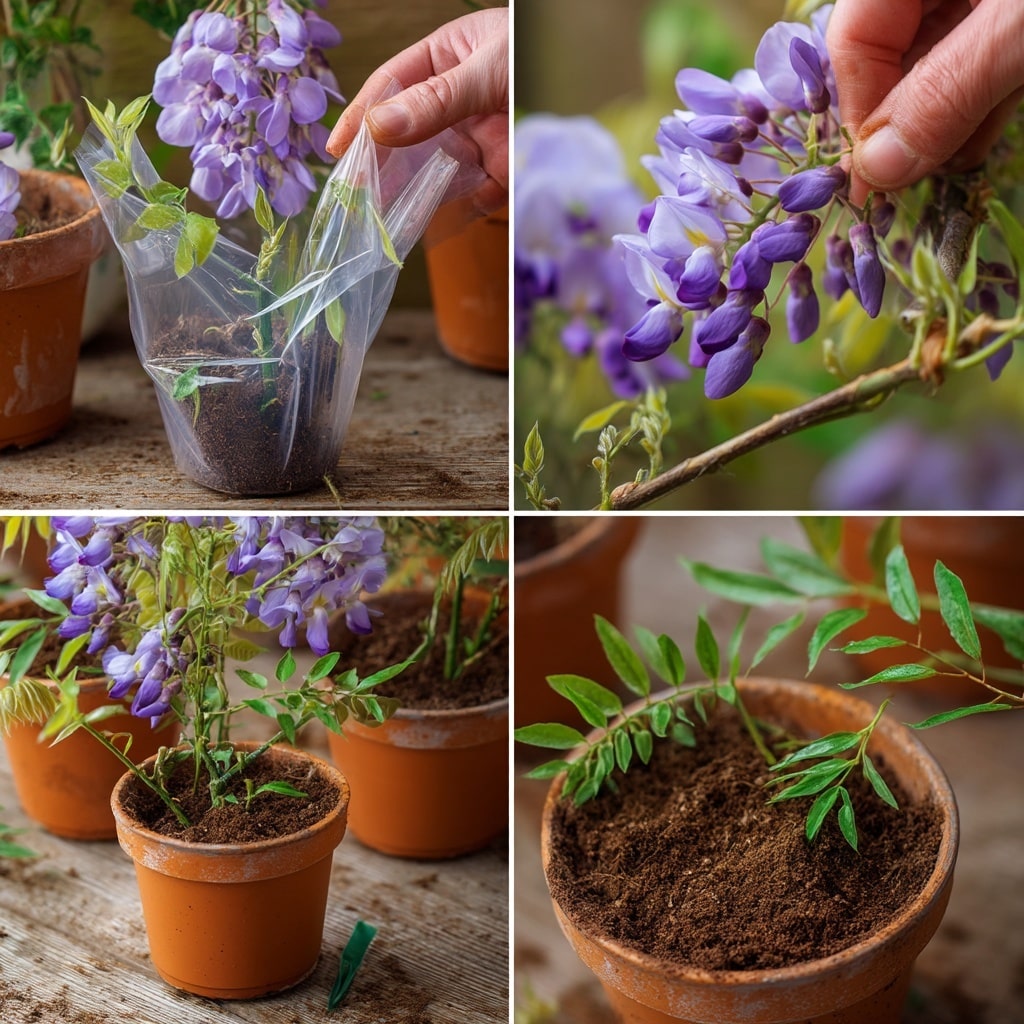
Want to grow another wisteria flower vine or share one with a friend? Propagating wisteria is rewarding — but patience is key. While you can grow wisteria from seed, it often takes 10 to 15 years to bloom. For faster results, stick with softwood cuttings.
How to Propagate Wisteria from Cuttings
Follow these steps to propagate your wisteria flower vine successfully:
- Take a cutting
- In late spring or early summer, snip a 3–6 inch softwood stem from the current year’s growth (the top of the vine is ideal).
- Choose green, flexible growth that snaps when bent.
- Prepare the cutting
- Remove leaves from the lower half of the cutting.
- Optional: Dip the cut end in rooting hormone for faster root development.
- Plant the cutting
- Place the stem in a pot filled with a moist, sterile mix (equal parts peat moss and perlite or coarse sand).
- Insert it deep enough to hold upright — usually about 1/3 of the stem.
- Create a greenhouse effect
- Cover the pot loosely with clear plastic (a zip-top bag works well) to hold in humidity.
- Place the container in bright, indirect light, not direct sun.
- Keep it moist
- Check regularly to keep the medium damp, not soggy.
- Roots usually develop within 4–6 weeks.
- Transplant with care
- Once rooted, move the cutting to a larger pot with quality potting soil.
- Gradually acclimate the new plant to outdoor conditions before planting in the ground.
🌱 Tip: Propagate multiple cuttings at once, as not all may root successfully.
Potting and Repotting Wisteria
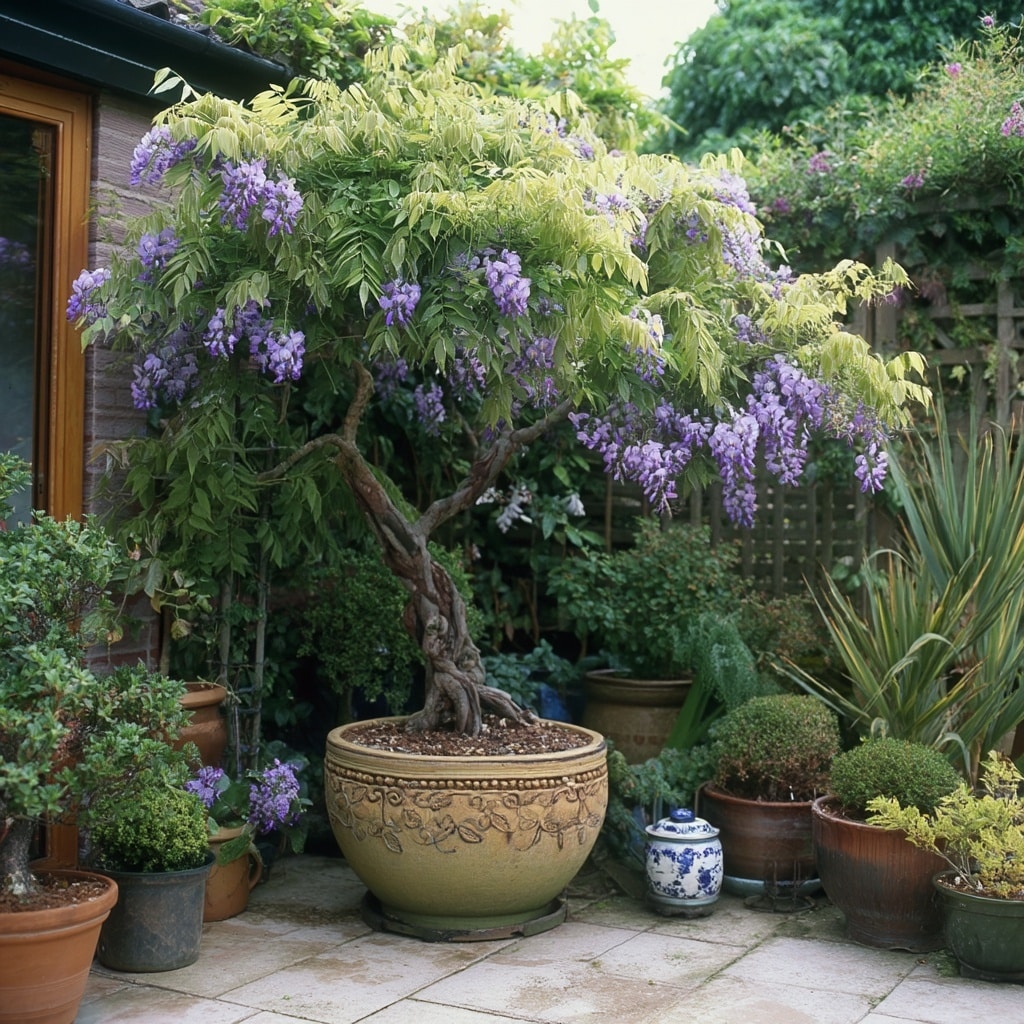
Although typically grown in the ground, the wisteria flower can thrive in containers — especially when trained into a tree form. Potting wisteria offers flexibility for patios, small gardens, or renters who want dramatic blooms without permanent planting. But container growing requires a bit more attention to detail.
Choosing the Right Pot
Select a large, sturdy container at least 18 inches in diameter and equally deep. Since the wisteria flower develops a strong root system and woody vines, your pot must be heavy enough to prevent tipping and allow root growth. Look for containers made of ceramic, terracotta, or reinforced plastic with drainage holes.
Best Wisteria Varieties for Pots
Compact and well-behaved varieties like:
- ‘Amethyst Falls’ (American wisteria)
- ‘Blue Moon’ (Kentucky wisteria)
…are ideal for containers. These types are less aggressive than their Asian counterparts and adapt well to restricted root spaces.
Potting Instructions
- Use high-quality potting mix — a blend with compost and perlite ensures good drainage.
- Add support — Stake the plant with a strong pole or small trellis to guide early growth.
- Water consistently — In containers, the soil dries faster. Keep it evenly moist but not waterlogged.
- Fertilize lightly — Each spring, apply a bloom-boosting fertilizer (low nitrogen, high phosphorus).
Repotting Tips
Every 2–3 years, check if your wisteria flower is root-bound. Signs include slowed growth, yellowing leaves, or water pooling on the surface. To repot:
- Choose a slightly larger container
- Trim off about 1/3 of the roots and top growth
- Refresh with new soil to reintroduce nutrients
Pests and Diseases
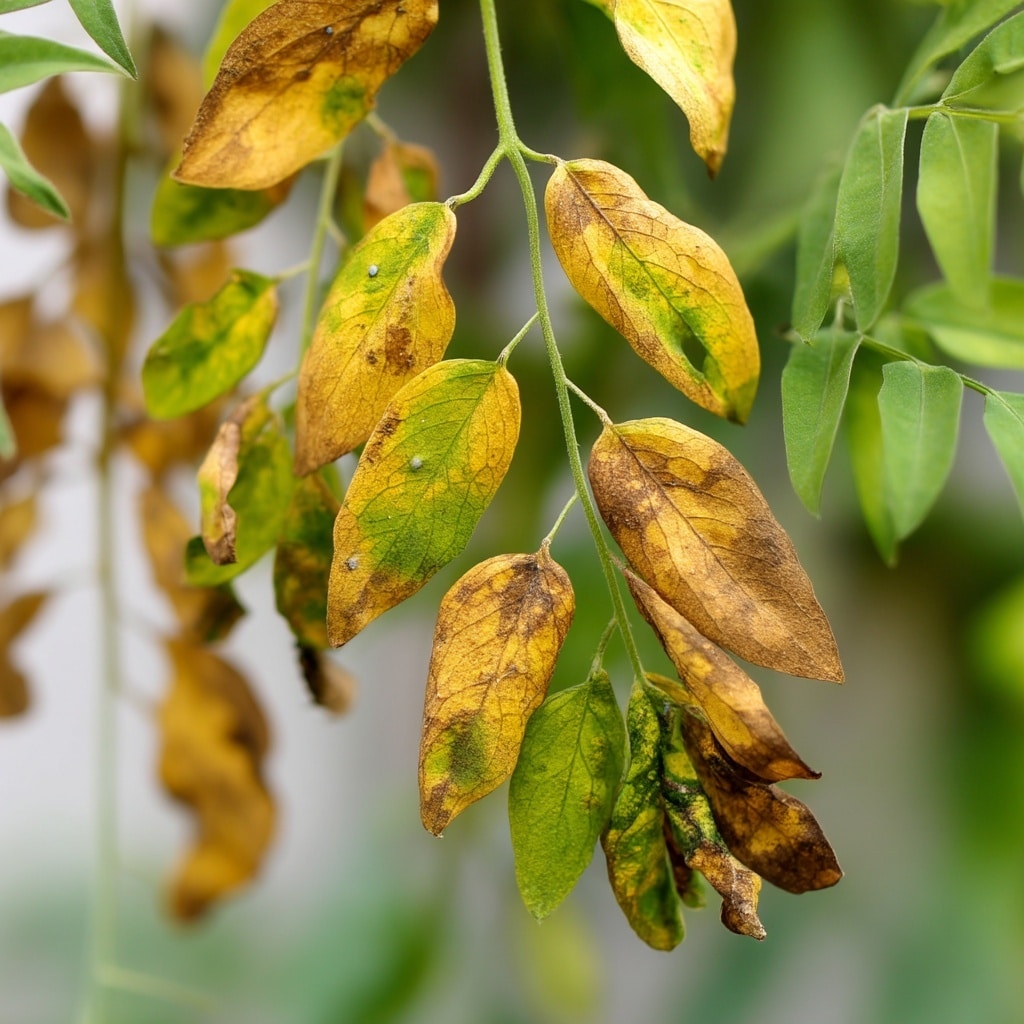
The wisteria flower is a tough, low-maintenance plant once established, but it’s not completely immune to garden pests and plant diseases. Staying ahead of problems through routine monitoring and care will help your vine stay healthy and bloom beautifully year after year.
Common Insect Pests
- Japanese beetles – These shiny beetles chew on leaves and flowers. Handpick or use traps if infestations are heavy.
- Aphids – Tiny, soft-bodied insects that cluster on new growth. Spray with a strong stream of water or apply insecticidal soap.
- Mealybugs, scale insects, and leaf miners – These pests suck plant juices and weaken the vine over time. Neem oil or insecticidal sprays can help.
- Spider mites – Look for stippled leaves and fine webbing. Increase humidity and use horticultural oil if needed.
🐞 Tip: For most pests, natural remedies like soapy water or manual removal are effective and safer than chemical options.
Fungal and Bacterial Issues
- Powdery mildew – Appears as a gray-white coating on leaves. Usually harmless but treat with fungicide if it spreads aggressively.
- Leaf spot – Caused by fungus or bacteria, resulting in dark blotches. Remove and discard affected leaves.
- Crown gall – A woody, tumor-like growth at the base. Caused by bacteria; untreatable. If the plant is young, remove and destroy it.
- Honey fungus – A serious soil-borne infection. Signs include cracked stems, white fungal growth at the base, or even mushrooms. Unfortunately, there’s no cure.
Preventative Measures
- Good airflow – Space plants well and prune regularly to reduce moisture buildup and disease.
- Sterilize tools – Especially after pruning infected plants. A 10% bleach solution is effective.
- Avoid overwatering – Root rot from soggy soil is a common problem in poorly drained locations.
Common Problems with Wisteria
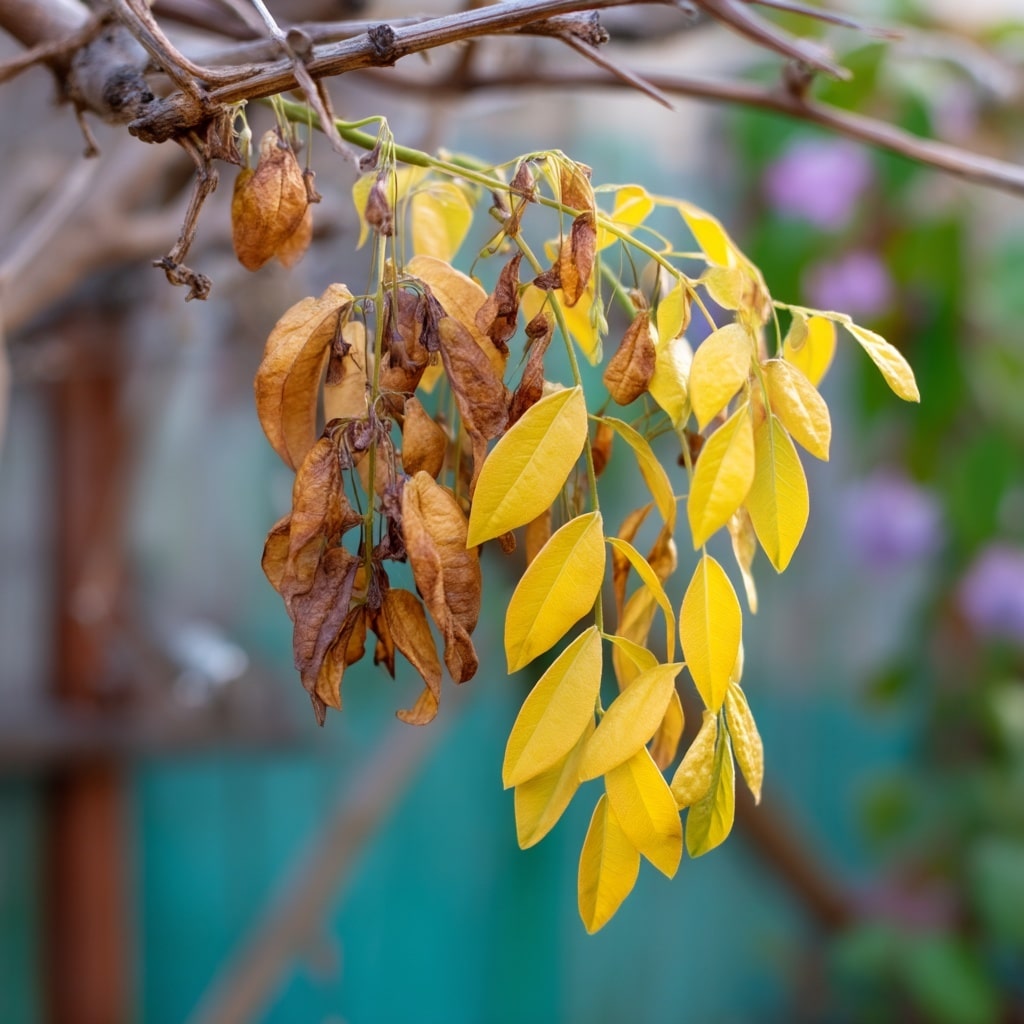
Even with the right care, your wisteria flower vine might occasionally show signs of stress. From leaf discoloration to lack of blooms, here’s how to diagnose and fix the most frequent issues home gardeners face.
Curling or Drying Leaves
If the leaves on your wisteria flower begin to curl, dry out, or turn crispy, several factors may be to blame:
- Underwatering or heat stress – Dry soil and high temperatures are common culprits. Increase watering during heatwaves.
- Poor drainage or root rot – Overly wet soil can suffocate roots and mimic drought symptoms.
- Pest damage – Aphids and spider mites can cause leaf curling by sucking sap from tender growth.
- Nutrient deficiencies – A lack of potassium or magnesium may result in leaf edge curling.
Yellowing Leaves
Yellowing foliage on your wisteria flower doesn’t always signal a major problem — sometimes it’s seasonal. But if the yellowing is widespread or occurs in young leaves, consider these causes:
- Iron deficiency – Leaves yellow with green veins, usually due to high soil pH. Use a chelated iron fertilizer.
- Overwatering – Soggy roots reduce the plant’s ability to absorb nutrients, leading to yellowing.
- Drought stress – A lack of moisture can cause wilting and yellowing, especially during long dry periods.
- Natural dormancy – Older leaves turning yellow in fall is normal as the plant prepares for winter.
Wisteria That Won’t Bloom
One of the most frustrating issues with the wisteria flower is a lack of blooms, especially on young or newly planted vines. Here’s what to check:
- Age of the plant – Seed-grown wisterias can take 10+ years to bloom. Named cultivars from cuttings usually flower sooner (2–3 years).
- Too much nitrogen – This promotes leafy growth at the expense of flowers. Avoid lawn fertilizers near the vine.
- Insufficient sunlight – Less than 6 hours of direct sun daily may suppress flowering.
- Incorrect pruning – Cutting at the wrong time can remove flower buds. For Asian species, prune in summer; for American varieties, prune in winter.
🌸 Tip: If your plant is mature and still won’t bloom, try root pruning in fall. Use a sharp spade to cut a circle around the base, about 2 feet out, to shock it into flowering the following spring.
Conclusion
The wisteria flower is a stunning, fragrant addition to any garden, but it rewards gardeners who provide structure, regular pruning, and the right growing conditions. Whether you’re training it along a porch, shaping it into a small tree, or growing it in a pot, proper care makes all the difference between a wild, tangled mess and a breathtaking spring show. Native varieties like American and Kentucky wisteria offer a manageable, non-invasive option for gardeners who want beauty without the worry.
Choose your site wisely, train your vine early, and prune with purpose — and your wisteria flower will reward you with years of lush, cascading blooms.