
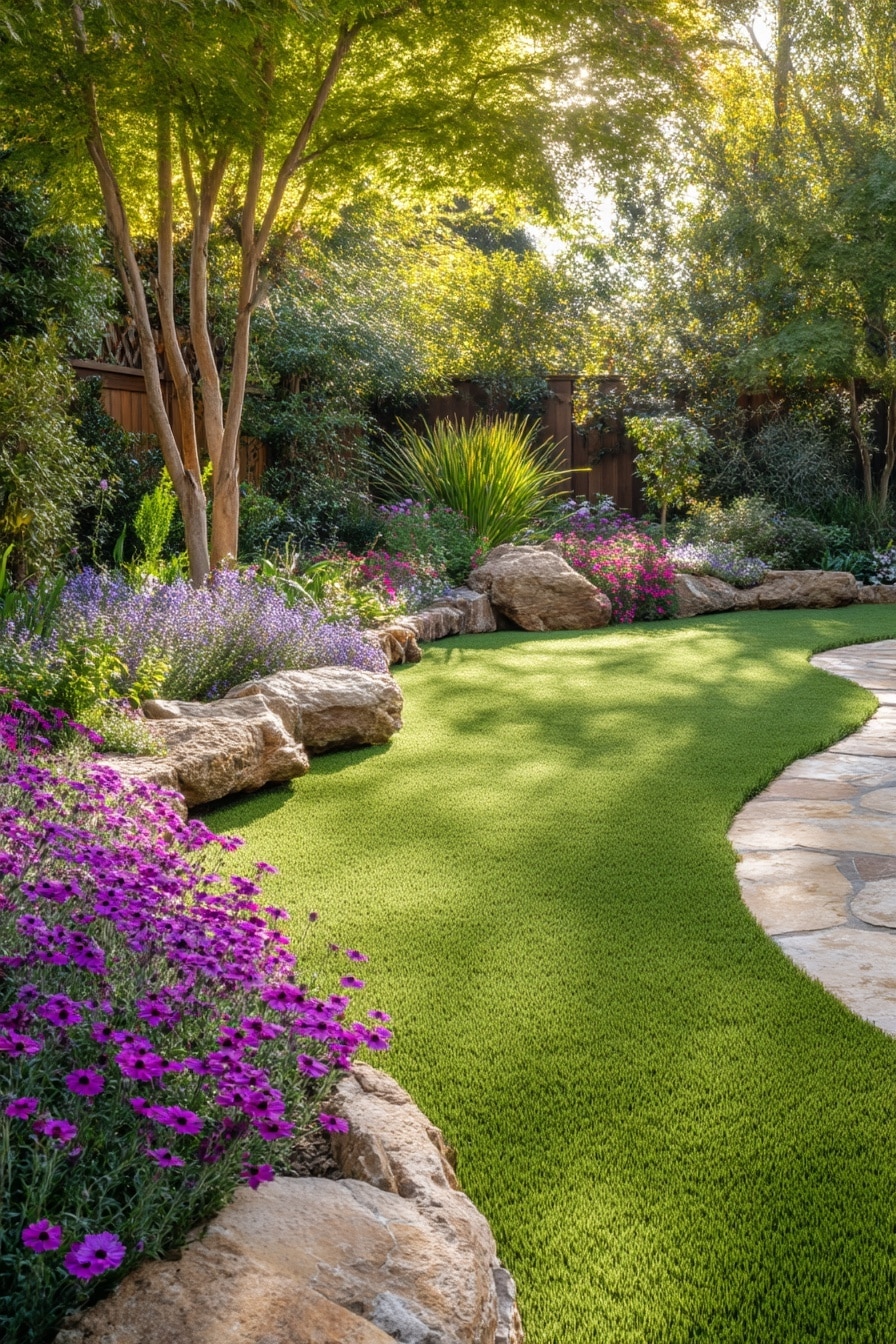
Wildflowers add bursts of natural beauty, texture, and seasonal colour to landscapes, making them an ideal complement to synthetic turf. When paired thoughtfully, low-maintenance wildflowers can enhance artificial grass areas by attracting pollinators, adding visual contrast, and creating a more inviting outdoor space without the upkeep of traditional flower beds.
In this guide, we’ll look at five stunning wildflowers that work harmoniously alongside synthetic turf and provide tips for designing and caring for your wildflower spaces.
Table of Contents
Why Choose Wildflowers with Synthetic Turf?

Adding wildflowers near synthetic turf brings both practical and aesthetic benefits:
- They require minimal maintenance and thrive without frequent watering or weeding.
- Wildflower plantings attract bees, butterflies, and other pollinators, enriching your garden ecosystem.
- Their natural, flowing appearance softens the uniform look of artificial grass and creates a more organic landscape feel.
Because synthetic turf itself doesn’t need mowing or fertilizing, pairing it with wildflowers lets you maintain a beautiful yard with very little effort.
1. Black-eyed Susan
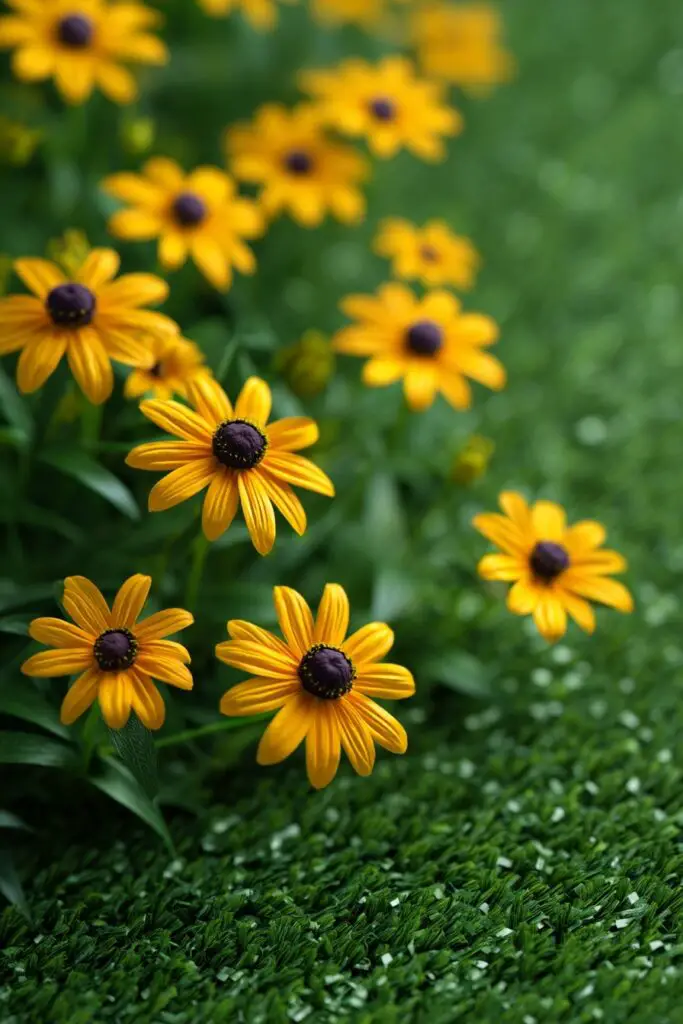
Black-eyed Susans are bold, sun-loving wildflowers with bright yellow petals and dark centres.
They:
- Thrive in full sun
- Tolerate poor soils
- Bloom over long periods
This makes them perfect for planting along the edges of synthetic turf where full sunlight hits. Their cheerful colour and sturdy stems bring consistent visual interest throughout the season.
2. Purple Coneflower (Echinacea)
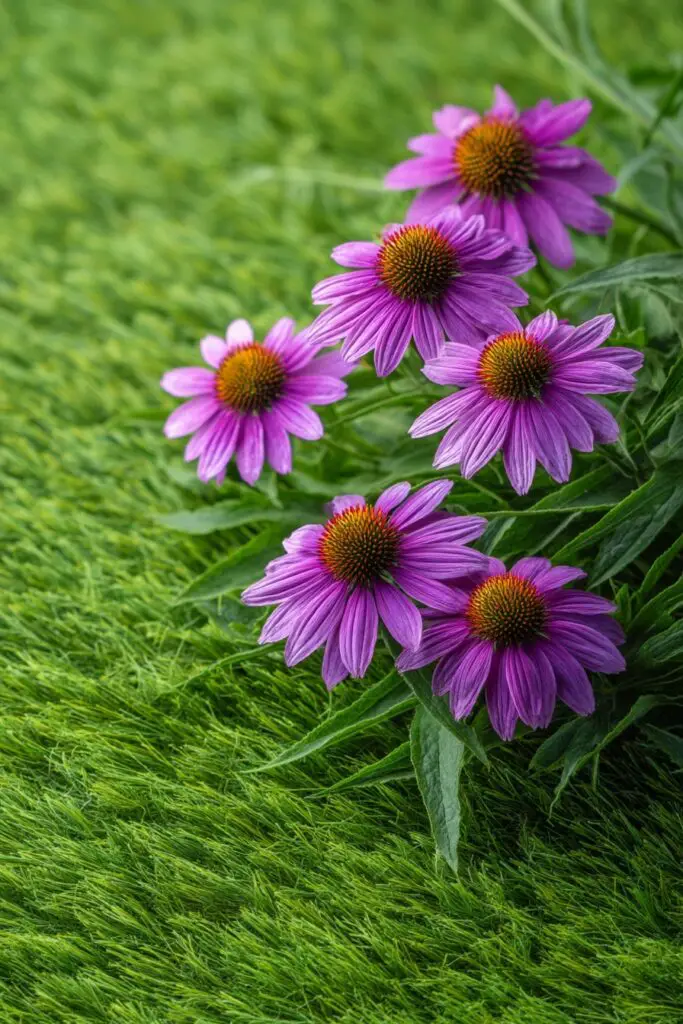
Purple coneflower adds striking colour contrast against green turf.
Benefits:
- Drought-tolerant once established
- Draws bees and butterflies
- Long blooming period
This hardy wildflower provides vertical interest and a welcoming splash of purple, helping break up large expanses of artificial grass.
3. Coreopsis
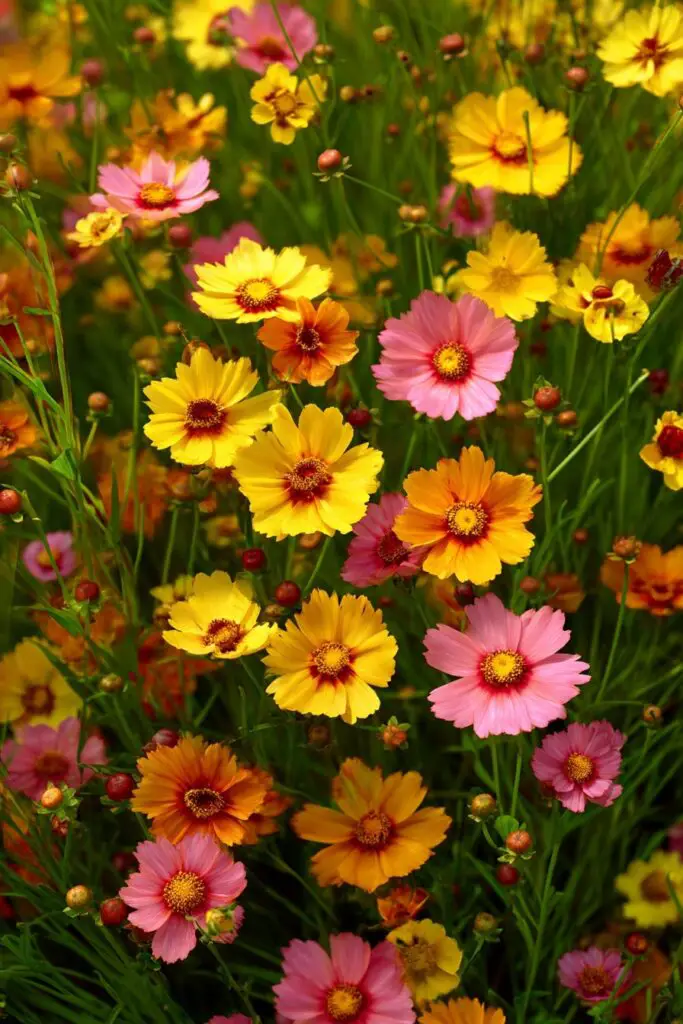
Coreopsis, often called tickseed, produces abundant small flowers in shades of yellow, pink, and red.
- Grows well in poor soil
- Self-sows easily
- Requires little care
By planting coreopsis in patches near synthetic turf, you encourage a natural, wild look without constant maintenance.
4. Butterfly Weed
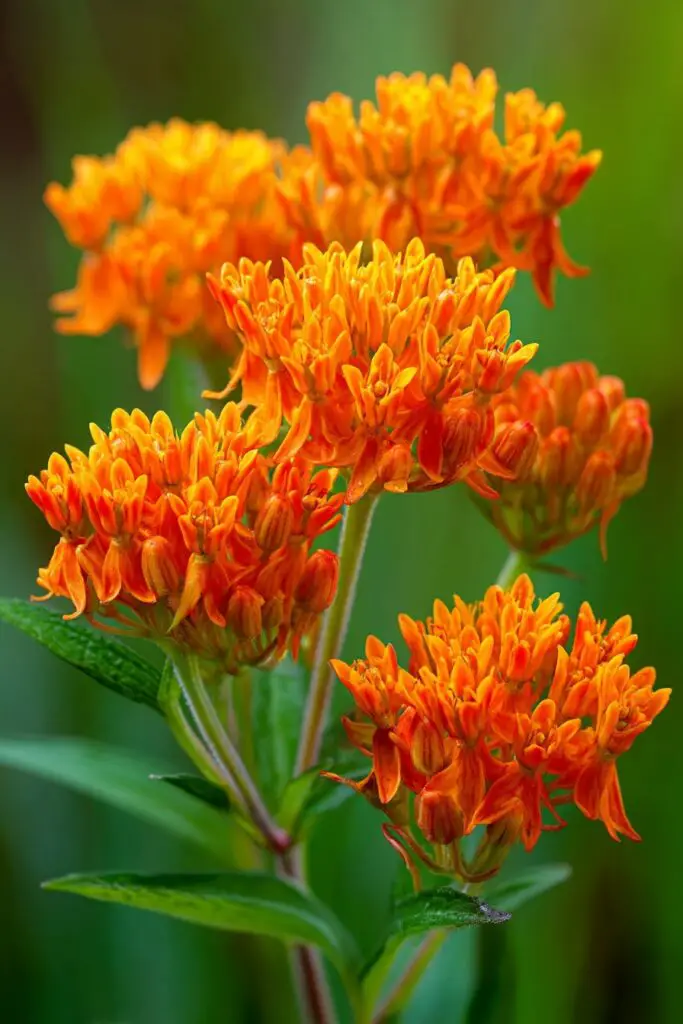
Butterfly weed is a vibrant wildflower perfect for wildlife-friendly landscapes.
Key features:
- Bright orange flowers
- Nectar source for butterflies and bees
- Perennial plant with low water needs
This makes it ideal for sunny borders or mixed wildflower areas adjacent to synthetic turf.
5. Yarrow
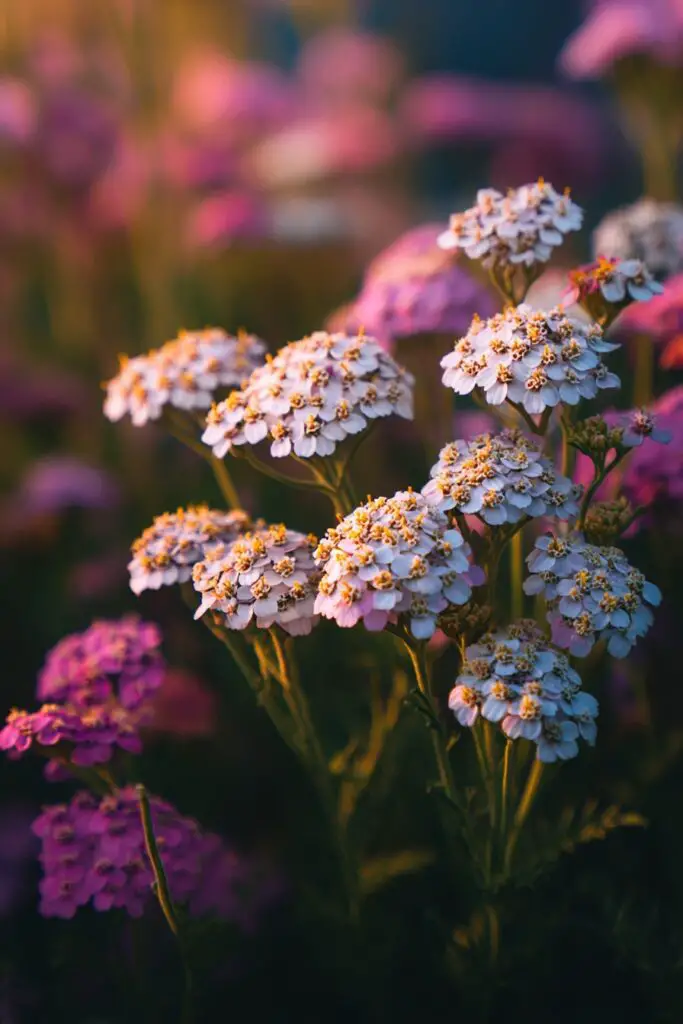
Yarrow stands out with its flat-topped clusters of tiny flowers and feathery foliage.
It’s appreciated for:
- Tolerance to heat and drought
- Long season of bloom
- Ability to naturalise in garden settings
Yarrow pairs beautifully with taller wildflowers and helps create layered planting designs near artificial grass areas.
Design Tips for Wildflowers Near Synthetic Turf
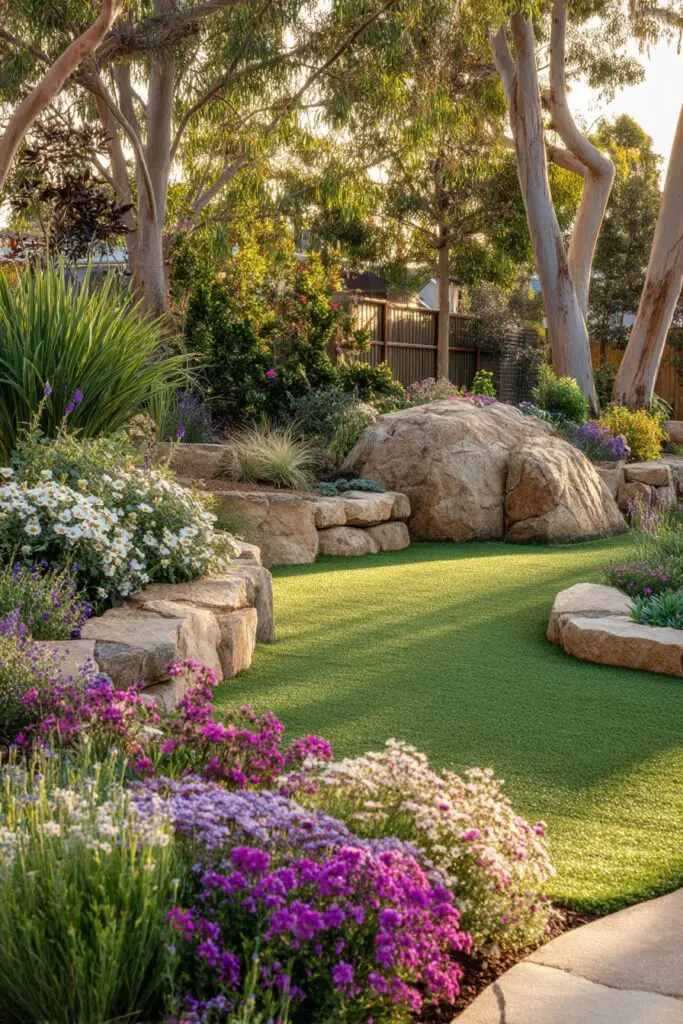
To make your wildflower plantings look intentional and harmonious with synthetic turf:
📍 Designate Defined Flower Zones
Rather than allowing flowers to grow randomly, create clearly defined beds or borders. This helps keep the planting area tidy and enhances visual appeal.
🌱 Test and Prepare Your Soil
Even though many wildflowers are hardy, testing your soil before planting helps ensure good seed-to-soil contact and long-lasting blooms. Amend soil if necessary to support germination.
✂️ Maintain Clear Edges
Use borders, pavers, or edging materials to separate wildflowers from synthetic turf. A clean edge emphasizes both the turf and the blooms, making your garden look intentionally designed.
🌼 Opt for Native Species
Native wildflowers are adapted to local conditions and often require less water, fertilizer, and care. They also provide valuable habitat for native pollinators.
Add Mulch
Mulching around wildflower plantings helps retain moisture, suppress weeds, and visually separate them from turf areas.
Caring for Your Wildflowers
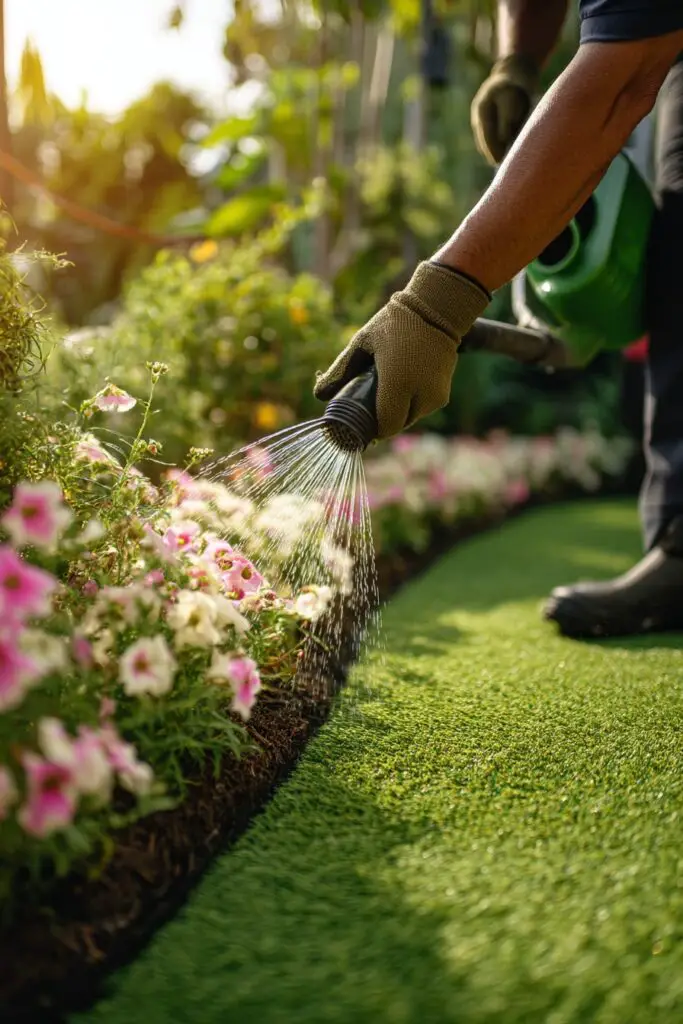
While wildflowers are known for being low-maintenance, a few simple practices will help them thrive:
- Water regularly early on to help young plants establish.
- Remove weeds that compete with young seeds or plants.
- Deadhead spent blooms later in the season to encourage longer flowering.
Since wildflowers often self-seed, they can fill in naturally over time, reducing the need for frequent replanting
Conclusion
Pairing wildflowers with synthetic turf is a smart, beautiful way to enjoy colour, attract pollinators, and maintain a low-effort garden space. Whether you choose bold Black-eyed Susans, elegant echinacea, or welcoming butterfly weed, these plants can transform artificial grass settings into vibrant, eco-friendly landscapes.