
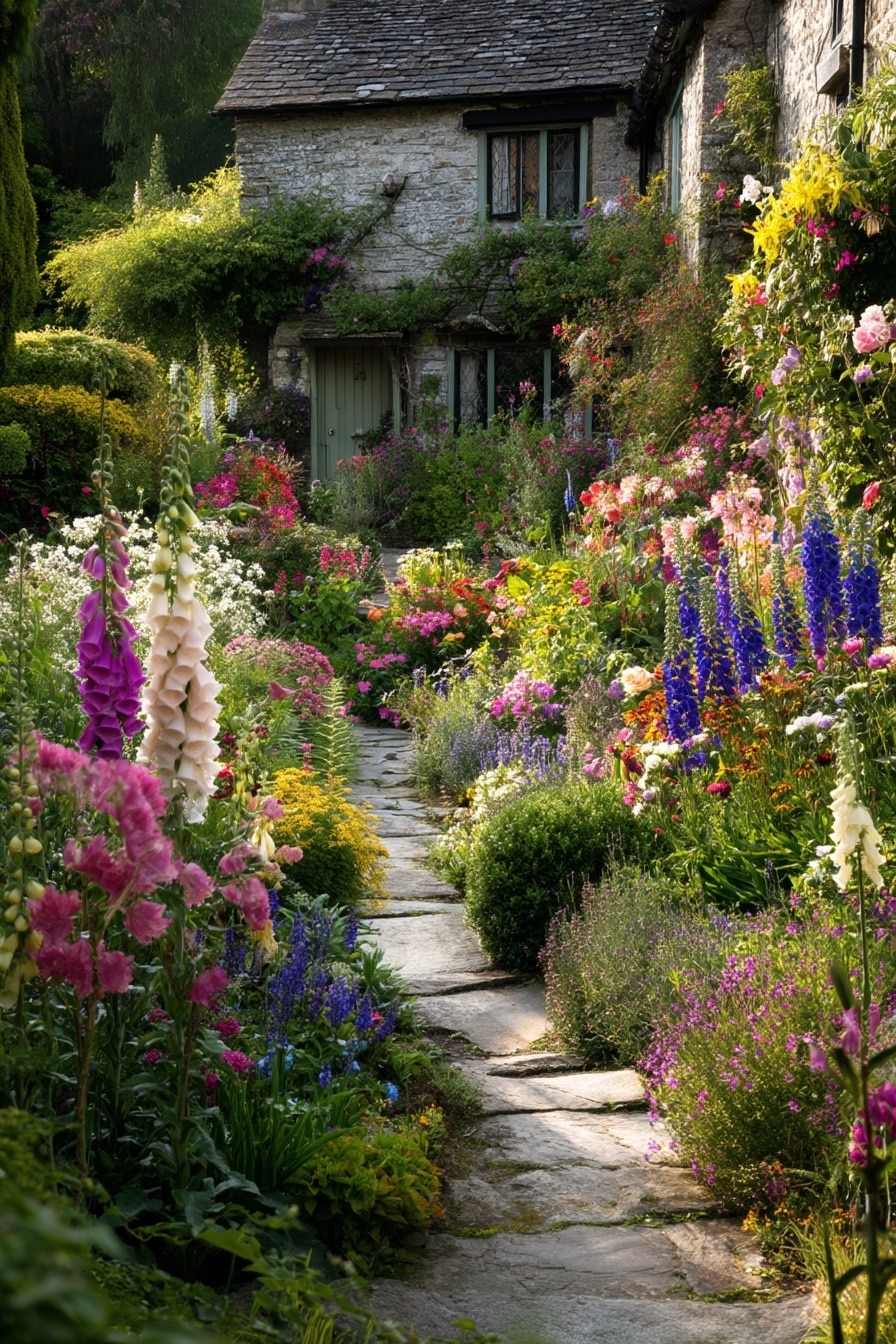
Cottage garden design has stood the test of time, combining beauty, function, and a touch of whimsy in outdoor spaces big and small. Traditionally packed with herbs, flowers, and edible plants growing in charming chaos, today’s cottage garden styles blend nostalgic charm with modern practicality. Whether you’re working with a spacious yard or just a few pots on a balcony, there’s a way to embrace this beloved gardening style.
As the cottagecore movement grows in popularity, more gardeners are embracing layered textures, vibrant blooms, and purposeful plant combinations that create harmony throughout the seasons. From low-maintenance options to containers and winter interest, cottage gardens are more flexible than ever — and their romantic appeal hasn’t faded one bit.
Table of Contents
1. Cottage Garden Containers

Don’t have a yard? You can still create a thriving cottage garden with just a few well-placed containers. This approach is ideal for balconies, patios, porches, or even sunny windowsills. With the right plant combinations and creative arrangements, container-grown gardens can deliver the same lush, layered feel of a traditional cottage garden — in a much smaller footprint.
Start by choosing a main plant for each pot — think colorful perennials like echinacea, salvia, or dwarf roses — and surround it with filler plants. Trailing herbs such as thyme or oregano add softness around the edges, while cascading petunias or sweet potato vine provide visual flow.
Use a mix of heights, colors, and textures to create interest. For added charm, group containers in clusters or long planter boxes, allowing you to rotate seasonal blooms throughout the year. This method keeps your space blooming continuously and gives you full control over sun exposure and soil quality — a bonus for urban gardeners.
2. Xeriscape Cottage Gardens
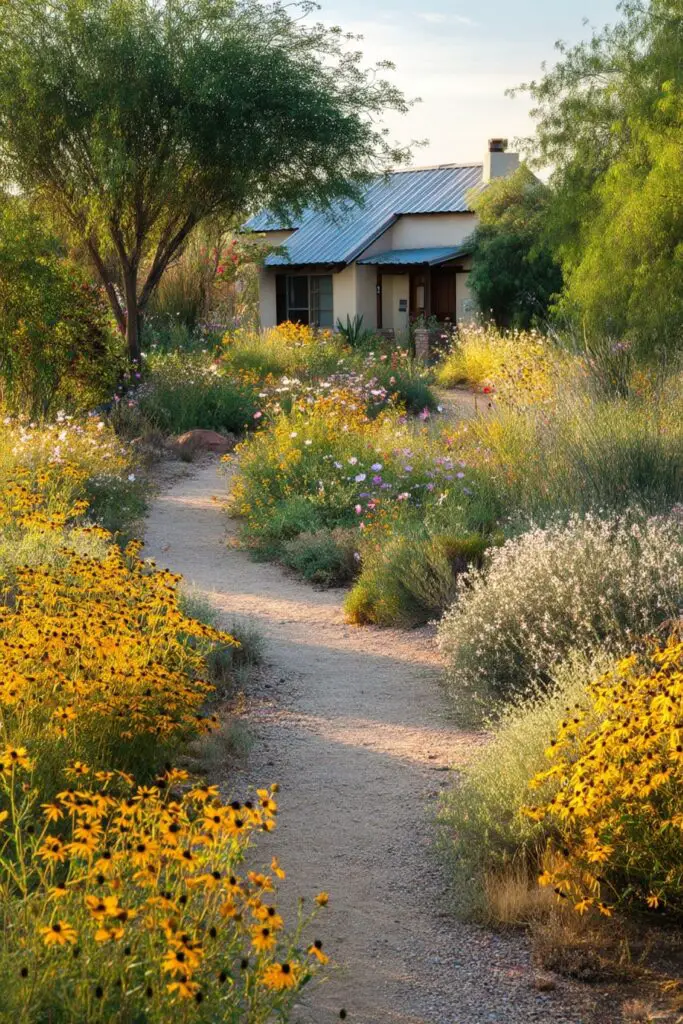
A cottage garden doesn’t have to be high-maintenance. If you live in a dry climate or simply want a garden that thrives with minimal watering, a xeriscape cottage garden offers the perfect solution. By combining drought-tolerant plants with classic cottage aesthetics, you can create a vibrant and romantic space that’s also eco-friendly.
Planting close together helps reduce evaporation and suppress weeds, while colorful, hardy plants like black-eyed Susan, purple coneflower, bearded iris, and cosmos bring texture and visual variety. Shrubs such as rose of Sharon and desert willow add structure and seasonal blooms without needing constant care.
Mulching and drip irrigation systems can further cut down on water use while keeping the roots happy. For a true cottage feel, mix in herbs like lavender and rosemary, which are not only drought-tolerant but also fragrant and functional.
This style is especially appealing to gardeners who want beauty without the burden of daily upkeep.
3. Shrub Cottage Gardens
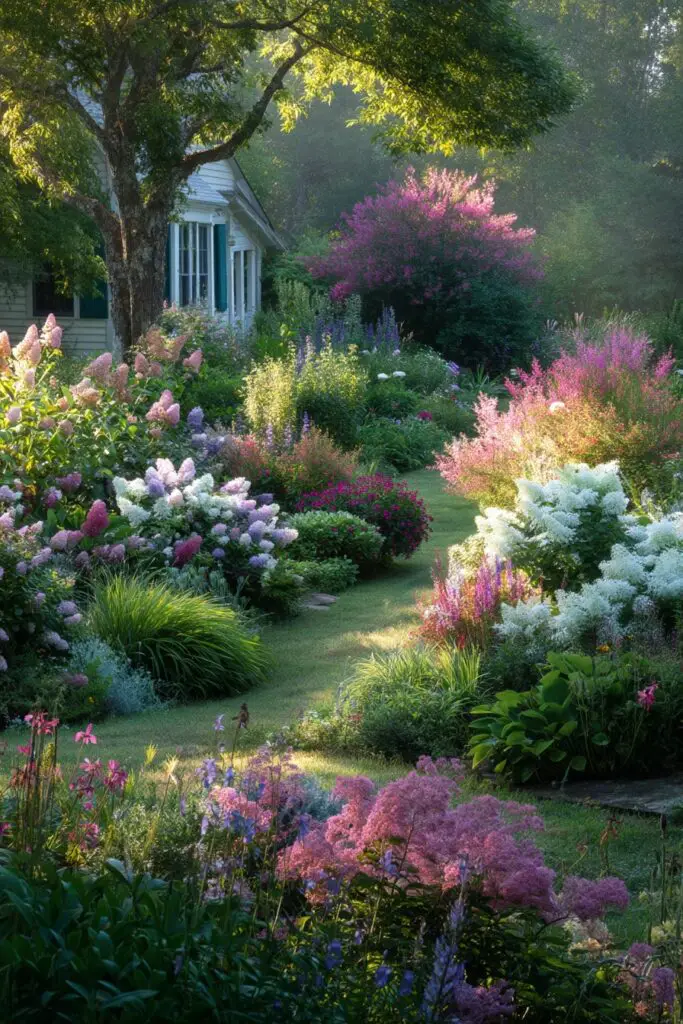
A cottage garden isn’t complete without layers — and shrubs are the perfect way to add depth, structure, and seasonal interest. Integrating flowering shrubs and small trees into your garden brings height variation, supports pollinators, and keeps the garden visually appealing year-round.
Consider starting with versatile favorites like hydrangeas, which come in many sizes and colors. For spring interest, flowering redbud trees provide early blooms and attract bees. Summer bloomers like chaste tree and butterfly bush not only fill in the middle layers of your garden but also invite pollinators with their vibrant flowers.
You can also add shrubby herbs such as autumn sage and Cleveland sage, which offer fragrance and resilience. Native shrubs like ceanothus bring local charm and minimal maintenance.
Strategically placing shrubs throughout your planting beds helps create that layered, slightly wild look that defines the cottage garden style — while offering form and structure that lasts throughout the seasons.
4. Winter Cottage Gardens
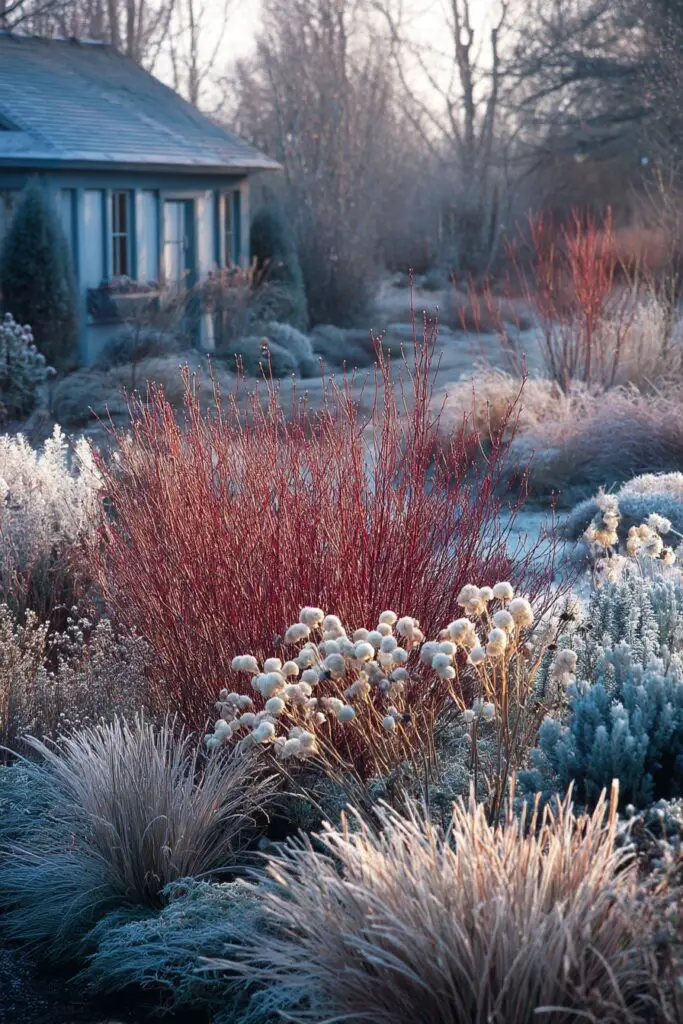
Many gardeners think a cottage garden fades away in winter — but with the right plant choices, it can remain beautiful even in the colder months. A winter-friendly design relies on evergreen foliage, structural seed heads, and plants that offer interesting colors and textures when flowers are no longer blooming.
Broadleaf evergreens like boxwood, camellia, and sweetbox provide rich greenery year-round, while juniper and yew offer hardy, cold-resistant structure. For bold winter color, try red twig dogwood, known for its striking scarlet stems that stand out against snow or mulch.
Seed heads from coneflower, rudbeckia, and sedum add visual interest and also provide food for birds. Ornamental grasses such as blue oat grass and fescue create movement and texture, softening the landscape.
For added charm, include berry-producing plants like viburnum or beautyberry, which add vibrant pops of color and attract winter wildlife — keeping your cottage garden full of life, even in the quiet season.
5. Cottagecore Gardens
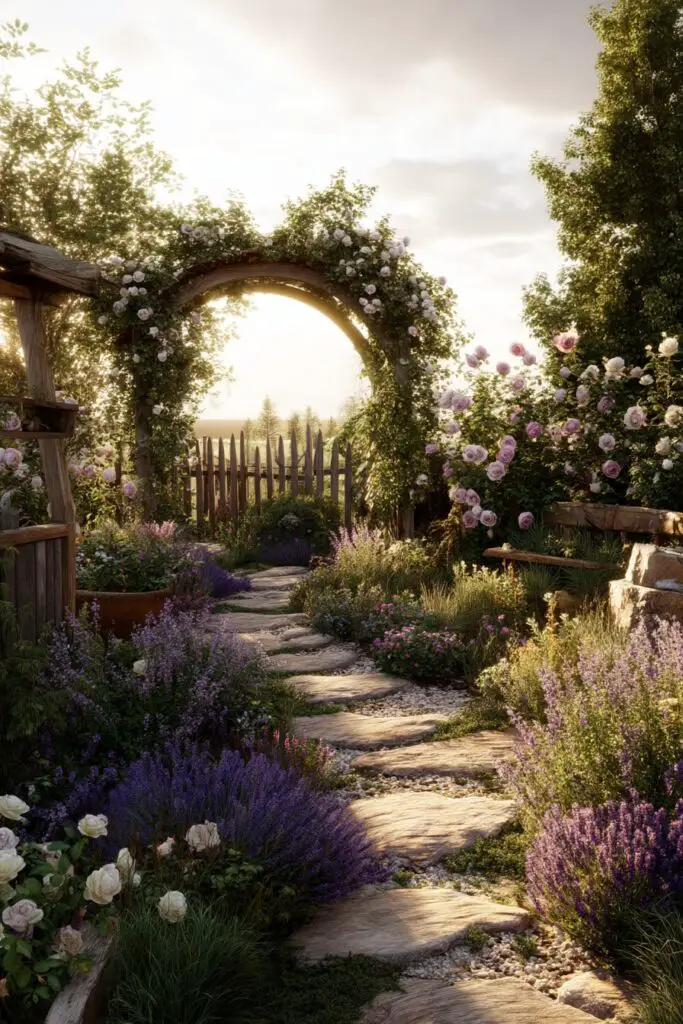
A cottage garden inspired by the cottagecore aesthetic takes things a step further — blending plants, produce, and design into a whimsical, storybook-like space. While traditional cottage gardens may feel more organic or spontaneous, a cottagecore garden is built with a stronger eye for balance, texture, and visual flow.
Start with foundational elements like roses, hydrangeas, and lavender, then weave in edible favorites such as blueberries, strawberries, and heirloom vegetables. Intermingle these with self-seeding annuals and ornamental trees like flowering crabapple or dwarf cherry for layers of interest through the seasons.
Focus on soft pathways, gentle curves, and natural materials — pea gravel, salvaged brick, or stone edging — to reinforce the nostalgic charm. Evergreens provide structure in winter, while climbing vines such as passionflower or clematis add height and romance.
This approach turns your outdoor space into a living painting — a dreamy, functional retreat where every corner has purpose and personality.
Conclusion
A well-designed cottage garden brings character, color, and calm to any outdoor space — whether you’re working with a sprawling backyard or a small city balcony. By choosing the right style for your needs — from container planting to drought-tolerant xeriscaping or even winter-friendly layouts — you can enjoy beauty and biodiversity all year long.
No matter which approach you choose, the charm of a cottage garden lies in its mix of function and flair, where every plant has a place, and every corner feels alive.