
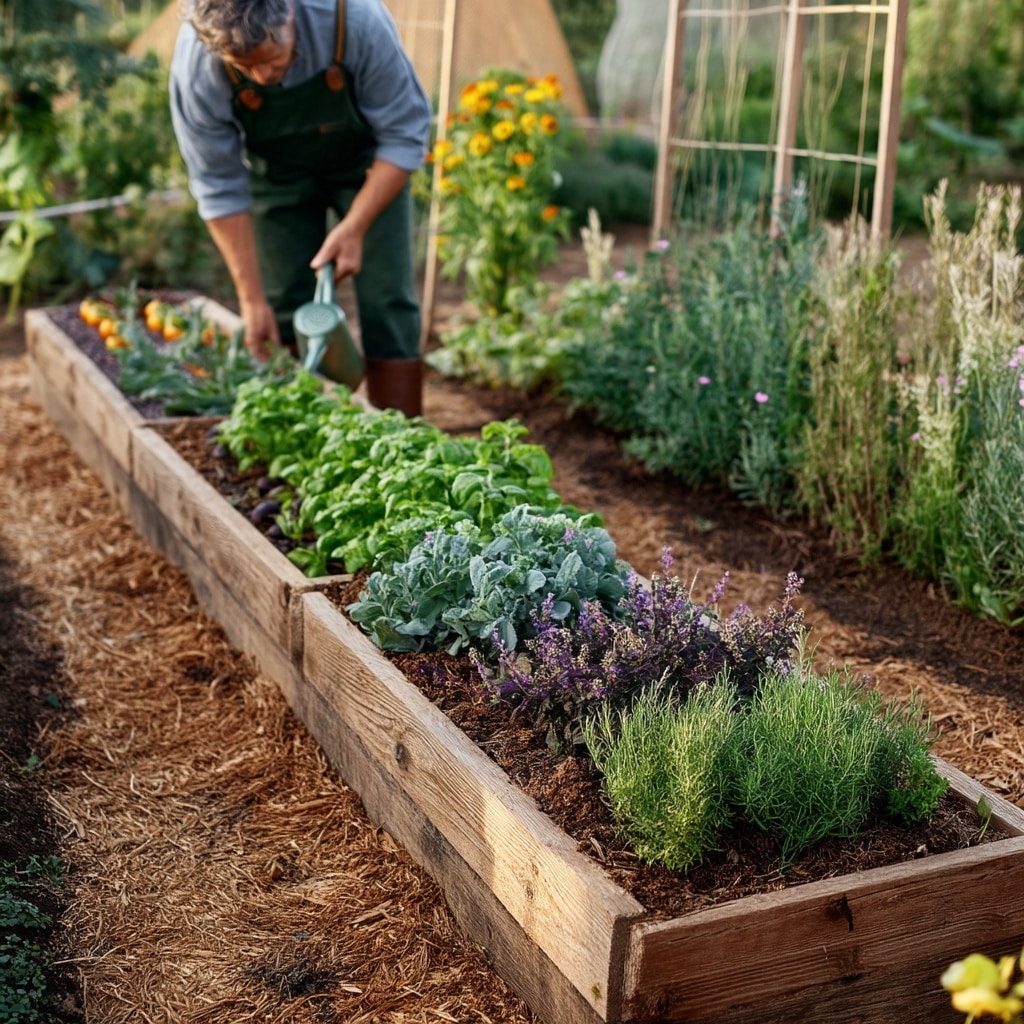
Raised garden beds DIY projects are one of the easiest ways to grow healthier plants while saving your back and knees. Whether you’re cultivating vegetables, herbs, or flowers, a raised bed gives you better control over soil quality, drainage, and weed management. Unlike traditional in-ground gardens, these elevated planters warm up faster in the spring and stay loose and aerated throughout the season—ideal for thriving roots. Plus, with fewer pests and less bending, you’ll enjoy the gardening process even more. In this guide, we’ll show you exactly how to build a sturdy raised garden bed that will last for years—without needing fancy tools or a contracto
Table of Contents
Tools & Materials You’ll Need

Before you begin building your raised garden beds DIY project, gather everything you’ll need ahead of time. Having the right tools and rot-resistant materials on hand will make the process smoother and help ensure your raised bed stands up to the elements year after year.
Tools:
- Measuring tape
- Circular saw (or get cuts made at the hardware store)
- Power drill or driver
- Carpenter’s level
- Shovel or garden rake
- Safety gear (gloves and safety glasses)
Materials:
- Rot-resistant wood – Cedar or redwood are ideal for longevity
- Exterior deck screws (3-inch length recommended)
- Landscape fabric or plain cardboard – Acts as a weed barrier
- Soil mix – A balanced blend of topsoil, compost, and organic matter
- Mulch – For moisture retention and weed control
- Corner brackets or rebar stakes (optional, for added frame support)
- Trellis (optional, for climbing plants like peas or cucumbers)
💡 Tip: If you’re building more than one bed, consider buying materials in bulk to save money.
Step 1: Choose the Right Spot
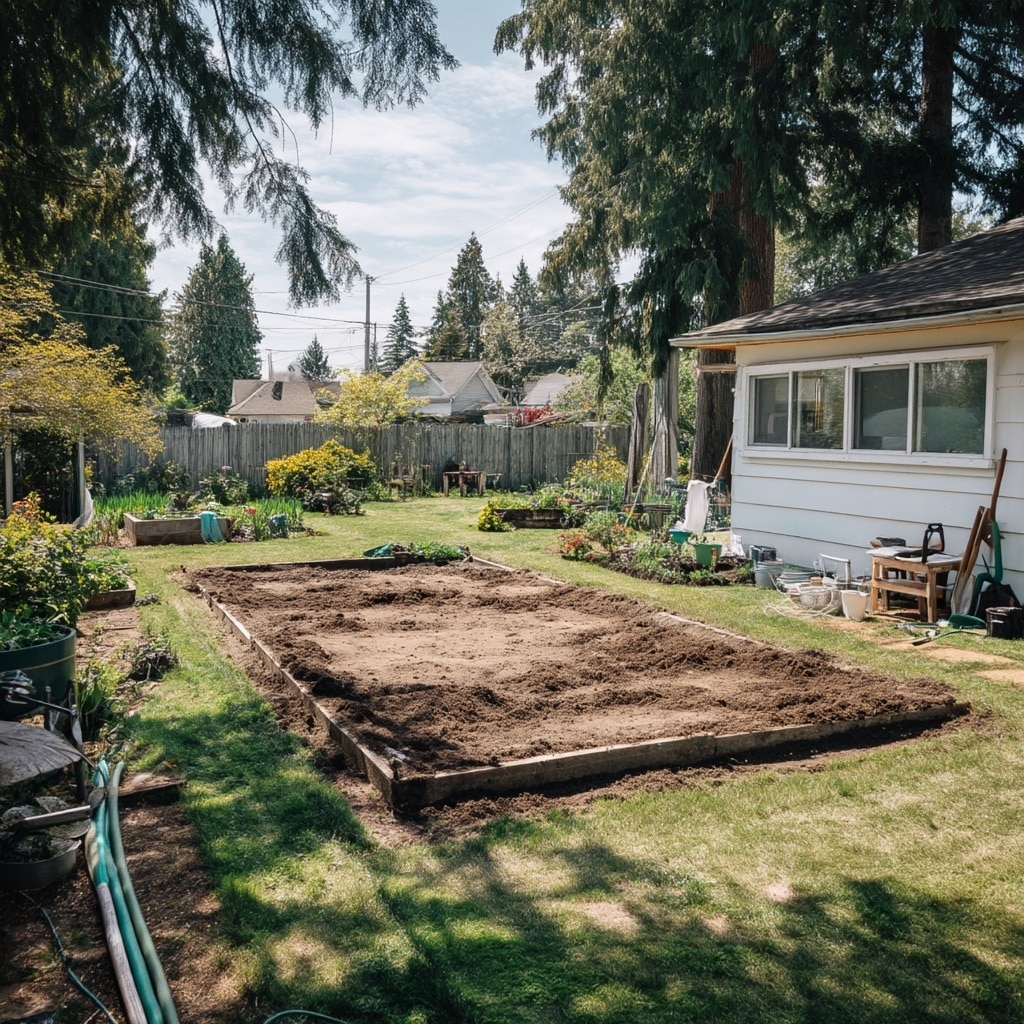
Location matters more than you think in any successful raised garden beds DIY setup. Most vegetables, herbs, and flowering plants thrive in full sun, so select a spot that gets at least 6 to 8 hours of sunlight per day.
Look for a flat, level area with good air circulation and easy access to water. If you plan to build multiple beds, make sure there’s at least 3 feet of walking space between each one so you can move around freely with tools or a wheelbarrow.
Before placing your bed, clear the area of grass, rocks, and debris. If the ground isn’t completely level, use a shovel to flatten it out. This small step will make building and watering much easier later on.
Step 2: Design the Right Size Planter Box
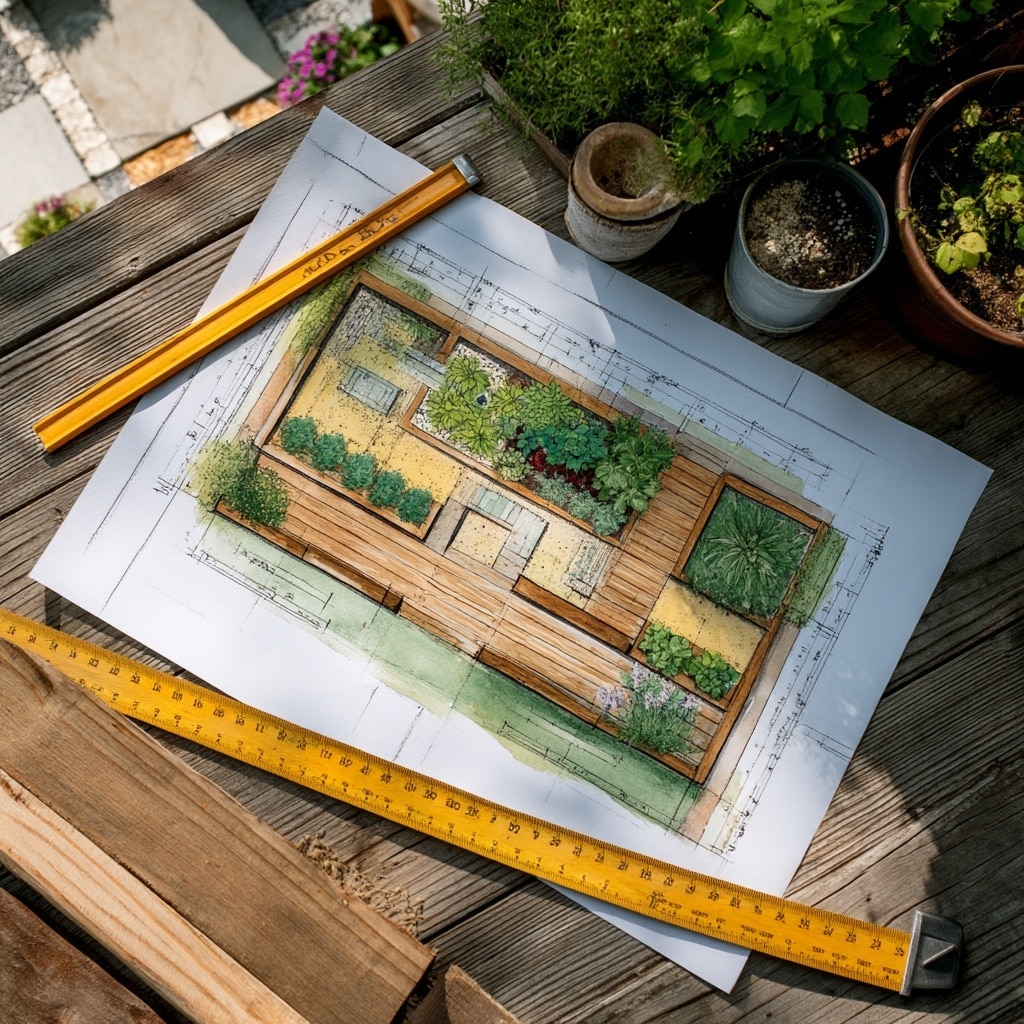
When planning the dimensions for your raised garden beds DIY, size truly matters—for both plant health and your comfort. While you can customize the bed to fit your space, a few guidelines will make your gardening more efficient.
✅ Width:
Keep the width no more than 4 feet. This allows you to reach the center of the bed from either side without stepping into it, which prevents soil compaction and makes tending your plants easier.
✅ Length:
Most raised beds range from 6 to 8 feet long, but you can go longer if you have the space. Just make sure the structure stays stable or add interior support if needed.
✅ Height:
Aim for a height between 12 and 24 inches. This gives enough depth for most vegetables and flowers. For root crops like carrots or potatoes, choose a depth of at least 18 inches to accommodate their growth.
💡 Pro Tip: A taller bed also means less bending or kneeling, making gardening more accessible for everyone.
Step 3: Cut and Prep the Lumber
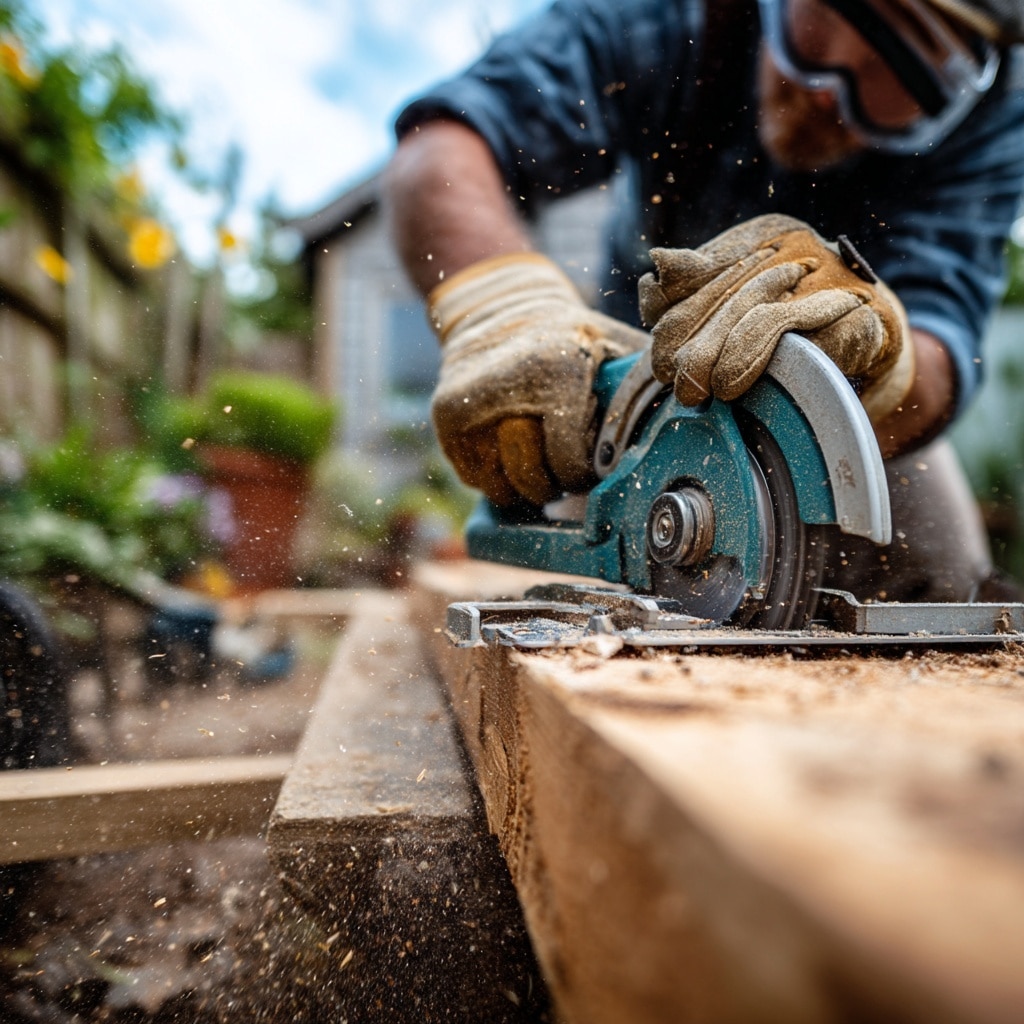
Choosing the right wood and preparing it correctly is key to ensuring your raised garden beds DIY project lasts for years.
✅ Choose Rot-Resistant Wood
Cedar and redwood are ideal because they’re naturally resistant to rot and insects. If you’re growing edible plants, avoid pressure-treated lumber unless it’s clearly labeled safe for gardens. For ornamental beds, budget-friendly untreated pine can work, but it won’t last as long.
✂️ Measure and Cut Your Boards
Sketch out your bed’s dimensions, then use a tape measure and pencil to mark your cuts. A circular saw works best for smooth, accurate cuts. Not comfortable using power tools? Most hardware stores will cut your boards for you—just bring your measurements.
⚠️ Safety First
Wear gloves and safety glasses while cutting. Double-check measurements before each cut to avoid wasting materials.
💡 Pro Tip: Label each board after cutting so assembly is faster and more organized.
Step 4: Assemble the Frame
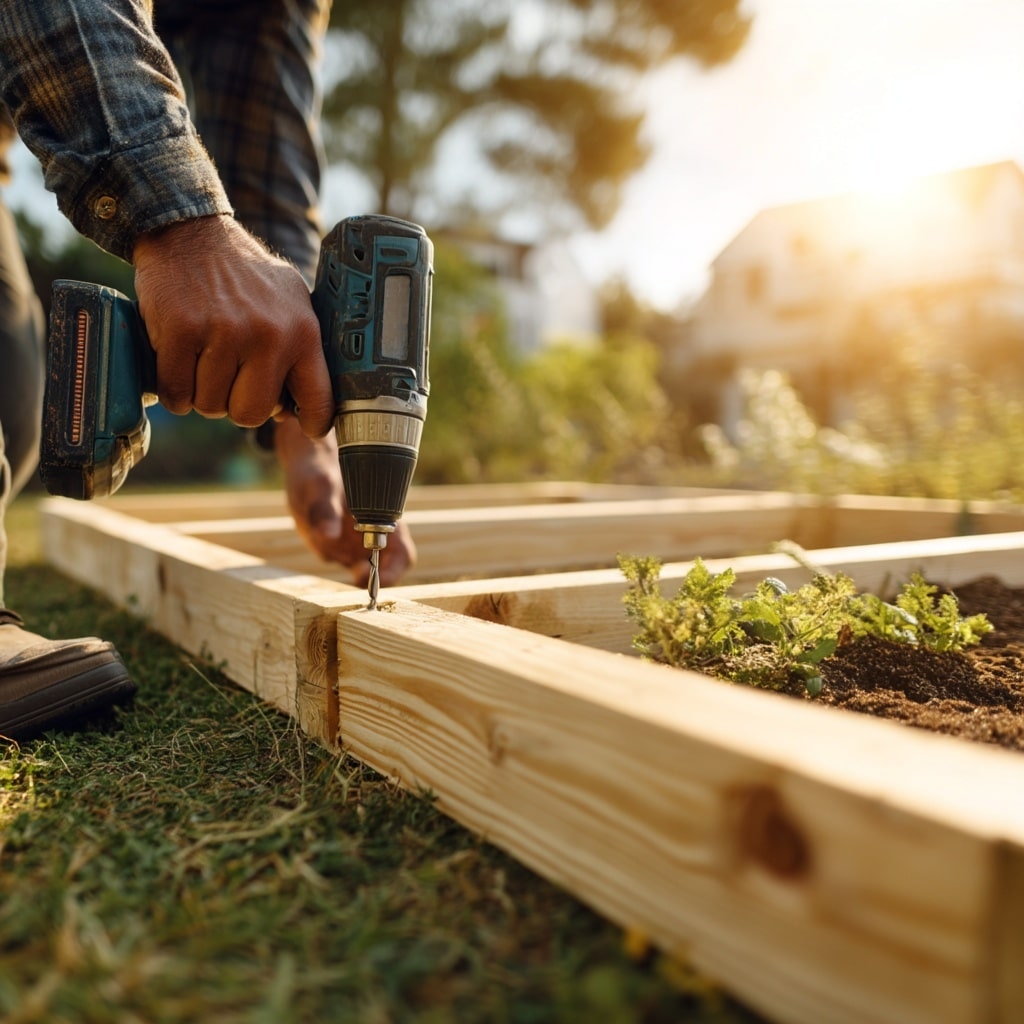
With your lumber prepped, it’s time to build the frame that will support your raised bed for seasons to come.
🧰 Lay It Out
On a flat surface, lay out your boards into a rectangle. Align the shorter end boards inside the longer sides for a clean, sturdy edge. If possible, work on a dry day to avoid moisture swelling the wood during assembly.
🔩 Drill & Screw
Use a power drill to pre-drill holes at the ends of the long boards—this prevents the wood from splitting. Then fasten the boards together using 3-inch exterior-grade deck screws. Tight connections ensure the frame stays square and strong.
💪 Reinforce the Corners (Optional but Recommended)
- Add metal corner brackets for added durability, especially if your bed is long.
- Or hammer 2-foot rebar stakes into each corner for extra ground support.
💡 Pro Tip: Use a carpenter’s square or level to check each corner for a true 90-degree angle.
Step 5: Place and Secure the Bed
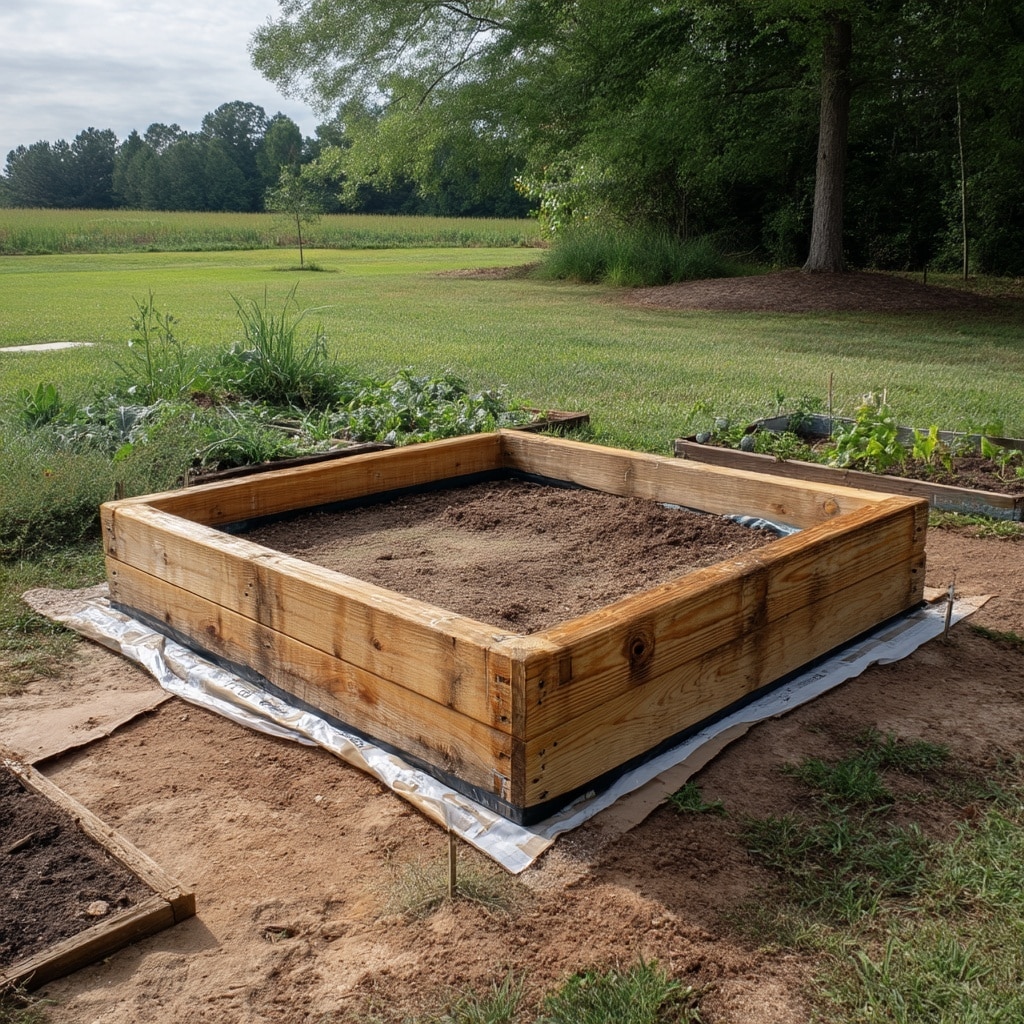
Once your frame is assembled, it’s time to move it to the prepared location in your garden.
📦 Set It In Place
Carefully position the frame where you cleared and leveled the ground earlier. Use a level to check that all sides are even. If the bed wobbles or doesn’t sit flat, dig shallow trenches or adjust the soil underneath until it’s stable.
🌱 Add a Weed Barrier
Before filling the bed, lay down a weed-blocking layer to prevent grass and invasive roots from creeping in:
- Use plain cardboard, newspaper, or landscape fabric
- Overlap pieces to avoid gaps
- Moisten the barrier to help it stay in place and begin breaking down naturally
🪱 Cardboard is especially great—it not only blocks weeds but also decomposes into the soil, attracting beneficial earthworms and improving soil structure over time.
💡 Avoid using glossy, heavily printed cardboard as it may contain chemicals not suitable for gardens.
Step 6: Fill with Soil
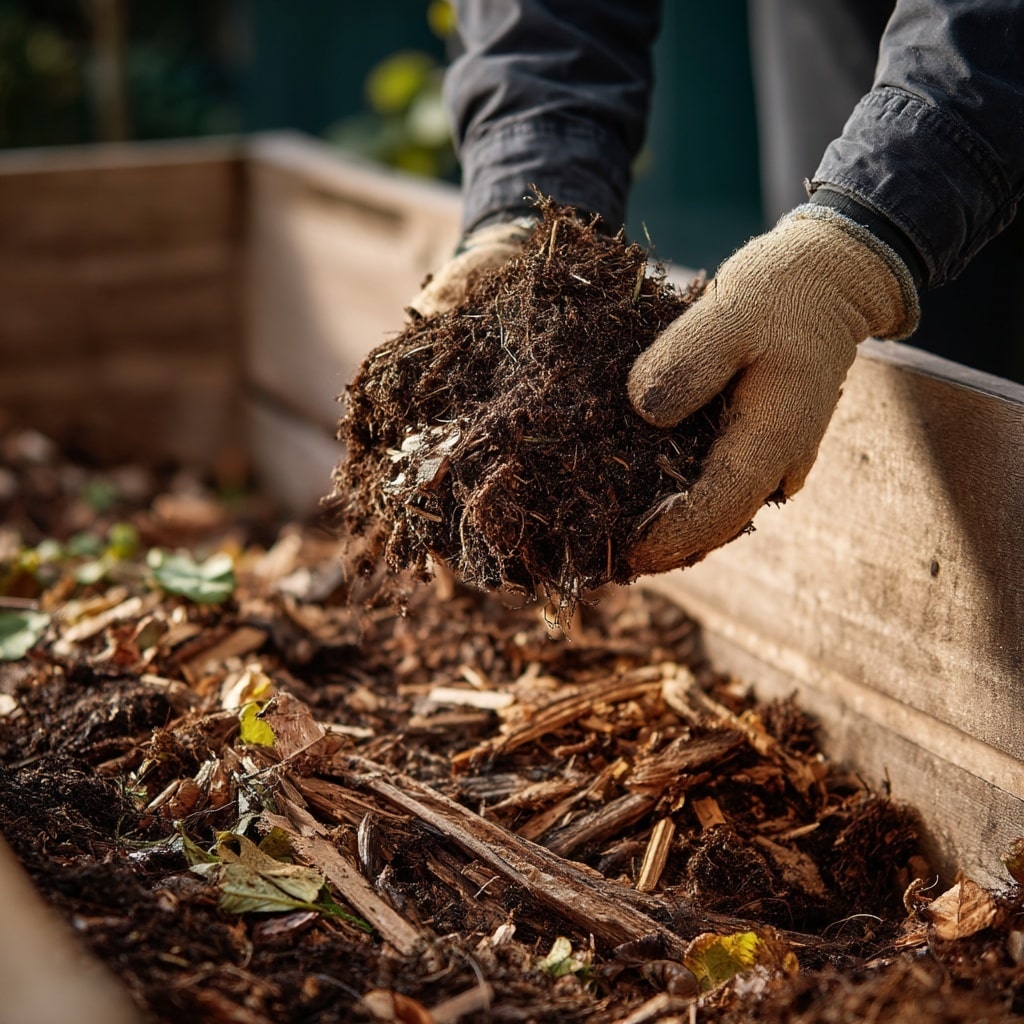
A quality soil mix is the secret to a productive and low-maintenance raised bed. Since you’re not relying on your native soil, you can create the perfect environment for roots to thrive.
🌿 Layer Your Soil Mix
A good raised bed soil blend includes:
- 60% topsoil – Provides structure and bulk
- 30% compost – Adds nutrients and beneficial microbes
- 10% organic matter – Such as aged manure, shredded leaves, or peat for moisture retention and aeration
Thoroughly mix these layers together before planting. You can also water the mix as you fill the bed to help it settle and eliminate air pockets.
🪵 Optional Base Layer for Deep Beds
If your raised bed is over 18 inches tall, consider saving money and improving drainage with a Hügelkultur-inspired base:
- Add a bottom layer of logs, sticks, or coarse mulch
- Top that with compost and finished soil layers
This base will break down over time, feeding your plants naturally while using less topsoil.
💡 Water the entire bed thoroughly after filling. Let it sit for a day or two before planting to allow settling.
Step 7: Plant and Maintain
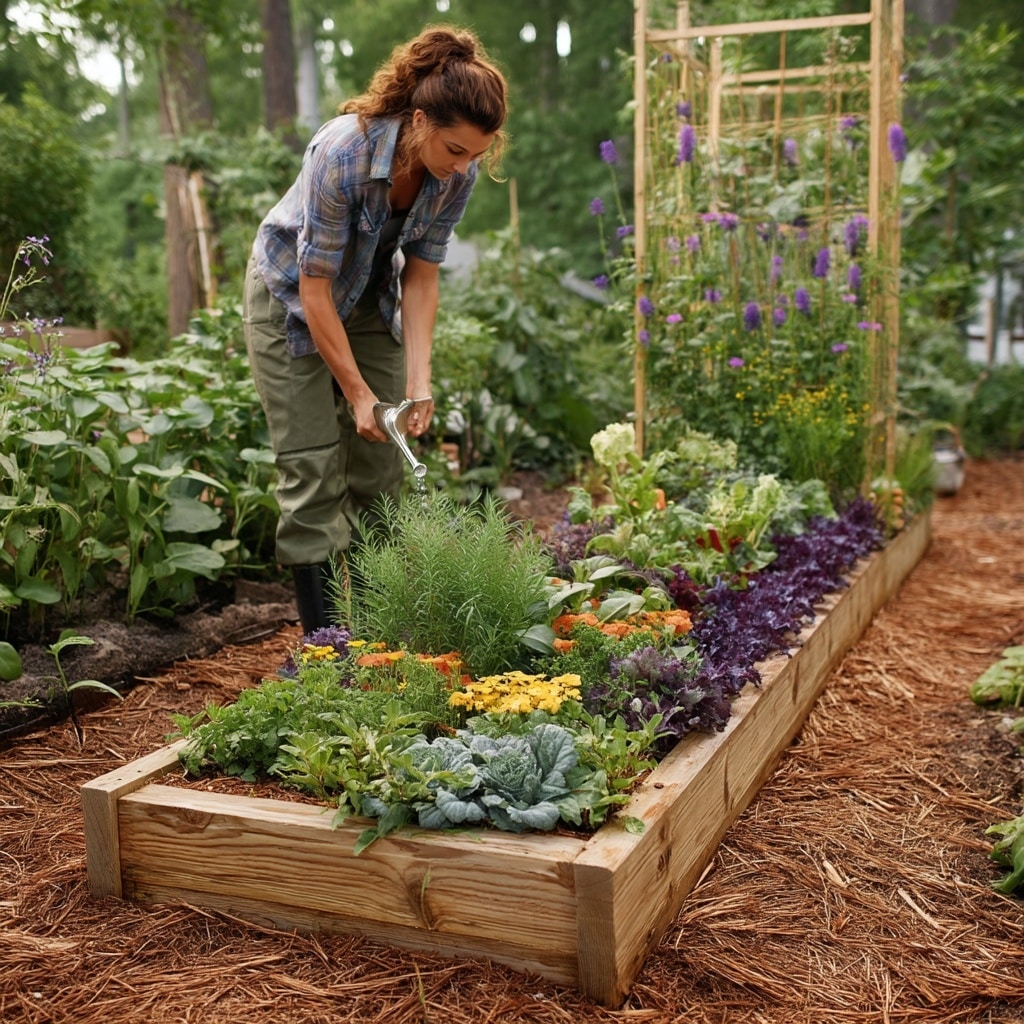
With your bed filled and settled, it’s time to start planting. Raised beds are ideal for everything from leafy greens to flowers to fruiting vegetables.
🌱 What to Plant
Raised beds warm up quickly and drain well, making them perfect for:
- Herbs: Basil, parsley, mint, thyme
- Leafy greens: Lettuce, spinach, kale
- Vegetables: Tomatoes, peppers, carrots, radishes, zucchini
- Fruits: Strawberries, bush beans
- Flowers: Marigolds, nasturtiums (great for pest control too)
💧 Watering Tips
Raised beds tend to dry out faster than ground gardens:
- Check moisture with your finger daily, especially in hot weather
- Water early in the morning to reduce evaporation
- Install a soaker hose or drip irrigation system for efficiency
🌾 Mulch Matters
Add a 2–3 inch layer of mulch over your soil to:
- Retain moisture
- Suppress weeds
- Regulate soil temperature
Use natural mulches like shredded bark, straw (not hay), or untreated wood chips.
🛠️ Maintain with Style
- Add a trellis for climbing plants like cucumbers or peas
- Use cloche covers to protect from pests
- Surround the bed with stepping stones or decorative edging for both function and beauty
💡 The more you enjoy looking at your garden, the more likely you are to tend it regularly.
Conclusion
Building a raised garden beds DIY setup doesn’t require a pro contractor—just a bit of planning, the right materials, and a free weekend. Whether you’re growing your first tomato or creating a floral focal point in your backyard, a well-constructed raised bed makes gardening more accessible, productive, and enjoyable. Plus, it’s an investment that will reward you season after season with better soil, fewer weeds, and a happier back.