
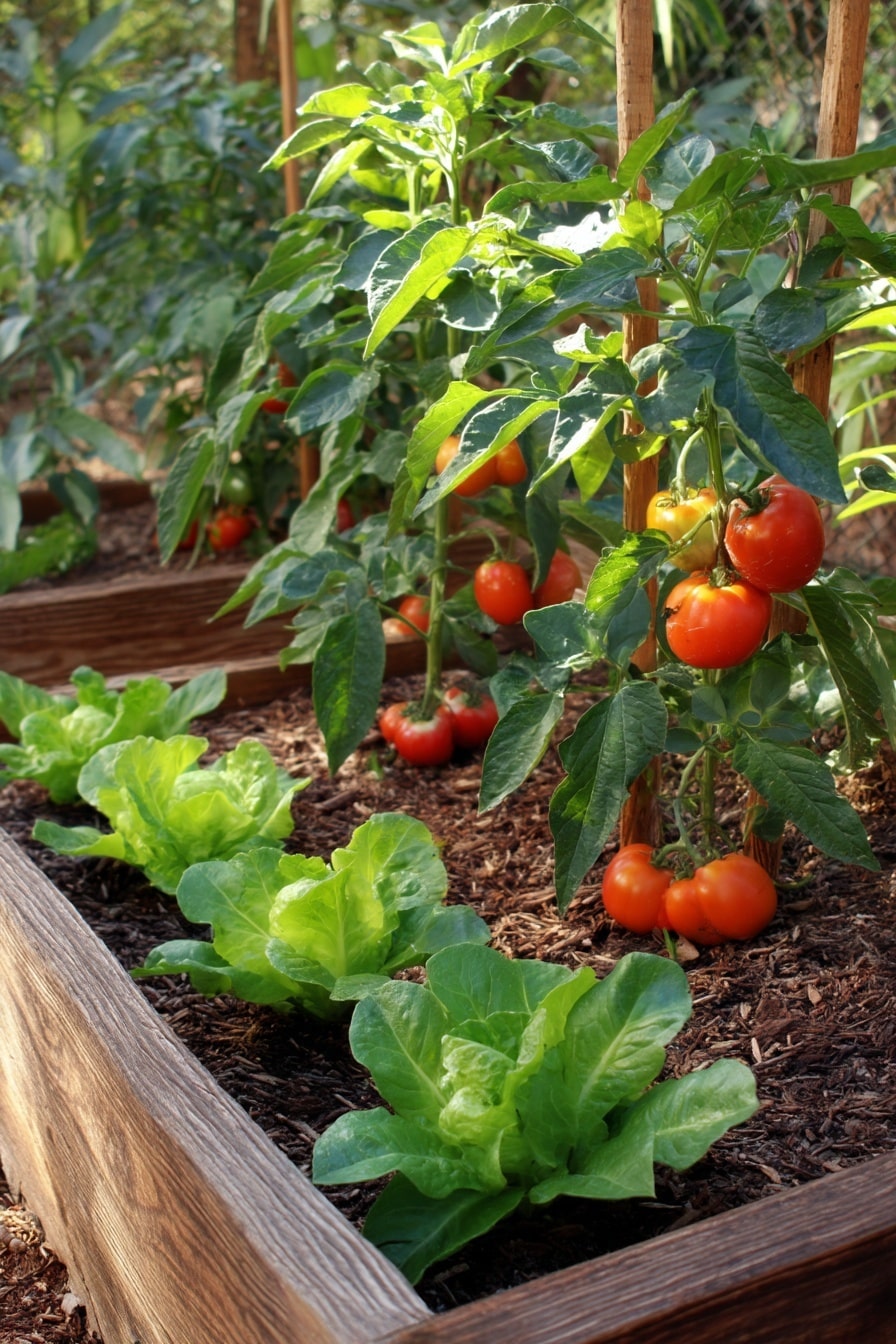
Garden bed layout planning is one of the most important steps when starting a raised bed vegetable garden. A well-designed layout helps plants grow efficiently, improves access for watering and harvesting, and makes the entire garden easier to manage.
Raised beds allow gardeners to organize crops in a compact space while improving soil quality and drainage. However, without a thoughtful garden bed layout, even raised beds can become overcrowded or difficult to maintain.
The following guide explains practical ways to design a functional raised bed garden. These ideas focus on spacing, crop placement, pathways, and companion planting so your garden bed layout supports healthy plants and productive harvests.
Table of Contents
1. Choose the Right Raised Bed Size

The foundation of a good garden bed layout begins with selecting the correct bed size. Beds should be wide enough to grow several plants but narrow enough to reach the center without stepping on the soil.
Ideal raised bed dimensions
- Width: 3 to 4 feet
- Length: 6 to 8 feet (or longer if space allows)
- Height: 10 to 18 inches for most vegetables
These measurements allow easy access from both sides while keeping soil loose and well-aerated.
Why bed size matters
- Prevents soil compaction
- Makes planting and harvesting easier
- Improves airflow between plants
A properly sized bed provides the structure needed for an efficient garden bed layout.
2. Plan Walkways Between Garden Beds
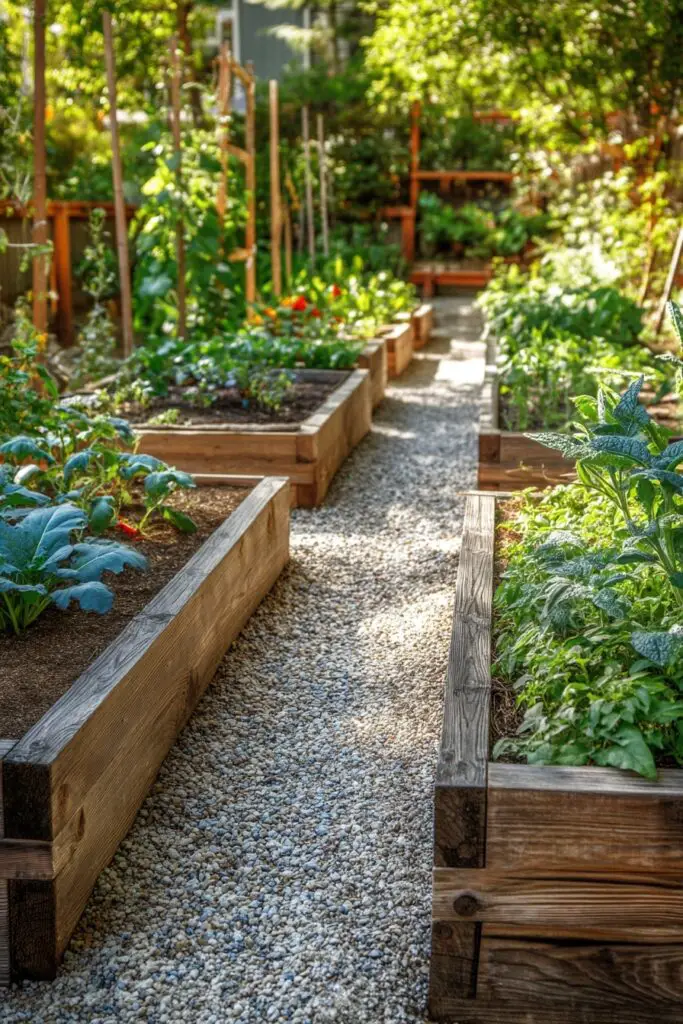
Pathways are an often overlooked part of a successful garden bed layout. Without enough space between beds, it becomes difficult to move tools, water plants, or harvest vegetables.
Recommended pathway width
- Minimum: 18–24 inches
- Comfortable spacing: 30–36 inches
Materials for garden paths
- Gravel
- Wood chips
- Stepping stones
- Brick or pavers
Paths keep the growing area organized and prevent gardeners from stepping on planting soil.
Including walkways in your garden bed layout helps keep the garden clean, accessible, and easy to maintain.
3. Arrange Plants by Height
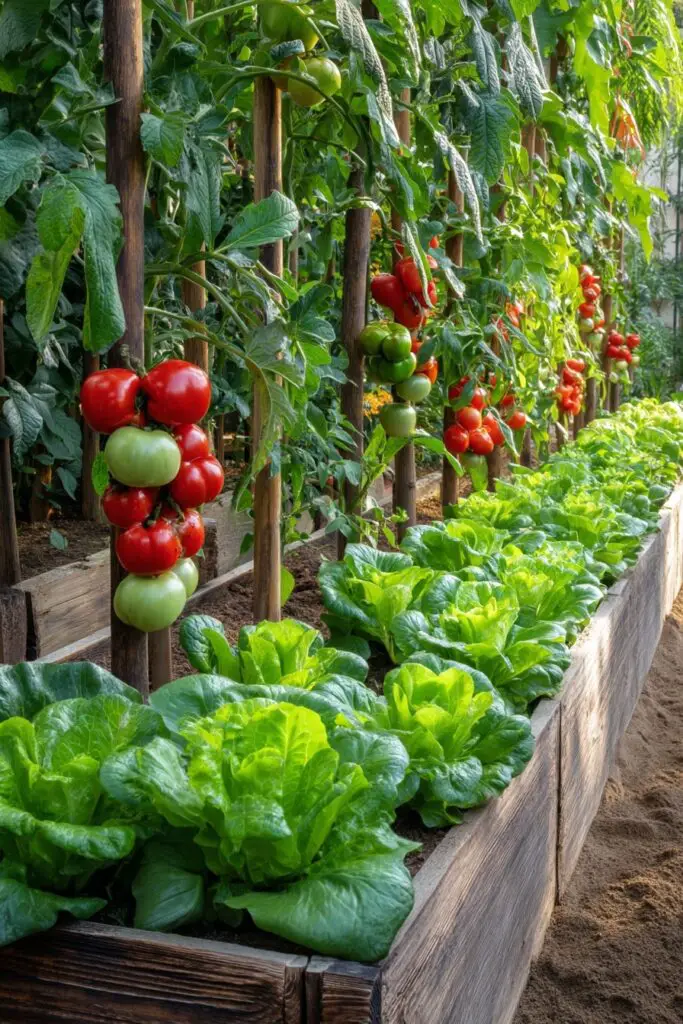
Another helpful strategy for an effective garden bed layout is placing taller plants where they won’t shade smaller crops.
This approach allows every plant to receive enough sunlight throughout the day.
Typical plant height placement
- Back of bed: Tomatoes, corn, trellised cucumbers
- Middle: Peppers, beans, eggplant
- Front: Lettuce, herbs, carrots
Benefits of height planning
- Prevents shading problems
- Improves air circulation
- Makes harvesting easier
Organizing crops by height creates a balanced garden bed layout that maximizes sun exposure.
4. Use Square Foot Gardening for Small Spaces
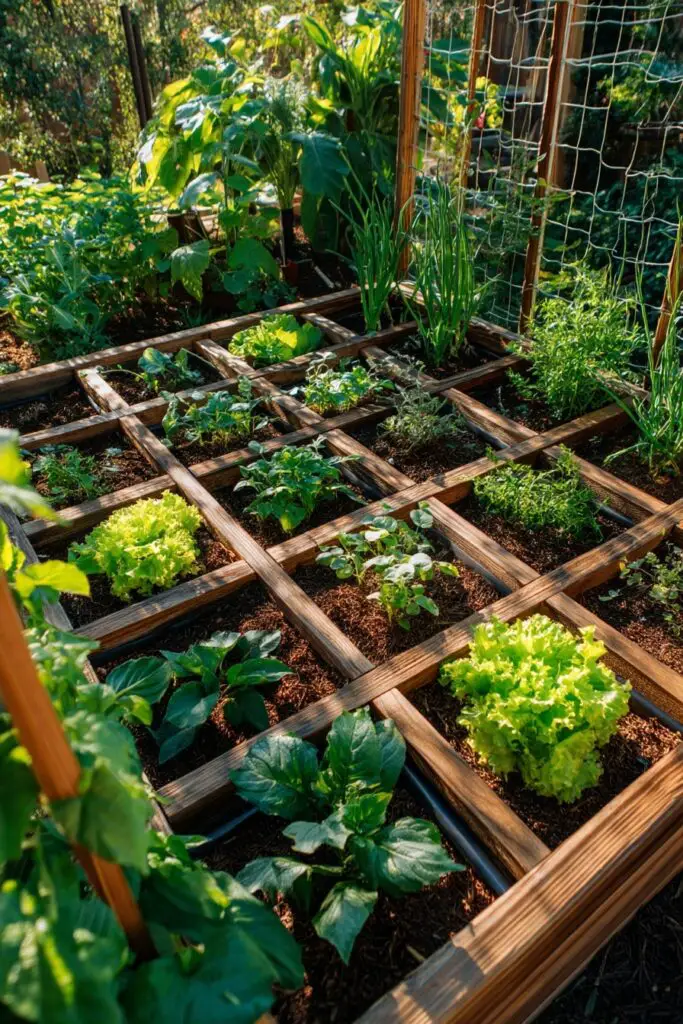
Square foot gardening is a popular method used in many efficient garden bed layout plans. The technique divides the bed into smaller squares, allowing gardeners to grow multiple crops in a compact area.
How the system works
- Beds are divided into 1-foot squares
- Each square contains a specific crop
- Plant spacing is adjusted based on plant size
Example square spacing
- 1 tomato plant per square
- 4 lettuce plants per square
- 16 carrots per square
This method simplifies planting and helps maintain an organized garden bed layout, especially in smaller gardens.
5. Include Companion Planting Zones
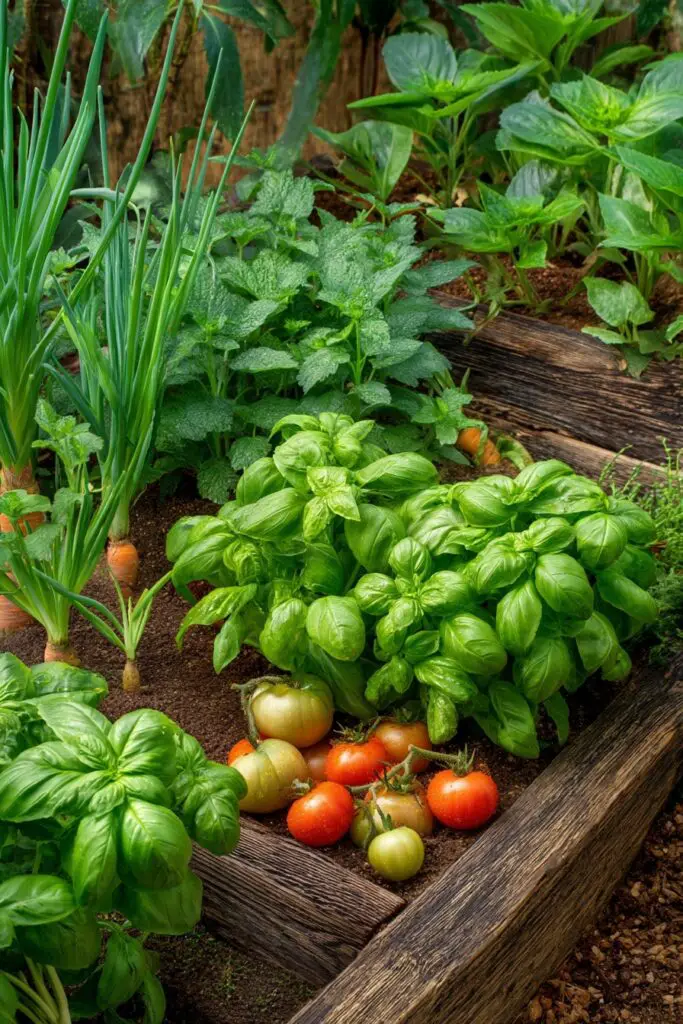
Companion planting can improve the productivity of a garden bed layout by grouping plants that benefit each other.
Certain plants help repel pests, attract pollinators, or improve soil conditions.
Common companion plant pairings
- Tomatoes with basil
- Carrots with onions
- Cucumbers with dill
- Lettuce with radishes
Advantages of companion planting
- Reduces pest problems
- Encourages beneficial insects
- Maximizes garden space
Integrating companion plants adds another layer of planning to your garden bed layout while improving overall plant health.
Tips for Designing a Productive Garden Bed Layout
When planning your garden bed layout, a few additional design strategies can help improve results.
1. Rotate crops each season
Planting the same crop in the same location every year can lead to soil nutrient depletion and pest buildup.
2. Leave space for trellises
Vertical supports for beans, cucumbers, or peas can increase production without expanding the bed.
3. Label plants clearly
Garden markers help keep track of crops in each section of the bed.
4. Start small
Beginning with two or three beds makes it easier to learn what works best.
These simple strategies help create a practical and manageable garden bed layout for both beginner and experienced gardeners.
Conclusion
A well-planned garden bed layout helps gardeners grow more vegetables while keeping the garden organized and easy to maintain. By choosing the right bed size, including walkways, arranging plants by height, using square foot gardening, and practicing companion planting, raised beds can become highly productive spaces.
With thoughtful planning and simple design principles, anyone can create a raised bed garden that supports healthy plants and consistent harvests throughout the growing season.