
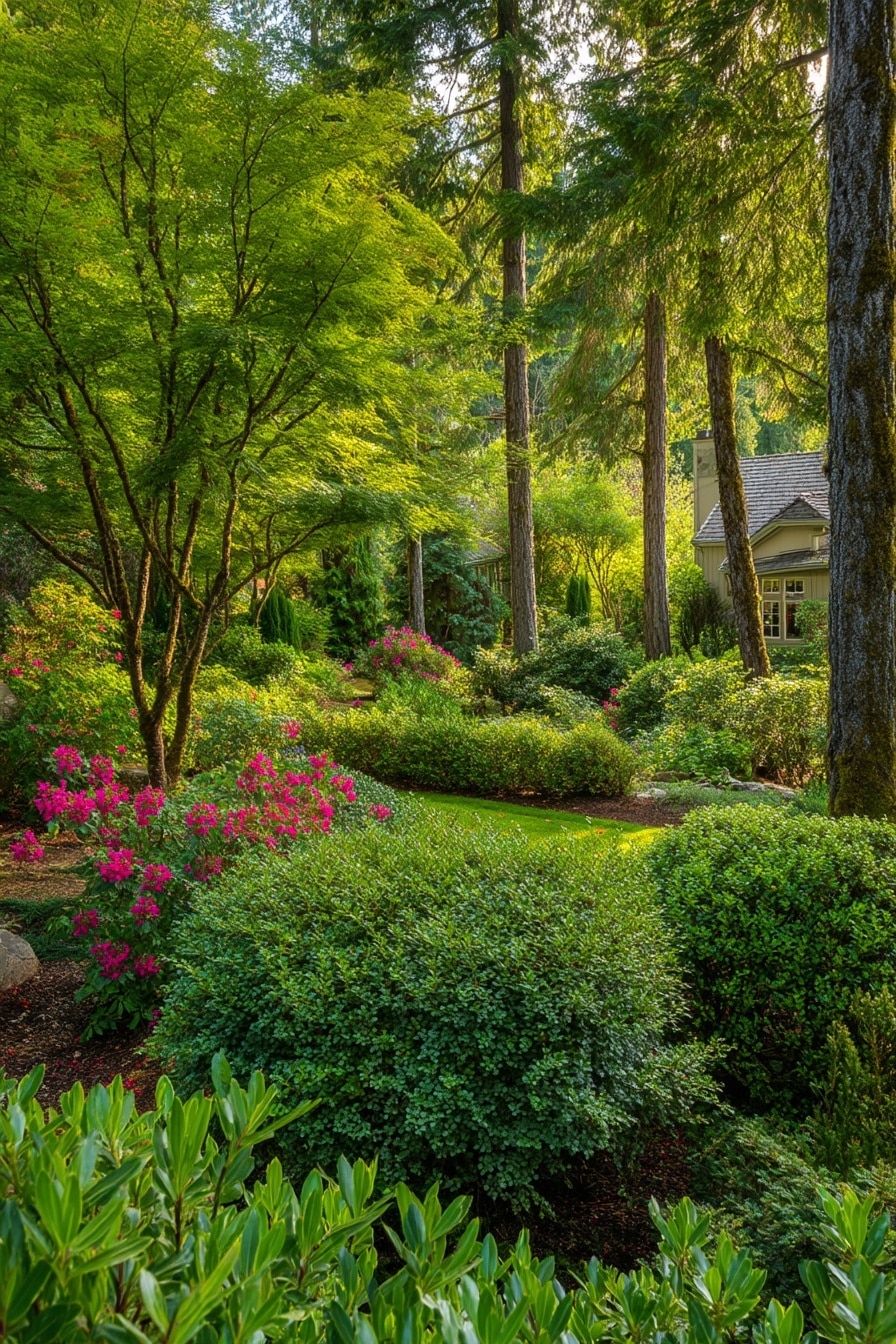
Evergreen landscape design is one of the most reliable ways to keep a garden attractive in every season. While many plants fade or go dormant during colder months, evergreen trees and shrubs maintain their foliage, giving your yard color, structure, and visual balance all year.
A well-planned evergreen landscape acts as the backbone of your garden. These plants provide strong shapes, privacy, and background greenery that highlight seasonal flowers and perennials. Designers often rely on evergreen planting because it adds stability and interest even when other plants have finished blooming.
Whether you want privacy from neighbors, a bold focal point, or a calm green backdrop, an effective evergreen landscape can transform your outdoor space. The following ideas show practical ways to incorporate evergreen plants so your garden remains vibrant and structured through every season.
Table of Contents
1. Use Evergreens for Screening and Privacy

A smart evergreen landscape can naturally create privacy in your garden. Evergreen shrubs and trees keep their leaves throughout the year, making them ideal for blocking views from nearby houses or busy streets.
Unlike deciduous plants, evergreen screens remain dense in winter, which helps maintain privacy and reduce noise.
Best ways to create a natural evergreen screen
- Plant evergreen shrubs along fences or property lines
- Combine different heights and textures for depth
- Use dense hedging varieties such as yew or laurel
Mixing several evergreen species also adds visual interest. Variegated leaves or different shades of green can brighten darker corners while still forming a strong privacy barrier.
Another advantage of this evergreen landscape strategy is wildlife support. Dense evergreen shrubs often provide shelter for birds during colder months.
2. Add Fragrance with Evergreen Shrubs
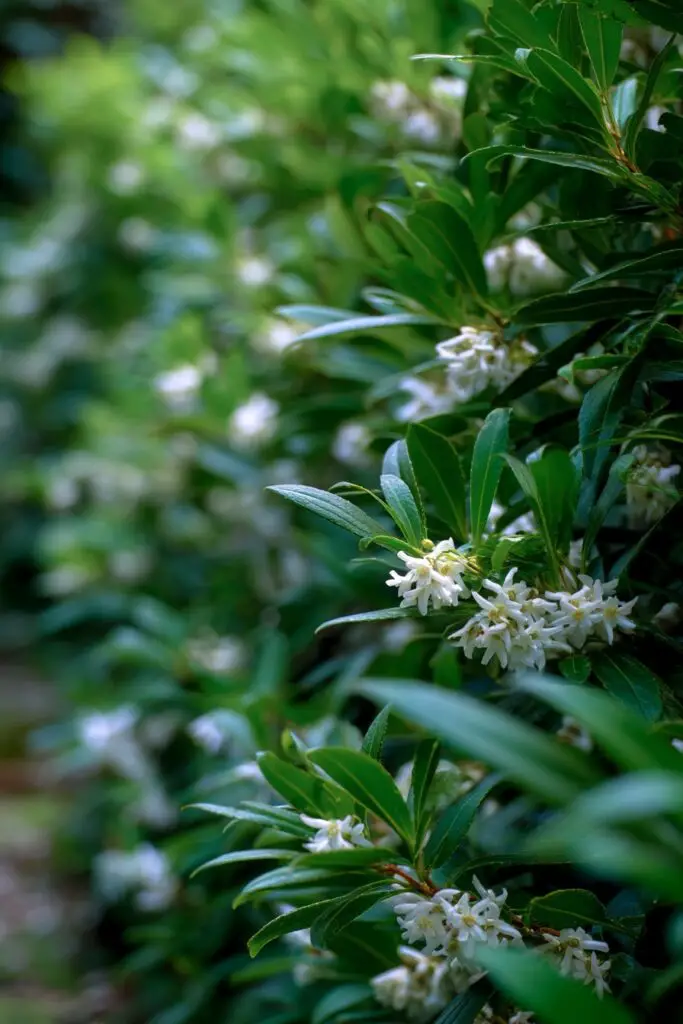
A fragrant evergreen landscape adds another layer of enjoyment to your garden. Some evergreen shrubs produce scented flowers that appear in winter or early spring, when most gardens lack color and fragrance.
Placing these plants near entrances or walkways allows you to enjoy their scent whenever you step outside.
Popular fragrant evergreen plants
- Daphne – produces highly scented winter flowers
- Sarcococca (Sweet Box) – sweet fragrance in late winter
- Choisya (Mexican Orange Blossom) – aromatic white flowers
- Elaeagnus – subtle blooms with strong autumn fragrance
Even small plant groupings can create a long flowering season. Combining a few varieties allows fragrance to appear at different times of the year.
Including scent in your evergreen landscape makes the garden feel lively even during colder months.
3. Use Evergreens to Create Form and Rhythm
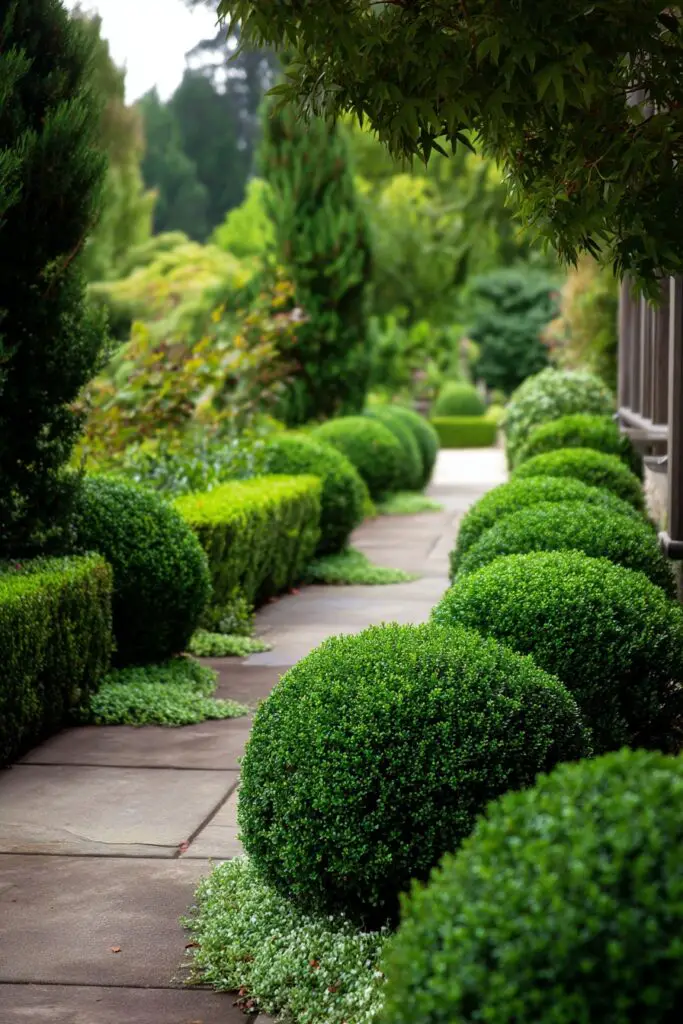
Strong shapes help a garden feel organized. A carefully planned evergreen landscape often includes shrubs that repeat across borders to create rhythm and balance.
Rounded shrubs, clipped mounds, and structured hedges guide the eye through planting beds and pathways.
How to create rhythm in planting
- Repeat the same shrub variety in multiple spots
- Use rounded forms to soften borders
- Combine clipped shapes with natural shrubs
Evergreens with compact growth habits are especially useful because they maintain their shape throughout the year.
Repeating shapes in your evergreen landscape helps tie different garden areas together while creating a calm, cohesive design.
4. Plant an Evergreen Backdrop
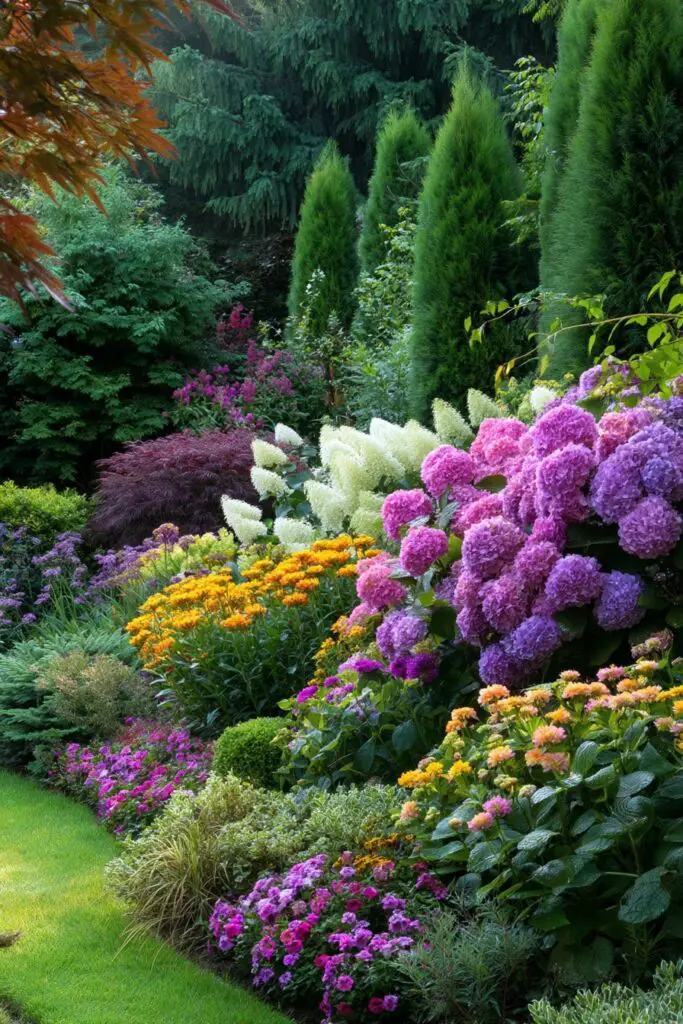
A strong evergreen landscape often includes a background layer of shrubs that highlight seasonal plants.
These deep green backdrops allow colorful flowers and ornamental grasses to stand out more clearly.
Why evergreen backdrops work well
- They frame seasonal flowers beautifully
- They add depth to planting beds
- They maintain structure during winter
For example, evergreen shrubs planted behind perennials provide visual support throughout the year. When summer flowers fade, the greenery continues to carry the garden’s design.
This layered approach keeps your evergreen landscape balanced and visually appealing in every season.
5. Create Borders and Hedges with Evergreens
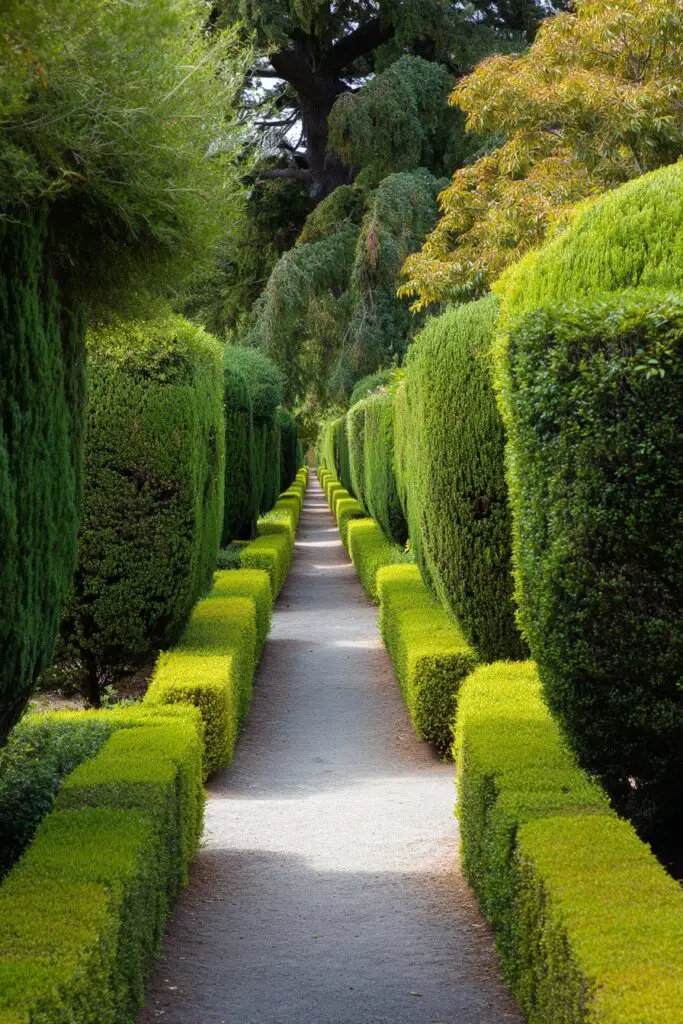
Hedges are one of the most traditional elements of an evergreen landscape. They define garden areas, outline pathways, and add form to outdoor spaces.
Evergreen hedges are particularly effective because they remain dense all year.
Evergreen hedge ideas
- Yew (Taxus) for formal clipped hedges
- Viburnum tinus for flowering hedges
- Portuguese laurel for tall privacy screens
- Photinia ‘Red Robin’ for colorful foliage
Hedges also help divide large gardens into smaller “rooms,” creating distinct areas for relaxation, dining, or vegetable growing.
With proper pruning, hedges become a long-lasting structural element in your evergreen landscape.
6. Add Structure with Evergreen Topiary
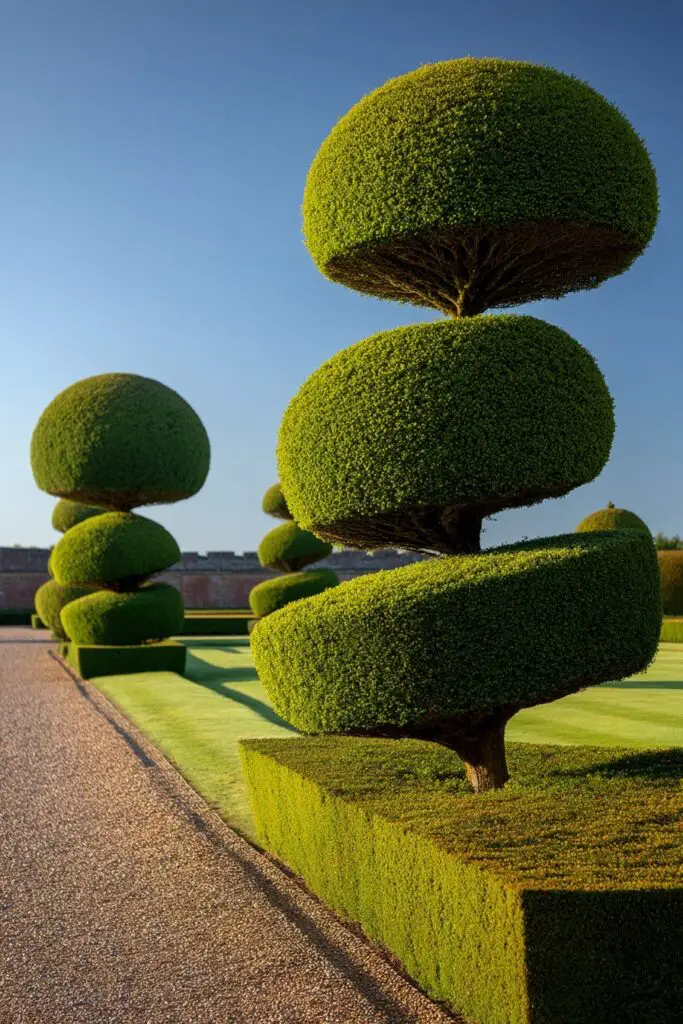
Topiary is one of the most striking features you can include in an evergreen landscape. Clipped shapes such as balls, cones, or spirals provide strong architectural interest.
These shapes work well in both traditional and modern gardens.
Plants commonly used for topiary
- Yew
- Boxwood
- Japanese holly
- Bay trees
Topiary pieces can be placed along pathways, at garden entrances, or beside patios.
Even a few carefully clipped shrubs can create dramatic visual impact in an evergreen landscape.
7. Brighten Shady Areas with Evergreen Plants
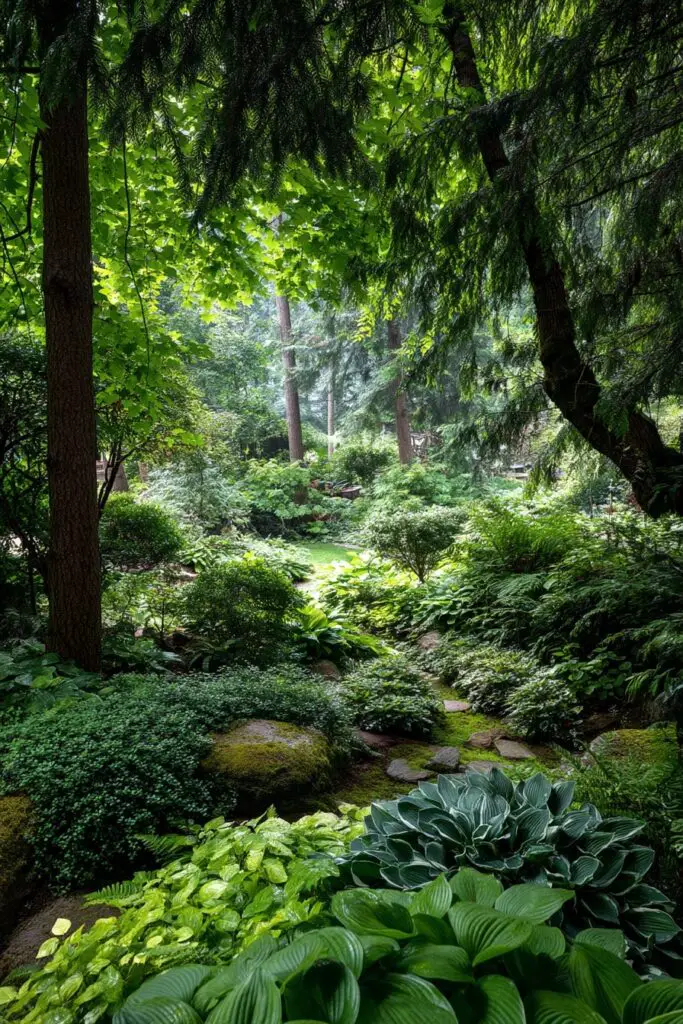
Dark garden corners often feel empty once flowering plants disappear. An evergreen landscape solves this problem by providing year-round foliage.
Many evergreen shrubs tolerate shade and thrive under trees or near buildings.
Evergreen plants suitable for shade
- Aucuba japonica for glossy leaves
- Sarcococca for compact growth and fragrance
- Viburnum davidii for berries and foliage texture
Using shade-tolerant plants ensures these areas stay vibrant throughout the year.
This approach allows every part of your evergreen landscape to contribute to the overall design.
8. Design a Formal Evergreen Parterre
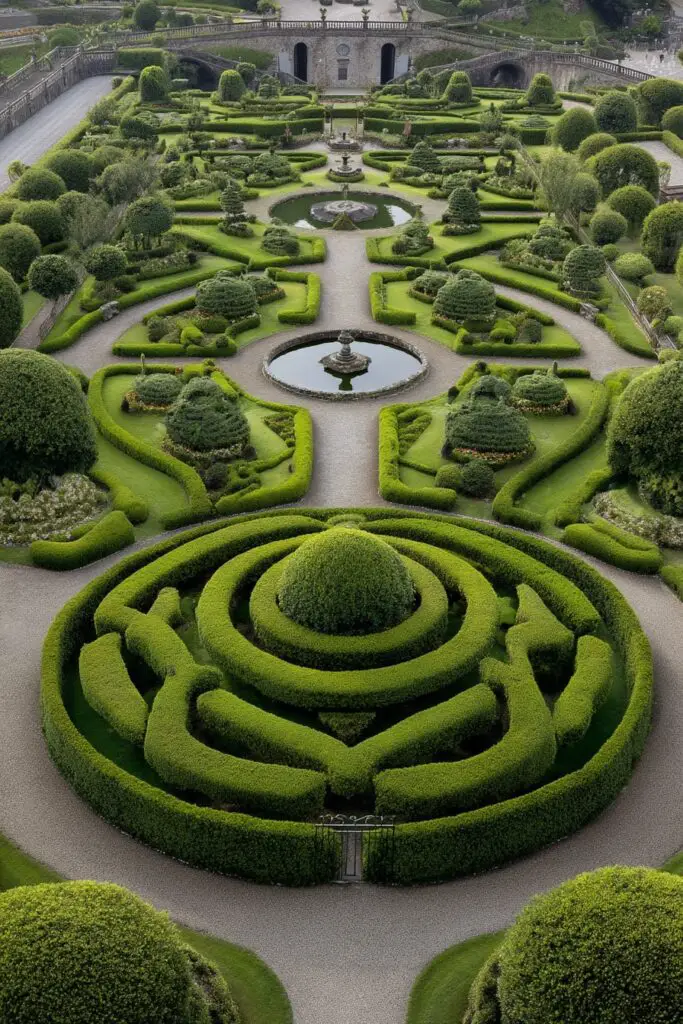
A parterre garden uses structured shapes and symmetrical planting. This classic design style often relies heavily on evergreen plants.
A formal evergreen landscape with clipped hedges creates beautiful geometric patterns that remain visible in every season.
Tips for creating a parterre garden
- Use low evergreen hedges to outline patterns
- Fill sections with flowers or gravel
- Maintain clean edges through regular pruning
Even small gardens can use a simplified parterre design with repeating shapes.
This technique brings elegance and structure to an evergreen landscape while maintaining year-round greenery.
9. Create a Tropical Look with Evergreen Foliage
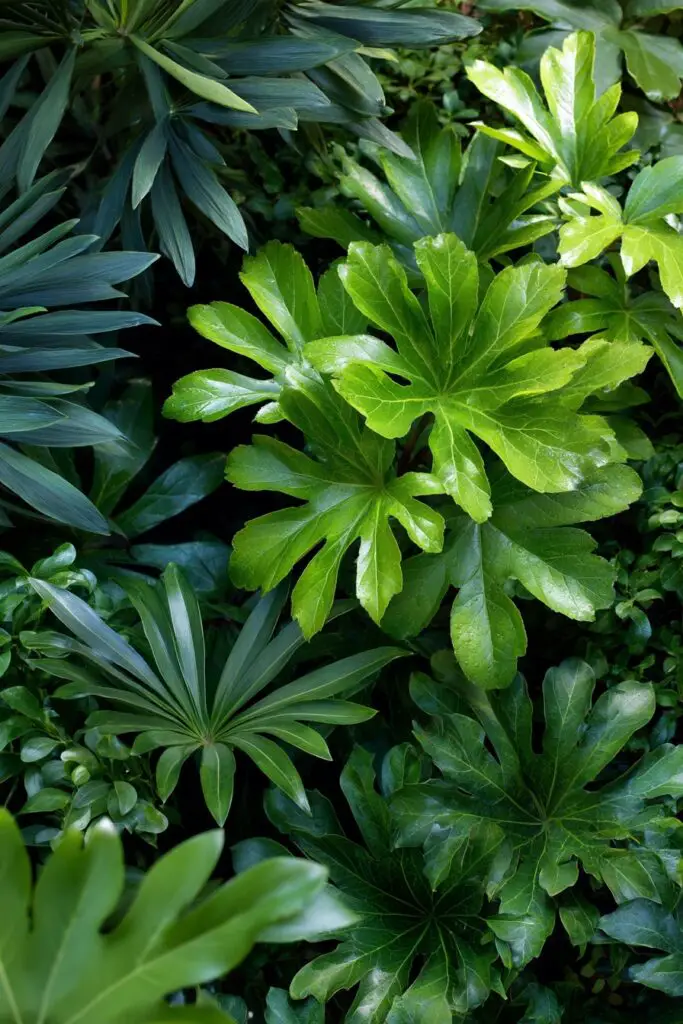
Not all evergreen gardens need to feel formal. Large-leaf plants can give your evergreen landscape a lush, tropical feel.
Plants with bold foliage add drama and texture while still keeping greenery through winter.
Tropical evergreen plants to consider
- Fatsia japonica for large architectural leaves
- Nandina domestica for colorful seasonal foliage
- Pieris japonica for decorative new growth
These plants work well in sheltered corners or shaded patios.
Adding dramatic foliage is an easy way to bring personality and texture into your evergreen landscape.
Conclusion
An effective evergreen landscape provides structure, privacy, and beauty throughout the year. By combining hedges, fragrant shrubs, topiary, and layered planting, you can build a garden that remains vibrant in every season.
Whether you prefer formal designs or relaxed planting schemes, evergreen plants act as the foundation of a balanced garden. With thoughtful planning, your evergreen landscape will provide texture, color, and structure that lasts for decades.