
Backyard walkway designs play an important role in how comfortable and organized your outdoor space feels. A well-planned path makes it easier to move through the garden, protects grass from heavy foot traffic, and adds visual structure to the yard.
Many homeowners choose pavers because they are durable, affordable, and available in many styles. With the right layout and materials, a simple backyard walkway can connect patios, gardens, and seating areas while improving safety and overall landscape design.
The following ideas highlight seven creative paver walkway backyard designs that combine style, practicality, and easy installation. These ideas can work for small gardens, large yards, or areas where you simply want a safer and more attractive path.
Table of Contents
1. Classic Straight Paver Walkway

A straight backyard walkway made with pavers is one of the most practical and beginner-friendly designs. This layout creates a clean path that directly connects two points, such as the patio and garden gate.
Straight walkways are especially useful in small backyards where space is limited and efficiency matters.
Why this design works
- Simple and quick installation
- Minimal material waste
- Clean, modern appearance
Concrete or brick pavers are commonly used because they are affordable and durable.
Design tips
- Use a gravel base for proper drainage
- Keep the path at least 3 feet wide for comfortable walking
- Add edging stones to hold the pavers in place
A straight backyard walkway creates a clear and safe route while keeping the design simple.
2. Curved Garden Walkway with Pavers
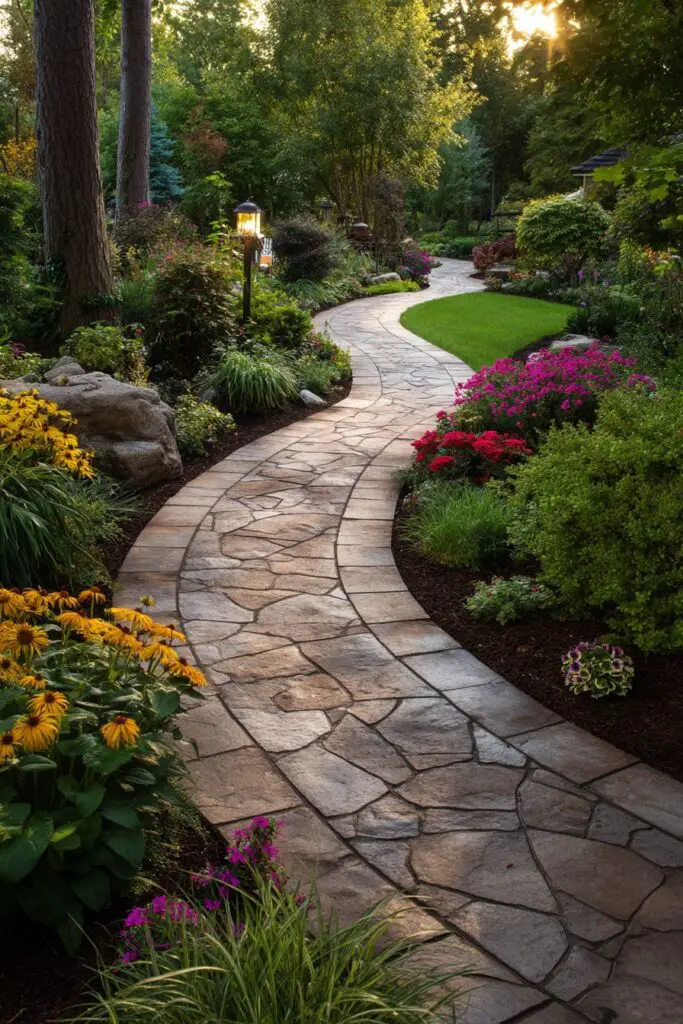
A curved backyard walkway brings a softer, more natural look to outdoor spaces. Instead of a direct line, the path gently winds through the garden.
This design works beautifully around flower beds, trees, or landscape features.
Benefits of curved walkways
- Creates a relaxed garden atmosphere
- Adds visual interest to the yard
- Encourages slower movement through the space
Planning a curved path
- Use smaller pavers that can follow curves easily
- Mark the route with garden hose before digging
- Keep curves gentle rather than sharp
A curved backyard walkway blends naturally with landscaping and makes the garden feel more inviting.
3. Stepping-Stone Style Paver Path
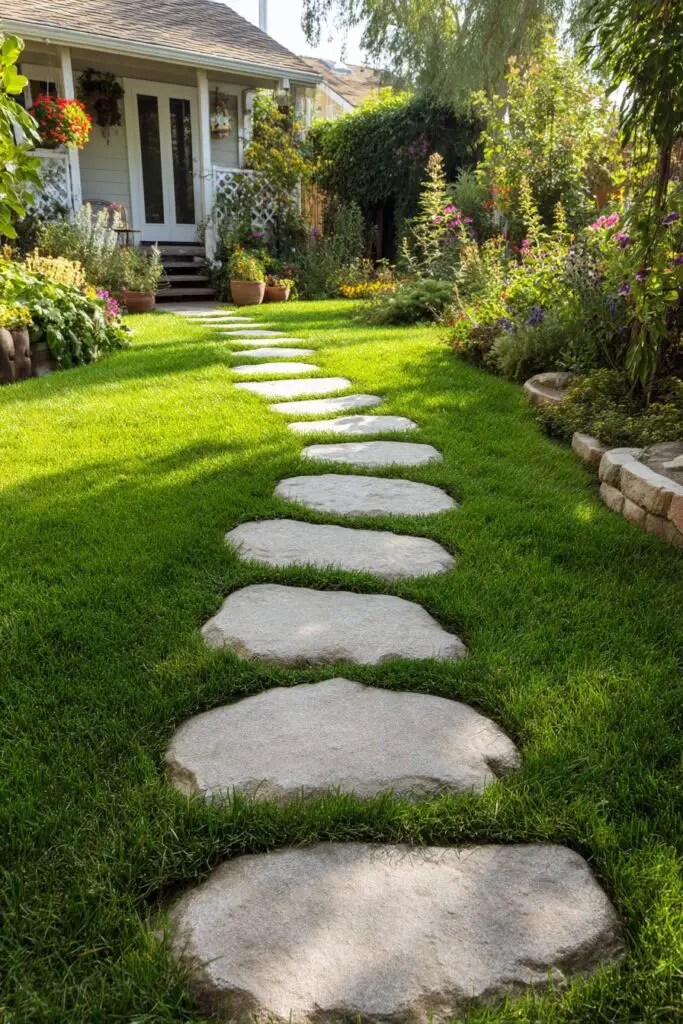
A stepping-stone backyard walkway offers a casual and affordable path option. Instead of placing pavers tightly together, they are spaced slightly apart across grass, gravel, or ground cover.
This design creates a relaxed garden look while still guiding foot traffic.
Advantages
- Uses fewer pavers, reducing cost
- Easy to install
- Allows plants or grass to grow between stones
Good material choices
- Natural stone pavers
- Large concrete stepping stones
- Flat slate slabs
A stepping-stone backyard walkway works especially well in informal gardens or cottage-style landscapes.
4. Paver Walkway with Gravel Borders
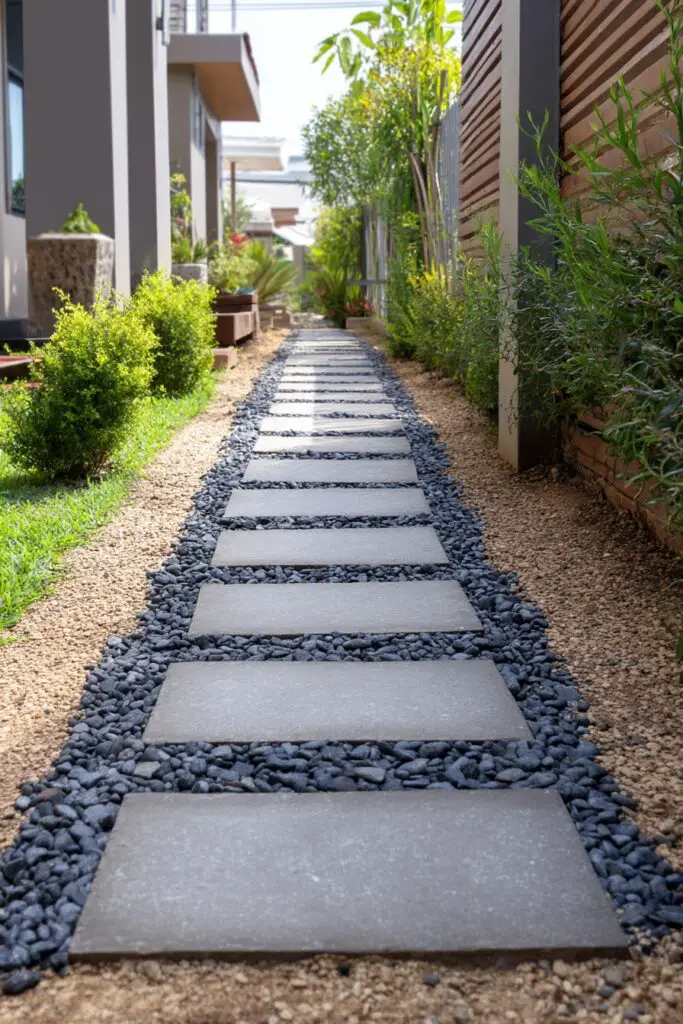
Adding gravel borders can elevate a simple backyard walkway into a more polished design. The pavers form the walking surface while decorative gravel fills the edges.
This combination improves drainage and gives the path a neat, defined appearance.
Why homeowners like this idea
- Affordable materials
- Good water drainage
- Attractive contrast between pavers and gravel
Design tips
- Install landscape fabric under gravel
- Choose gravel colors that complement the pavers
- Use metal or stone edging to keep materials separated
A gravel-edged backyard walkway is both practical and visually appealing.
5. Modern Large-Slab Paver Walkway
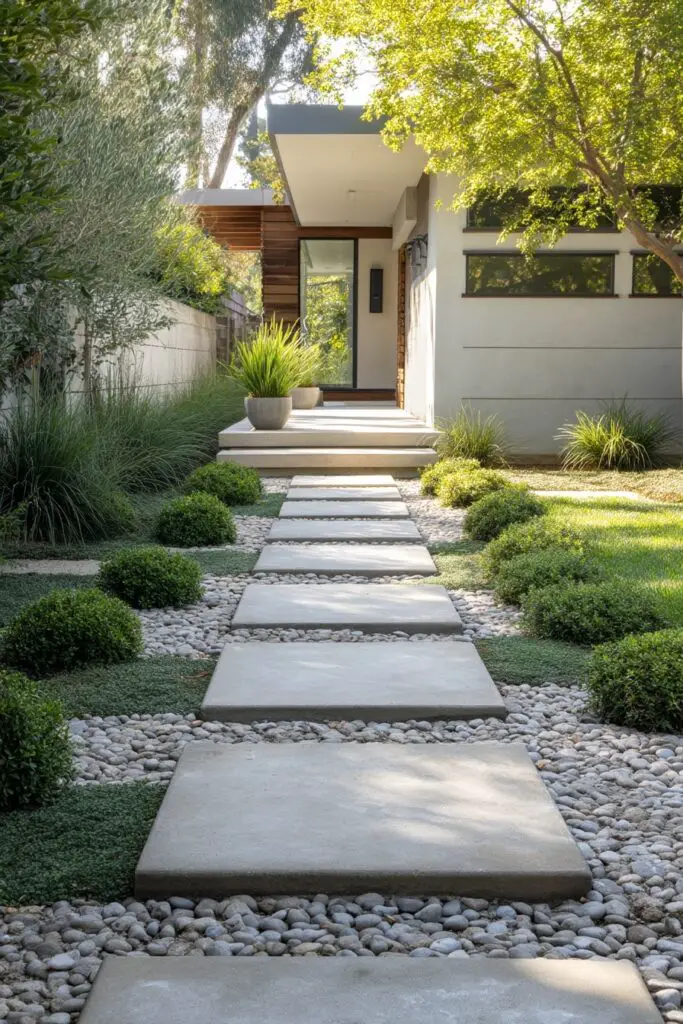
Large paver slabs can create a sleek and contemporary backyard walkway. These oversized stones provide a bold look while reducing the number of pieces needed.
Modern gardens often use this design for clean lines and open spacing.
Benefits
- Minimal joints between pavers
- Modern landscape style
- Faster installation compared to small pavers
Styling tips
- Leave gaps filled with gravel or decorative stone
- Align slabs evenly for a structured layout
- Pair with minimalist landscaping
A large-slab backyard walkway works particularly well in modern or minimalist backyard designs.
6. Rustic Brick Paver Walkway
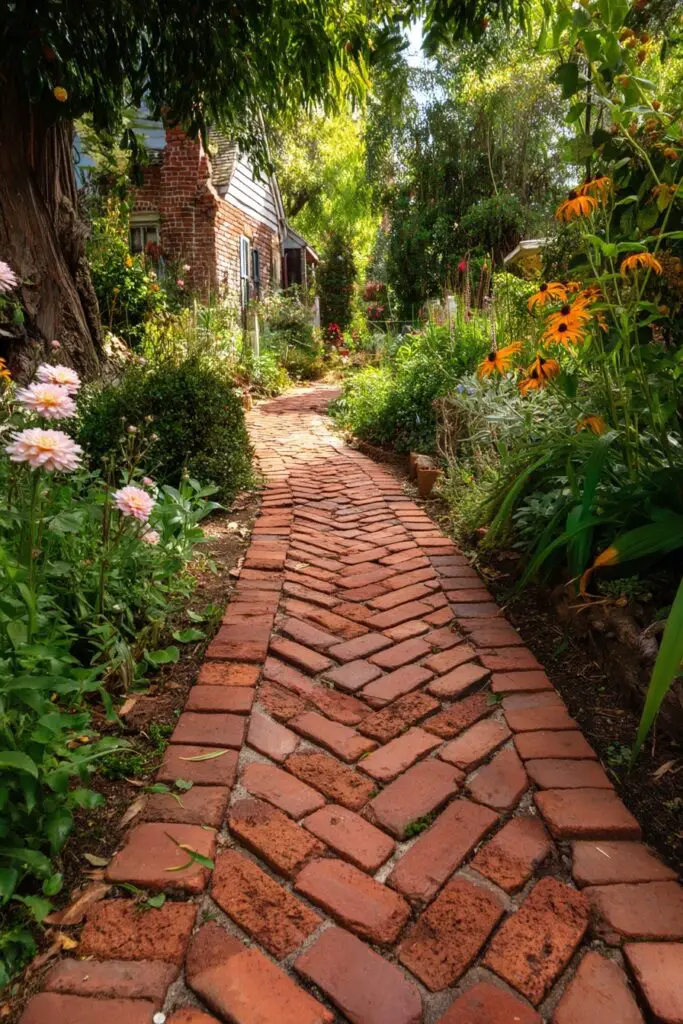
Brick pavers create a charming and traditional backyard walkway that blends well with classic garden designs. Their warm tones and textured surface add character to outdoor paths.
Bricks can be arranged in patterns such as herringbone, basket weave, or running bond.
Advantages
- Timeless garden appearance
- Durable and weather-resistant
- Multiple layout patterns available
Installation tips
- Compact the base layer thoroughly
- Use sand between joints for stability
- Seal bricks for long-term durability
A brick backyard walkway adds warmth and charm to the landscape.
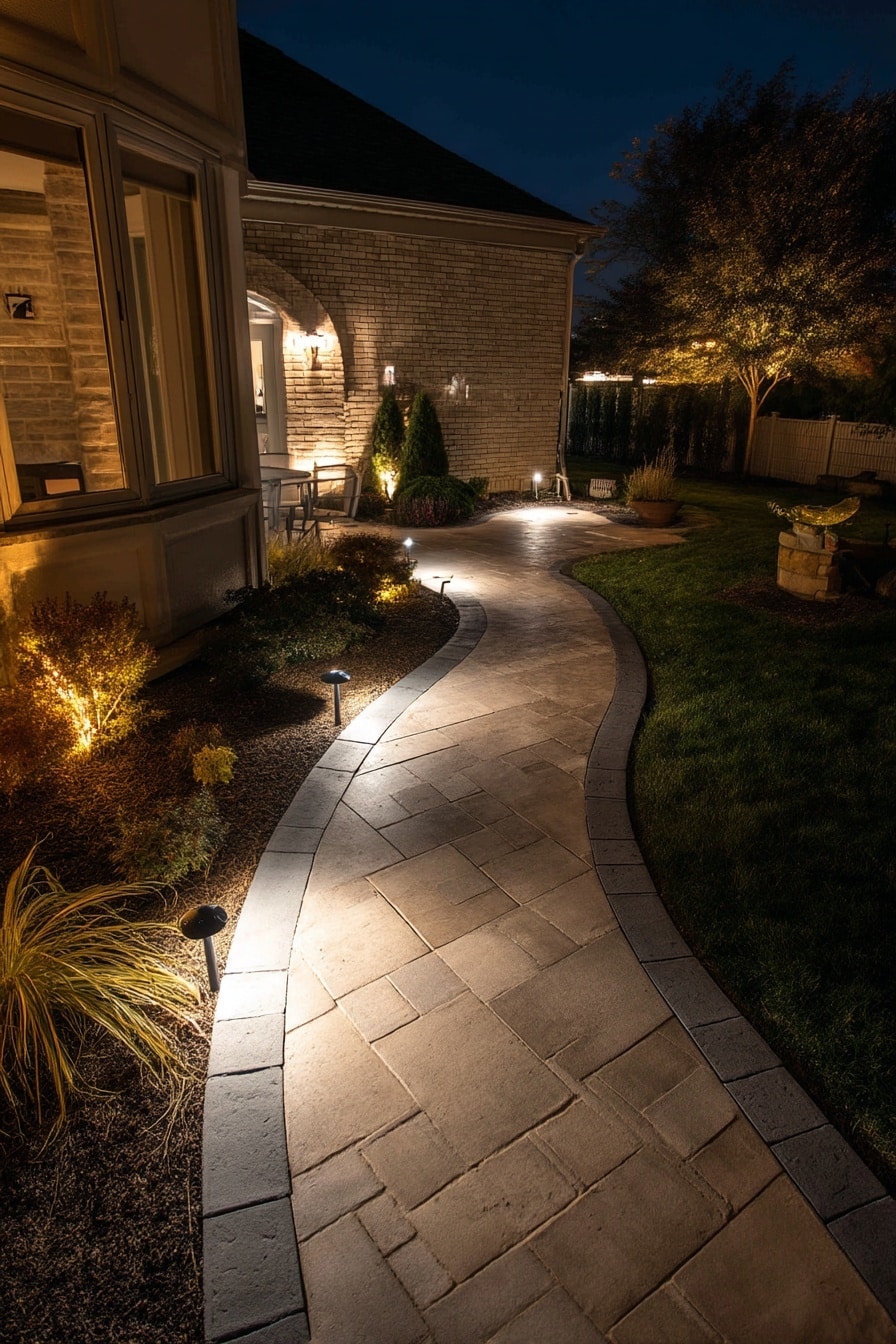
7. Paver Walkway with Garden Lighting
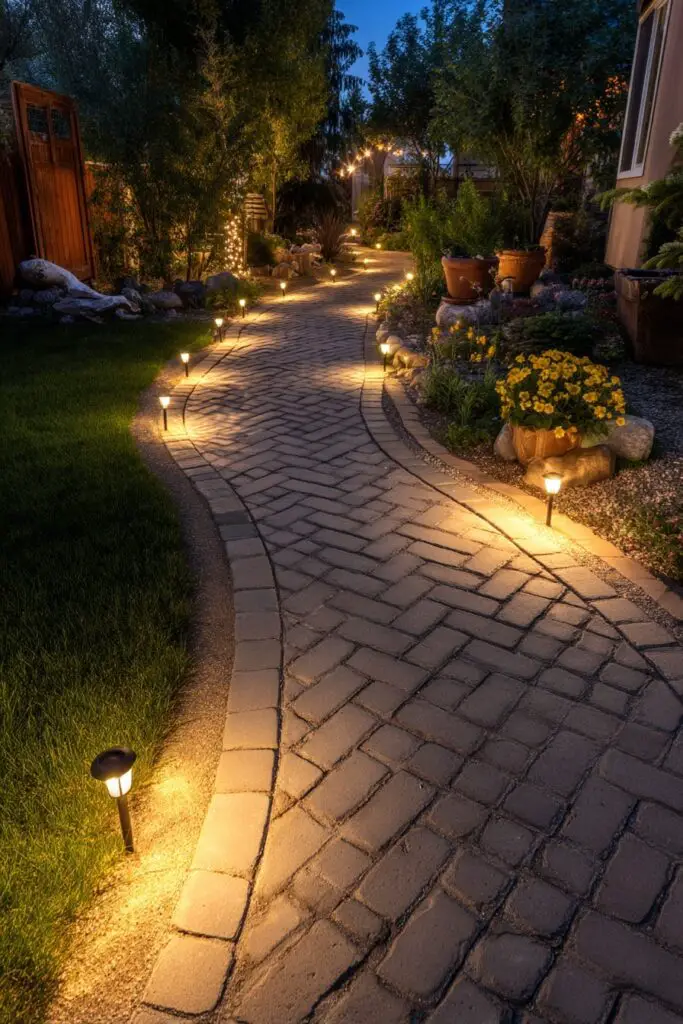
Adding lighting along a backyard walkway improves safety and highlights landscaping at night. Small solar lights or low-voltage fixtures can be installed along the edges of the path.
Lighting turns a simple walkway into an attractive nighttime feature.
Benefits of walkway lighting
- Safer navigation after dark
- Enhances outdoor ambiance
- Highlights garden plants and borders
Lighting ideas
- Solar stake lights along edges
- Recessed lights between pavers
- Low garden lanterns beside the path
A well-lit backyard walkway makes the garden more usable and welcoming in the evening.
Tips for Building a Durable Backyard Walkway
When creating a backyard walkway, proper preparation helps the path last for years.
1. Prepare a strong base
Excavate the area and add compacted gravel to support the pavers.
2. Use proper edging
Edge restraints prevent pavers from shifting over time.
3. Maintain proper drainage
Slight slopes help water drain away from the walkway.
4. Choose weather-resistant materials
Concrete, brick, and natural stone pavers are all durable options.
These steps ensure your backyard walkway remains stable and attractive.
Conclusion
A thoughtfully designed backyard walkway adds both beauty and function to outdoor spaces. Whether you choose a straight path, curved garden route, stepping-stone layout, or modern slab design, pavers offer a durable and stylish solution.
With proper planning and simple materials, homeowners can create safe pathways that connect different parts of the garden while enhancing the overall landscape design.