
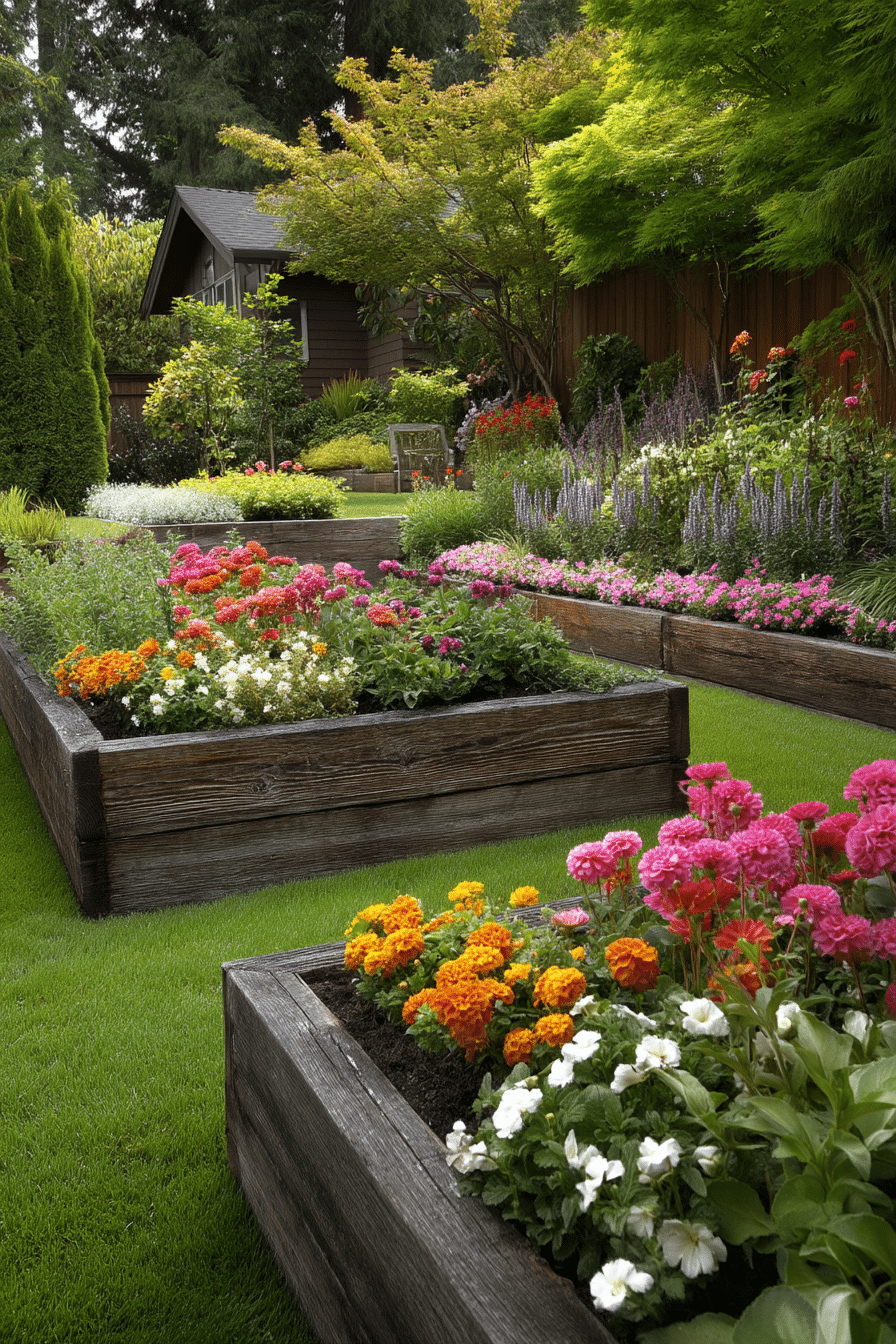
Flower garden ideas can breathe life into your backyard, turning even the simplest patch of green into a stunning personal retreat. Whether you’re working with a small patio or a spacious lawn, the right combination of color, texture, and layout can completely change the feel of your outdoor area. A thoughtfully designed flower garden doesn’t just boost curb appeal—it invites pollinators, enhances your mood, and gives you a reason to step outside every day. In this guide, we’ll share five backyard flower garden ideas that are easy to implement, low-maintenance, and guaranteed to add charm to your space—fast.
Table of Contents
1. Create a Relaxing Oasis with Fragrant Evening Bloomers

One of the simplest yet most powerful flower garden ideas is to design a space that delights your senses—especially in the evening. Fragrant night-blooming flowers not only look beautiful but also offer a calming scent that transforms your backyard into a peaceful retreat after sunset.
Consider adding plants like moonflower, evening primrose, and night phlox, which open as the sun goes down. Their pale blooms reflect moonlight, creating a soft glow that’s both romantic and serene. These flowers are also known for attracting nocturnal pollinators like moths, adding a touch of life and movement to your twilight hours.
Tips for Success:
- Plant fragrant varieties near patios or seating areas for maximum enjoyment.
- Mix evening bloomers with day-blooming perennials to keep color in your garden all day.
- Use mulch around these plants to retain moisture and reduce nighttime temperature swings.
By focusing on scent and timing, this idea enhances your garden’s functionality and beauty during often-overlooked evening hours.
2. Add Dimension with Raised Flower Beds
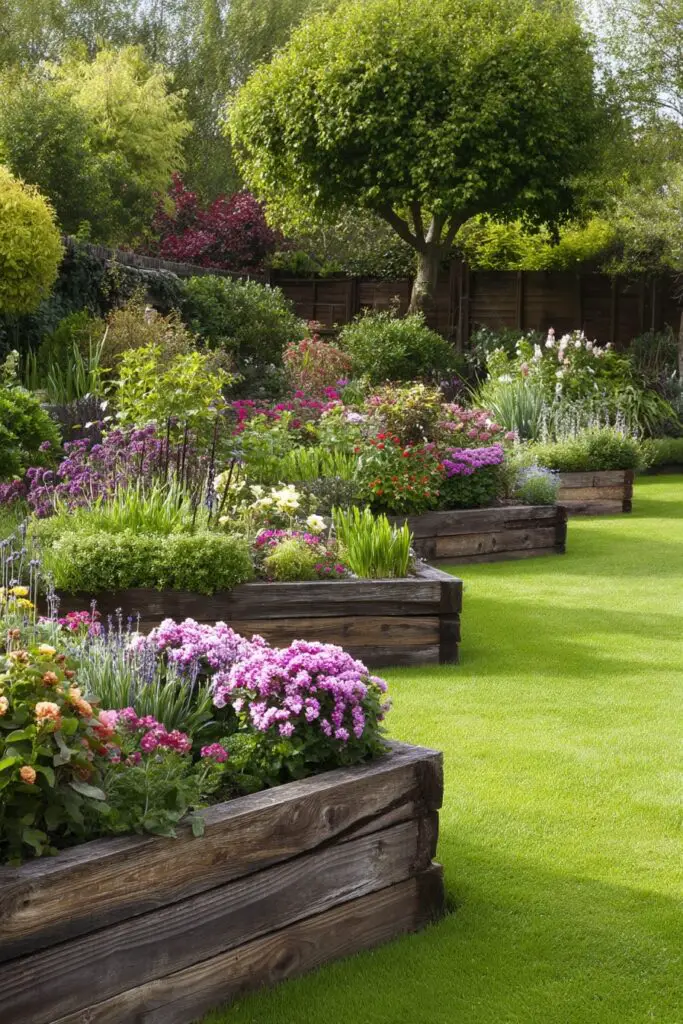
Raised beds are a timeless and practical approach to flower garden ideas that instantly elevate both form and function. These structures create visual interest by adding height variation, define borders in a clean, organized way, and make garden maintenance easier on your back and knees.
Raised beds allow for better soil control, excellent drainage, and an extended growing season thanks to warmer soil temperatures. They’re also ideal for compact or sloped yards where traditional planting might be a challenge.
What to Include:
- Construct beds from untreated wood, stone, or metal for a natural look.
- Layer soil with compost and organic matter to create a nutrient-rich environment.
- Choose a mix of perennials and annuals for continuous color throughout the seasons.
Raised beds not only organize your space—they also offer a polished, intentional feel that enhances the overall design of your backyard.
3. Attract Butterflies with Pollinator-Friendly Blooms
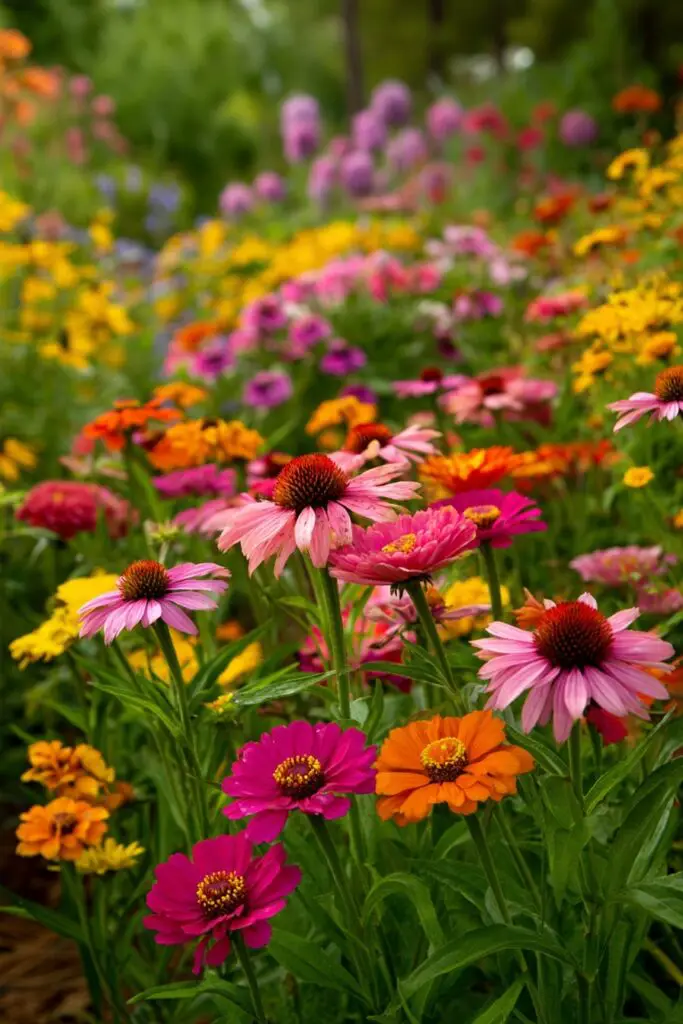
Among the most rewarding flower garden ideas is creating a habitat that supports local wildlife—especially butterflies. These vibrant visitors add motion and color to your garden while playing a vital role in pollination.
To attract butterflies, plant nectar-rich flowers like coneflowers, black-eyed Susans, milkweed, zinnias, and lilac. These varieties offer not only beauty but also nourishment for butterflies and other pollinators. Native plants are especially effective, as they are adapted to local species and climates.
Butterfly Garden Essentials:
- Include flat stones where butterflies can bask in the sun.
- Avoid chemical pesticides; opt for organic or natural pest control methods.
- Choose a sunny location with protection from strong winds.
A pollinator-friendly flower garden is more than just beautiful—it actively supports biodiversity and keeps your ecosystem thriving.
4. Use Garden Lighting to Extend Enjoyment After Dark
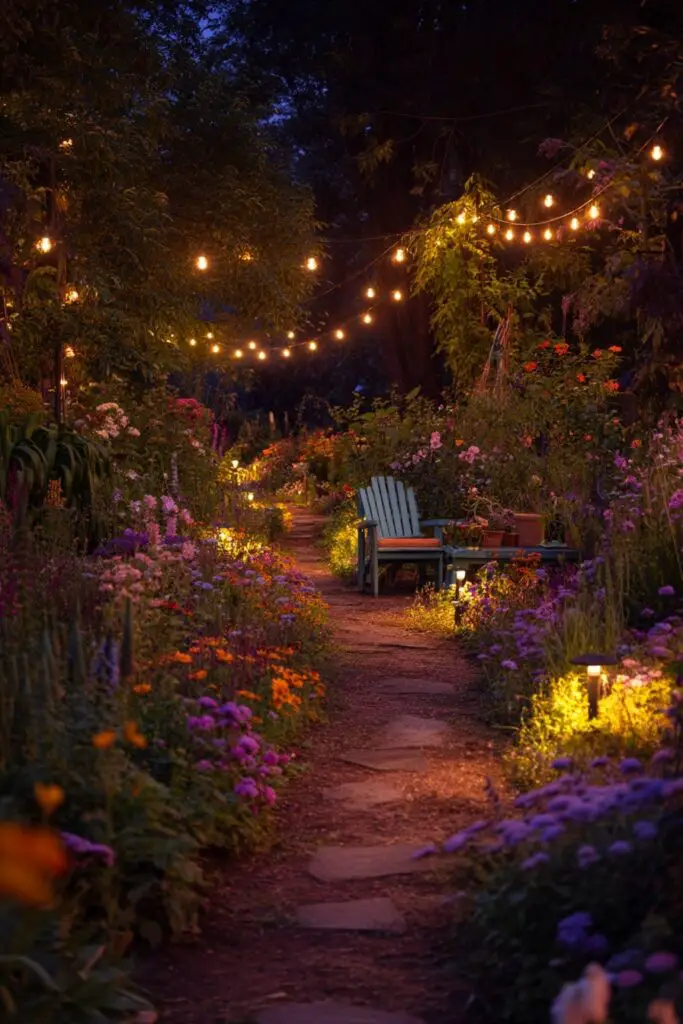
Smart lighting is one of the most transformative flower garden ideas for creating ambiance and safety once the sun goes down. Whether you’re hosting friends or enjoying a quiet evening outside, well-placed lighting brings your garden to life at night.
Accent lights can be used to highlight blooming flower beds, pathways, or focal points like trellises and fountains. Solar-powered lanterns or string lights offer an eco-friendly and easy-to-install solution, while low-voltage spotlights provide stronger, targeted illumination.
Lighting Ideas That Work:
- Install uplighting at the base of tall plants or trees for dramatic shadows.
- Line flower beds with soft, warm pathway lights.
- Drape string lights above garden seating areas for a cozy, festive feel.
Lighting not only extends your outdoor enjoyment—it also enhances the beauty and depth of your garden in new ways after sunset.
5. Embrace the Charm of a Cottage Garden Style
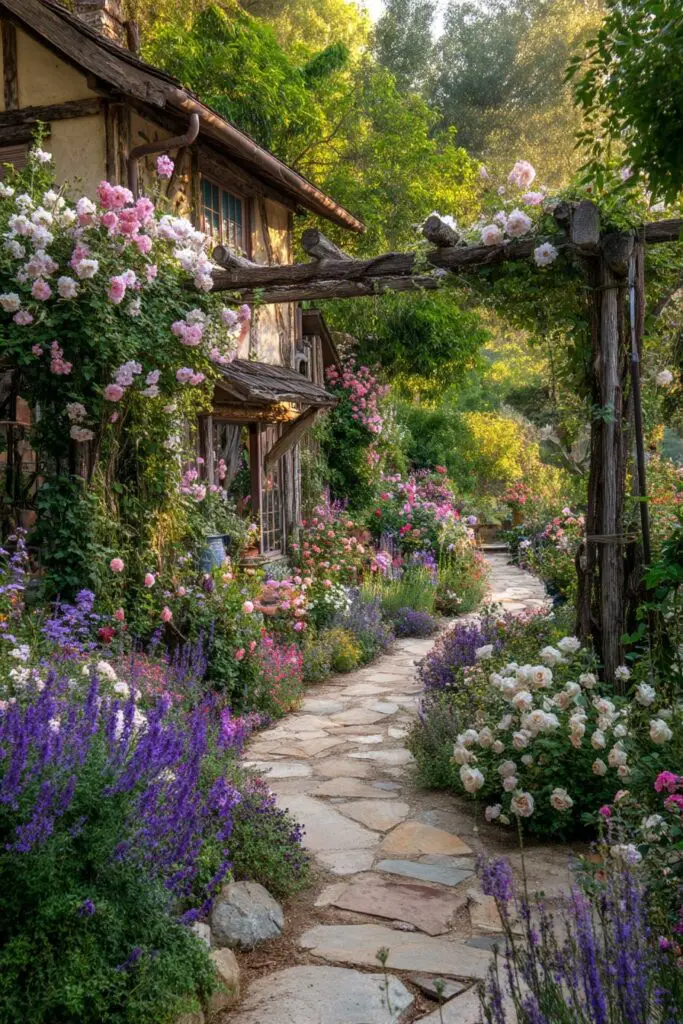
For those who love a lush, romantic aesthetic, cottage-style planting is one of the most visually satisfying flower garden ideas. This approach is all about creating a free-flowing, layered look with a mix of perennials, annuals, herbs, and even small shrubs.
The key to a successful cottage garden is controlled chaos—let flowers spill over pathways and blend naturally with each other. Think lavender, roses, hollyhocks, foxgloves, and delphiniums. This style works especially well in sunny spots and adds old-world charm to even modern yards.
Cottage Garden Design Tips:
- Mix heights and textures for a full, lived-in look.
- Use curved pathways and borders to guide the eye naturally.
- Incorporate rustic elements like vintage pots, wooden trellises, or repurposed containers.
This whimsical, high-impact garden style invites you to enjoy a slower pace and appreciate every bloom and breeze.
Design Principles for a Beautiful Backyard Flower Garden
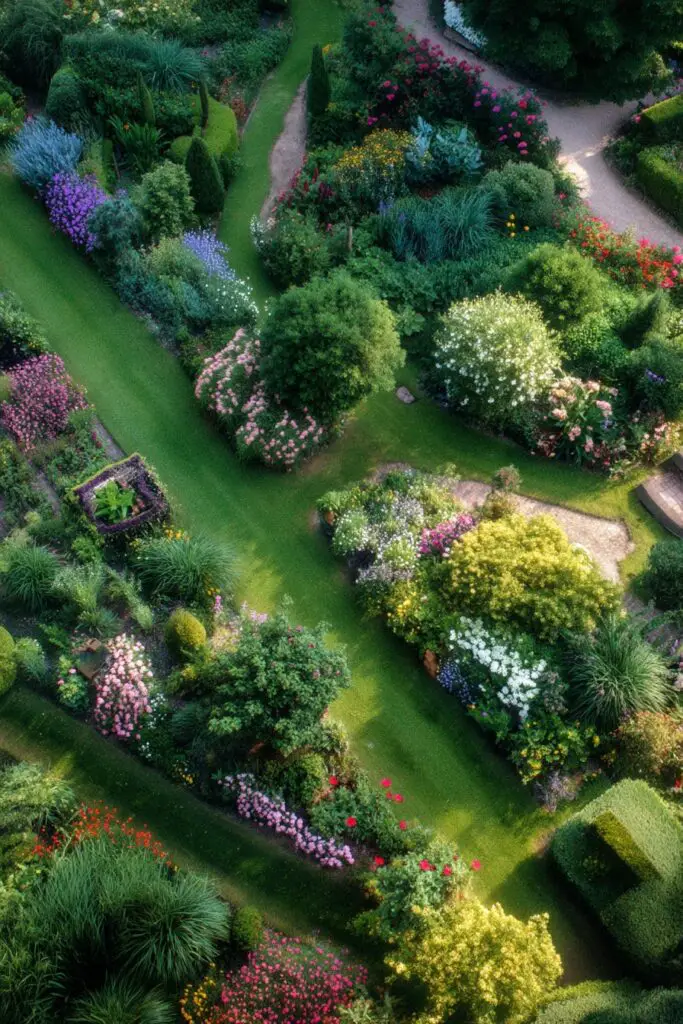
Incorporating effective flower garden ideas goes beyond plant choice—it’s also about how you arrange and style your space. A well-designed garden balances aesthetics, functionality, and seasonal interest to ensure lasting visual appeal.
Color Coordination Strategies
Color is one of the first things people notice in a flower garden. Whether you want a calming palette or something bold and energetic, choosing a cohesive color scheme can unify your space.
- Monochromatic schemes (e.g., all purples or whites) offer a clean, elegant look.
- Complementary colors (like purple and yellow) add visual energy.
- Use foliage (greens, silvers, burgundies) to balance bright blooms.
Stick with 2–3 primary colors and repeat them throughout the garden for harmony.
Layering and Plant Height
To avoid a flat, one-dimensional garden, use layering to create depth. Arrange your plants from tallest to shortest, with tallest blooms at the back (or center in circular beds) and lower growers at the front.
- Use ornamental grasses and tall perennials for the top layer.
- Fill mid-height with shrubs, daisies, or zinnias.
- Ground covers like creeping thyme or alyssum anchor the borders.
Layering also allows every plant to be seen while improving airflow and sun exposure.
Maintaining a Healthy Backyard Flower Garden
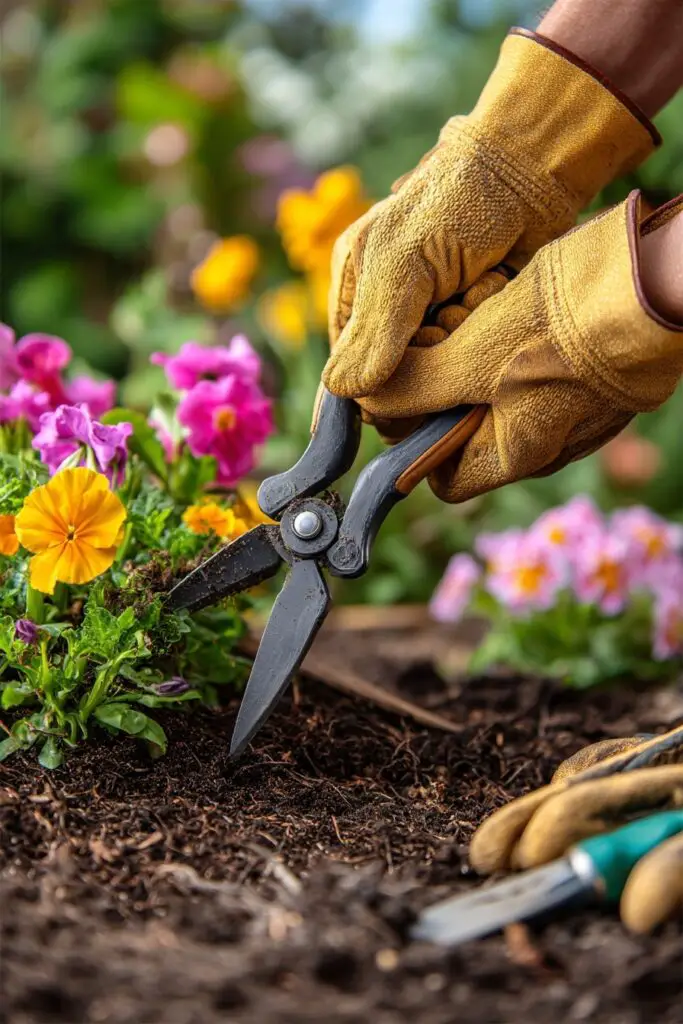
No matter how beautiful your flower garden ideas are, your blooms won’t thrive without proper care. A consistent maintenance routine helps flowers reach their full potential, season after season.
Seasonal Care Tips
Your garden’s needs will shift throughout the year. Staying on top of seasonal tasks ensures lasting color and vitality.
- Spring: Prepare beds, prune dead growth, and plant cool-season flowers.
- Summer: Water deeply, deadhead spent blooms, and watch for pests.
- Fall: Cut back perennials, apply mulch, and plant spring-blooming bulbs.
- Winter: Clean tools, protect vulnerable plants, and plan next year’s layout.
Consistent seasonal upkeep reduces disease risk and keeps the garden looking neat.
Soil Preparation and Fertilization
Healthy soil is the foundation of any successful flower garden. Before planting, amend your soil with compost or organic matter to boost structure and nutrients. Conduct a soil test if unsure of pH and fertility levels.
- Use slow-release, balanced fertilizers for steady feeding.
- Mulch around plants to retain moisture and suppress weeds.
- Avoid over-fertilizing, which can encourage leaf growth over flowers.
Proper soil prep leads to vibrant blooms, stronger roots, and fewer problems down the line.
Frequently Asked Questions (FAQs)
What are the easiest flowers to grow for beginners?
Some of the most beginner-friendly flower garden ideas include planting marigolds, zinnias, cosmos, and sunflowers. These flowers are hardy, require minimal care, and bloom generously throughout the season.
How much sunlight do flower gardens need?
Most flowering plants need at least 6 hours of full sun each day. However, some varieties like impatiens or hostas thrive in partial to full shade. Always match your plant choice to your garden’s light conditions.
How do I keep pests out of my flower garden naturally?
To deter pests without chemicals:
- Encourage beneficial insects like ladybugs and lacewings.
- Use neem oil or insecticidal soap sprays.
- Companion plant with herbs like basil and mint that naturally repel bugs.
Can I grow flowers in containers if I don’t have yard space?
Absolutely. Container gardening is a great option if you’re short on space. Choose compact, well-draining pots and use a quality potting mix. Opt for flowers like petunias, geraniums, and calibrachoa, which perform well in containers.
When is the best time to start a flower garden?
Spring and early fall are ideal for planting most flowers. This allows roots to establish before the heat of summer or frost of winter.
Conclusion
Whether you’re new to gardening or looking to refresh your backyard, these flower garden ideas offer practical ways to bring life, color, and joy to your outdoor space. From fragrant evening bloomers to charming cottage layouts, the key is to choose styles that reflect your personality and work well with your yard’s conditions. With a bit of planning and care, your flower garden can become your favorite place to unwind, connect with nature, and admire the beauty of every season.