
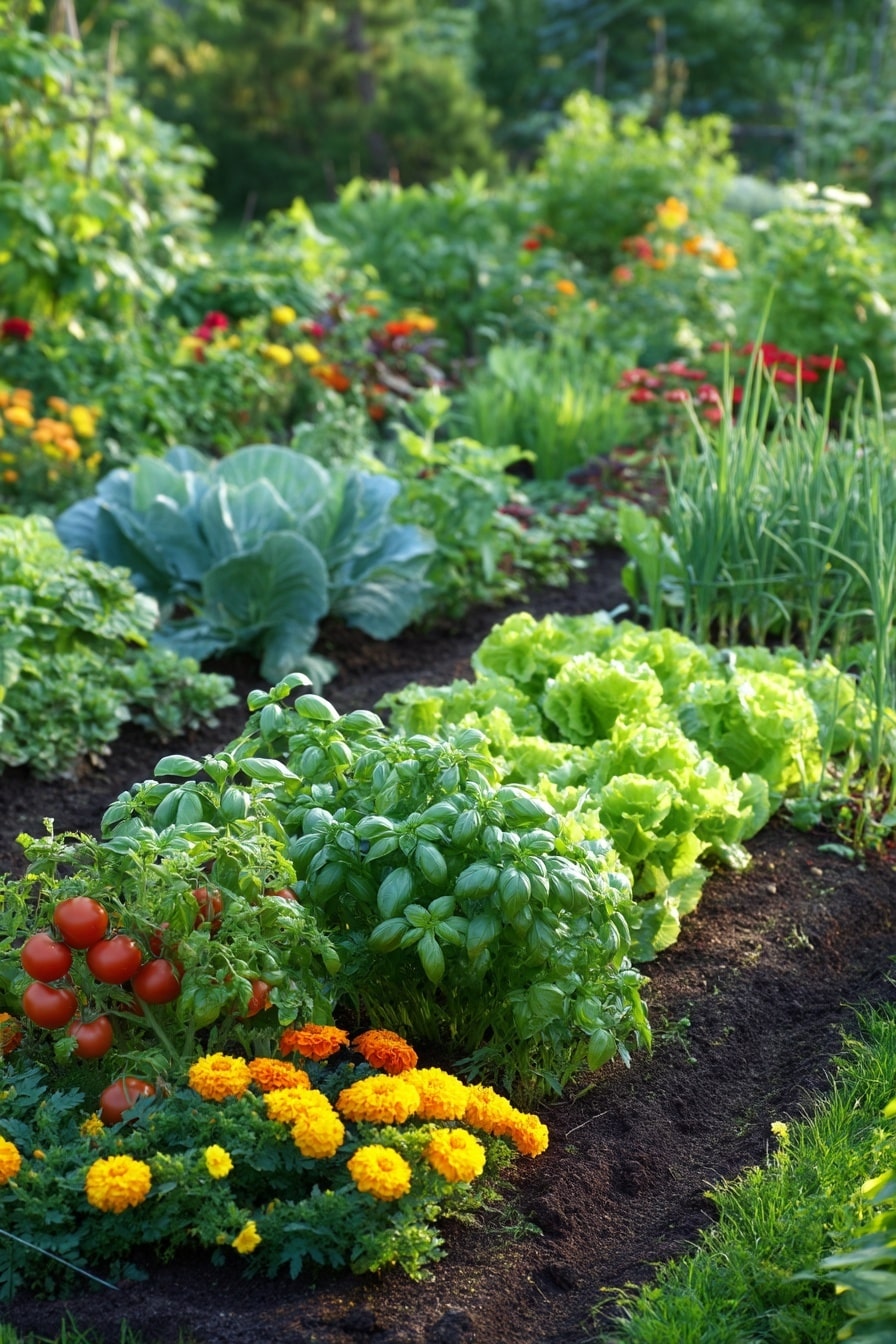
Backyard garden layout planning can make the difference between a crowded garden and a productive, beautiful outdoor space. A well-planned backyard garden layout helps you organize plants, maximize available space, and keep maintenance simple throughout the growing season.
Many homeowners have limited yard space, yet still want to grow vegetables, flowers, or herbs. By choosing the right backyard garden layout, you can create a garden that fits your space while supporting healthy plant growth. Thoughtful spacing, proper sunlight exposure, and clear walkways all play an important role.
In this guide, you’ll find five practical backyard garden layout ideas designed to maximize space. Each design works for different garden sizes and gardening styles, helping you build a productive and visually appealing backyard garden.
Table of Contents
1. Raised Bed Backyard Garden Layout

A raised bed backyard garden layout is one of the most efficient ways to organize planting space. Raised beds create defined growing areas while improving soil quality and drainage.
This type of backyard garden layout works especially well in small or uneven yards where traditional row planting may not be ideal.
Benefits of raised bed layouts
Raised beds offer several advantages for backyard gardeners:
- Improved soil drainage
- Better control of soil nutrients
- Easier weed management
- Comfortable access for planting and harvesting
Because raised beds concentrate growing areas, they help maximize productivity within a compact backyard garden layout.
Plants that grow well in raised beds
Many vegetables thrive in this layout, including:
- Tomatoes
- Lettuce
- Peppers
- Carrots
- Spinach
Grouping vegetables together in raised beds keeps your backyard garden layout organized while making watering and harvesting easier.
2. Grid or Square Foot Backyard Garden Layout
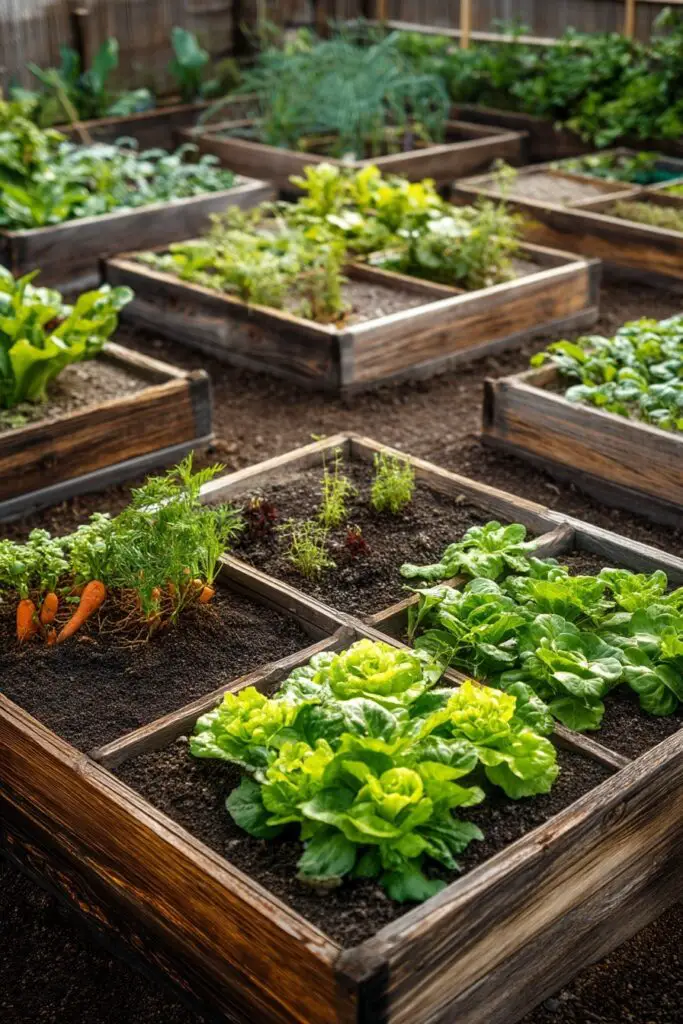
A grid-style backyard garden layout divides the garden into evenly sized squares, making it easier to manage plant spacing.
This method is especially popular for small gardens because it uses every inch of growing space effectively.
How square foot layouts work
The garden bed is divided into squares, typically 12 inches by 12 inches. Each square contains a specific crop depending on how much room the plant needs.
Examples include:
- 1 tomato plant per square
- 4 lettuce plants per square
- 9 spinach plants per square
- 16 carrots per square
This organized backyard garden layout helps prevent overcrowding and keeps crops easy to identify.
Advantages of grid gardening
- Efficient use of space
- Simple planting plan
- Easy crop rotation
- Reduced weed growth
A grid system works well for gardeners who want a tidy and productive backyard garden layout.
3. Vertical Backyard Garden Layout
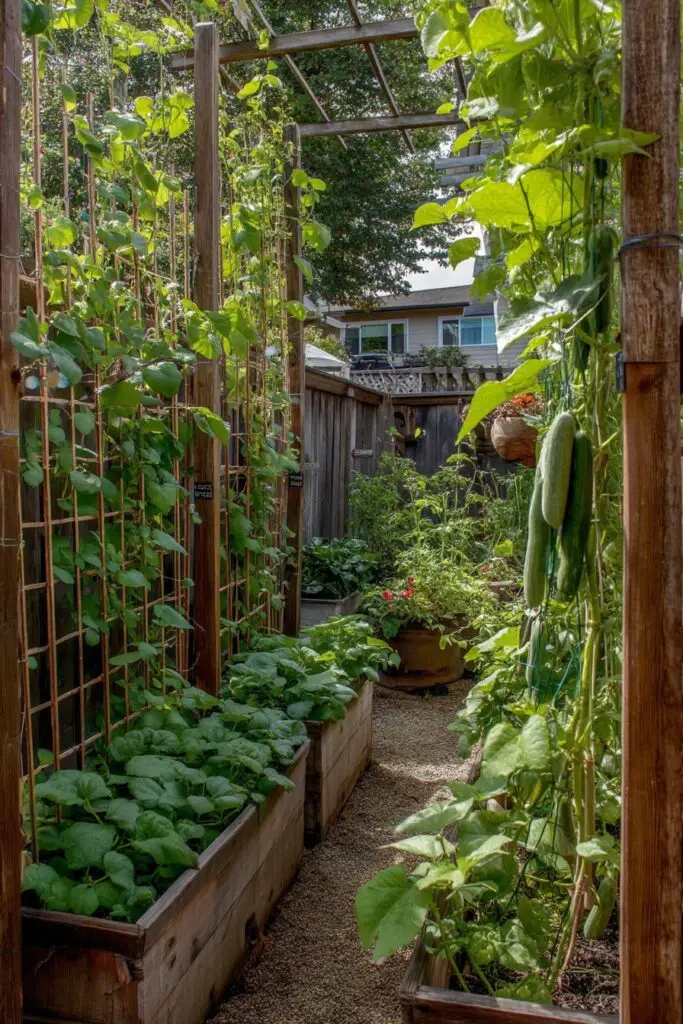
When ground space is limited, a vertical backyard garden layout allows plants to grow upward instead of spreading across the soil.
Vertical gardening can dramatically increase the number of plants you grow without expanding the garden footprint.
Vertical structures for backyard gardens
Several structures help support a vertical backyard garden layout, such as:
- Trellises
- Garden arches
- Fences
- Hanging planters
- Vertical plant walls
These supports allow climbing vegetables and vines to grow upward while keeping the ground area open.
Vegetables suited for vertical gardening
Plants that grow well in a vertical backyard garden layout include:
- Cucumbers
- Pole beans
- Peas
- Tomatoes
- Small squash varieties
Growing upward also improves airflow around plants, which can reduce certain plant diseases.
4. Circular Backyard Garden Layout
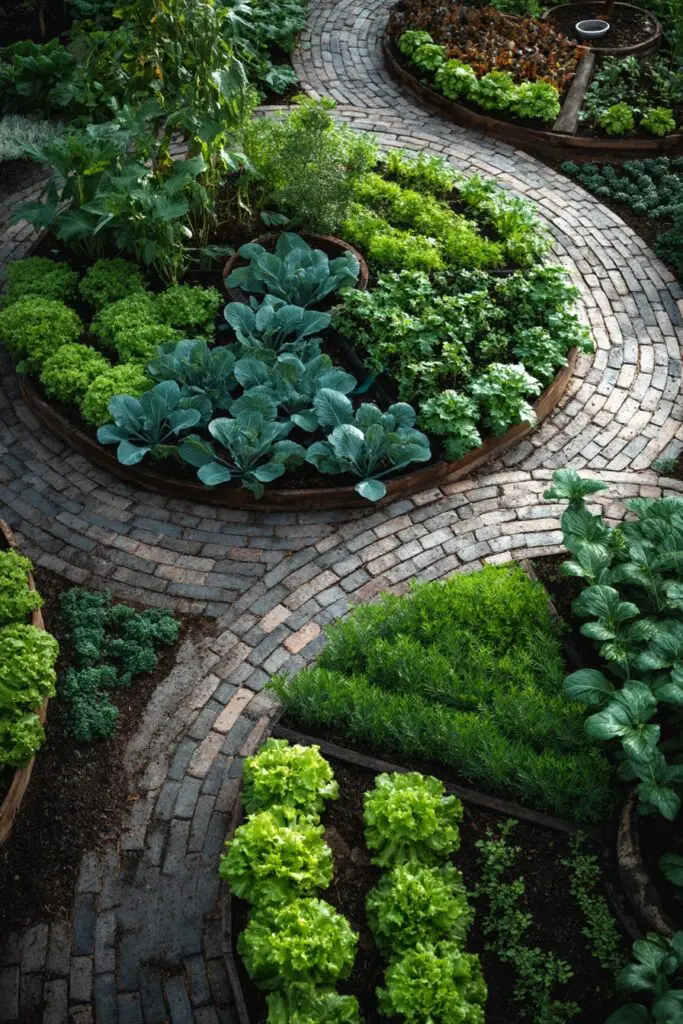
A circular backyard garden layout creates an attractive and functional design while maximizing planting space.
In this layout, plants grow around a central feature such as a small tree, decorative structure, or water source.
How circular gardens are organized
The garden is divided into wedge-shaped sections around the center point. Each section can contain a different crop or type of plant.
This design allows gardeners to:
- Access plants from multiple directions
- Separate plant groups easily
- Create visual balance in the garden
A circular backyard garden layout is often used in decorative kitchen gardens or small backyard landscapes.
Best plants for circular gardens
Many gardeners plant a mix of vegetables and herbs, including:
- Basil
- Lettuce
- Kale
- Peppers
- Strawberries
Combining different plant heights adds depth to the backyard garden layout.
5. Mixed Garden Backyard Layout
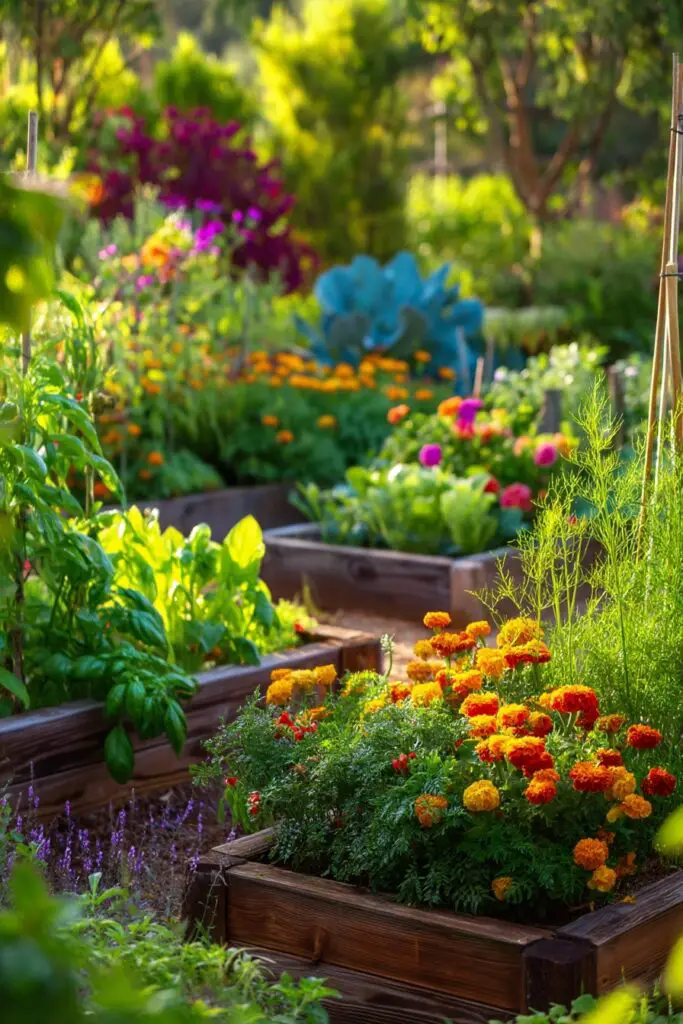
A mixed planting backyard garden layout combines vegetables, herbs, and flowers within the same garden space. This style focuses on diversity and efficient use of space.
Instead of separating plant types into different sections, everything grows together in a balanced design.
Benefits of mixed garden layouts
A mixed backyard garden layout offers several advantages:
- Attracts beneficial pollinators
- Improves biodiversity
- Reduces pest problems
- Creates a visually appealing garden
Flowers planted among vegetables can help support pollination while adding color to the garden.
Popular plant combinations
Gardeners often mix plants such as:
- Tomatoes with basil
- Carrots with onions
- Lettuce with herbs
- Marigolds with vegetables
These combinations make a mixed backyard garden layout both productive and attractive.
Tips for Designing an Efficient Backyard Garden Layout
Before planting, a few planning steps can help create a successful backyard garden layout.
Consider sunlight exposure
Most vegetables require 6–8 hours of direct sunlight each day. Place sun-loving plants in the brightest part of the yard.
Plan for watering
Position your backyard garden layout near a water source or install drip irrigation for convenience.
Allow room for walkways
Paths between beds prevent soil compaction and make harvesting easier.
Group plants by growth habits
Place taller plants where they will not shade smaller crops.
Thoughtful planning ensures your backyard garden layout remains productive and easy to maintain.
Conclusion
A smart backyard garden layout helps gardeners make the most of available space while creating a beautiful and productive garden. Whether you choose raised beds, grid gardening, vertical planting, circular designs, or mixed plantings, each layout offers unique benefits.
The best backyard garden layout depends on your yard size, gardening goals, and the plants you want to grow. By planning carefully and organizing planting areas effectively, you can build a thriving backyard garden that produces fresh vegetables and herbs throughout the growing season.