
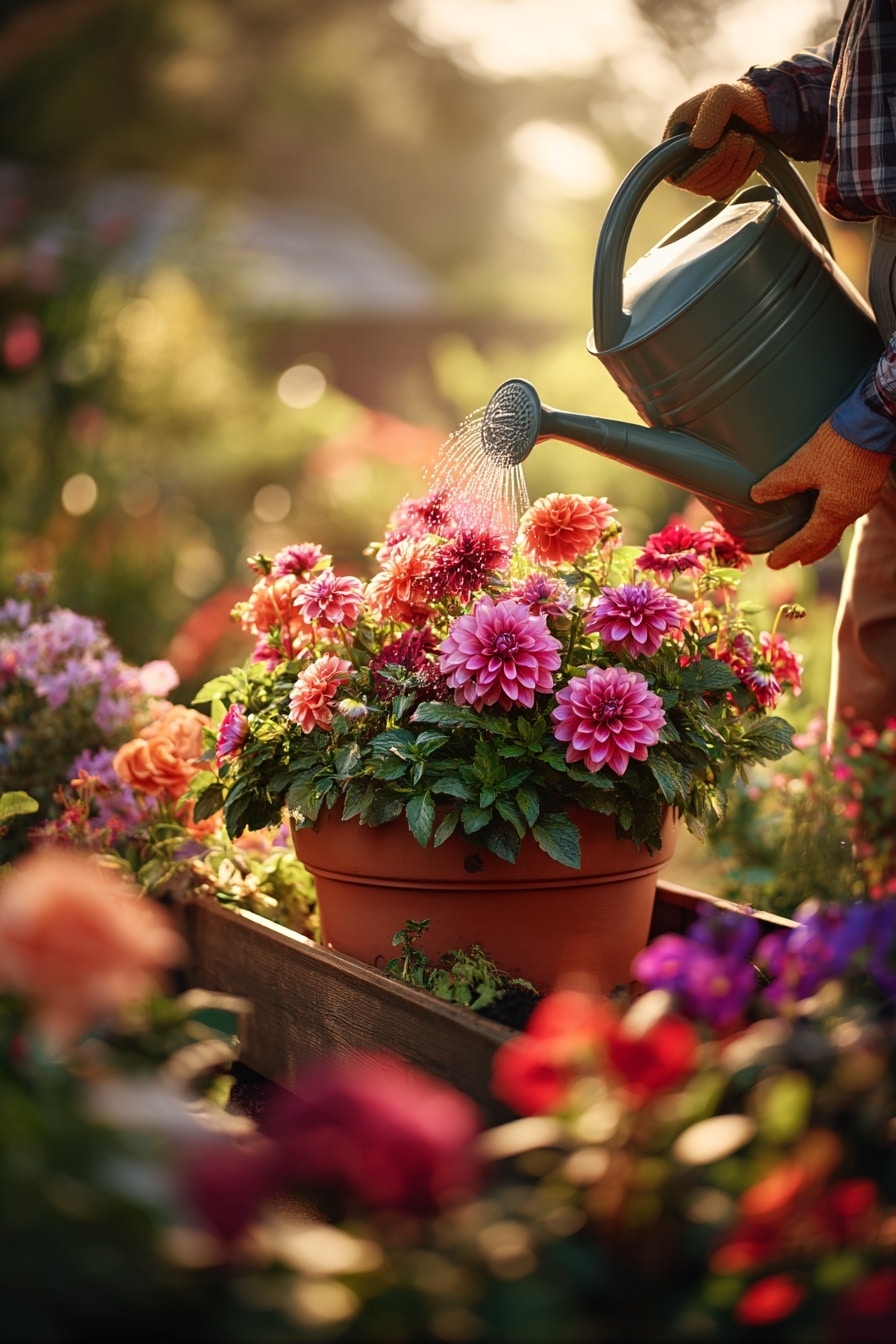
Container garden flower arrangements are one of the fastest ways to create color, texture, and life in any outdoor space. Whether you have a small patio, balcony, porch, or a large backyard, a well-designed container garden flower display can instantly transform the area into a lush retreat.
Unlike traditional garden beds, a container garden flower setup gives you flexibility. You can move pots to chase sunlight, refresh tired blooms quickly, and experiment with different combinations throughout the season. With the right planning, you can create stunning arrangements that look professionally designed — even if you’re just getting started.
In this guide, you’ll find practical ideas, design formulas, and plant pairings to help you build a vibrant container garden flower display that delivers immediate impact.
Table of Contents
Why Choose a Container Garden Flower Arrangement?

A container garden flower display offers instant results without the long wait required for traditional landscaping. Instead of preparing soil, planning permanent beds, and waiting for plants to mature, you can design a finished look in a single afternoon.
Here’s why many gardeners prefer this approach:
- Immediate color and fullness
- Flexible placement and mobility
- Better control over soil quality
- Ideal for small spaces
- Easier seasonal updates
Because a container garden flower setup is self-contained, you can tailor the soil mix to suit specific blooms. This is especially helpful if your native soil is poor, sandy, or heavy clay.
Another advantage is adaptability. If a frost warning appears or a plant struggles in strong sun, you can simply move the container. That flexibility makes container gardening especially practical for beginners and busy homeowners.
If you already grow vegetables in pots, you might consider linking to your own article on patio vegetable gardening to encourage readers to combine edible and ornamental displays.
The “Thriller, Filler, Spiller” Formula for a Stunning Container Garden Flower
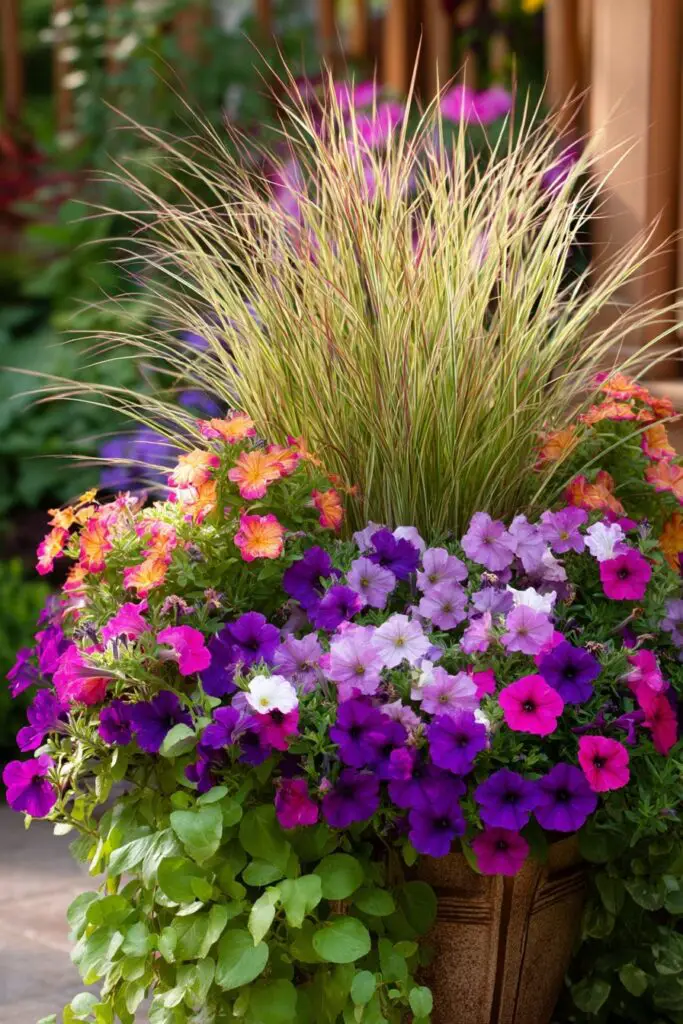
One of the simplest ways to design a balanced container garden flower arrangement is by using the classic “thriller, filler, spiller” method. This structure creates depth, height, and movement — even in a single pot.
1. Thriller: The Focal Point
The thriller is the tallest and most dramatic plant in your container garden flower display. It draws the eye upward and anchors the arrangement.
Popular thriller choices include:
- Ornamental grasses
- Canna lilies
- Salvia
- Angelonia
- Dwarf shrubs
Place the thriller in the center of a round pot or at the back of a container that sits against a wall.
2. Filler: The Supporting Blooms
Filler plants add volume and color around the thriller. These mid-height blooms help your container garden flower look full and cohesive.
Great filler options:
- Petunias
- Geraniums
- Begonias
- Coleus
- Calibrachoa
Choose complementary colors or soft contrasts to avoid visual clutter.
3. Spiller: The Cascading Effect
Spillers trail over the edges, softening the container and adding movement. This finishing touch makes a container garden flower arrangement look lush and professionally styled.
Beautiful spillers include:
- Sweet potato vine
- Lobelia
- Ivy
- Bacopa
- Trailing verbena
When combined thoughtfully, these three elements create instant balance and dimension.
Best Container Garden Flower Combinations for Sun and Shade
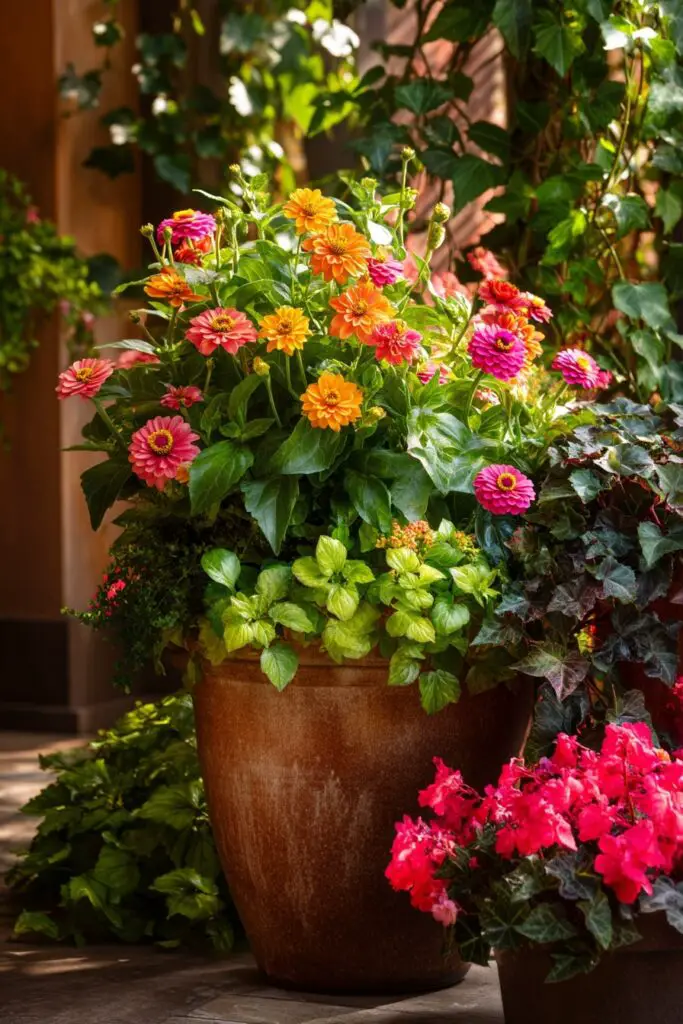
Choosing the right plants for light conditions is essential for a thriving container garden flower display. Sun exposure affects bloom size, color intensity, and overall plant health.
Below are reliable combinations based on sunlight levels.
Full Sun Container Garden Flower Ideas (6+ Hours of Sun)
A full sun container garden flower arrangement can handle heat and direct light while producing bold color.
Bright & Tropical Look
- Thriller: Canna lily
- Filler: Zinnias
- Spiller: Sweet potato vine
Classic Summer Mix
- Thriller: Purple salvia
- Filler: Red geraniums
- Spiller: White bacopa
Pollinator-Friendly Option
- Thriller: Lantana
- Filler: Petunias
- Spiller: Trailing verbena
These combinations thrive in warm conditions and deliver nonstop blooms through summer.
Partial Shade Container Garden Flower Ideas (3–6 Hours of Sun)
A partial shade container garden flower design benefits from plants that tolerate filtered light or morning sun.
Soft Cottage Style
- Thriller: Foxglove (in larger pots)
- Filler: Begonias
- Spiller: Ivy
Bold Foliage Focus
- Thriller: Coleus
- Filler: Impatiens
- Spiller: Creeping Jenny
Shade-friendly flowers often produce richer foliage colors and softer blooms, creating a calm and layered effect.
Deep Shade Container Garden Flower Ideas
If your porch or balcony gets minimal sunlight, choose blooms and foliage that perform well without direct rays.
Elegant Shade Combination
- Thriller: Fern
- Filler: Tuberous begonias
- Spiller: Trailing ivy
In lower light areas, foliage contrast becomes even more important. Mix textures — broad leaves, delicate fronds, and trailing vines — to add visual interest.
If you have an article about shade-loving perennials on your site, this would be a strong internal link opportunity here.
Choosing the Right Containers and Soil for a Healthy Container Garden Flower
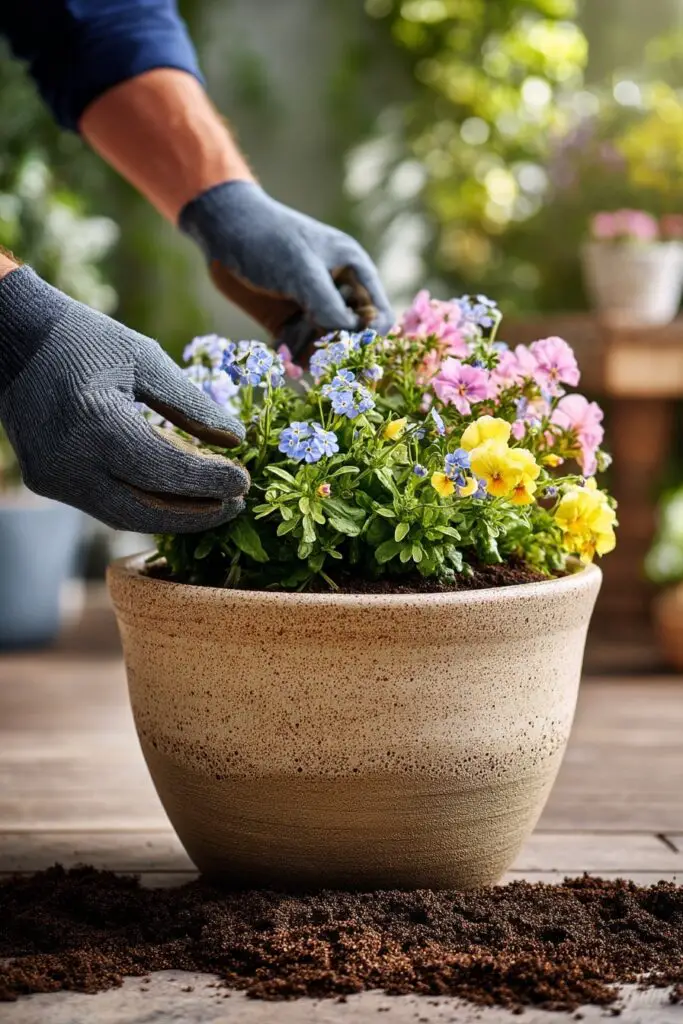
The success of your container garden flower display depends just as much on the container and soil as the plants themselves. Even the most beautiful blooms will struggle if drainage or root space is limited.
Selecting the Best Container
When choosing a pot for your container garden flower arrangement, consider:
- Drainage holes (essential to prevent root rot)
- Size (larger pots retain moisture longer)
- Material (affects temperature and watering needs)
Common container materials:
- Terracotta – Breathable but dries quickly
- Plastic or resin – Lightweight and moisture-retentive
- Ceramic or glazed pots – Decorative and durable
- Wooden planters – Natural look, good insulation
For instant impact, choose a container that feels slightly oversized. A fuller container garden flower arrangement looks more established from day one.
If you have an article about choosing outdoor planters, this would be another natural internal link opportunity.
The Ideal Soil Mix for Container Garden Flower Success
Never use garden soil in pots. A proper potting mix ensures airflow and drainage for healthy roots.
Look for a high-quality potting mix that includes:
- Peat moss or coco coir
- Perlite or vermiculite
- Slow-release fertilizer (optional but helpful)
Because a container garden flower setup has limited soil volume, nutrients deplete faster than in ground beds. Feeding every 2–3 weeks with a balanced liquid fertilizer keeps blooms strong and vibrant.
Watering Tips for Lush Blooms
Container plants dry out faster than in-ground flowers. Check moisture daily during warm weather.
Helpful guidelines:
- Water deeply until it drains from the bottom
- Water in the morning when possible
- Avoid shallow, frequent watering
Consistent moisture prevents stress, which keeps your container garden flower arrangement looking full and colorful.
How to Keep Your Container Garden Flower Display Blooming All Season
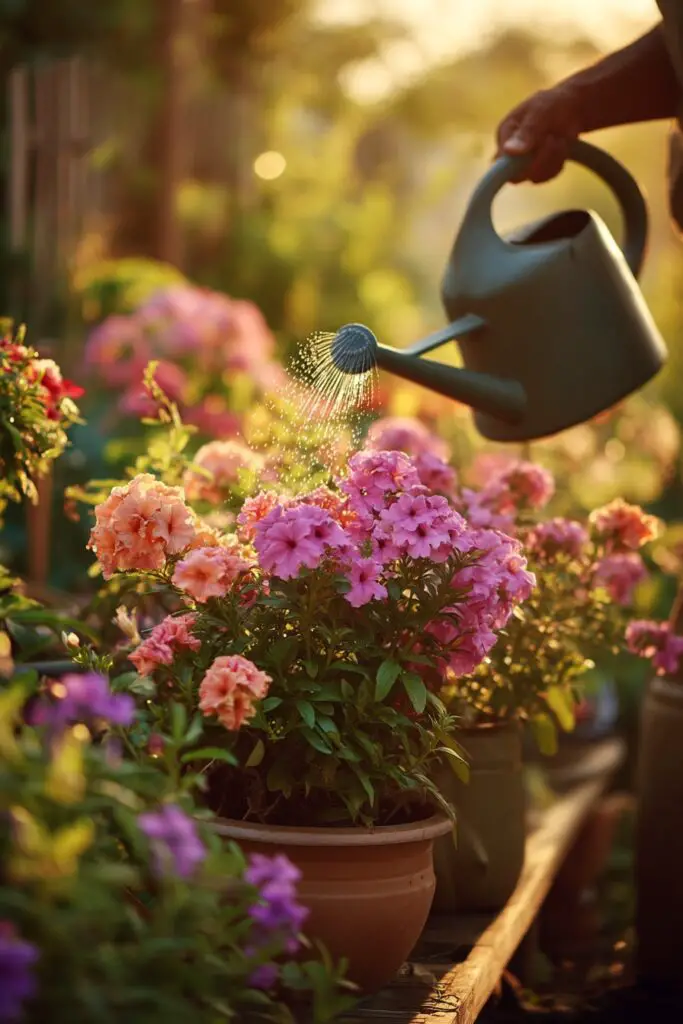
A vibrant container garden flower arrangement can last from spring through fall with the right maintenance. Regular care prevents leggy growth, fading blooms, and nutrient deficiencies.
Deadheading for Continuous Blooms
Removing spent flowers encourages new buds to form. Many flowering plants redirect energy into seed production once blooms fade.
To maintain a full container garden flower display:
- Pinch off faded blooms weekly
- Trim back leggy stems
- Remove yellowing leaves
Petunias, geraniums, and zinnias especially benefit from regular deadheading.
Mid-Season Refresh Ideas
By midsummer, some plants may slow down. Instead of replacing the entire container garden flower arrangement, refresh it.
Simple updates include:
- Swapping out fading filler plants
- Adding fresh trailing spillers
- Top-dressing with compost
- Replacing one dramatic thriller for a new focal point
This keeps your display looking intentional and vibrant without starting from scratch.
Fertilizing for Strong Growth
Because nutrients wash out of containers quickly, a container garden flower setup needs consistent feeding.
Best practices:
- Apply liquid fertilizer every 2–3 weeks
- Use a bloom-boosting formula during peak season
- Reduce feeding in early fall
Balanced fertilization helps maintain color intensity and strong stems.
Protecting Against Heat and Stress
During extreme heat:
- Move containers to afternoon shade
- Increase watering frequency
- Mulch the top layer to reduce evaporation
With proactive care, your container garden flower arrangement can stay healthy well into autumn.
Conclusion
A thoughtfully designed container garden flower display offers instant beauty, flexibility, and season-long color. By combining the thriller, filler, and spiller method with proper soil, smart plant choices, and regular care, you can create a striking arrangement in any space — from compact balconies to spacious patios.
Container gardening allows you to adapt, refresh, and experiment without permanent changes to your landscape. With the right combinations and consistent maintenance, your blooms will continue to impress all season long.