
Tomato trellis ideas make all the difference when you’re trying to grow healthy, abundant tomato plants without them sprawling across the ground and inviting disease or pests. In a home garden, supporting your tomatoes vertically doesn’t just boost plant health — it improves air circulation, simplifies watering and harvesting, and turns rows of tangled vines into a more organized and attractive space.
Whether you’re tending a small backyard bed or a larger plot of indeterminate varieties that can reach skyward through the season, the right support system enables stronger stems and heavier fruit production. While store‑bought cages work well for compact plants, clever DIY trellis setups often give you more height, stability, and even style.
In this article, you’ll find eight practical, budget‑friendly tomato trellis ideas that range from classic support grids to creative handmade structures gardeners love. Before we get into the ideas themselves, let’s go over a few quick tips to help you make the most of your trellis this season.
Table of Contents
Quick Tips for Using a Tomato Trellis
Before diving into the tomato trellis ideas, here are a few tips to make sure your support system works efficiently and keeps your tomato plants thriving all season long:
Choose the Right Trellis for the Tomato Type
- Determinate varieties (bush types) grow to a set height and stop; they often just need basic support like small cages or grids.
- Indeterminate varieties (vining types) keep growing and fruiting until frost — they need tall, strong, and adaptable support systems.
Install Trellises Early
- Set up your trellis at planting time to avoid disturbing the root system later.
- Early support trains plants to grow upright from the start, preventing stem damage.
Secure Plants Gently
- Use soft ties, garden twine, or stretchy clips to attach vines to the structure.
- Avoid tight knots that could restrict growth or damage the stems.
Keep Up With Pruning
- Regularly prune suckers (small shoots that appear between the main stem and branches) to direct energy into fruit production and reduce overcrowding.
Consider Placement and Sun Exposure
- Trellised tomatoes need 6–8 hours of direct sunlight daily.
- Ensure the structure won’t shade nearby plants unintentionally.
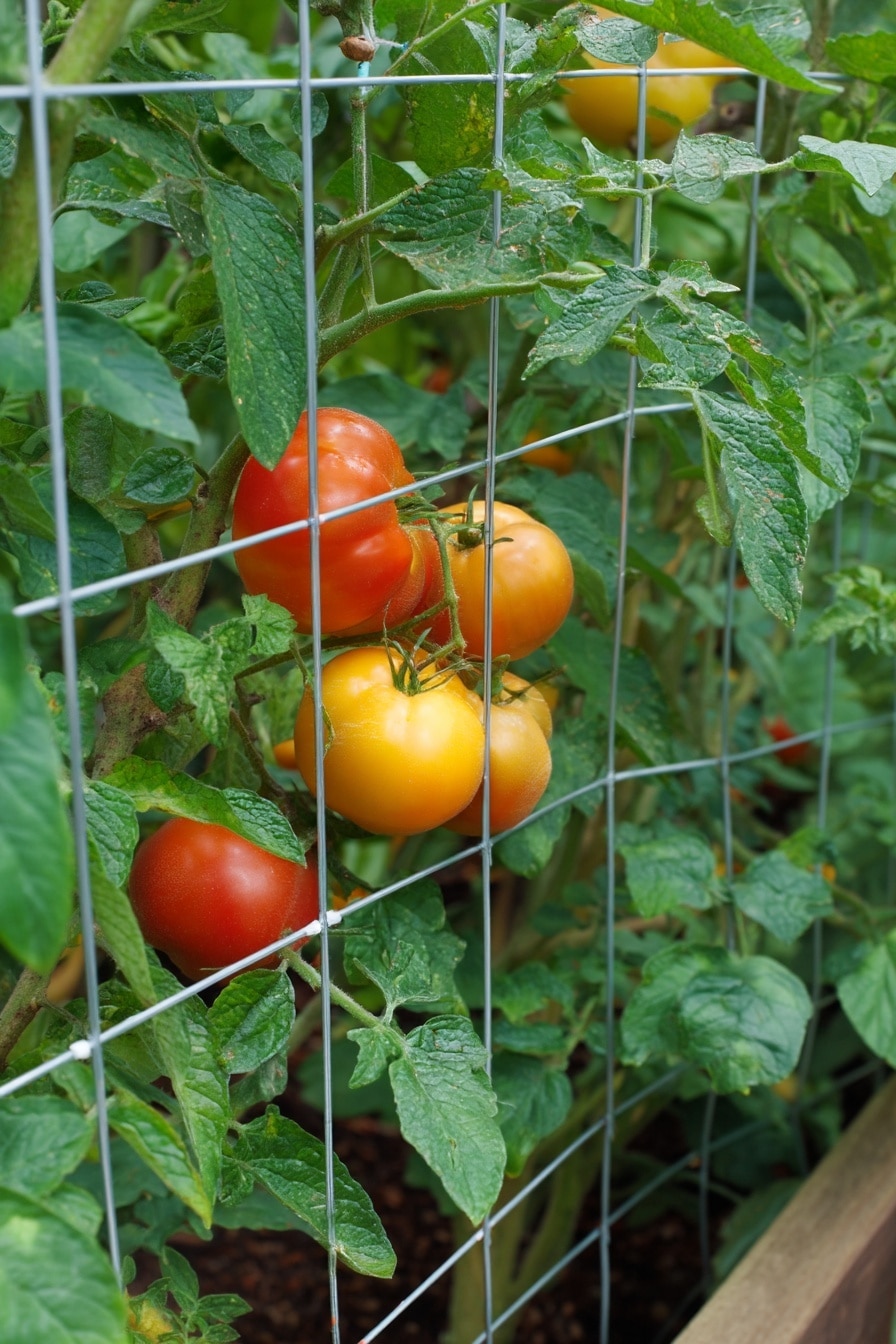
1. Grid-Style Wire Panel Trellis

- Use metal wire panels or fencing (like hog or cattle panels) supported by sturdy wooden or metal stakes.
- This option provides a broad, rigid surface for tomato vines to cling to naturally.
- Works especially well for raised beds or row planting.
2. Pole and Twine Trellis
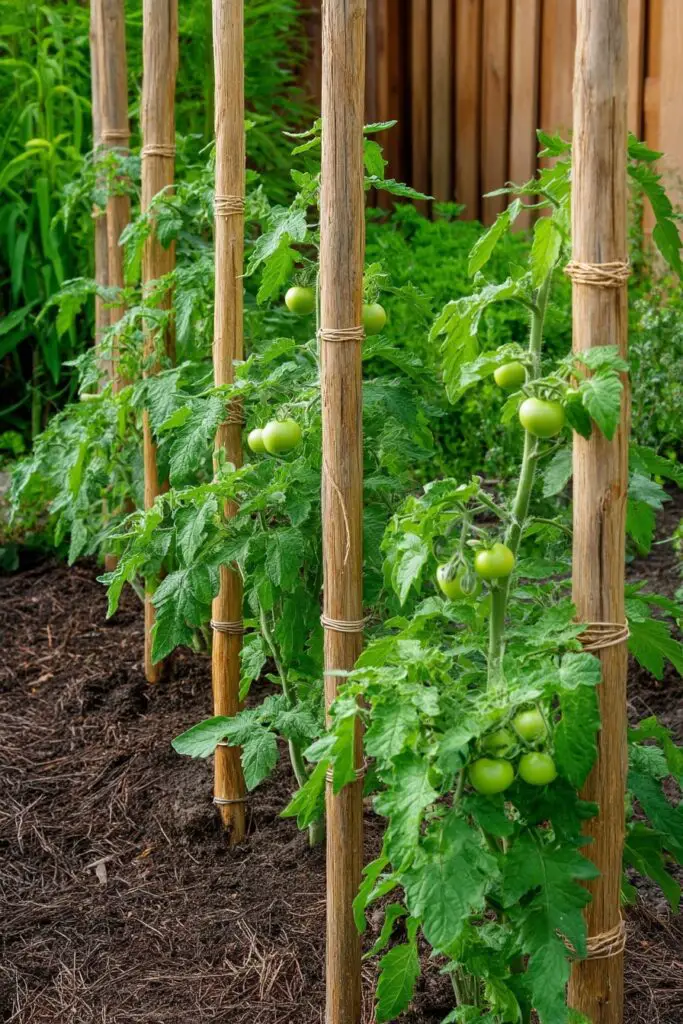
- Sink tall wooden poles or bamboo stakes into the ground at intervals.
- String natural garden twine horizontally or in a spiral between poles to guide plant growth.
- Easy to adjust and dismantle after the growing season.
3. A-Frame Bamboo Trellis
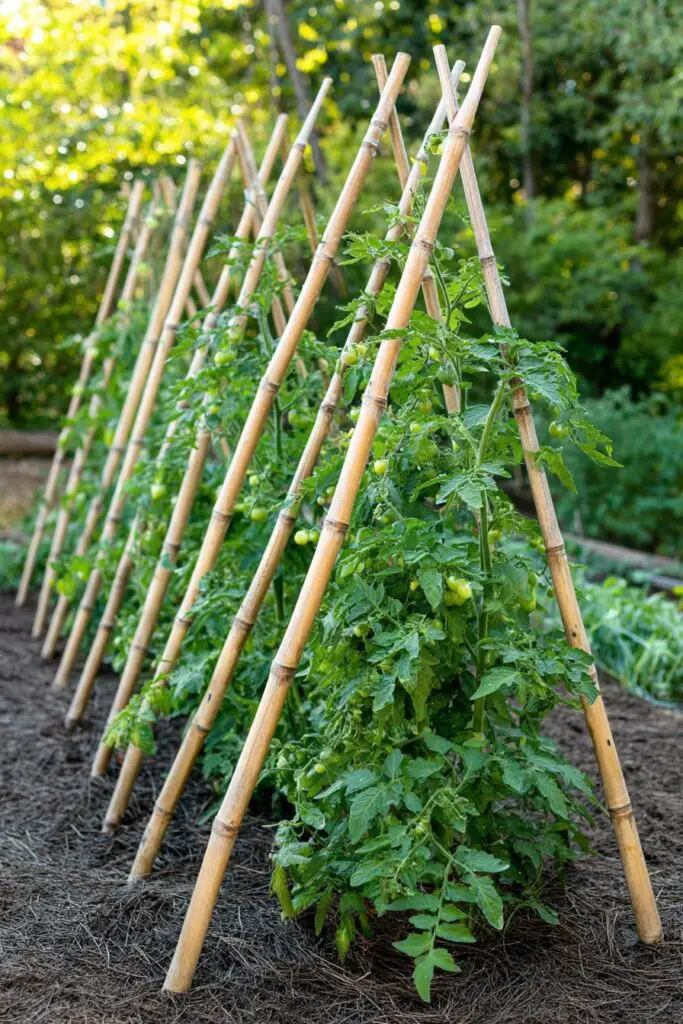
- Arrange two bamboo poles in an inverted “V” and tie them at the top to form an A-frame.
- Connect cross-supports or netting between sides for climbing.
- Great for maximizing vertical space in small gardens.
4. Ladder-Style Wooden Trellis
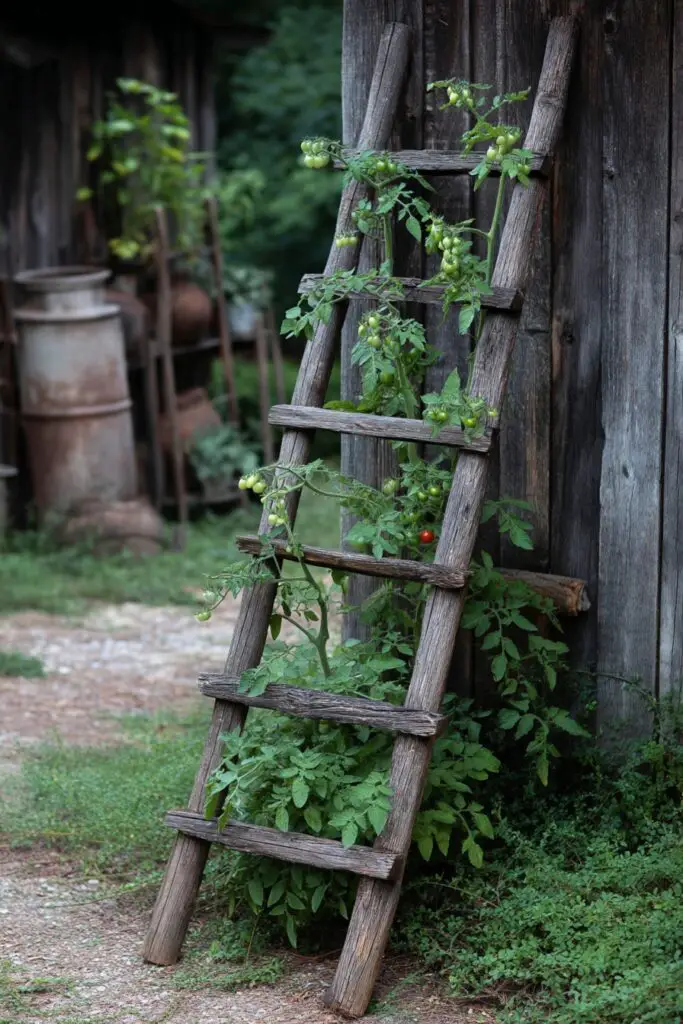
- Repurpose an old ladder or build one with scrap wood and galvanized screws.
- Sturdy rungs make it easy to tie off stems, and it brings rustic charm to any garden bed.
- Paint or stain for added weather resistance and style.
5. Overhead Arch or T-Post System
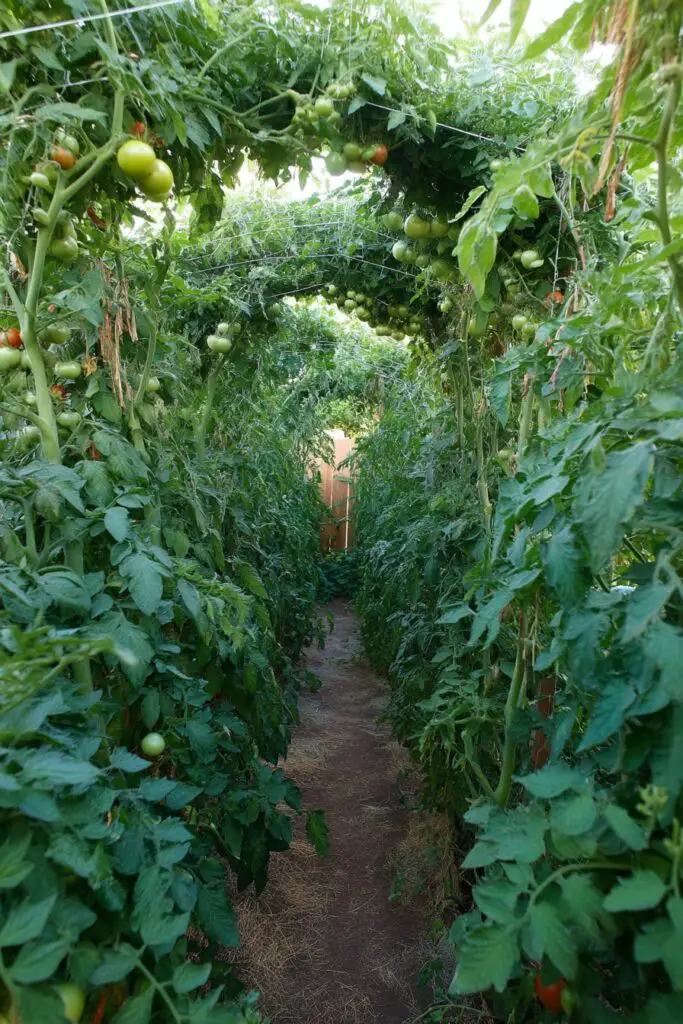
- Use tall T-posts or strong wooden beams with a horizontal crossbar across the top.
- Guide tomato vines up and over the support using twine or netting.
- A stunning way to grow tomatoes while creating shady walkways or garden tunnels.
6. Tomato Clips on a String Trellis
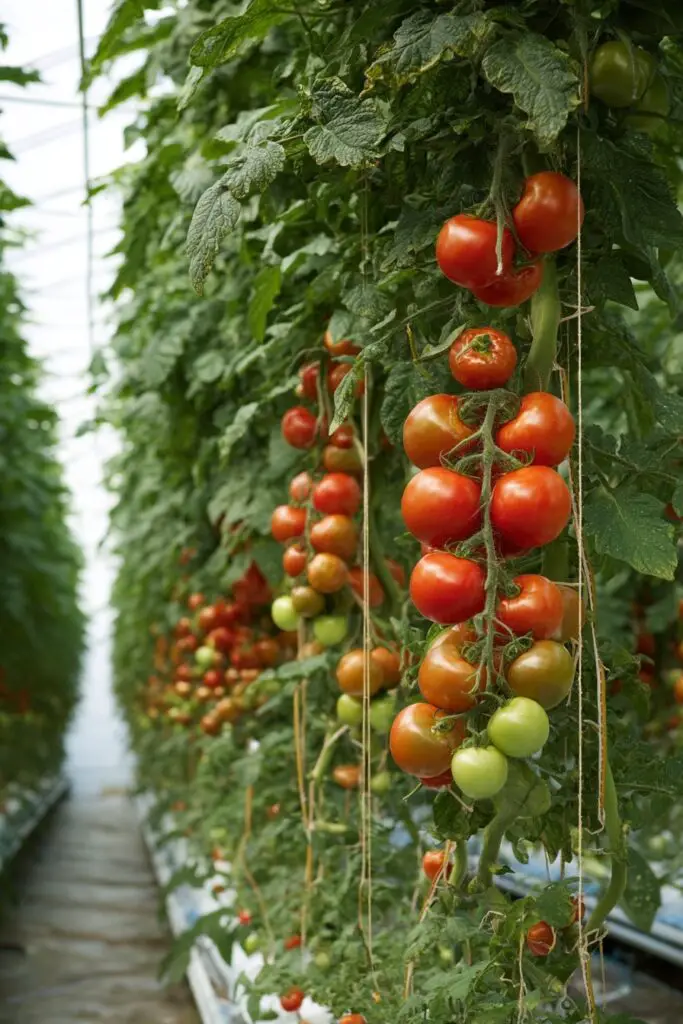
- Tie strings from an overhead bar and clip them to the tomato stems using tomato-specific clips.
- Commonly used in greenhouse or high-tunnel setups.
- Keeps plants upright and manageable with minimal hardware.
7. PVC Pipe Frame Trellis
- Build a lightweight yet sturdy frame using PVC pipe and corner connectors.
- Attach netting or wire grid to the frame to support growing vines.
- Waterproof, durable, and easy to disassemble in the off-season.
8. Stick and Cup Stake System
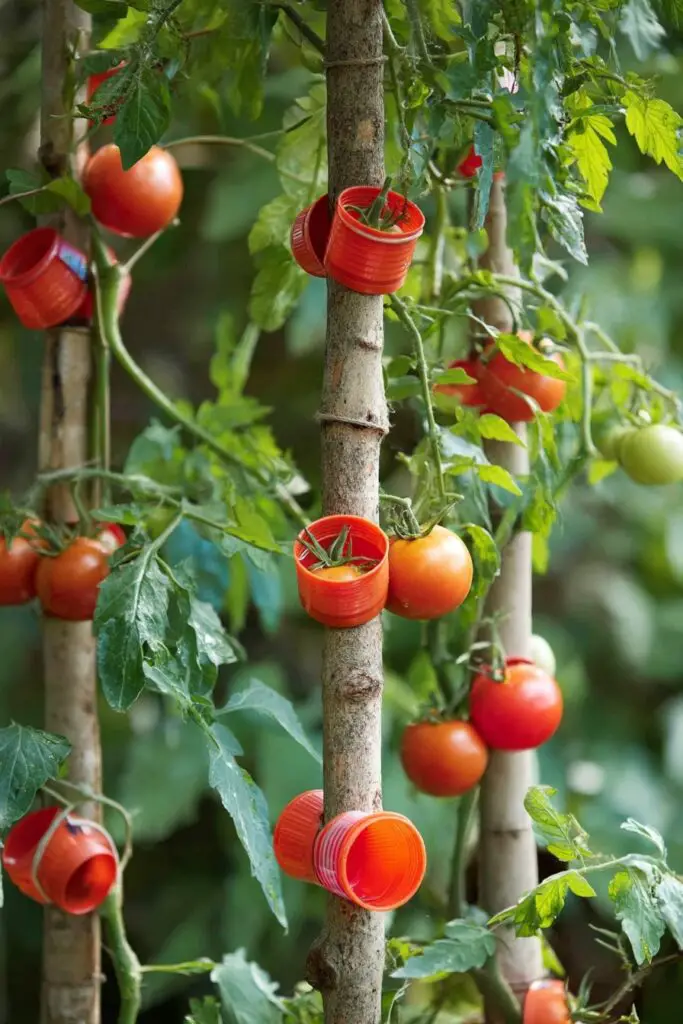
- Push long sticks into the ground around each plant.
- Cut plastic cups in half and use them to cradle the branches and keep fruit off the soil.
- A quirky but effective method for small or container gardens.
Tomato Trellis FAQs
Here are answers to a few common questions gardeners have when choosing or building their tomato trellis:
What’s the difference between a trellis and a tomato cage?
- A trellis is typically a flat or vertical structure that supports vines as they grow upward.
- A tomato cage is usually circular or triangular and surrounds the plant, offering support from all sides.
- Trellises allow more control over vine direction and are better suited for indeterminate varieties.
How tall should a tomato trellis be?
- For determinate tomatoes, 3 to 4 feet is generally enough.
- Indeterminate tomatoes may require trellises at least 6 to 8 feet tall, depending on the variety and growing season length.
Can you reuse a tomato trellis?
- Yes, most DIY trellises — especially those made from PVC, wire, or wood — can be cleaned, stored, and reused year after year.
- Always disinfect supports at the end of the season to prevent disease carryover.
Conclusion
Supporting your tomatoes properly is a simple but powerful way to boost plant health, reduce garden clutter, and increase your harvest. These tomato trellis ideas offer options for every type of gardener — whether you’re repurposing materials, crafting something beautiful, or just making do with what you have.
Strong, creative trellising is more than just support — it’s a design choice that brings both productivity and beauty to your garden space.