
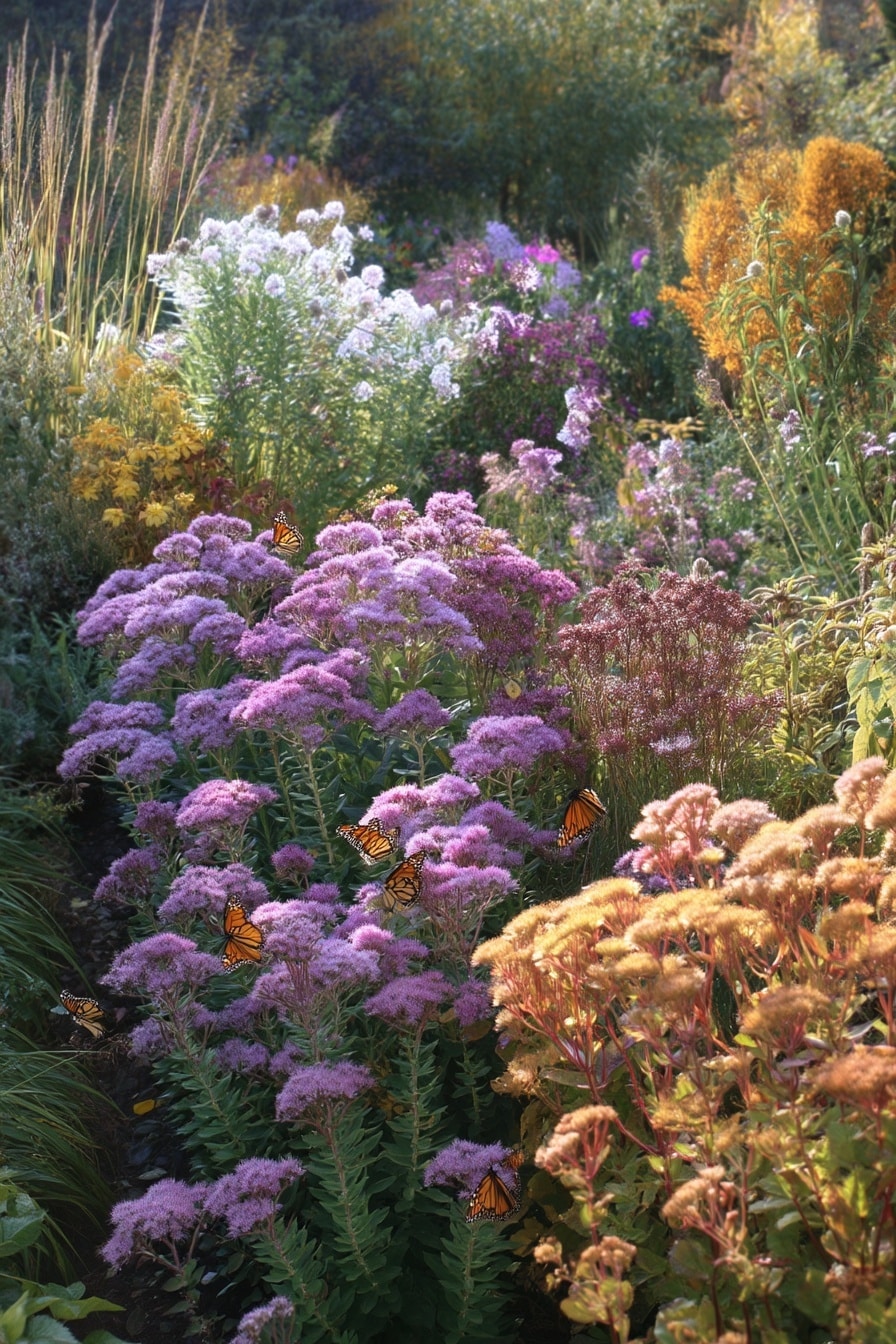
Butterfly garden planning goes far beyond adding a few colorful flowers. It’s about creating a habitat—a layered, nectar-rich environment where butterflies and moths can feed, rest, and reproduce. With pollinators under growing pressure from habitat loss, home gardeners play a vital role in their survival. By planting specific groupings designed to attract and support these delicate creatures, you can help preserve biodiversity while enjoying the beauty of winged visitors in your own yard. From sunny borders to balcony containers, these five butterfly garden planting recipes are perfect for gardeners who want to blend visual impact with ecological purpose.
Table of Contents
1. Sunny Border Blend

One of the most reliable ways to create a thriving butterfly garden is by designing a full-sun border filled with nectar-rich perennials and airy textures. This setup offers continuous blooms and easy access for butterflies throughout the warmer months.
Plants to Include
- Echinacea (Coneflower) – long-lasting, bright blooms loved by butterflies
- Salvia – spikes of deep blue or purple flowers rich in nectar
- Yarrow – flat clusters perfect for landing and feeding
- Agastache (Hyssop) – fragrant with tubular flowers ideal for pollinators
Group these plants in natural drifts, and avoid overcrowding to allow butterflies room to move freely between blooms.
2. Patio Pot Pollinator Mix
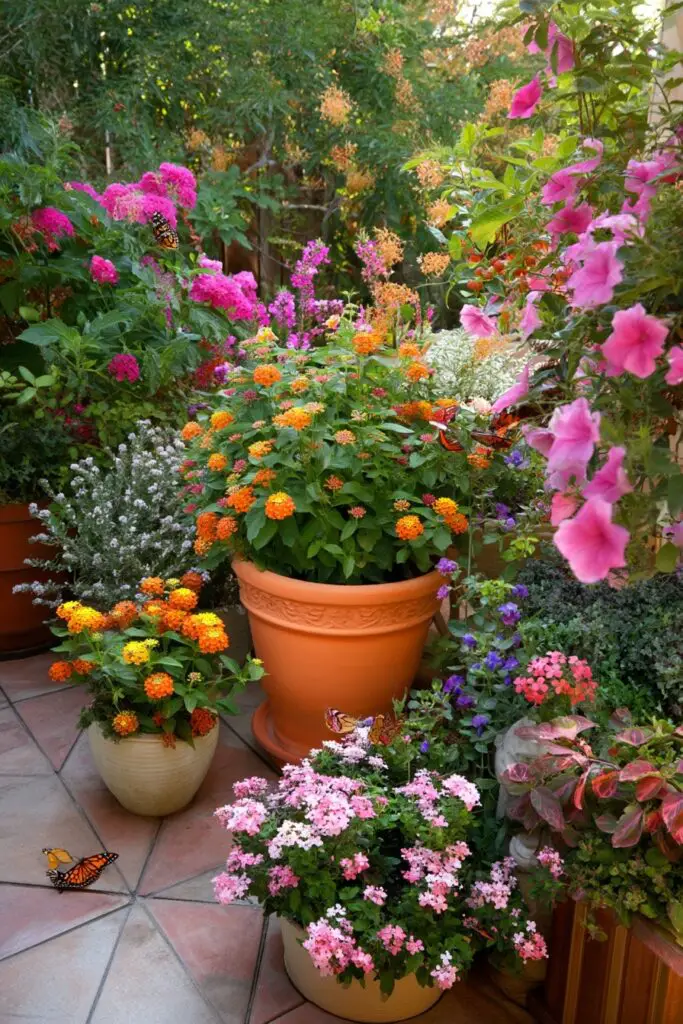
Even if you’re limited to a balcony or small patio, you can still grow a flourishing butterfly garden using containers. The key is to combine compact, nectar-rich plants that bloom generously and attract pollinators to even the smallest space.
Plants to Include
- Verbena bonariensis – tall and airy with lavender-purple blooms
- Lantana – colorful clusters butterflies love, ideal for pots
- Petunias – long-blooming and full of sweet scent
- Milkweed (Asclepias tuberosa) – essential for monarchs
Use lightweight containers with good drainage and group them to create a mini oasis. Rotate plants to keep blooms fresh all season.
3. Fragrant Cottage Border
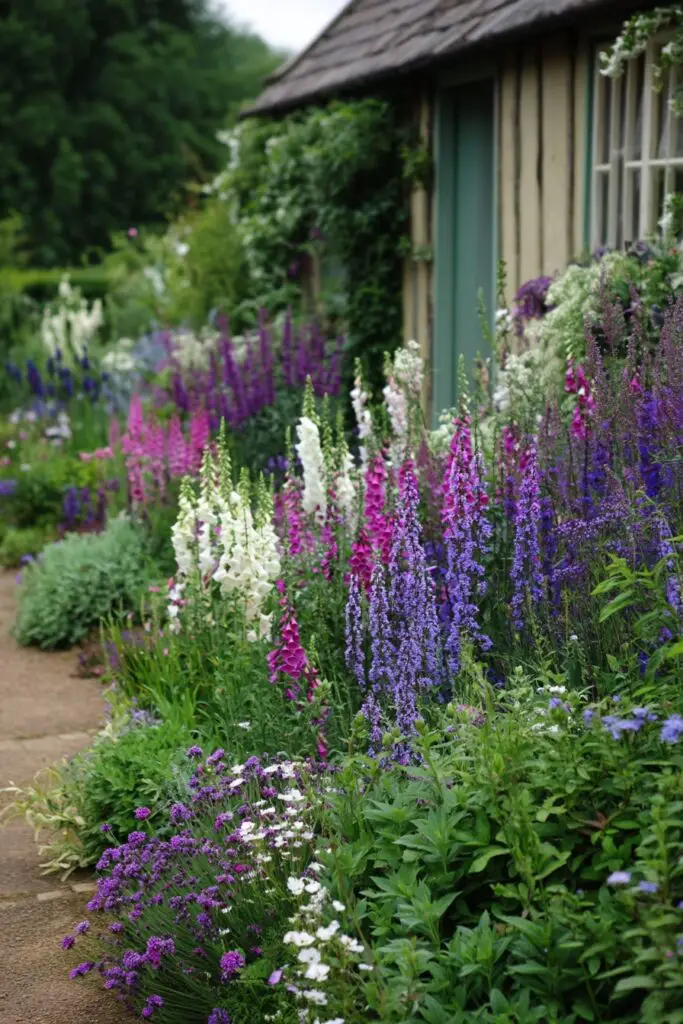
A cottage-style border brings a soft, romantic feel to your butterfly garden, while offering plenty of nectar and shelter for pollinators. This approach layers colors and textures to create a continuous bloom and a gentle, inviting space.
Plants to Include
- Lavender – fragrant and rich in nectar, loved by butterflies and bees
- Catmint (Nepeta) – low-growing, silvery foliage with long-blooming flowers
- Foxglove (Digitalis) – tall spires perfect for butterflies to perch and sip
- Scabiosa (Pincushion Flower) – compact, soft blooms that attract fluttering wings
This recipe works best in a sunny, slightly informal bed with natural spacing and a relaxed garden layout.
4. Late-Season Nectar Bed
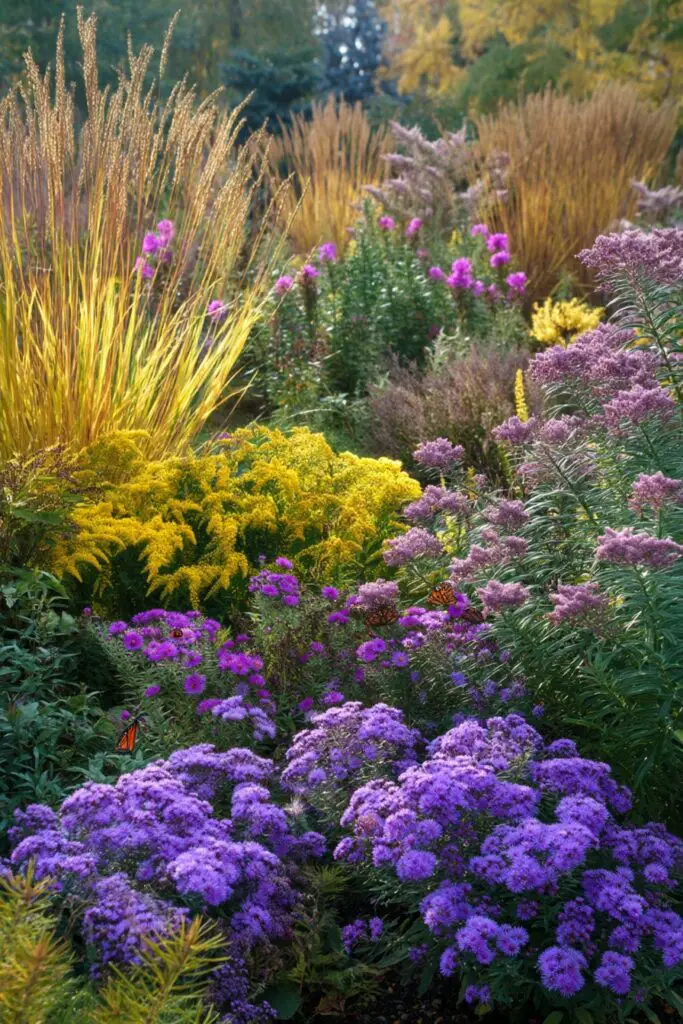
A successful butterfly garden supports pollinators beyond summer. Providing nectar into early autumn helps late-season butterflies fuel up before migration or dormancy.
Plants to Include
- Sedum (Stonecrop) – dense flower heads that attract butterflies late in the year
- Asters – daisy-like blooms that provide fall color and nectar
- Joe Pye Weed (Eutrochium) – tall, native perennial with rich late blooms
- Russian Sage (Perovskia) – silvery foliage with long-lasting purple flowers
Plant these together in a warm, sunny spot to ensure a reliable nectar source when most other blooms fade.
5. Caterpillar Host Patch
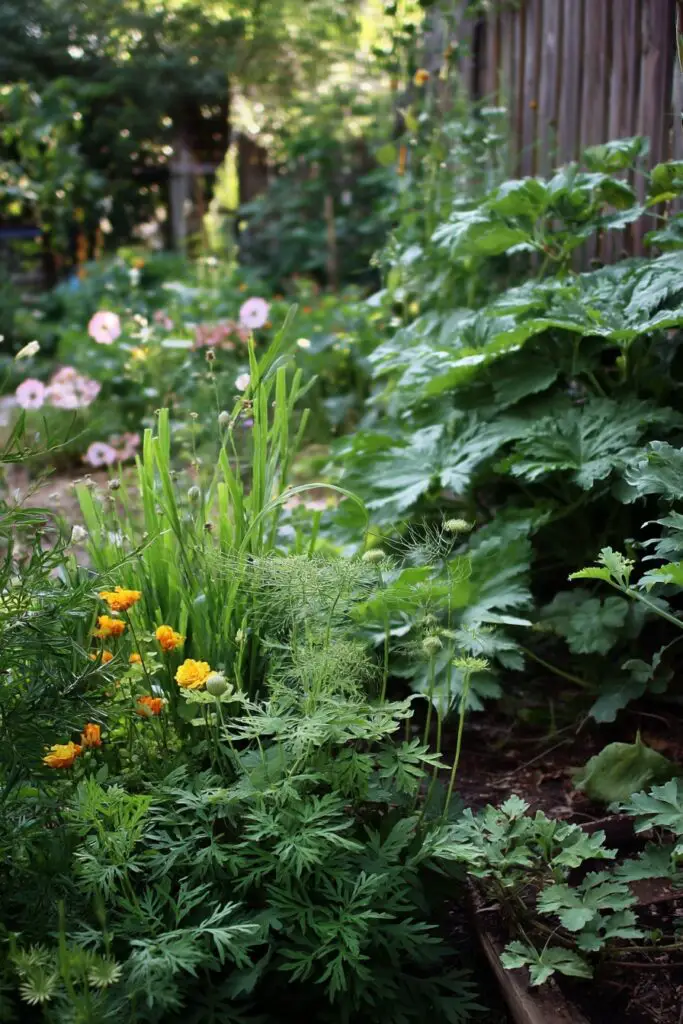
A truly supportive butterfly garden goes beyond nectar. Providing host plants for caterpillars helps complete the life cycle and encourages butterflies to lay eggs in your garden.
Plants to Include
- Milkweed (Asclepias spp.) – the only food source for monarch caterpillars
- Parsley, Dill, and Fennel – host plants for swallowtail butterflies
- Passionflower vine (Passiflora) – host for gulf fritillary butterflies
- Hollyhock – classic host plant for painted lady and other species
Position host plants slightly away from heavy foot traffic to protect vulnerable caterpillars. Let some leaves be chewed—it’s a sign your garden is doing its job.
Conclusion
Creating a butterfly garden is about more than pretty flowers—it’s about fostering life. By planting with purpose and using recipes tailored for different spaces and seasons, you can provide a reliable sanctuary for butterflies and other pollinators. Whether you have a sunny yard, a patio container, or just a few square feet, these garden ideas invite movement, color, and meaningful ecological impact right into your landscape.