
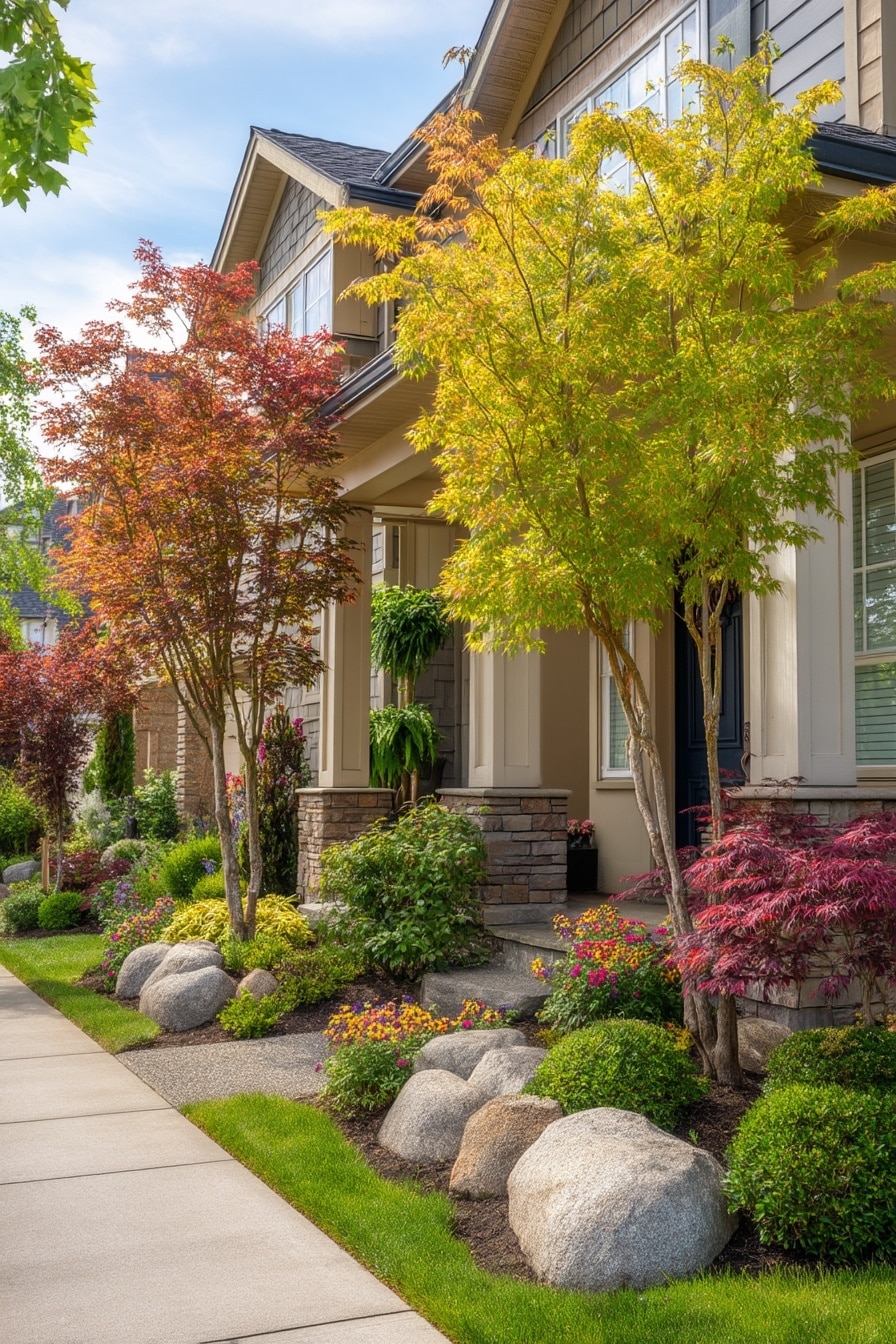
Front garden privacy sets the tone for your home before you even step inside. A welcoming yet secluded entrance helps you relax, reduces visibility from passersby, and makes your home feel like a personal sanctuary.
Whether your property sits close to the street or your neighbours’ windows overlook your walkway, a well-planned front garden design can create privacy without feeling closed in. Thoughtful plantings, decorative elements, and design strategies can offer screening while enhancing curb appeal.
In this article, you’ll find curated front garden privacy ideas inspired by expert landscape concepts to help you craft a hidden, tranquil entrance that feels both stylish and secure.
Table of Contents
1. Layered Planting for Natural Front Garden Privacy

One of the most effective ways to create privacy in a front garden is through layered planting. Instead of relying on a single hedge or fence, combine plants of different heights to build depth and coverage.
Layering softens the boundary between your home and the street while keeping the space visually appealing.
Combine Tall Shrubs, Mid-Height Plants, and Ground Cover
A structured planting scheme can include:
- Tall evergreen shrubs at the back
- Flowering shrubs or ornamental grasses in the middle
- Low ground cover plants at the front
This tiered approach prevents your front garden from feeling boxed in. It also allows airflow and filtered light, which keeps the entrance bright but shielded.
Choose Evergreen for Year-Round Screening
Deciduous plants may leave gaps in winter. Evergreens such as boxwood, yew, or photinia provide consistent coverage throughout the year.
Layered greenery creates a natural screen that feels intentional rather than defensive. If you have an article about low-maintenance shrubs or evergreen planting ideas, this is a strong internal linking opportunity.
2. Decorative Screens and Panels for a Stylish Front Garden
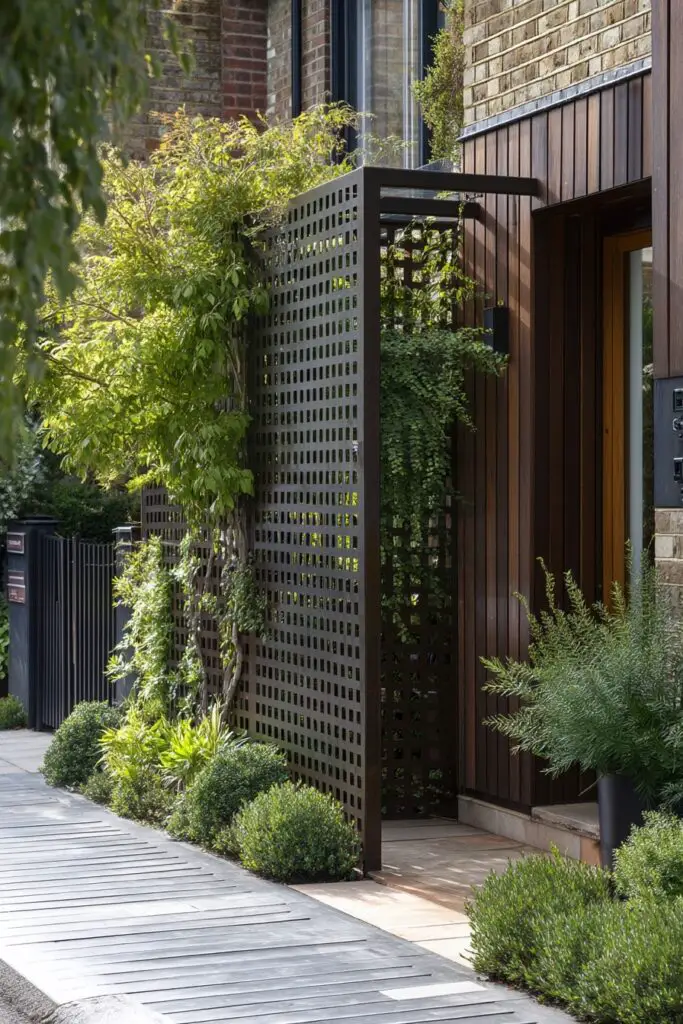
A well-placed screen can instantly increase privacy in a front garden without sacrificing style. Unlike solid fencing, decorative panels allow filtered light while blocking direct views into your entryway.
These features work especially well in modern or compact properties where space is limited.
Use Laser-Cut or Slatted Panels
Contemporary garden screens come in a variety of materials:
- Powder-coated metal
- Timber slats
- Composite panels
- Frosted glass sections
Slatted or perforated designs provide coverage while maintaining airflow. In a front garden, this balance keeps the entrance from feeling enclosed.
Frame the Entry Path
Position screens strategically:
- Along one side of a walkway
- Near the front door
- Around a small seating area
When integrated thoughtfully, a decorative panel becomes both a design feature and a privacy solution. Pair it with climbing plants to soften the look and create a layered effect.
3. Raised Planters to Elevate Front Garden Privacy
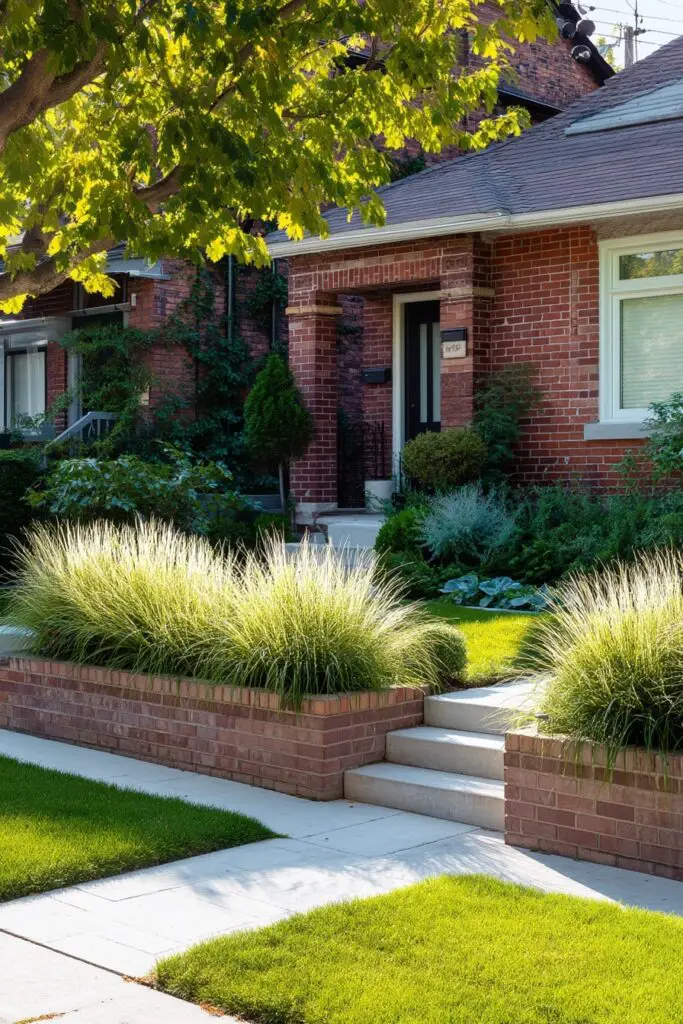
Raised planters add height exactly where you need it. In a front garden, they lift greenery closer to eye level, helping to block sightlines without installing a full fence.
This approach works particularly well for homes close to sidewalks or shared driveways.
Build Height Without Permanent Walls
Instead of constructing tall barriers, try:
- Brick or rendered raised beds
- Timber planter boxes
- Built-in seating with planting behind it
By elevating shrubs and ornamental grasses, your front garden gains instant screening while maintaining openness at ground level.
Mix Structure With Softness
Combine structured materials with layered planting:
- Architectural grasses
- Compact evergreen shrubs
- Seasonal flowering plants
Raised planters also create visual interest and define pathways. They frame the entrance while guiding visitors naturally toward your front door.
4. Statement Gates and Entry Features for a Private Front Garden
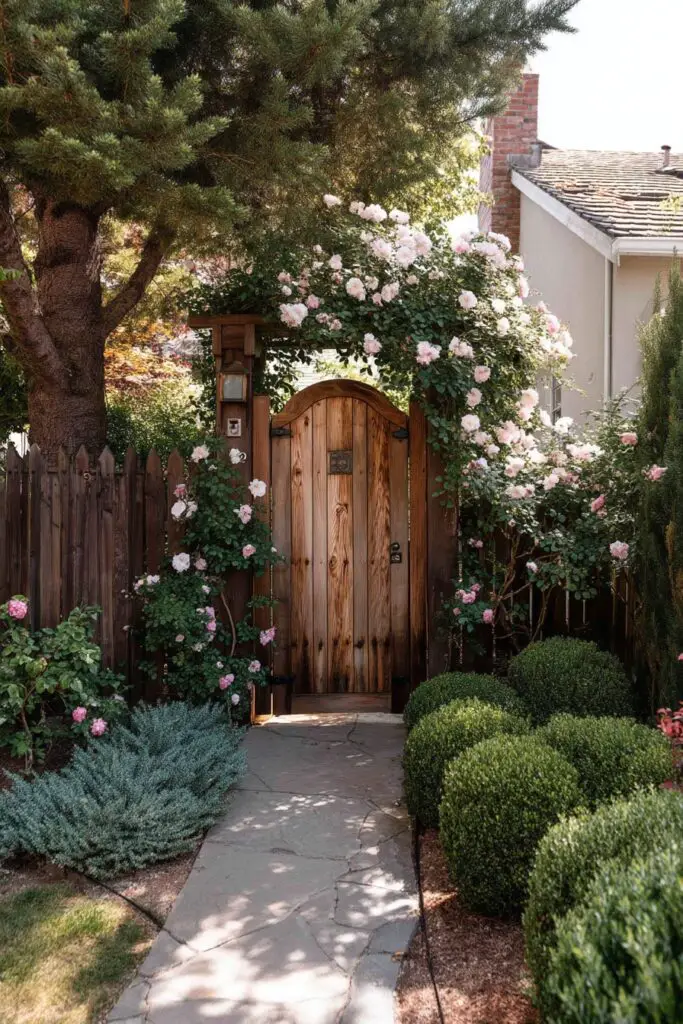
A well-designed gate can instantly enhance privacy in a front garden while adding character to your home’s exterior. Instead of treating the entrance as an afterthought, make it a focal point that shields your property from view.
Install a Solid or Semi-Solid Gate
Depending on your style, you might choose:
- Solid timber gates for maximum privacy
- Slatted wood designs for filtered visibility
- Metal gates with subtle detailing
A taller gate at the entrance of your front garden creates a psychological and visual barrier. It signals that the space beyond is private, even if the surrounding fencing is lower.
Frame the Gate With Greenery
Soften the structure by planting:
- Climbing roses or jasmine along the sides
- Evergreen shrubs near the base
- Ornamental grasses for texture
This combination blends hard and soft landscaping. The result is a secluded entrance that still feels welcoming.
5. Hedges and Living Walls to Enclose the Front Garden
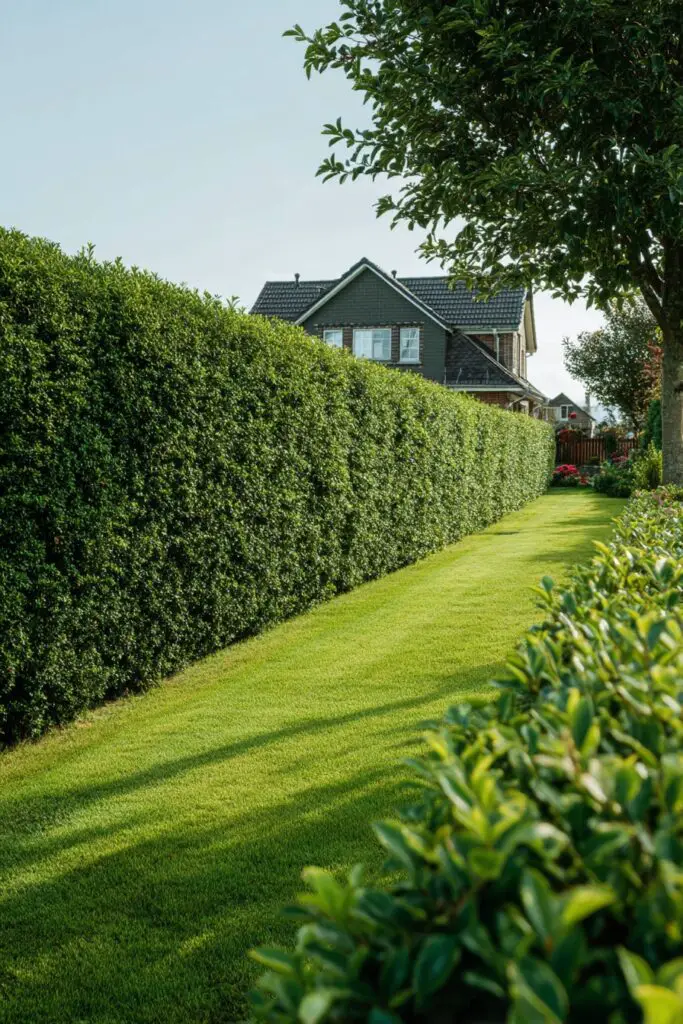
Nothing defines privacy quite like a lush hedge. In a front garden, a well-maintained hedge creates a natural boundary that feels softer than fencing but just as effective.
Hedges provide structure, reduce noise, and add year-round greenery.
Select the Right Hedge Variety
Choose plants based on maintenance needs and desired height:
- Boxwood for neat, formal borders
- Laurel for taller, dense screening
- Privet for fast growth
- Hornbeam for seasonal interest
When trimmed regularly, a hedge frames your front garden while keeping unwanted views out.
Consider a Living Wall for Compact Spaces
If space is tight, a vertical green wall can provide privacy without taking up much ground area.
Living walls work well:
- Along a narrow side boundary
- Beside an entrance path
- Around a small seating nook
Layered foliage not only shields your entrance but also enhances curb appeal.
6. Strategic Tree Placement for Subtle Front Garden Privacy
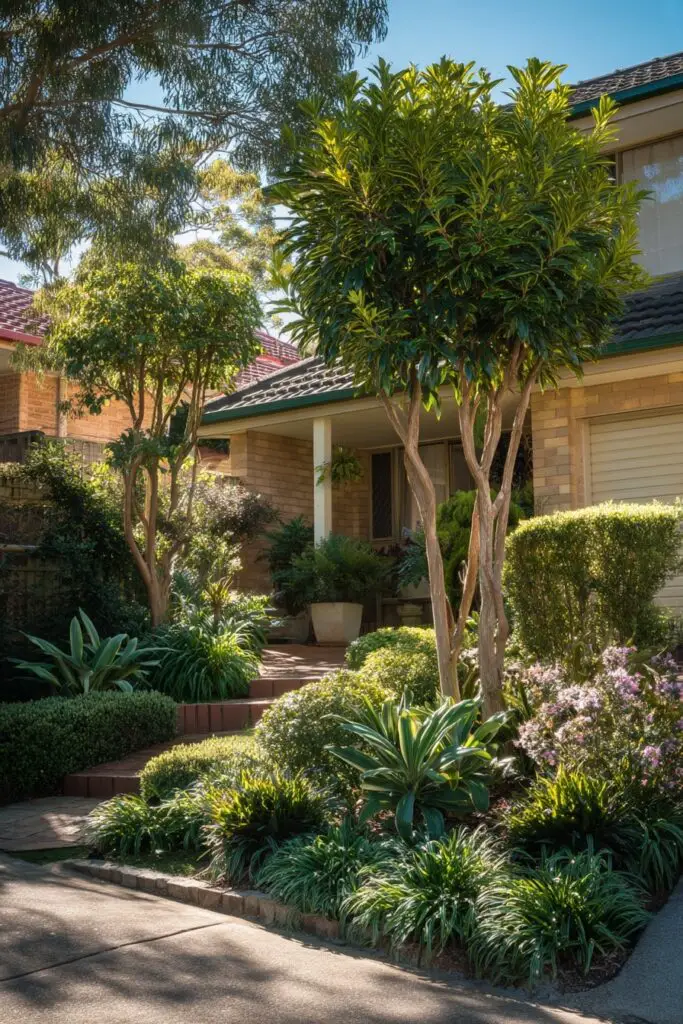
Trees can provide natural screening without making a front garden feel enclosed. When positioned thoughtfully, they break sightlines from upper windows or passing traffic while maintaining openness at ground level.
This approach is especially useful in suburban neighborhoods where privacy concerns come from multiple angles.
Use Multi-Stem or Columnar Trees
Not all trees are suitable for compact spaces. In a front garden, look for varieties that grow upward rather than outward.
Good options include:
- Multi-stem ornamental trees
- Columnar hornbeam
- Amelanchier
- Upright Japanese maple
These trees create height and soft filtering without overwhelming the space.
Position Trees to Interrupt Views
Instead of planting randomly, consider where privacy is needed most.
Place trees:
- Between the house and the street
- Near seating areas
- Along side boundaries
Careful placement makes your front garden feel protected while still open and inviting.
7. Layered Lighting to Enhance Front Garden Privacy at Night
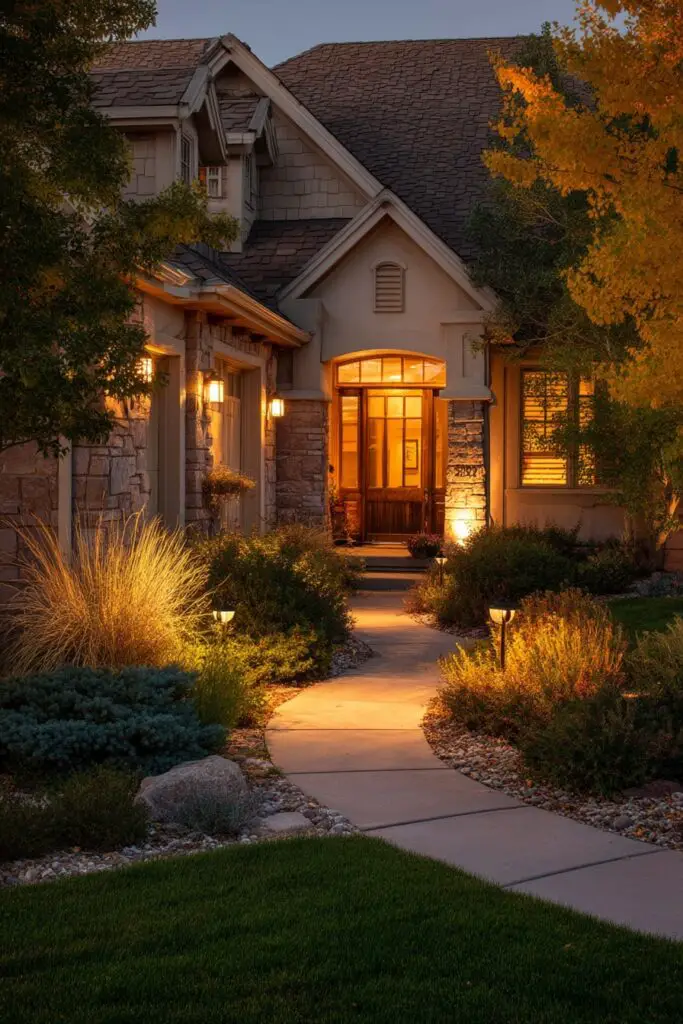
Privacy doesn’t end when the sun goes down. In a front garden, lighting plays a key role in controlling visibility after dark. Poorly placed lights can expose your entrance, while strategic illumination creates warmth and subtle concealment.
Use Soft, Downward Lighting
Avoid bright floodlights aimed outward. Instead, opt for:
- Low pathway lights
- Wall-mounted downlights
- Recessed step lighting
These fixtures highlight walkways and architectural features without broadcasting your entire front garden to the street.
Illuminate Plants, Not the Street
Uplighting shrubs and trees creates layered shadows that add depth. This technique enhances visual interest while reducing harsh glare.
Soft lighting makes your entrance feel secure and welcoming without overexposing it.
Conclusion
A well-designed front garden can feel private, welcoming, and beautifully layered all at once. From layered planting and raised beds to decorative screens, gates, hedges, trees, and thoughtful lighting, each approach adds seclusion without sacrificing style.
By combining structure with greenery and using height strategically, you can create a hidden entrance that feels peaceful and protected. Even smaller spaces can achieve meaningful privacy with intentional planning.