
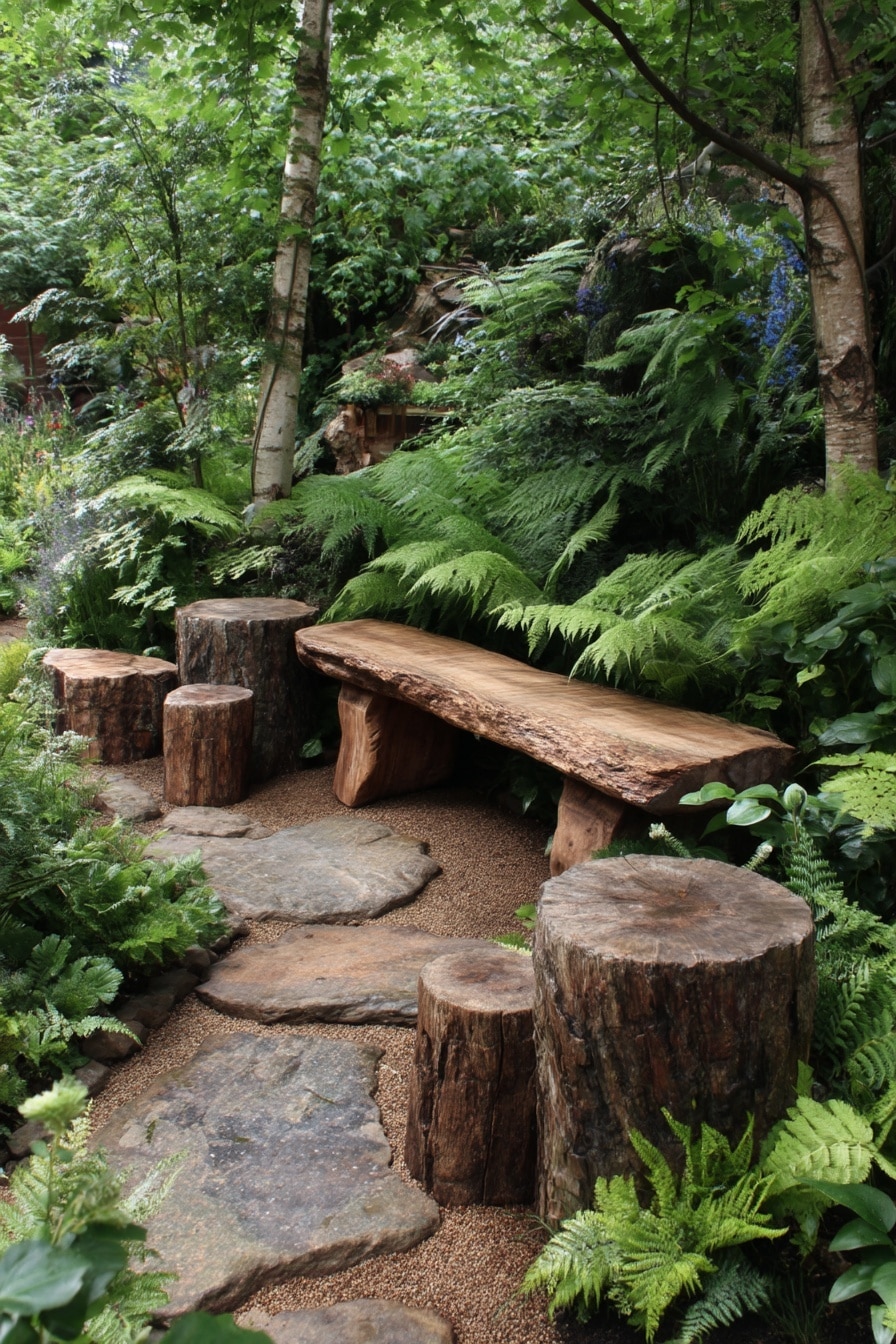
Woodland garden designs bring a calm, natural feel to your outdoor space by mimicking the layered beauty of a forest. With a mix of shade-loving plants, textured greenery, and organic layouts, this style creates a peaceful retreat right outside your door.
A well-planned woodland garden doesn’t need a large space or dense trees to work. By focusing on plant selection, layout, and natural elements, you can recreate this look in both small and large yards. Below are five practical and visually appealing woodland garden ideas that can transform your landscape into a relaxing, nature-inspired setting.
Table of Contents
1. Layered Planting for a Natural Forest Look

A woodland garden thrives on layers, just like a real forest. Combining different plant heights creates depth and a more authentic appearance.
How to Layer Plants:
- Tall trees or small ornamental trees for the upper layer
- Shrubs and ferns for the middle layer
- Ground covers like moss or creeping plants for the base
Plant Suggestions:
- Ferns, hostas, and astilbes for shade
- Small trees like dogwood or Japanese maple
- Ground covers such as ivy or sweet woodruff
Layering gives your woodland garden a full, balanced look while making the space feel lush and established.
2. Winding Paths for a Relaxed Feel
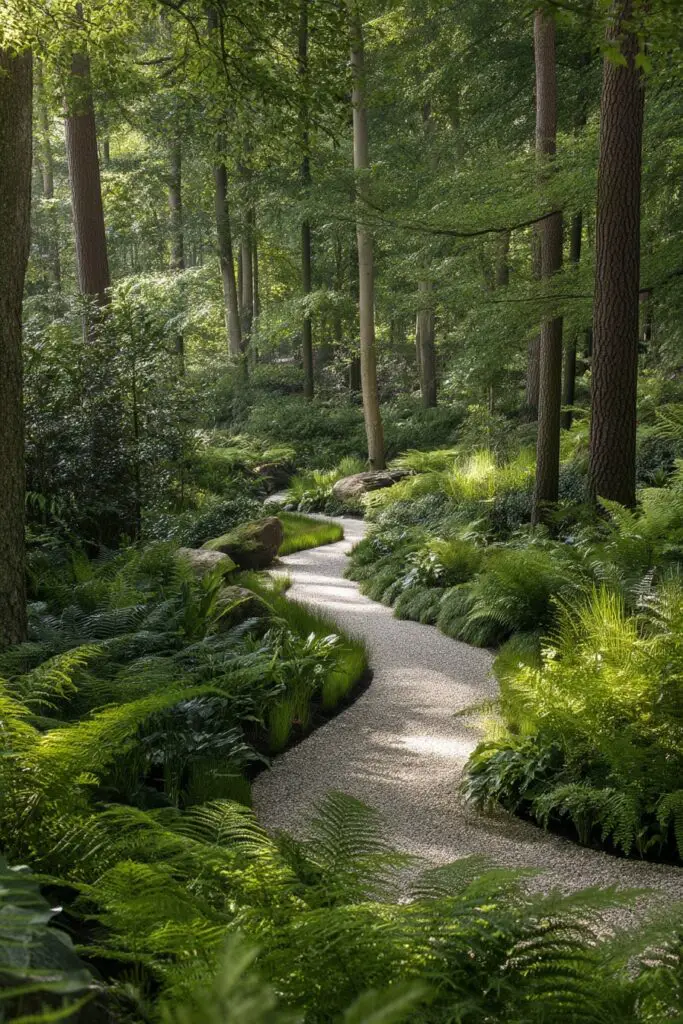
Paths are an essential feature in any woodland garden. Instead of straight lines, curved walkways create a softer, more inviting flow.
Design Tips:
- Use natural materials like gravel, bark, or stepping stones
- Let the path gently curve through planting areas
- Add low plants along the edges for a seamless transition
A winding path encourages slow movement and allows you to enjoy every part of your woodland garden. It also helps define the space without making it feel structured or rigid.
3. Shade-Loving Plants for Easy Growth
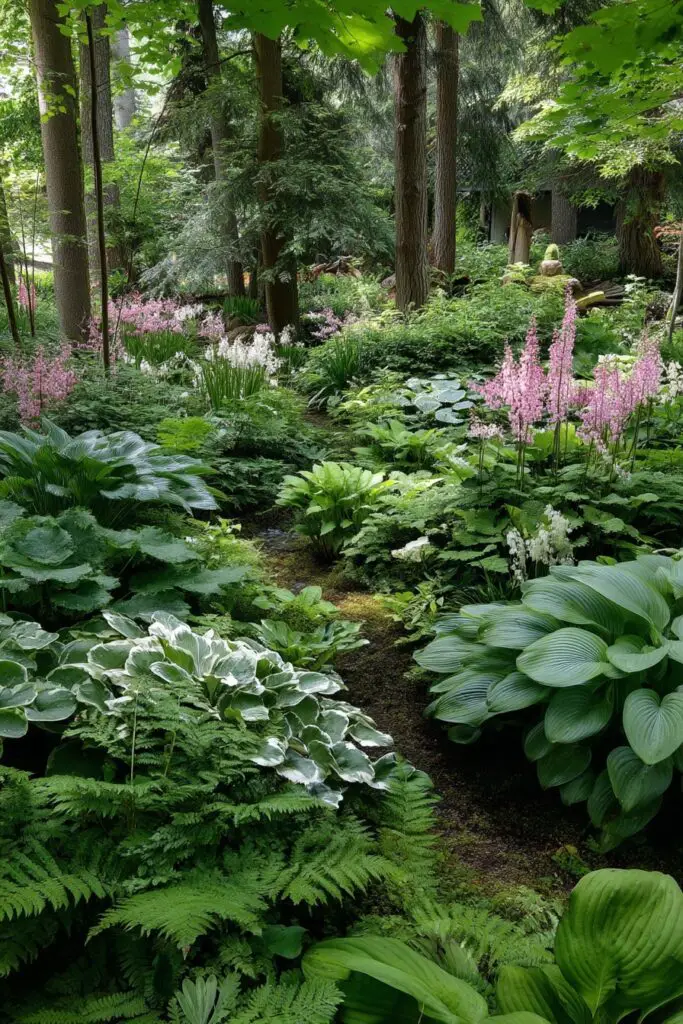
A key part of a woodland garden is choosing plants that thrive in low-light conditions. This makes maintenance easier and ensures healthy growth.
Best Shade Plants:
- Hostas
- Ferns
- Heuchera
- Bleeding heart
Care Tips:
- Improve soil with compost for better drainage
- Keep soil consistently moist but not waterlogged
- Mulch regularly to retain moisture
Using the right plants allows your woodland garden to flourish naturally, even in areas with limited sunlight.
4. Natural Materials and Rustic Features
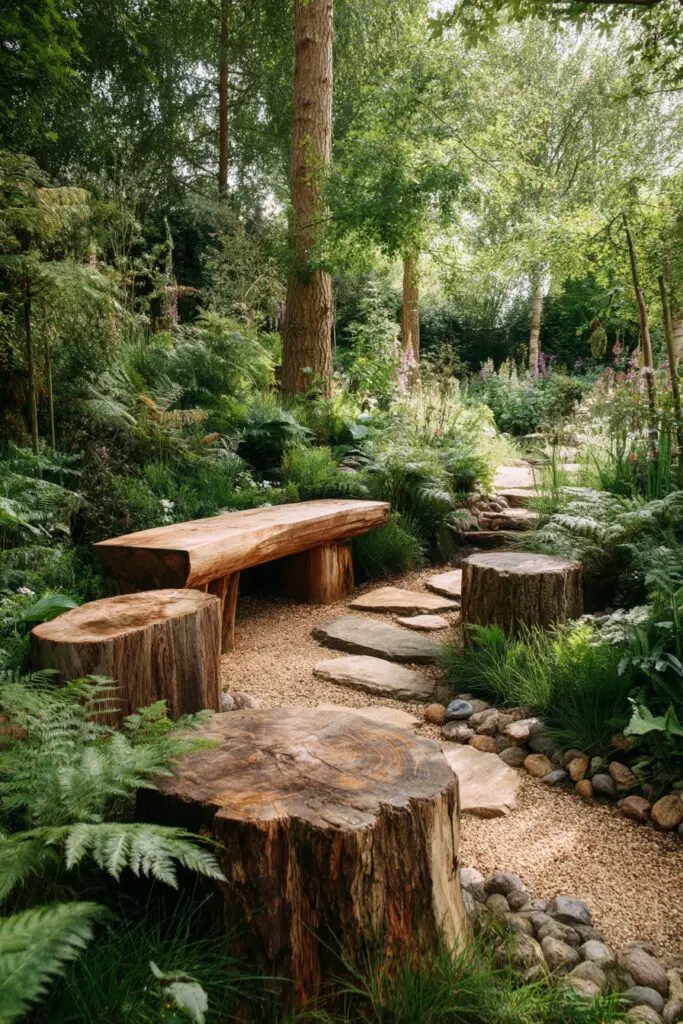
To maintain an authentic woodland garden look, incorporate materials that blend with nature.
Ideas to Try:
- Wooden benches or tree stumps for seating
- Stone borders or logs to edge beds
- Decorative branches or driftwood accents
These elements add character without overpowering the garden. They help your woodland garden feel connected to its surroundings and more organic in design.
5. Water Features for a Peaceful Atmosphere
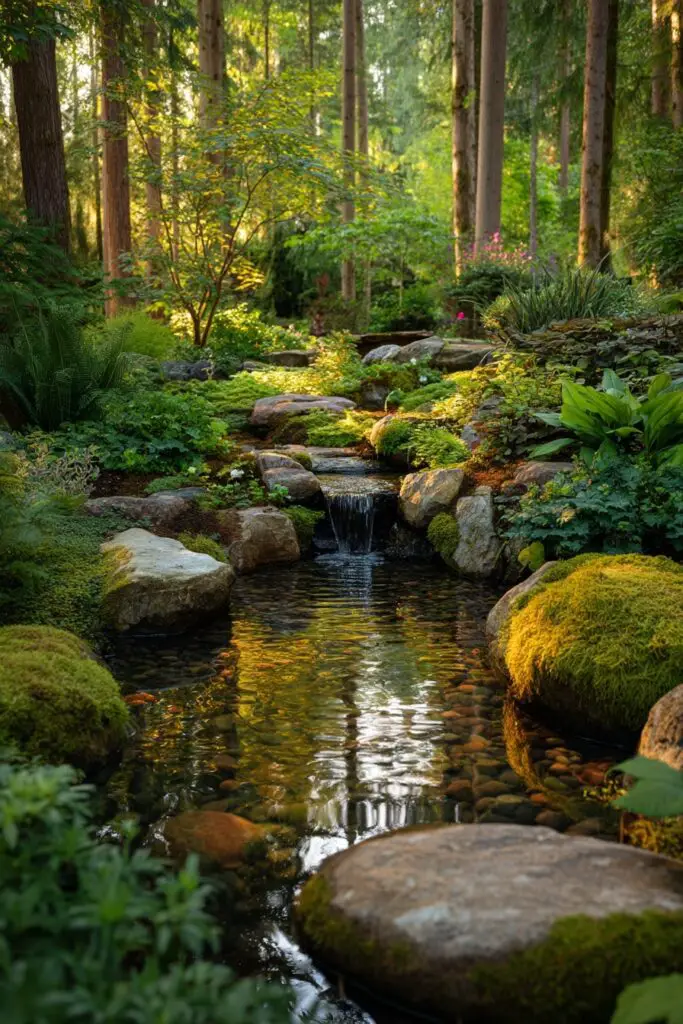
Adding a small water feature can elevate your woodland garden and enhance its calming effect.
Options:
- A simple birdbath
- A small pond
- A gentle trickling fountain
Benefits:
- Attracts birds and wildlife
- Adds soothing sound
- Creates a focal point
Water features bring life and movement to a woodland garden, making the space more engaging and relaxing.
Conclusion
A woodland garden is all about creating a natural, layered space that feels calm and inviting. By using layered planting, curved paths, shade-loving plants, natural materials, and water features, you can design a garden that reflects the beauty of a forest.
Start small and build gradually. With time, your woodland garden will grow into a peaceful retreat that enhances both your home and your outdoor experience.