
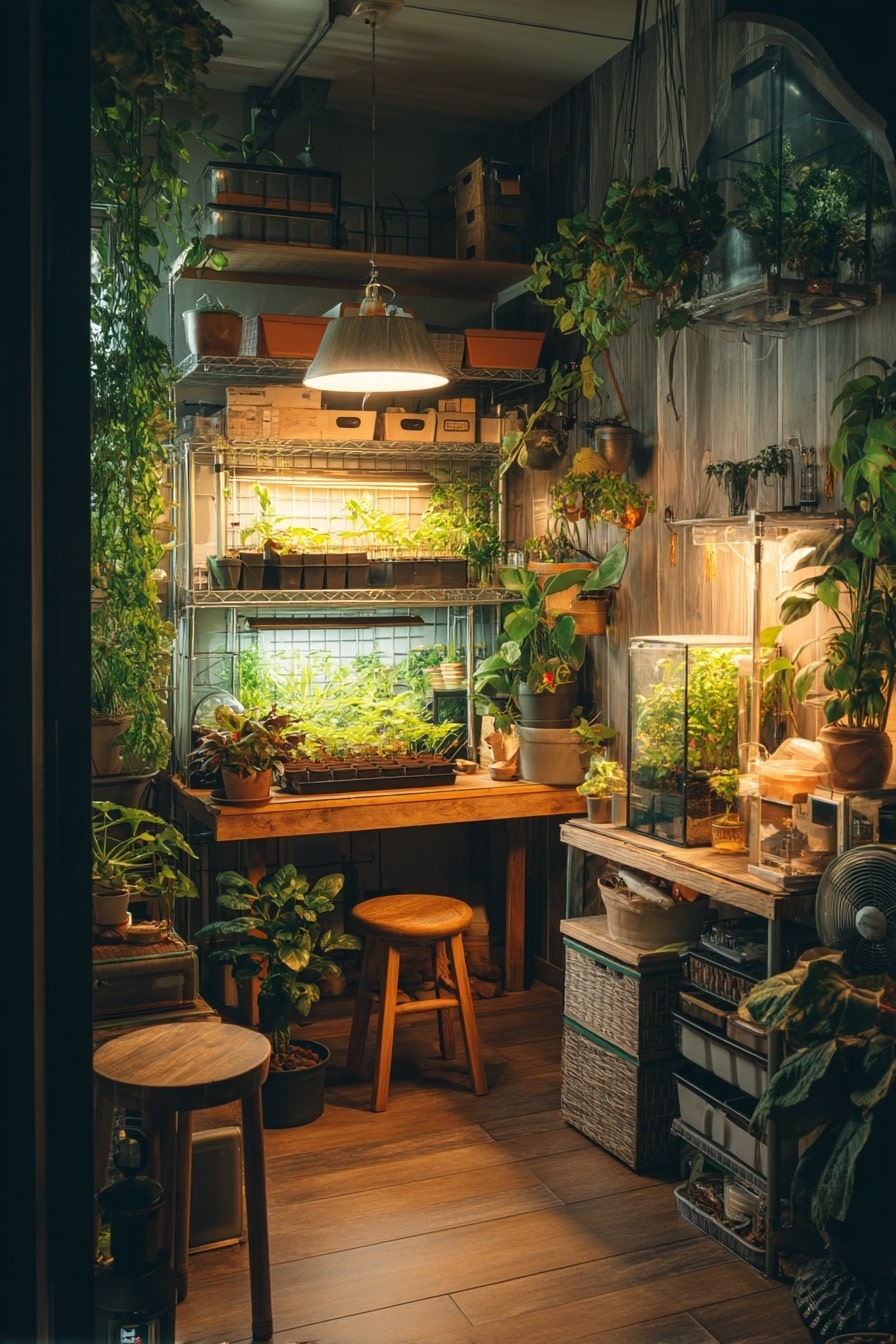
An indoor greenhouse offers a controlled, plant-friendly environment right inside your home—something most indoor spaces simply don’t provide on their own. While your living room may feel cozy to you, for many plants, it’s a harsh and unpredictable place. Dry air, inconsistent temperatures, and low light can all stress your plants, leading to weak growth, pest problems, or even total failure.
Whether you’re starting seeds, growing herbs, or sheltering tender plants through winter, an indoor greenhouse helps stabilize their environment. From humidity to light and airflow, it gives your plants what they need to thrive—even when the outdoor garden is out of commission.
Table of Contents
What Is an Indoor Greenhouse?

An indoor greenhouse is a dedicated space inside your home designed to mimic the favorable growing conditions of a traditional outdoor greenhouse. It provides consistent humidity, temperature, airflow, and lighting—four essentials that most indoor spaces lack for healthy plant growth.
These greenhouses can be as simple as a plastic-covered seed tray or as complex as a full-sized grow tent with lights, fans, and thermostats. What they all share is a common goal: to create a stable environment where plants can flourish year-round, regardless of the weather outside.
Indoor greenhouses are ideal for overwintering tender plants, germinating seeds, or growing herbs and vegetables when outdoor conditions aren’t ideal. They reduce environmental stress, deter pests like spider mites, and help avoid common issues like dry soil and weak seedlings.
Why a Sunny Window Isn’t Enough
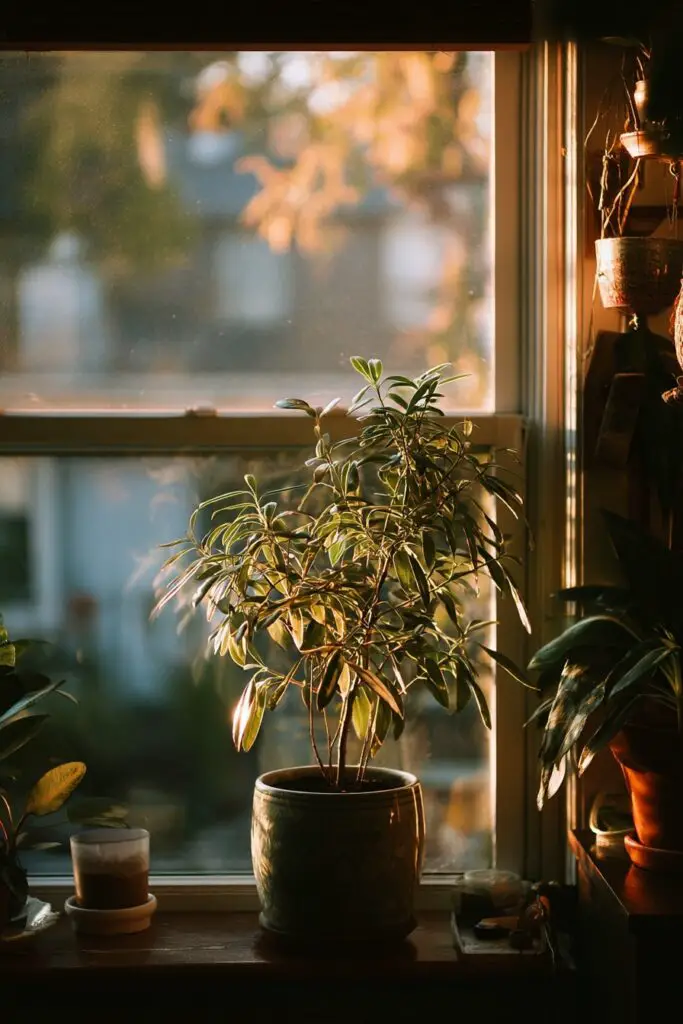
While it might seem like placing your plants on a bright windowsill is enough, most indoor environments fall short of what plants truly need. A south-facing window can help, but even then, it often provides inconsistent light, fluctuating temperatures, and exposure to cold drafts or overheating.
Many plants stretch unnaturally toward the light source, becoming leggy and weak. This is especially common with herbs, vegetables, and other sun-loving species that require strong, direct light for several hours a day.
In winter, window sills often become chilly at night and overheated during the day. These constant changes in temperature and humidity lead to stress, poor structure, and reduced yields—or no growth at all.
An indoor greenhouse allows you to take full control. Instead of relying on weather or window exposure, you can regulate the light, heat, and moisture your plants receive—giving them a much better chance to thrive.
Using Grow Lights and Moving Plants Indoors
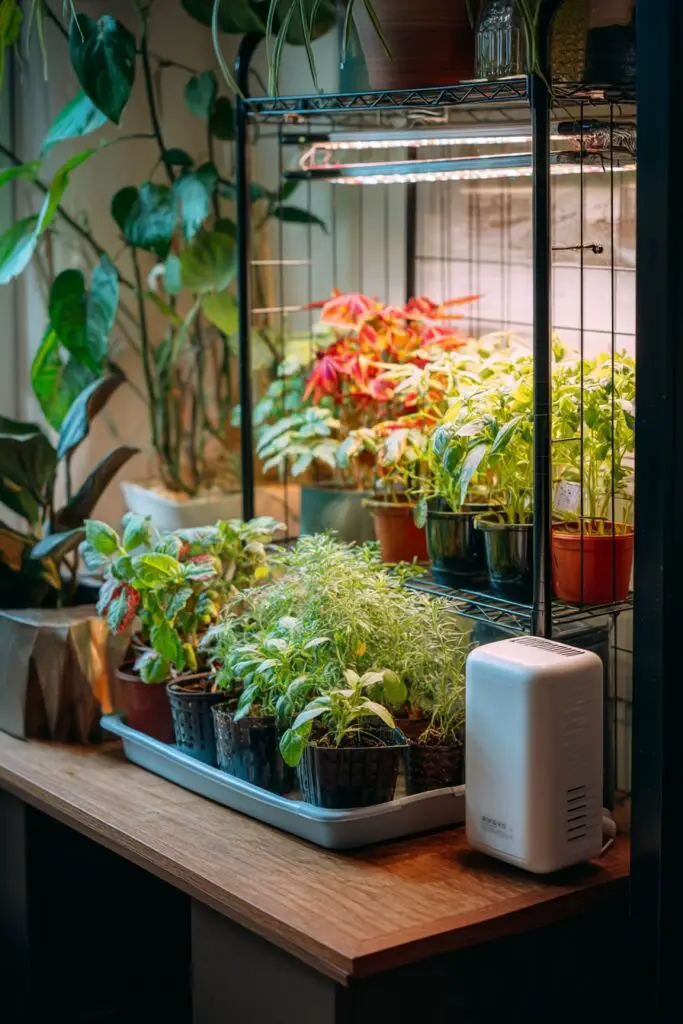
When outdoor conditions shift or natural light becomes unreliable, many gardeners turn to grow lights to supplement or replace sunlight. This is a smart move—but without the support of an indoor greenhouse, plants are still vulnerable to the dry, unpredictable indoor climate.
Every time a door opens or the heating system kicks in, your plants experience temperature changes and airflow disruptions. These constant fluctuations can lead to stunted growth, poor germination, or even pest infestations.
Grow lights help meet the plant’s need for energy, but they don’t solve issues like dry air, low humidity, or uneven temperatures on their own. That’s where an indoor greenhouse setup comes in—it contains warmth and moisture, buffers temperature swings, and creates a more balanced microclimate around your plants.
Pairing grow lights with a greenhouse enclosure provides a more complete solution, helping seedlings develop strong roots and healthy foliage before being moved outdoors.
Small-Scale Indoor Greenhouse Examples
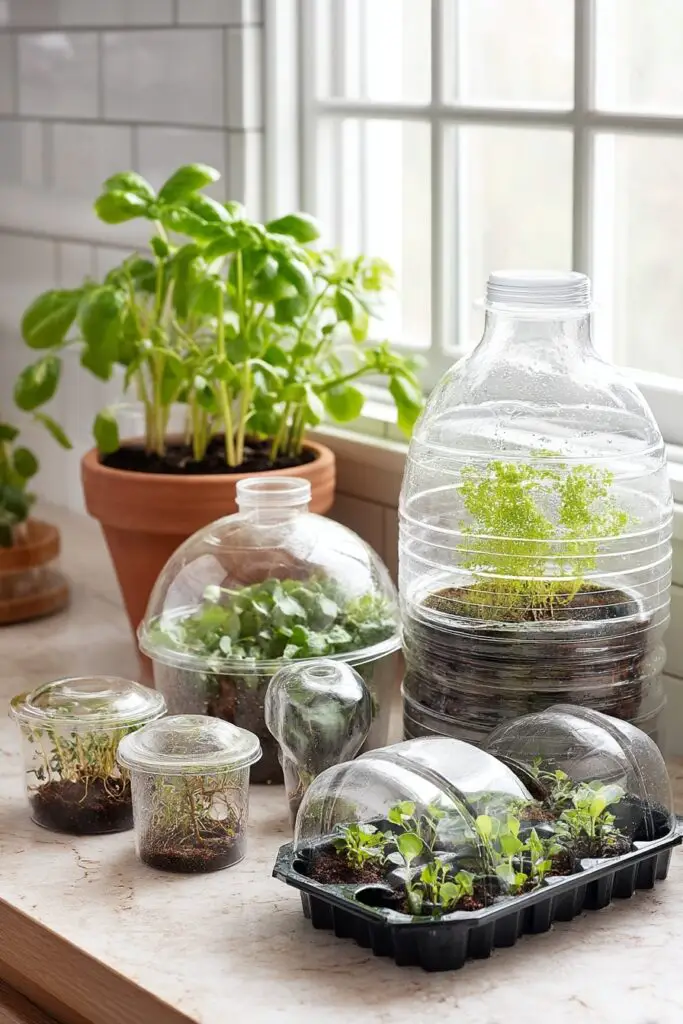
You don’t need a big budget or a lot of space to create a functional indoor greenhouse. In fact, many effective setups can be made from everyday household items.
🥤 1. 2-Liter Bottle Greenhouse
Cut the top off a clear 2-liter soda bottle and place it over a small pot. This traps humidity and warmth, creating a protective dome for germinating seeds or rooting cuttings. Just remember to remove the cap once sprouts emerge to allow fresh air in.
🥡 2. Clamshell Food Containers
Plastic containers from produce or baked goods make perfect mini greenhouses. Place a few rockwool cubes or seed trays inside, close the lid, and you’ve got an instant humidity dome. Add small vents or open the lid slightly once seedlings appear.
🌱 3. Humidity Domes
Seed starter kits often include shallow trays with clear domes. These are designed to maintain moisture and warmth until seedlings outgrow the space. Taller humidity domes are also available and better suited for larger seedlings or plants with rapid vertical growth.
🔥 4. Heating Mats
To help maintain a warm root zone, place a thermostat-controlled heat mat under your setup. This is especially helpful during colder months when room temperatures may be too low for optimal germination.
These small-scale solutions are ideal for windowsills, countertops, or grow racks—and they’re a great starting point for beginners looking to build their first indoor greenhouse without a big investment.
Larger Indoor Greenhouse Setups
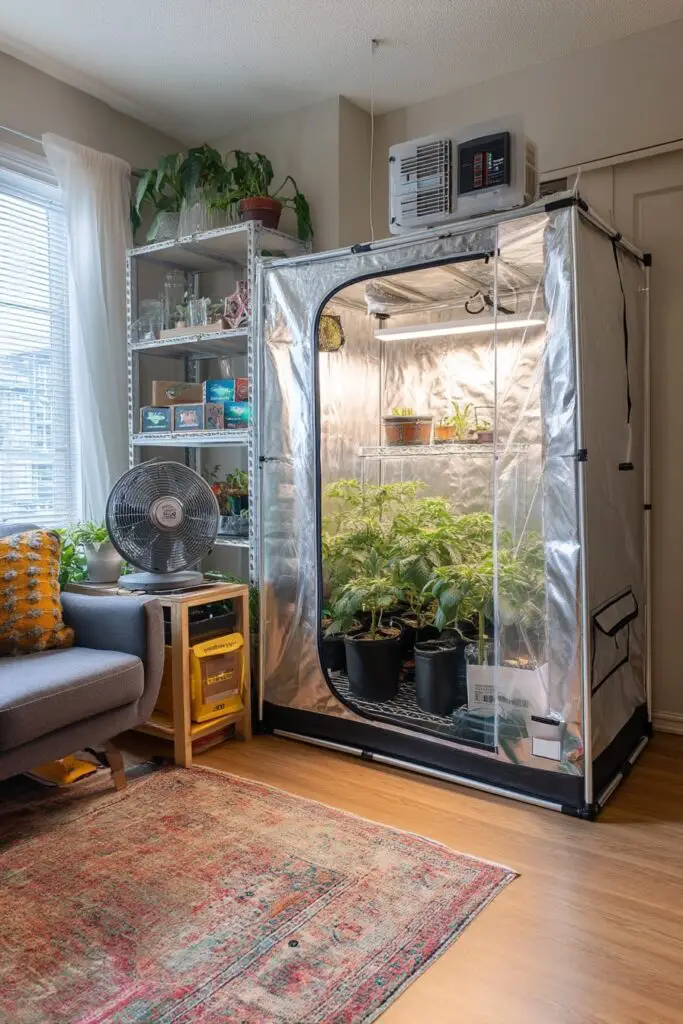
Once your plants outgrow their starter domes or you’re managing multiple trays, it may be time to scale up your indoor greenhouse setup. Larger systems offer better environmental control and support more mature plants or higher quantities of seedlings.
🧺 Grow Rack With Plastic Sheeting
Start with a basic shelving unit and wrap it in clear plastic sheeting to create a greenhouse chamber. This traps humidity and helps maintain stable temperatures around your plants. It’s ideal for seed starting or overwintering herbs and ornamentals.
🌀 Add a Small Fan
Air movement is essential to healthy growth. It prevents mold, strengthens stems, and deters pests like fungus gnats. A personal-sized fan or clip-on model helps circulate air inside the greenhouse without overwhelming tender seedlings.
🌡 Use a Thermostat
Pairing a heat mat with a thermostat allows precise temperature control, especially for germination. Keeping temperatures consistent inside your greenhouse promotes faster growth and reduces plant stress.
🌿 Upgrade to a Grow Tent or Grow Box
For maximum control, a grow tent offers a fully enclosed environment with reflective interiors, adjustable vents, and mounting options for lights and fans. Although often used for hydroponics, they’re equally effective for soil-based gardening. You can also build a custom indoor greenhouse from glass or polycarbonate panels if you prefer something more decorative.
These larger setups are ideal for serious indoor gardeners who want year-round success and better consistency across all growing stages.
Final Thoughts on Indoor Greenhouses
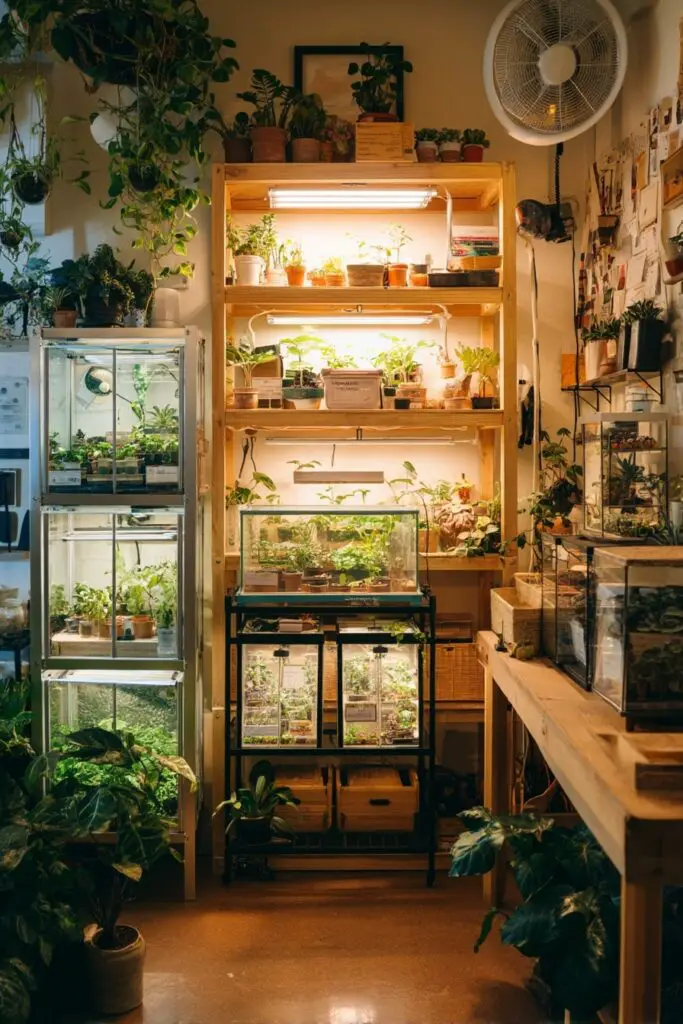
Creating an indoor greenhouse is one of the smartest ways to support healthy plant growth in any season. Whether you’re starting seeds, overwintering tender plants, or growing herbs in a small apartment, a greenhouse setup allows you to control light, temperature, humidity, and airflow—four key elements that most indoor spaces lack.
Start small with DIY materials or dive into a more advanced setup like a grow tent or custom cabinet. As your needs grow, so can your greenhouse. No matter the size or budget, the right indoor greenhouse can transform how—and what—you grow indoors.