
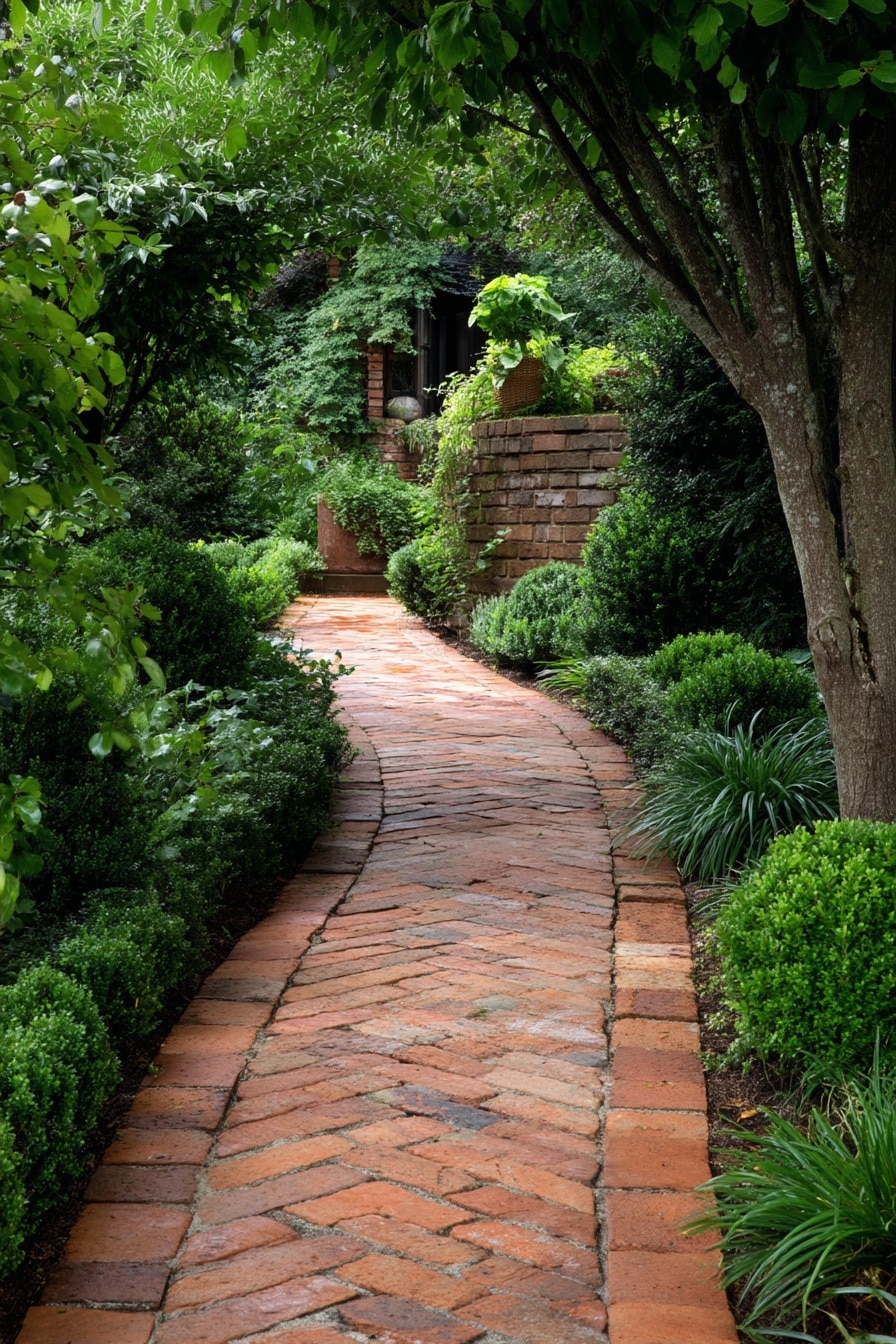
Flagstone walkway designs are a timeless way to add texture, character, and practicality to your outdoor space. The natural beauty of flat stone creates inviting paths that blend seamlessly with planting and hard landscaping alike, making a flagstone walkway both functional and genuinely aesthetic in gardens, courtyards, and front entryways alike. Whether you favour classic symmetry or more informal rustic charm, the right paving approach can completely transform how people move through and experience your plot.
Table of Contents
1. Unify steps and paths with matching flagstones

Choosing a consistent stone palette for your flagstone walkway and any accompanying steps can provide a cohesive continuity in your garden’s design. Using the same flagstone material throughout — whether on gently curving paths through planting beds or leading up terraced levels — ties disparate parts of your landscape together. Neutral hues such as pale greys or soft tans allow surrounding greenery and blooms to take centre stage.
Tips for success:
- Select flagstones that complement your home’s exterior colour.
- Position subtle lighting along the route to highlight textures after dusk.
- Link with patios or walls built from the same stone for a unified look.
2. Use contrasting edging to frame your walkway
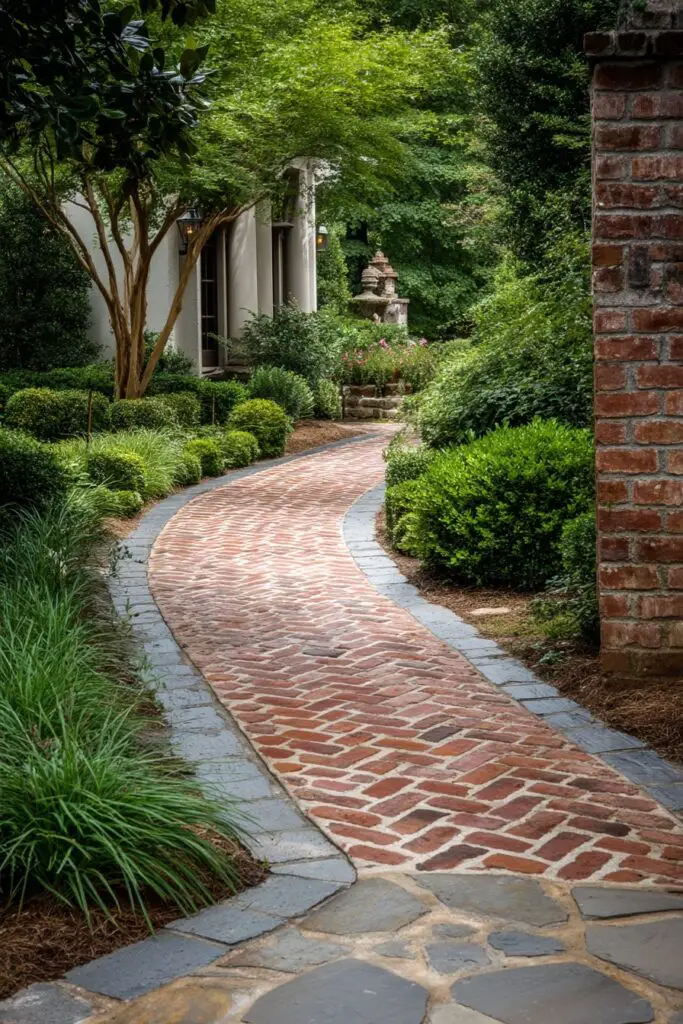
One effective approach to make a flagstone walkway stand out is to edge it with contrasting materials such as clay pavers or brick. The rich tones and uniform lines of traditional bricks provide a beautiful counterpoint to irregular, natural stone shapes. This design not only highlights each stone’s unique colour and texture but also brings structure and definition to the path, ideal in cottage or formal garden settings.
Consider:
- Using reclaimed bricks for added character.
- Narrow edging to gently accentuate pathways without overpowering the stone.
- Complementing with low planting along the borders.
3. Create visual interest with irregular or mosaic layouts
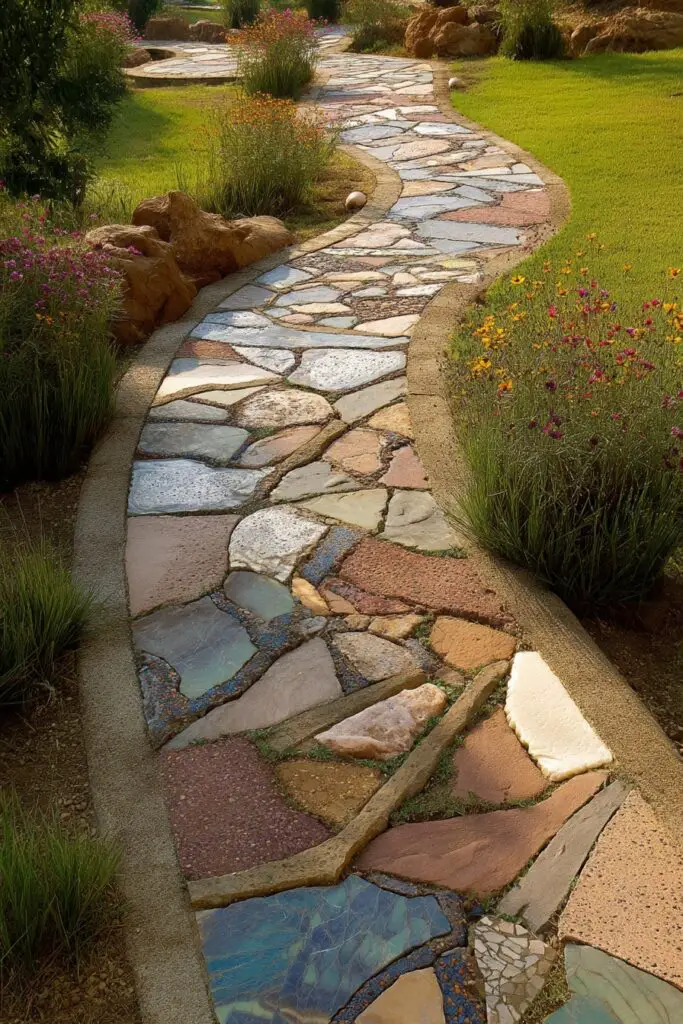
A playful and artistic way to approach your flagstone walkway is by embracing irregular shapes and mixed materials. Arranging flagstones in a mosaic-like pattern can make a path feel bespoke and visually rich. This is especially effective where stones of varying colours and sizes create rhythm and flow, turning a simple garden route into a standout feature.
Design ideas:
- Combine flagstone with gravel or slate chips between pieces.
- Use a broader palette of materials to tie into surrounding plant colours.
- Keep the base level and well-packed to ensure a stable surface.
4. Play with edges for personality
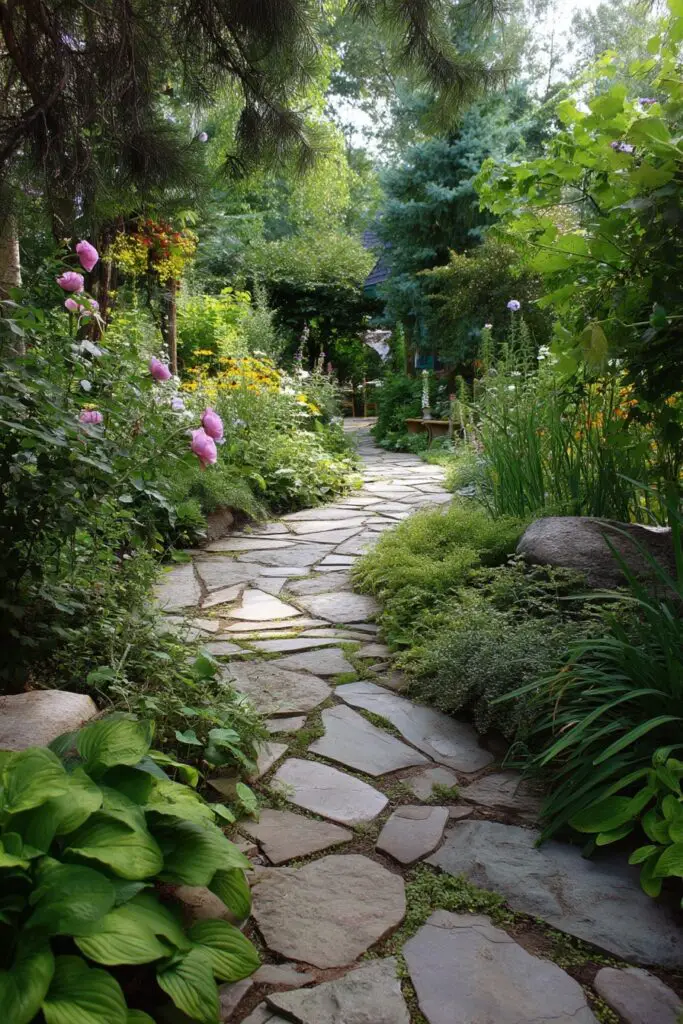
Your flagstone walkway doesn’t need to be rigid or symmetrical to be effective. Allowing flagstone edges to stagger or follow a loosely curved line adds personality and blends naturally with surrounding planting or lawns. Irregular edges help soften transitions between hard and soft landscaping, creating a more relaxed feel. Plant ground covers or low grasses close to the edges to enhance this effect.
Pro tips:
- Avoid overly complex zig‑zags — subtle curves feel more organic.
- Choose materials that sit well within the garden style (modern vs. cottage).
5. Enhance the experience with surrounding planting
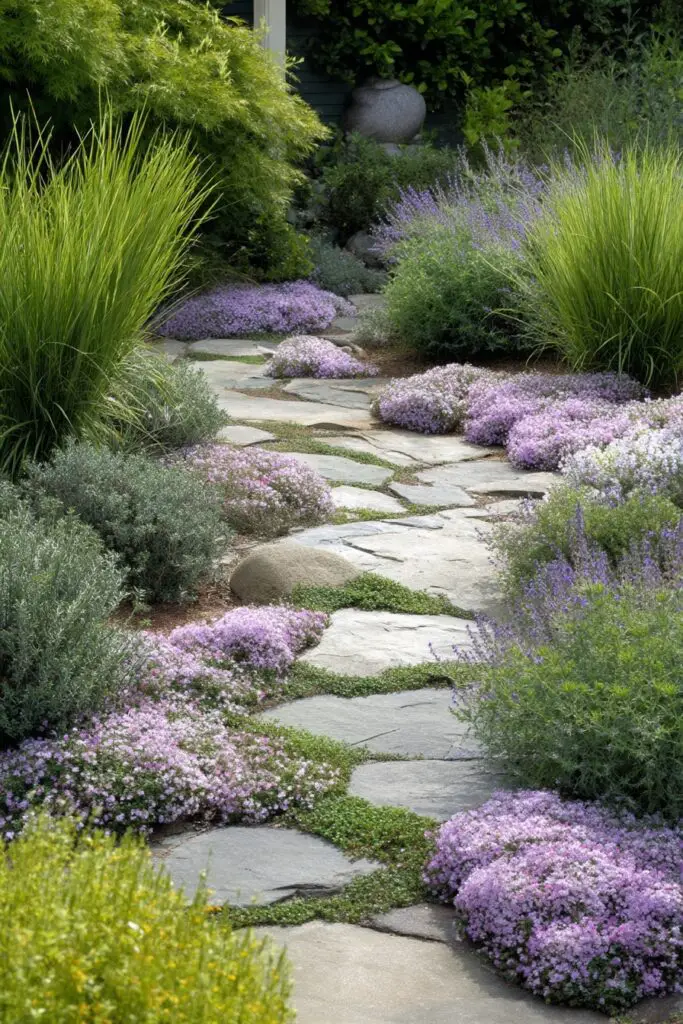
A flagstone walkway becomes even more inviting when flanked by thoughtful planting. Low‑growing perennials, ornamental grasses, or aromatic herbs soften edges and add sensory appeal. Strategically placed mid‑height shrubs or accent trees can frame a path and guide the eye, helping to visually connect different zones of your plot.
Planting ideas:
- Creeping thyme or thyme varieties between stones for scent and soft colour.
- Lavender for structure and seasonal interest.
- Ornamental grasses to add movement beside stone edges.
Conclusion
A flagstone walkway is more than just a path — it’s a design opportunity that bridges style and function. Whether you prefer clean lines with matching steps, creative mosaic layouts, or nature‑embraced edges filled with planting, thoughtful stone placement can elevate your garden’s flow and charm. Remember to consider accessibility, surrounding features, and overall landscape style when planning your route.