
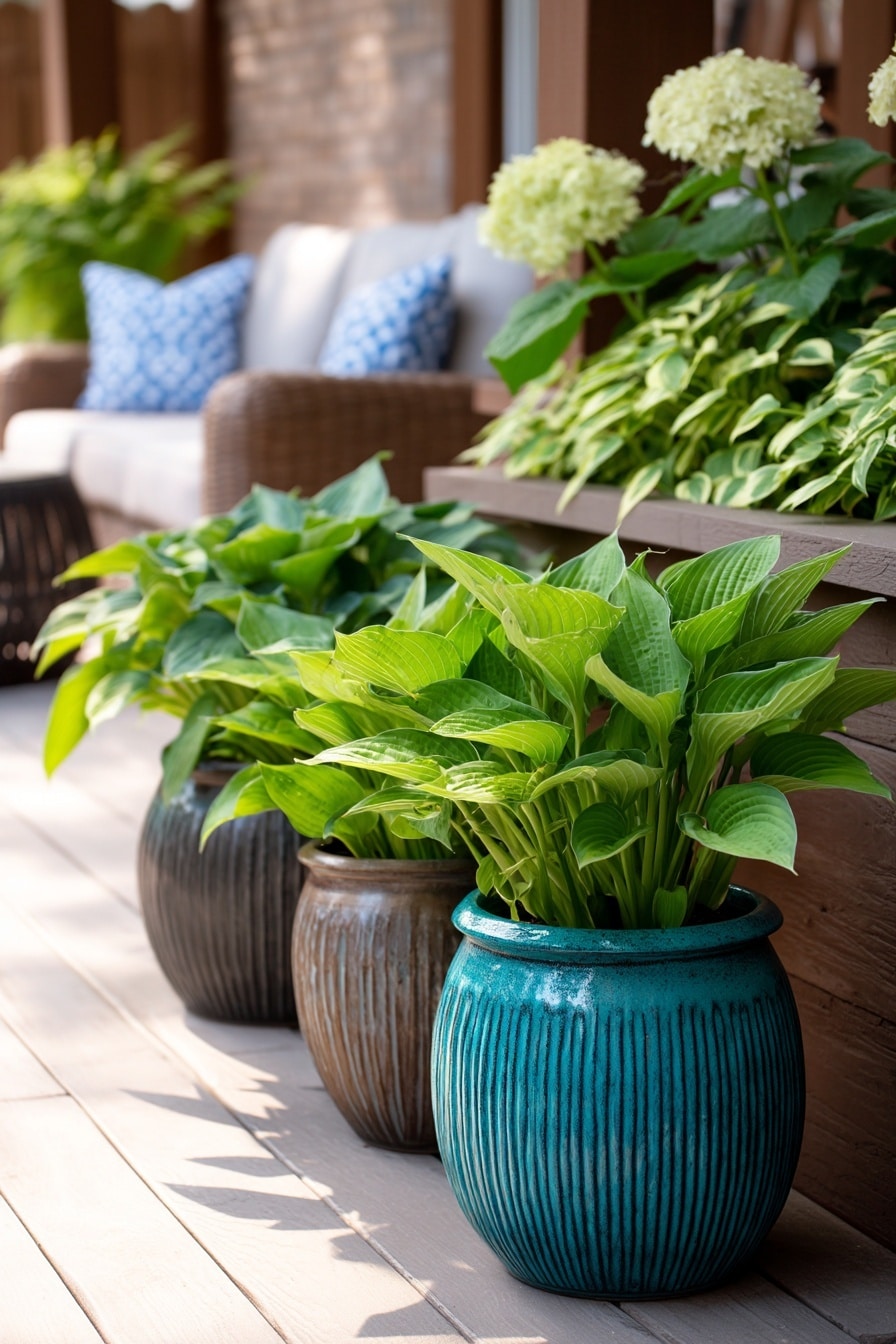

Hostas are one of the most reliable and versatile plants you can grow in a shade garden. Known for their lush foliage, wide range of colors, and easy-care nature, hostas bring structure and calm beauty to outdoor spaces. Whether you have a small corner or a full landscape to design, hostas can play a major role in shaping the look and feel of your garden.
Gardeners value hostas for their adaptability and ability to pair well with other plants. From bold statement pieces to subtle ground covers, hostas offer endless design possibilities. In this guide, you’ll learn practical and creative ways to use hostas effectively while keeping your garden balanced and visually appealing.
Table of Contents
1. Use Hostas as a Lush Ground Cover

One of the easiest ways to design with hostas is by using them as ground cover in shaded areas. Their dense foliage spreads over time, helping to suppress weeds and fill empty spaces naturally.
Planting hostas in groups creates a soft, carpet-like effect that makes garden beds look fuller. Choose varieties with similar growth habits for a uniform look, or mix sizes for a layered effect.
For best results:
- Space plants according to their mature size
- Use mulch to retain moisture
- Water regularly, especially in dry periods
This method works well under trees or along shaded pathways where grass struggles to grow.
2. Create Contrast With Different Hosta Varieties

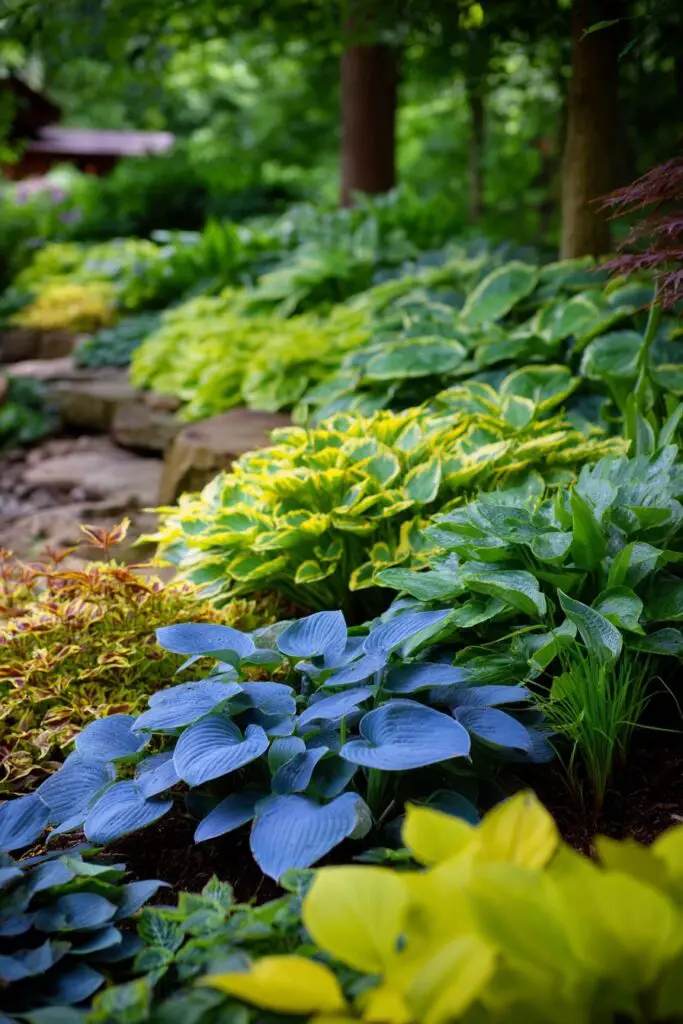
Designing with hostas becomes more interesting when you mix different leaf shapes, colors, and sizes. Some varieties feature deep green leaves, while others display blue tones or bright chartreuse hues.
By combining contrasting hostas, you can create visual depth without relying on flowers. Large-leaf hostas can serve as focal points, while smaller varieties fill in the gaps.
Try pairing:
- Blue-toned hostas with golden varieties
- Large leaves with narrow or ruffled types
- Variegated hostas with solid-colored ones
This approach adds texture and keeps the garden visually engaging throughout the season.
3. Frame Walkways and Garden Borders

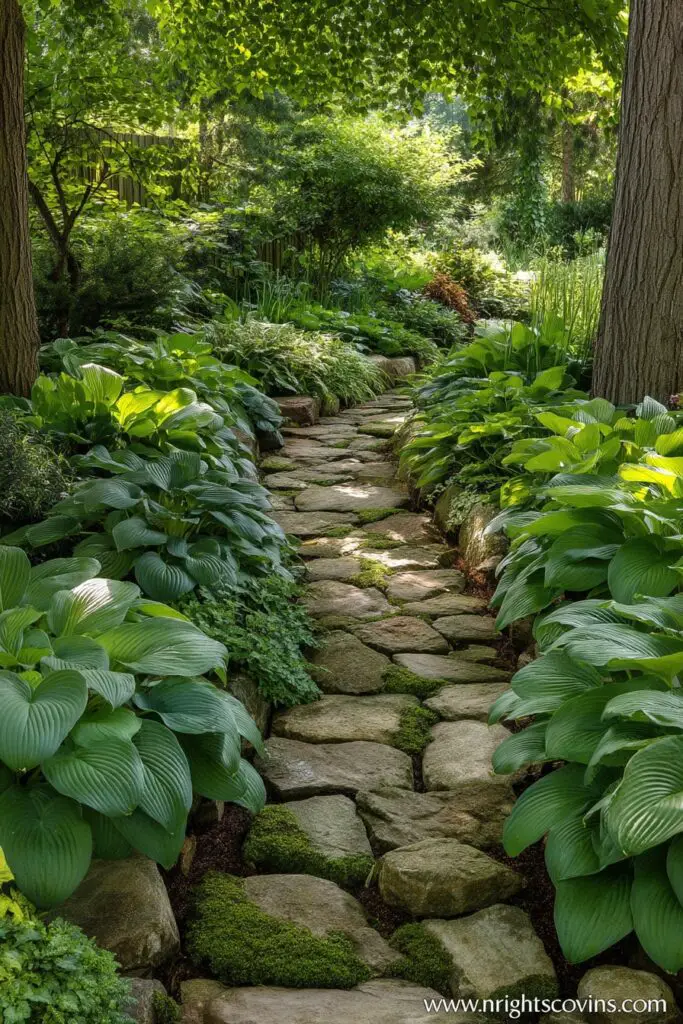
Hostas are perfect for lining walkways and defining garden edges. Their neat mounding shape creates a clean and organized look without much maintenance.
Planting hostas along paths helps guide movement through the garden while softening hard edges like stone or concrete. Medium-sized varieties work best for borders, as they provide structure without overwhelming the space.
Tips for border planting:
- Keep spacing consistent for a tidy appearance
- Choose varieties with similar height
- Combine with edging materials like stones or bricks
This technique enhances both function and aesthetics in your landscape.
4. Pair Hostas With Companion Plants
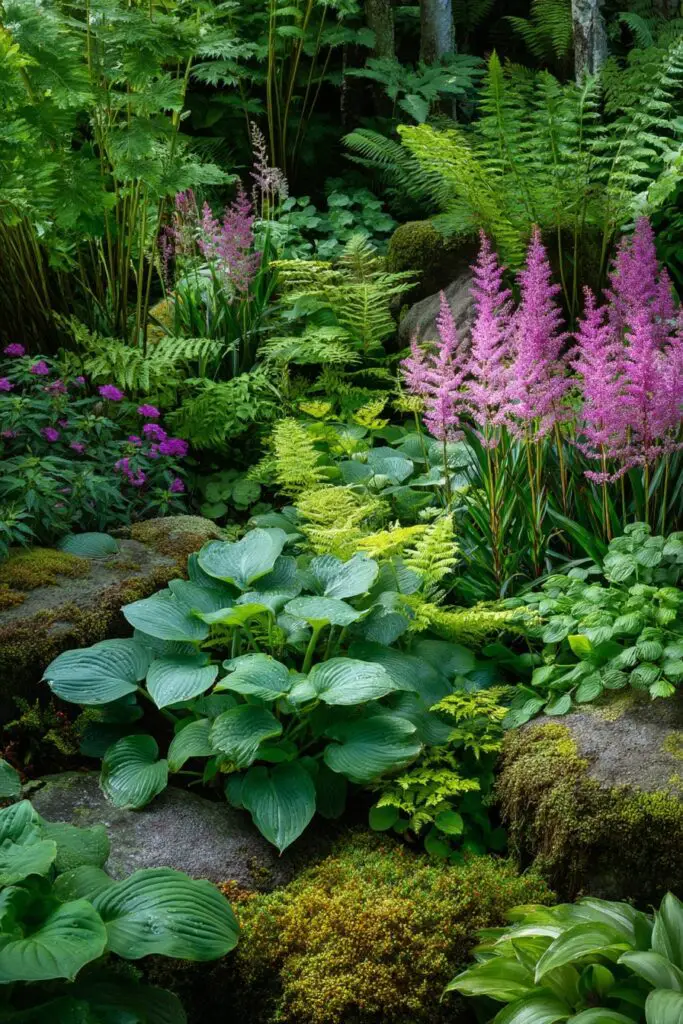
Another effective way to design with hostas is by combining them with other shade-loving plants. Their broad leaves contrast beautifully with finer textures, creating a balanced planting scheme.
Good companion plants include:
- Ferns for soft, feathery texture
- Heuchera for color variation
- Astilbe for seasonal blooms
When paired thoughtfully, hostas act as a backdrop that allows other plants to stand out while still maintaining harmony.
You might also consider linking to related topics on your site, such as:
- Shade garden plant ideas
- Low-maintenance landscaping tips
- Best perennials for beginners
5. Use Hostas in Containers for Flexible Design

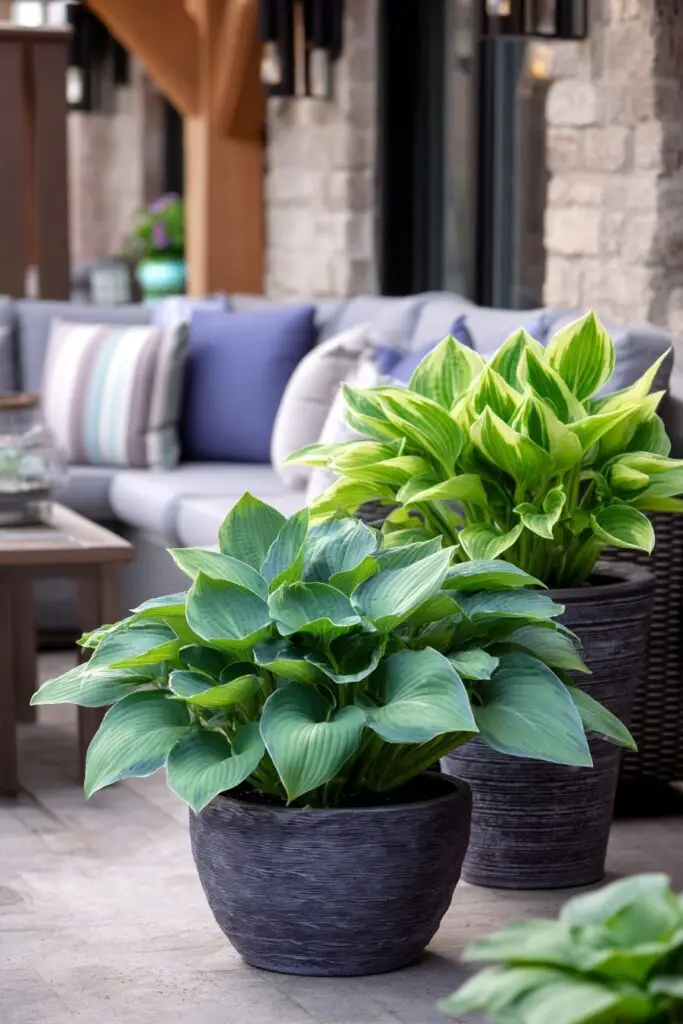
Hostas aren’t limited to garden beds—they also thrive in containers. This makes them ideal for patios, decks, and small spaces.
Growing hostas in pots allows you to move them around to adjust your design as needed. Choose containers with good drainage and use high-quality potting soil to keep plants healthy.
Container design ideas:
- Mix hostas with trailing plants
- Use a single large hostas as a focal point
- Group multiple pots for layered height
This method adds flexibility and works well for renters or gardeners with limited space.
Conclusion
Hostas offer a simple yet powerful way to improve the look of any shade garden. By using them as ground cover, mixing varieties, framing walkways, pairing with companions, or planting in containers, you can create a space that feels cohesive and inviting. With minimal care and maximum visual impact, hostas remain a favorite choice for gardeners of all skill levels.