
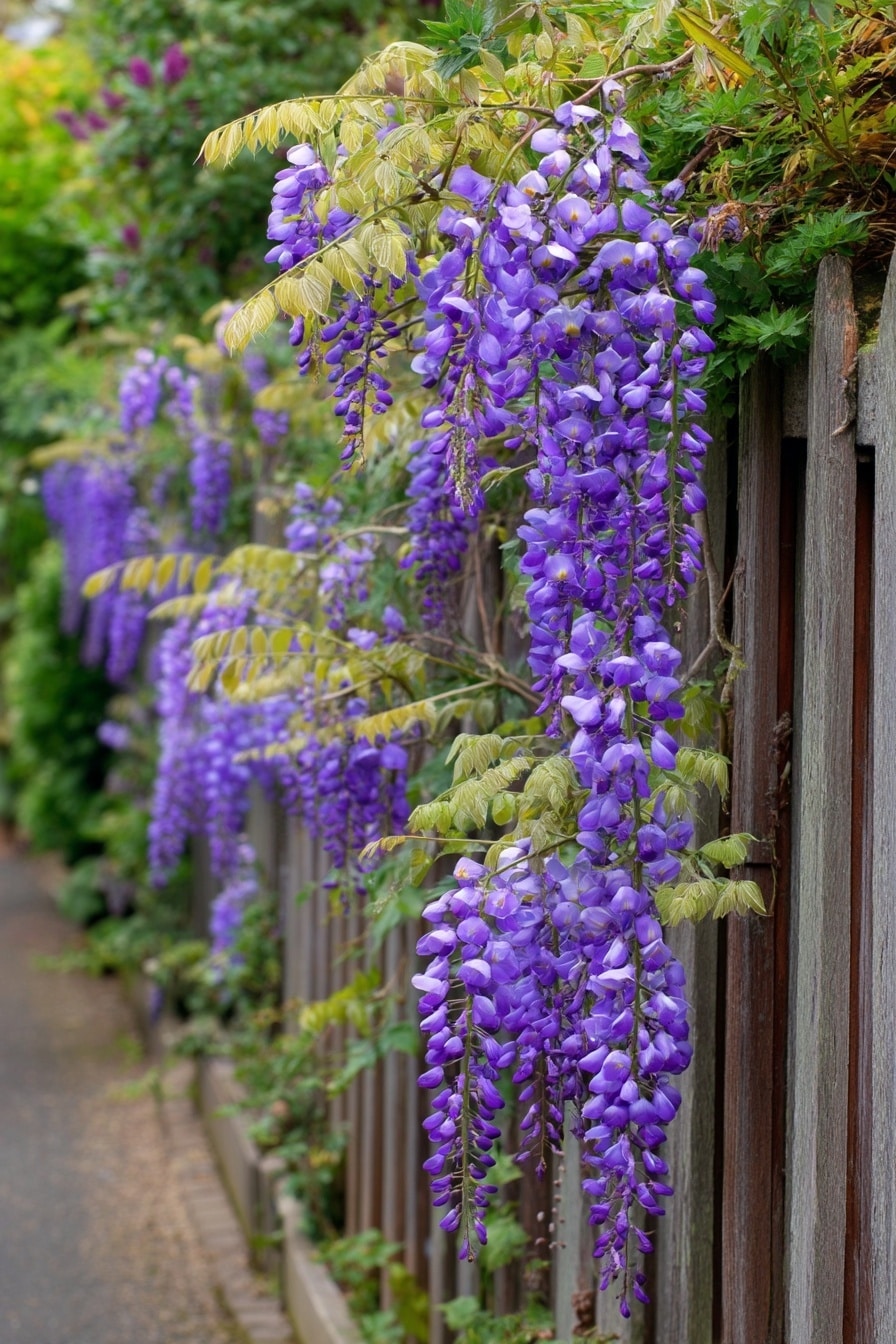
Wisteria trellis ideas are an excellent way to showcase the beauty and elegance of wisteria in your garden. With its cascading flowers and vigorous growth, training wisteria to climb a trellis or pergola can create a breathtaking focal point in your outdoor space. Whether you’re aiming for a picturesque garden entrance or a shady retreat, there are several techniques to help wisteria thrive and climb gracefully up various supports. In this article, we’ll explore five effective ways to train wisteria, ensuring it flourishes in style.
Table of Contents
1. Using a Wisteria Pergola for Maximum Impact

A wisteria pergola offers a stunning way to display this climber, with its flowers hanging beautifully from the roof. The pergola not only provides structural support for the plant but also offers the benefit of added shade. To train wisteria on a pergola, position the plant about 20cm away from the base and use wire ties to guide the shoots upwards. Once the plant reaches the pergola roof, prune to encourage branching. Over time, the wisteria will cover the structure, offering a lovely shaded area below.
Design Tips:
- Ensure the pergola is sturdy enough to handle the weight of the mature plant.
- Regularly prune to keep the growth controlled and promote abundant blooms.
2. Training Wisteria on a House Wall

Training wisteria on a house wall is a great way to add vertical interest to your home’s exterior. South- or west-facing walls work best to ensure the plant gets enough sunlight. Install horizontal steel wires on the wall to guide the plant’s growth. Be sure to tie the vertical shoots to the wires as they grow, and regularly prune to avoid structural damage to your home, such as blocked windows or damaged roof tiles.
Pro Tips:
- Check the plant regularly to ensure it doesn’t interfere with windows or gutters.
- Use sturdy, tensioned steel wires to support the plant’s weight.
3. Creating a Beautiful Archway with Wisteria
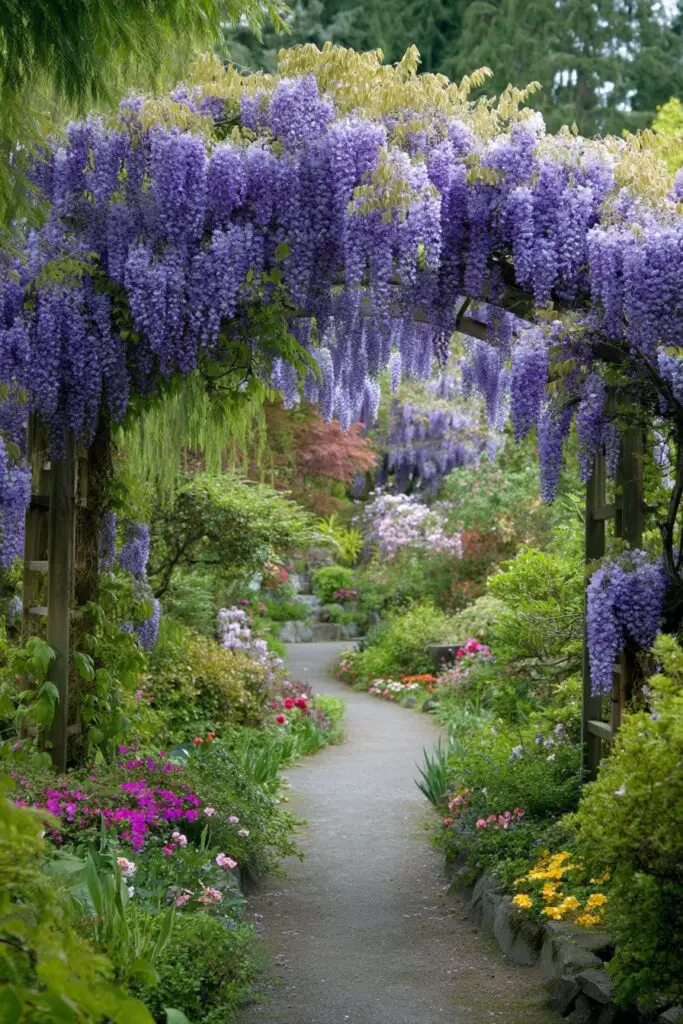
Training wisteria to climb over an arch creates a stunning garden feature. The cascading flowers from the arch provide a dramatic and romantic touch to any outdoor space. To train wisteria on an arch, position the plant near the base and tie the shoots to vertical supports. As the plant grows, guide the branches along the arch and regularly prune to maintain its shape and ensure healthy growth.
Design Considerations:
- Choose a strong, robust arch to support the plant’s mature size.
- Prune consistently to maintain the structure and encourage healthy flowering.
4. Espalier Wisteria for Compact Spaces
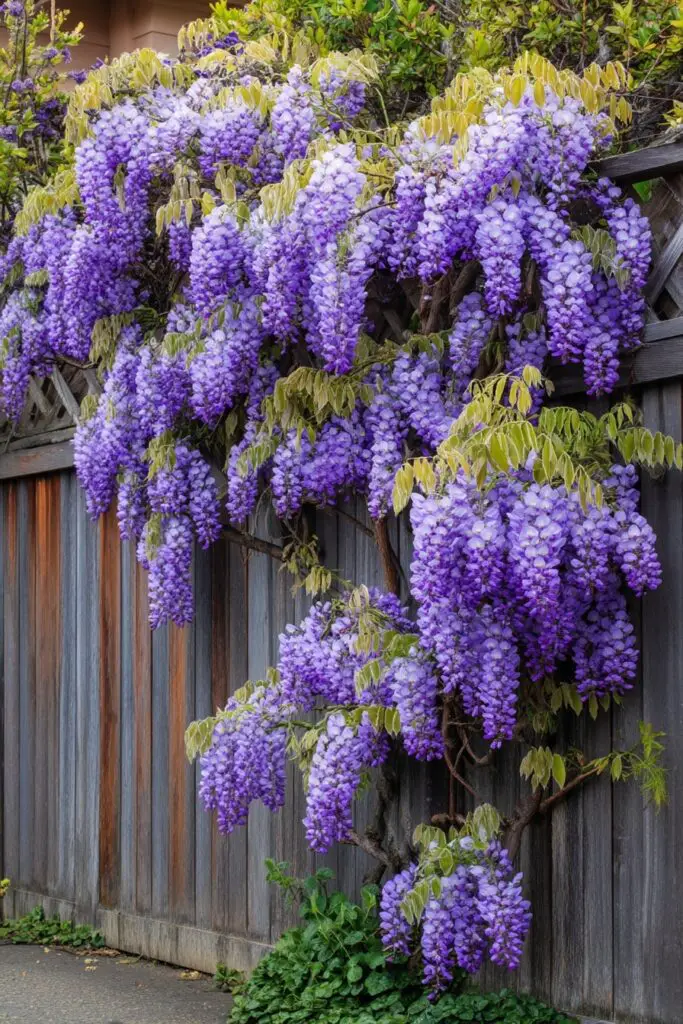
Espalier training involves growing plants flat against a structure, which is perfect for smaller spaces. This technique can be used to train wisteria along fences, walls, or even the side of a shed. Install horizontal wires and tie the branches as they grow, ensuring the plant is directed along the flat surface.
Benefits:
- Ideal for small gardens or limited space.
- Allows for easy maintenance and pruning, keeping the plant under control.
5. Wisteria on Fences for Vertical Beauty
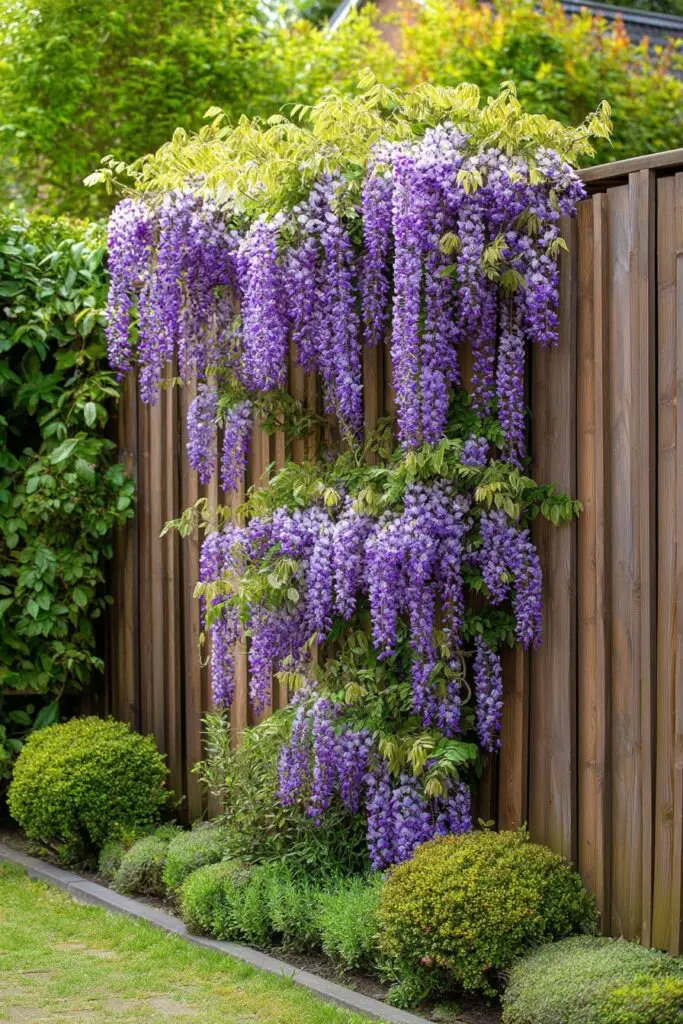
Fences make excellent supports for wisteria, especially if you’re looking for a vertical garden solution. Use strong trellises or wires on a fence to guide the wisteria upward. Regular pruning will prevent the plant from becoming too invasive and help shape it to grow neatly along the structure.
Tips for Success:
- Install a sturdy fence or trellis system.
- Train and prune consistently to maintain a tidy appearance.
Conclusion
Training wisteria to climb up a trellis, pergola, or wall can dramatically enhance your garden’s beauty and provide a striking focal point. Whether you choose a pergola for shade, an arch for a romantic entrance, or a fence for vertical interest, wisteria is a versatile and stunning addition to any garden. By following these techniques and maintaining regular pruning, you’ll enjoy flourishing wisteria blooms season after season.