
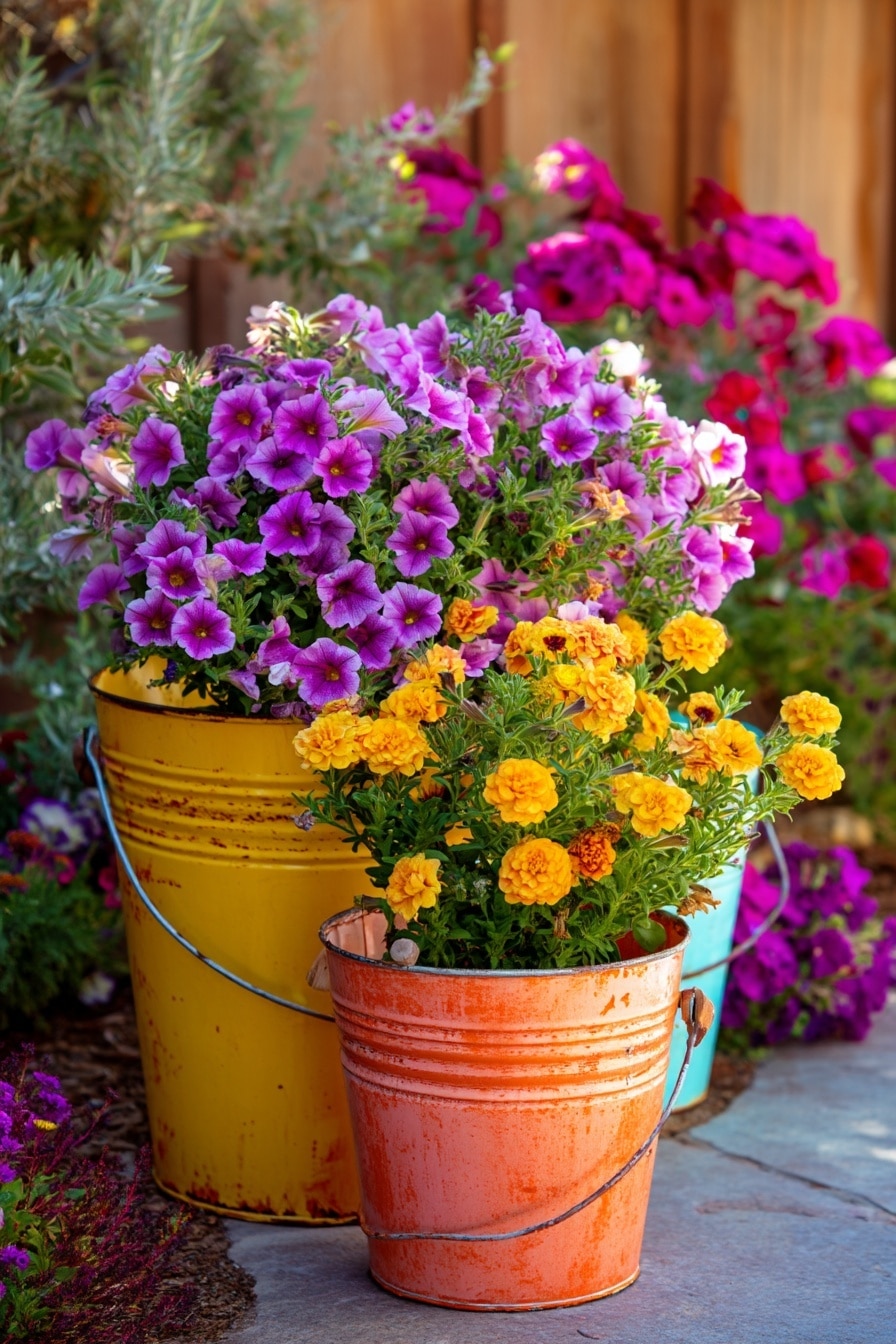
Bucket gardening is one of the easiest ways to grow plants in small spaces without needing a traditional garden bed. Whether you live in an apartment, have limited yard space, or just want a flexible gardening setup, bucket gardening offers a simple and affordable solution.
With just a few containers, some soil, and the right plants, you can create a thriving DIY garden almost anywhere. Bucket gardening is especially useful for beginners because it’s low-cost, portable, and easy to manage. In this guide, you’ll find practical ideas to help you turn ordinary buckets into a productive and attractive garden.
Table of Contents
1. Grow Vegetables in Buckets

One of the most popular bucket gardening ideas is growing fresh vegetables right at home. Buckets provide enough depth for many crops, making them ideal for small-scale food production.
Best Vegetables for Bucket Gardening
- Tomatoes
- Peppers
- Lettuce
- Spinach
- Radishes
Choose buckets that hold at least 5 gallons for larger plants like tomatoes. Proper drainage is essential, so drill holes at the bottom to prevent water buildup.
Tips for Success
- Use high-quality potting mix instead of garden soil
- Place buckets where they receive 6–8 hours of sunlight
- Water consistently, as containers dry out faster
This type of bucket gardening helps you enjoy fresh produce even in tight spaces.
2. Create a Herb Garden in Buckets
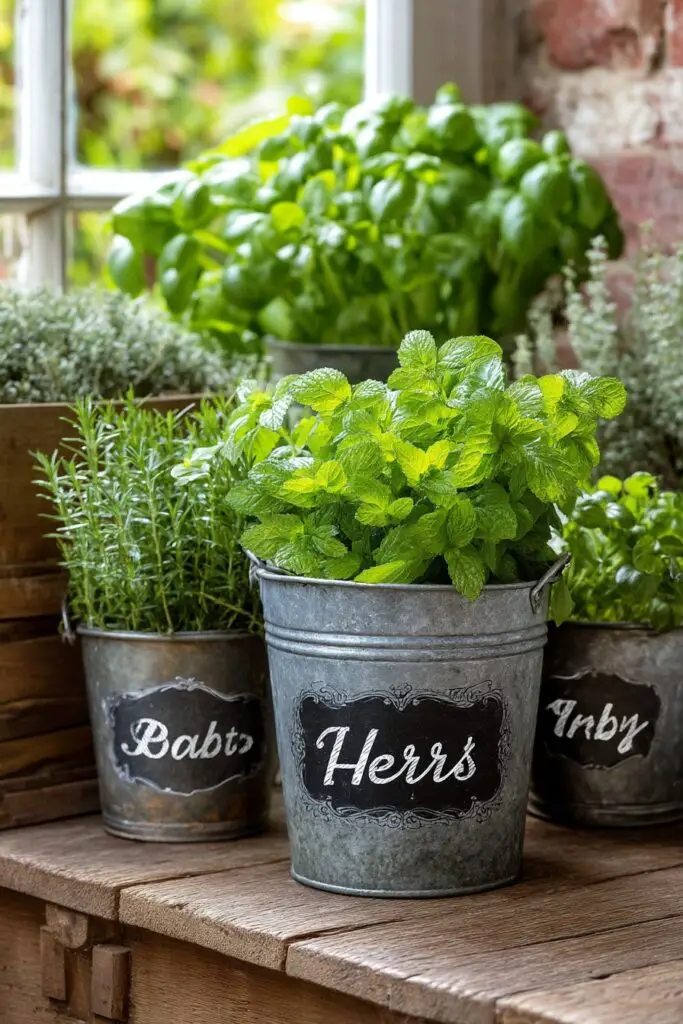
Bucket gardening works perfectly for herbs because they don’t require much space and grow well in containers.
Ideal Herbs for Buckets
- Basil
- Mint
- Parsley
- Thyme
- Rosemary
You can keep your herb buckets near your kitchen door for easy access while cooking.
Design Ideas
- Paint buckets for a decorative touch
- Label each herb for easy identification
- Arrange them in rows or tiers
A herb-based bucket gardening setup adds both function and style to your outdoor area.
3. Build a Vertical Bucket Garden
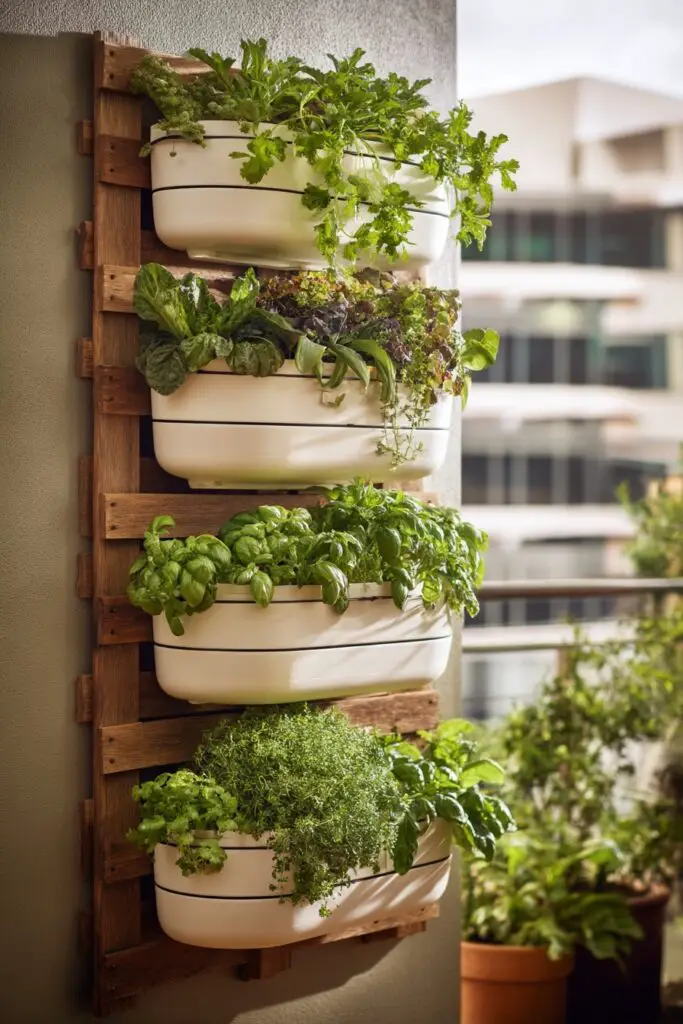
If space is limited, vertical bucket gardening is a smart solution. By stacking or hanging buckets, you can grow more plants without taking up ground space.
Vertical Setup Options
- Stack buckets with support frames
- Hang buckets on walls or fences
- Use tiered stands
Benefits
- Saves space
- Improves air circulation
- Makes watering and harvesting easier
This bucket gardening method is ideal for balconies, patios, and small yards.
4. Use Buckets for Flower Displays
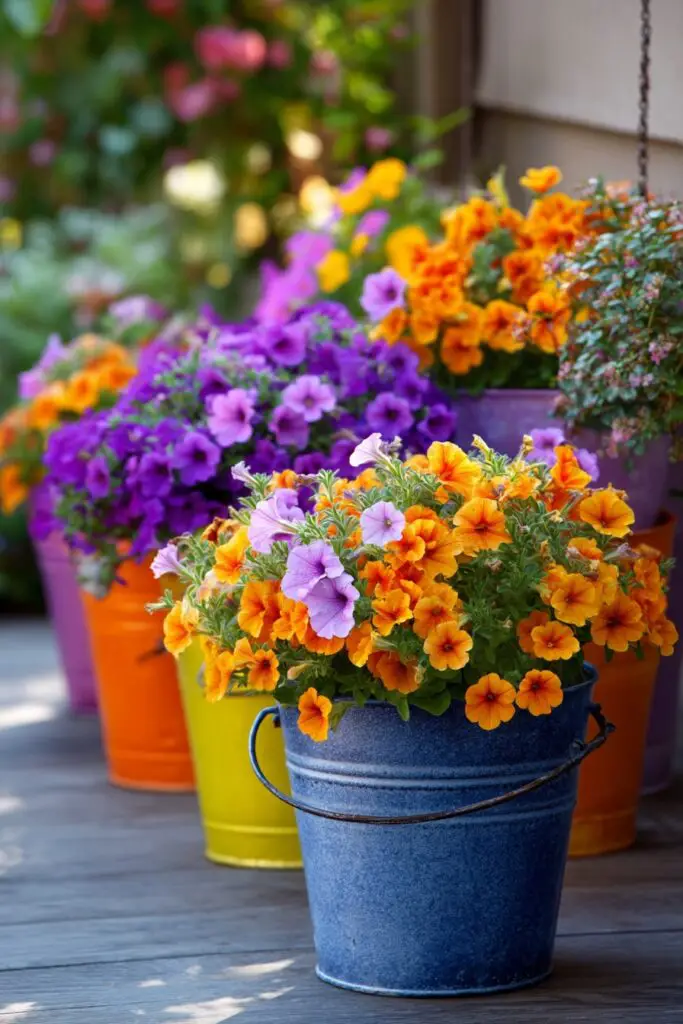
Bucket gardening isn’t just for food—you can also create beautiful flower arrangements to brighten your space.
Great Flowers for Buckets
- Petunias
- Marigolds
- Geraniums
- Pansies
Styling Tips
- Mix different flower colors for visual appeal
- Use decorative buckets or paint them
- Place buckets near entryways or pathways
Flower-based bucket gardening adds color and charm while keeping maintenance simple.
5. Set Up a Self-Watering Bucket System
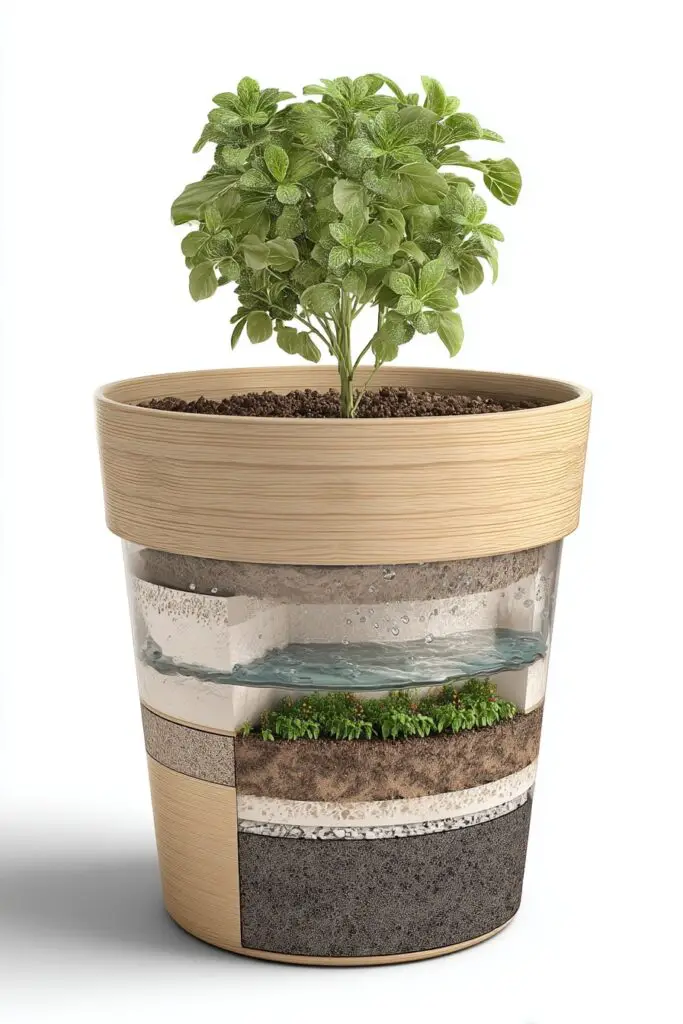
For a more efficient approach, try a self-watering bucket gardening system. This method reduces the need for frequent watering and keeps plants hydrated.
How It Works
- A water reservoir sits at the bottom of the bucket
- Soil absorbs moisture through a wicking system
- Plants get consistent hydration
Advantages
- Saves time and effort
- Prevents overwatering
- Supports healthy plant growth
Self-watering setups make bucket gardening more convenient, especially in hot climates.
Conclusion
Bucket gardening is a practical and creative way to grow plants in any space. From vegetables and herbs to flowers and vertical setups, there are many ways to make the most of this simple method. With a little planning and care, bucket gardening can turn even the smallest area into a productive and enjoyable garden.