
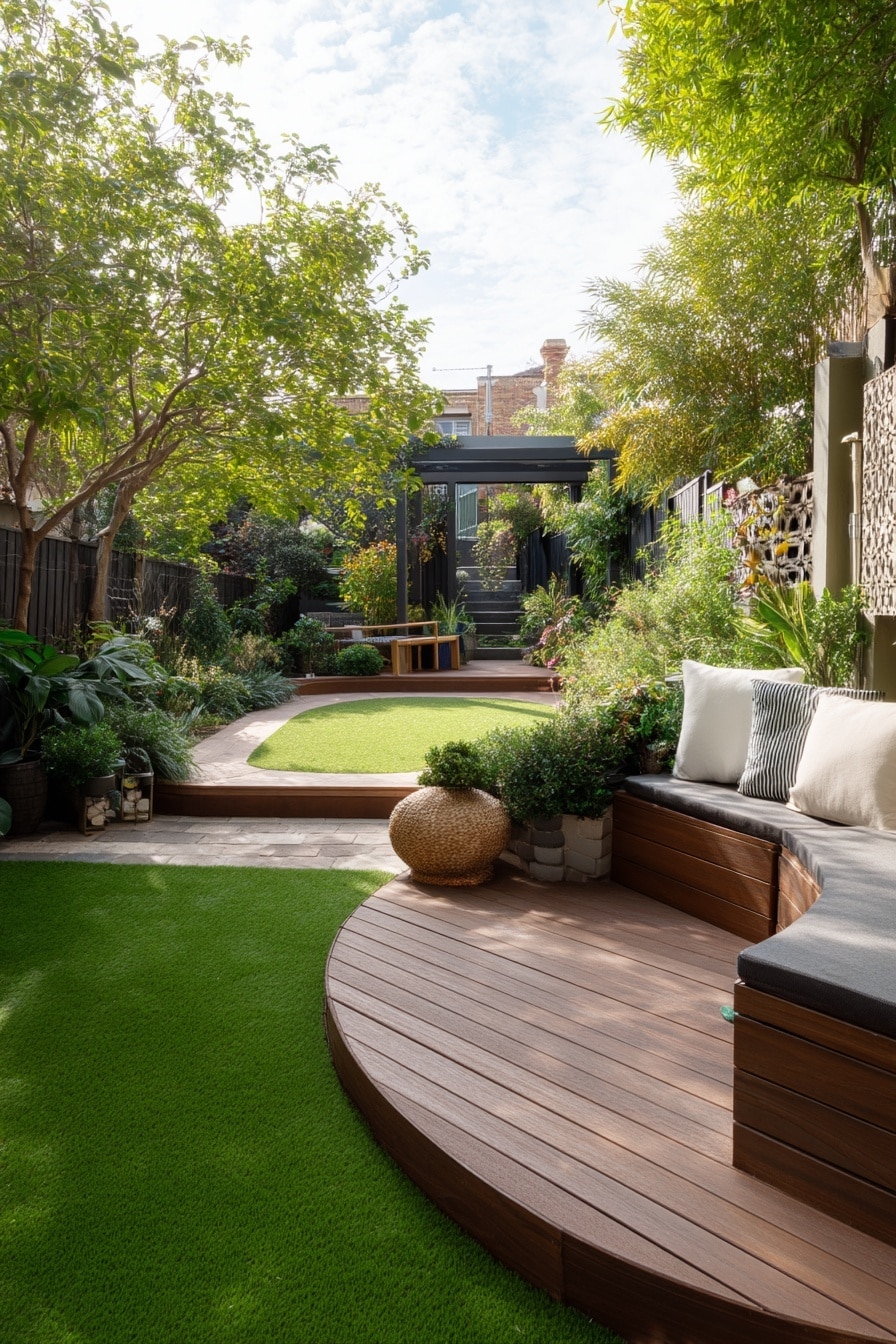
small backyard design can feel challenging at first, but with the right layout strategy, even the most compact yard can become functional, stylish, and inviting. A well-planned small backyard doesn’t rely on size — it relies on smart zoning, vertical thinking, and thoughtful furniture placement.
If your small backyard feels cramped or underused, the solution often lies in rearranging space rather than expanding it. Below are five practical layout ideas that help you maximize every square foot while keeping your outdoor area beautiful and easy to maintain.
Table of Contents
1. Create Clear Zones in Your Small Backyard

The most effective way to organize a small backyard is to divide it into purposeful zones.
Even limited square footage benefits from structure. Instead of treating the yard as one open area, break it into defined sections such as:
- A dining corner
- A lounging area
- A planting zone
- A pathway or transition space
Use outdoor rugs, gravel changes, or low planters to visually separate areas without building solid walls.
In a small backyard, zoning prevents clutter and gives each area a clear function. This makes the space feel intentional rather than crowded.
Tip: Keep walkways at least 24 inches wide to maintain comfortable flow.
2. Use Vertical Space to Free Up Ground Area
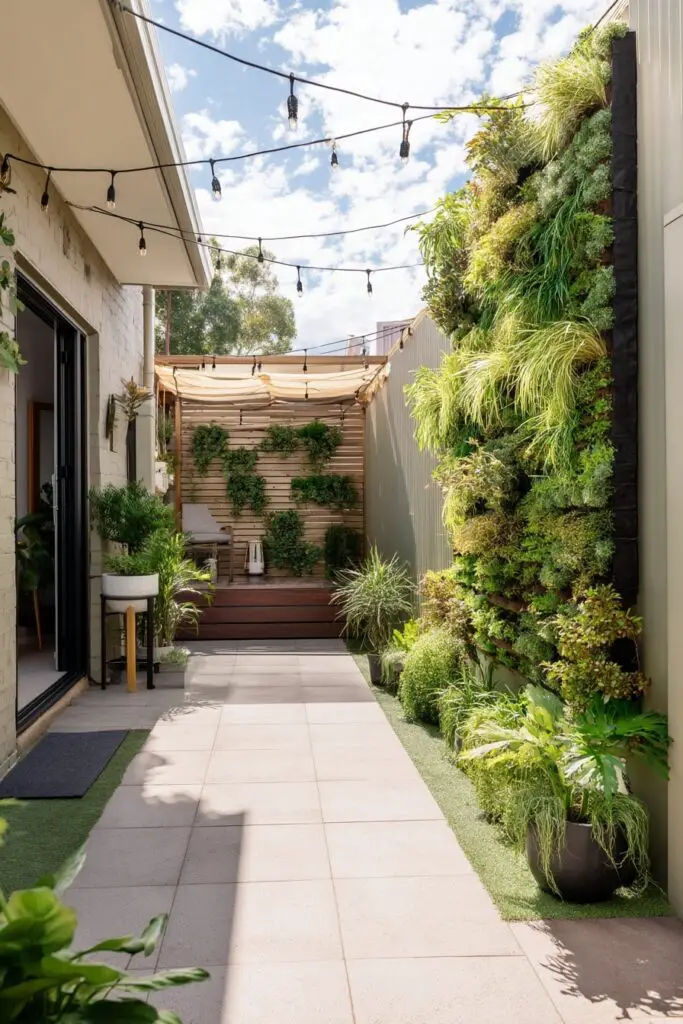
When horizontal space is limited, go vertical.
A small backyard can feel twice as large when walls and fences are used strategically. Consider:
- Wall-mounted planters
- Vertical herb gardens
- Climbing plants on trellises
- Hanging lanterns or string lights
Vertical elements draw the eye upward, creating visual height. This prevents the small backyard from feeling boxed in.
Tall, narrow plants like ornamental grasses or columnar shrubs also add structure without taking up valuable floor space.
If privacy is needed, install slim vertical screens rather than bulky hedges.
3. Choose Multi-Functional Furniture
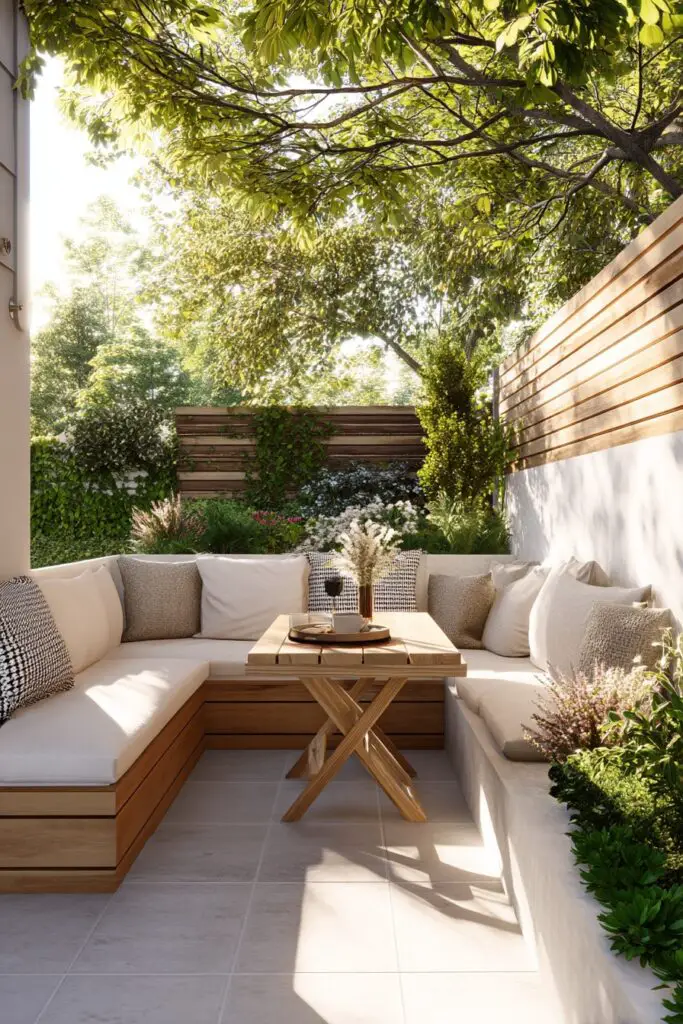
Furniture can quickly overwhelm a small backyard if not selected carefully.
Instead of large, heavy pieces, choose items that serve multiple purposes:
- Storage benches that double as seating
- Foldable dining tables
- Stackable chairs
- Built-in seating along walls
Built-in benches are especially effective in a small backyard because they eliminate the need for extra clearance behind chairs.
Stick to a cohesive color palette to prevent visual clutter. Neutral tones with subtle accents help the small backyard feel open and cohesive.
Avoid oversized sectionals unless your layout clearly supports them.
4. Design with Diagonal or Curved Lines
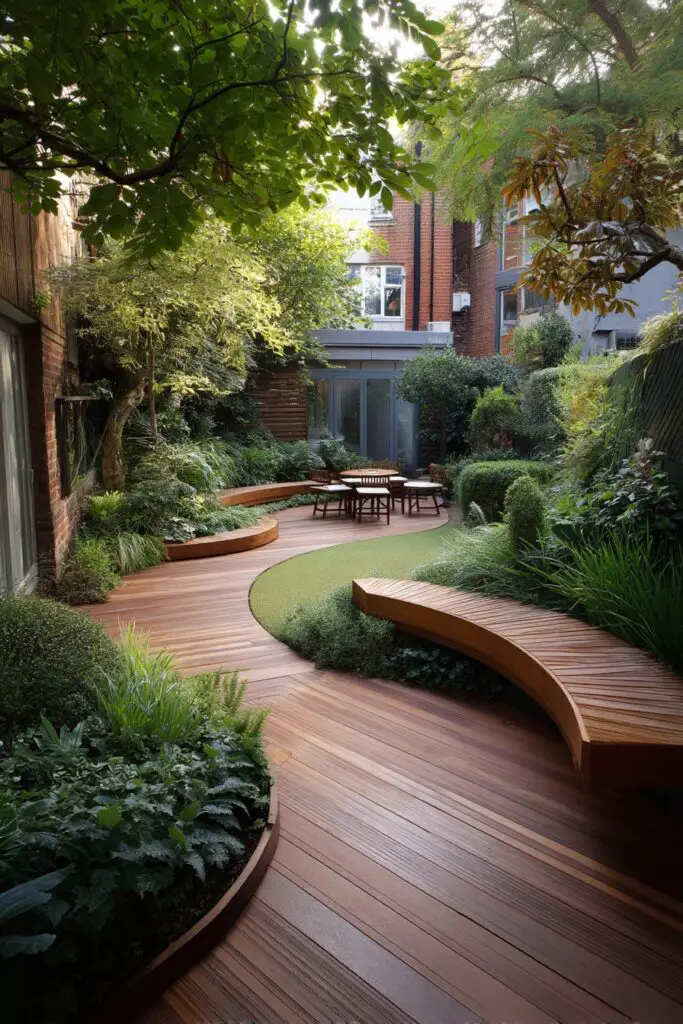
Straight lines can emphasize the narrowness of a small backyard.
Introducing diagonal paving patterns or gently curved pathways softens the layout and makes the space feel more dynamic.
For example:
- Lay decking boards diagonally
- Create a curved planting bed
- Position seating at an angle
These techniques trick the eye and make the small backyard appear wider than it actually is.
Curves also improve flow by guiding movement naturally from one zone to another.
5. Keep Planting Structured and Layered
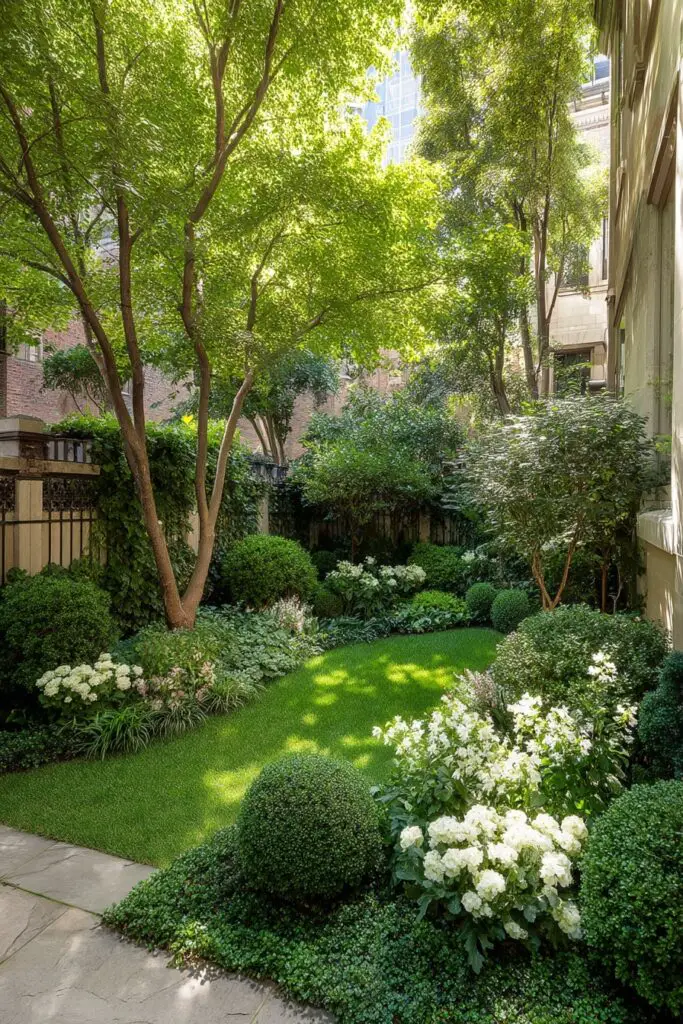
Planting can either enhance or overwhelm a small backyard.
Avoid random placement. Instead, use layered planting:
- Taller plants at the back
- Medium shrubs in the middle
- Low groundcovers in front
This creates depth without blocking views.
Choose plants with varied textures but similar color tones to maintain harmony. Too many bold colors can make a small backyard feel busy.
Container gardening is also effective. Group pots in odd numbers and vary heights for interest while keeping arrangements tidy.
If maintenance is a concern, focus on low-maintenance perennials and evergreen shrubs.
Lighting Tricks to Expand a Small Backyard
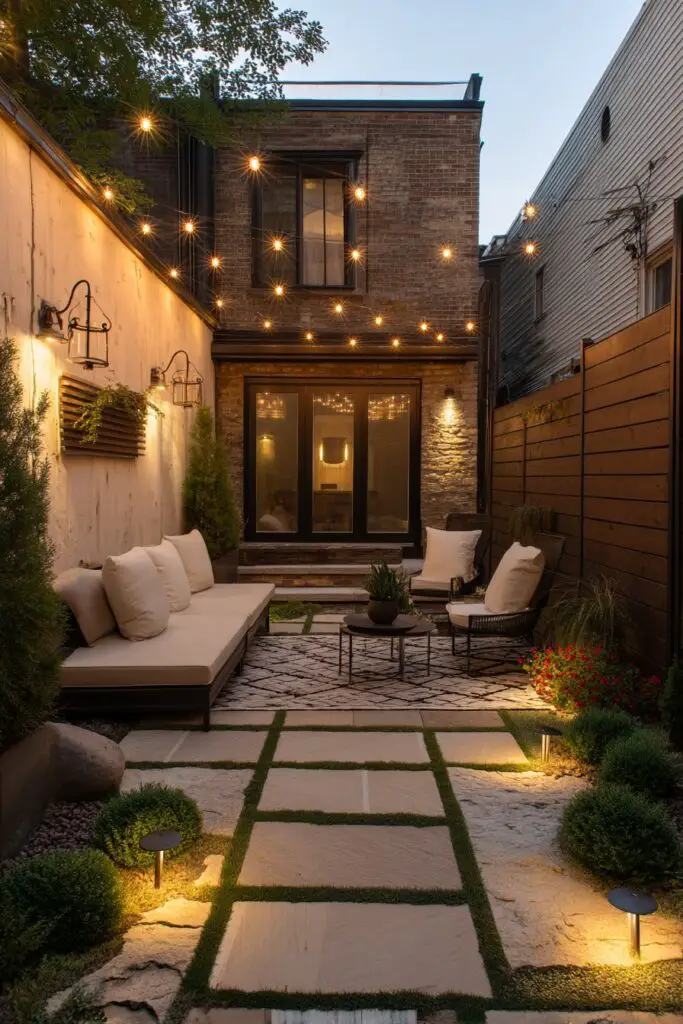
Lighting plays a powerful role in how a small backyard feels after sunset.
Layered lighting helps define zones while adding warmth:
- Wall-mounted lights for vertical emphasis
- Path lights for safe movement
- Soft string lights above seating areas
Avoid overly bright floodlights. Gentle illumination creates depth and reduces harsh shadows that shrink the perceived size of your small backyard.
Solar lights can be practical if wiring options are limited.
Color Strategies That Make a Small Backyard Feel Bigger
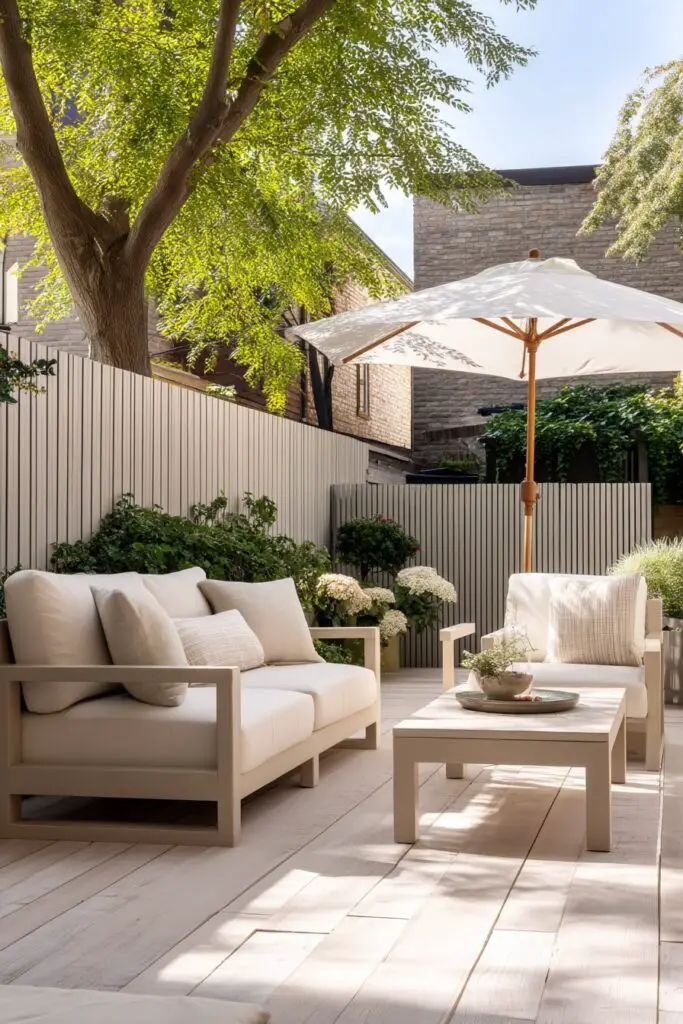
Color influences perception more than most homeowners realize.
To make a small backyard feel more spacious:
- Use light-colored paving or decking
- Paint fences in soft neutrals
- Choose furniture in muted shades
Dark colors absorb light and can make compact spaces feel tighter.
Repeating the same color in different areas creates continuity. For example, matching planters with fence trim ties the layout together visually.
Consistency is key in a small backyard. Too many contrasting tones can divide the space awkwardly.
Avoiding Common Small Backyard Layout Mistakes
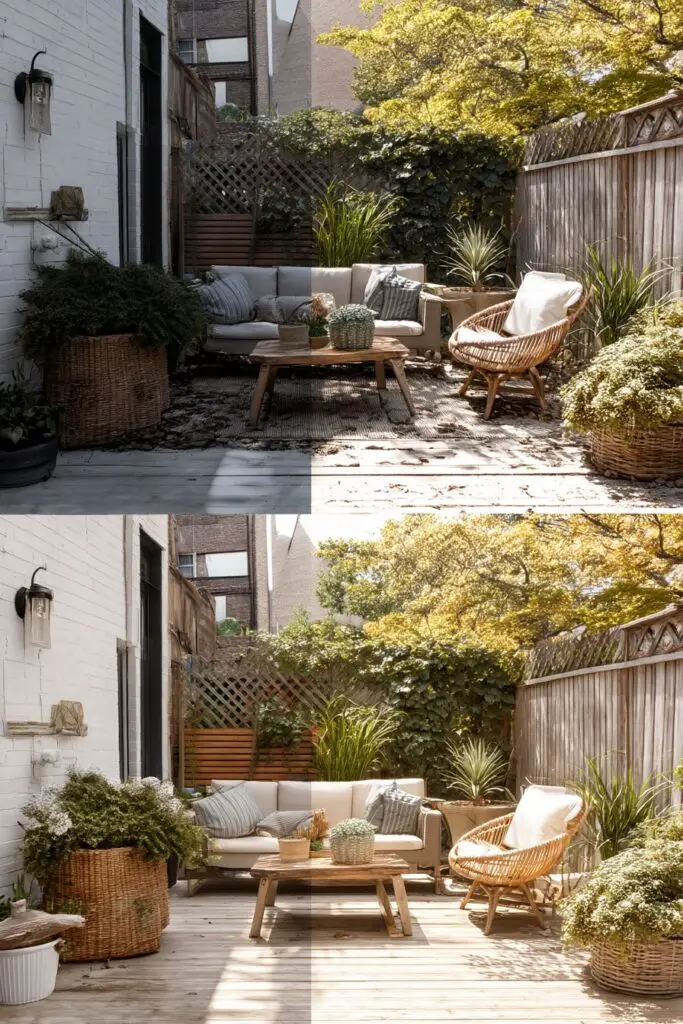
Even well-intentioned designs can backfire.
Common mistakes include:
- Blocking pathways with furniture
- Planting oversized trees too close to seating
- Using too many decorative elements
- Ignoring storage needs
Clutter accumulates quickly in a small backyard. Keep decorative items minimal and prioritize functional pieces.
Measure your space before purchasing furniture. A few inches can make a significant difference in comfort and movement.
Bringing It All Together
A successful small backyard layout balances structure, openness, and personality.
By zoning your space, using vertical elements, choosing multi-functional furniture, incorporating diagonal lines, and layering plants carefully, you create a yard that feels larger than its footprint.
The key is restraint. Every feature should serve a purpose.
When designed thoughtfully, a small backyard becomes an inviting extension of your home rather than an afterthought.
Conclusion
A small backyard doesn’t have to limit your outdoor lifestyle. With clear zones, vertical planting, space-saving furniture, and cohesive design choices, you can transform a compact yard into a comfortable and stylish retreat.
Focus on layout first, then refine details. Smart planning ensures your small backyard feels open, organized, and enjoyable year-round.