
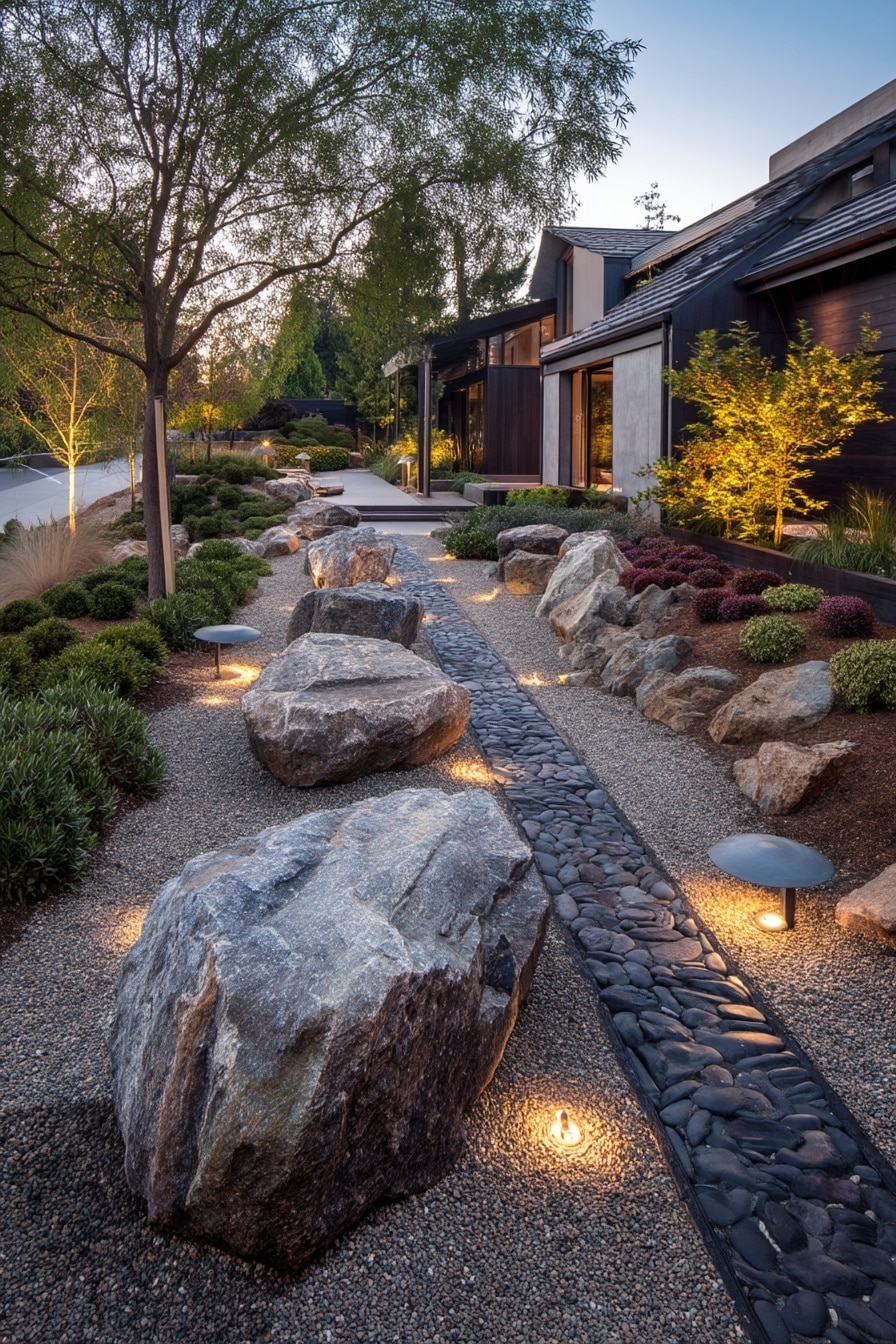
Boulder landscaping can transform a garden by introducing natural scale, texture and visual interest that plants alone often can’t match. Whether you have a sprawling yard or a compact courtyard, using large stones thoughtfully adds structure and character to your outdoor spaces while creating focal points that draw the eye throughout the seasons.
These rugged, ancient elements provide contrast against softer foliage and blooms, and when placed cleverly they can enhance pathways, beds and even seating areas. In this guide, we’ll break down ten practical ways to elevate your landscape using boulders in ways that feel both intentional and inspired.
Table of Contents
1. Highlight a Focal Boulder

One of the simplest yet most striking boulder landscaping techniques is to showcase a single, well-placed rock as a focal point. Just like a sculpture or garden feature, a bold boulder draws attention and anchors the surrounding space.
How to make it work:
- Choose a boulder with interesting shape, color, or texture.
- Place it where the eye naturally lands—near a pathway curve, at the end of a vista, or in the center of a planting bed.
- Set it partially into the ground to mimic a natural, grounded look.
- Frame it with low-growing plants or grasses to enhance its presence without overwhelming it.
This simple move brings weight and balance to the garden and sets the tone for a grounded, nature-inspired design.
2. Group Boulders for Natural Effect
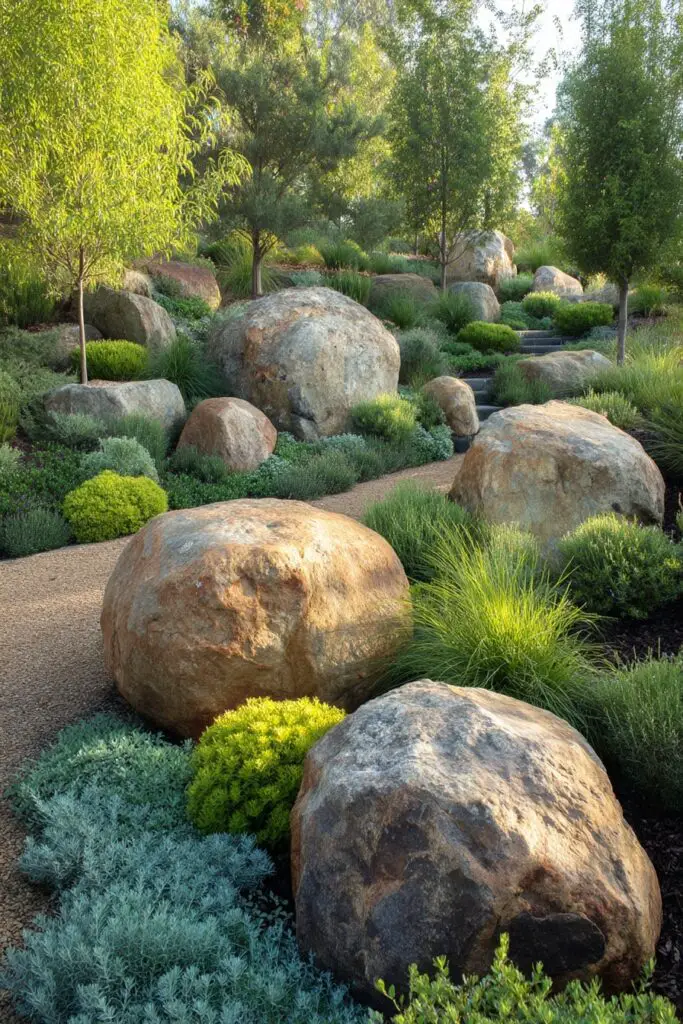
Rather than using boulders as standalone features, grouping them creates a more organic, natural feel in boulder landscaping. Think of how rocks appear in nature—clustered, varied in size, and partially buried. Reproducing that look adds authenticity to your garden.
Tips for grouping boulders effectively:
- Use odd numbers—typically 3 or 5—for more dynamic arrangements.
- Vary the size and shape of each boulder while keeping them visually cohesive.
- Bury the bases slightly at different depths to avoid a “just dropped” look.
- Position them in a way that suggests they’ve been shaped by nature over time.
Grouped boulders create subtle movement and layering, especially when paired with native grasses, mosses, or shade-loving perennials.
3. Nest Boulders Into Planting Beds
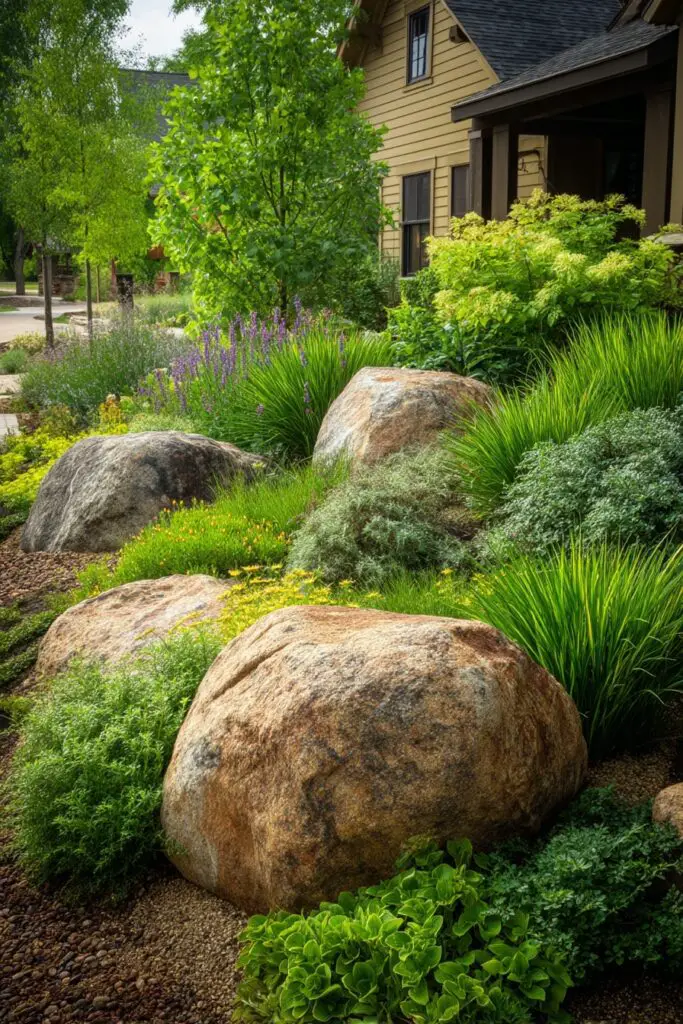
One of the most effective ways to integrate boulder landscaping into your garden is by tucking large stones into planting beds. This blends hard and soft elements, adding structure to borders while enhancing texture and contrast.
Smart ways to nest boulders into beds:
- Position boulders at the edge or middle of beds, not just the back.
- Surround them with low-growing plants, such as sedum, thyme, or ornamental grasses.
- Choose boulders that complement the scale of the plants nearby.
- Leave enough exposed surface for the rock to feel purposeful but not dominant.
This technique works beautifully in both formal and naturalistic designs. Nestled stones help define bed shapes and create anchor points in the landscape that remain attractive year-round.
4. Use Boulders to Shape a Slope or Terraced Area
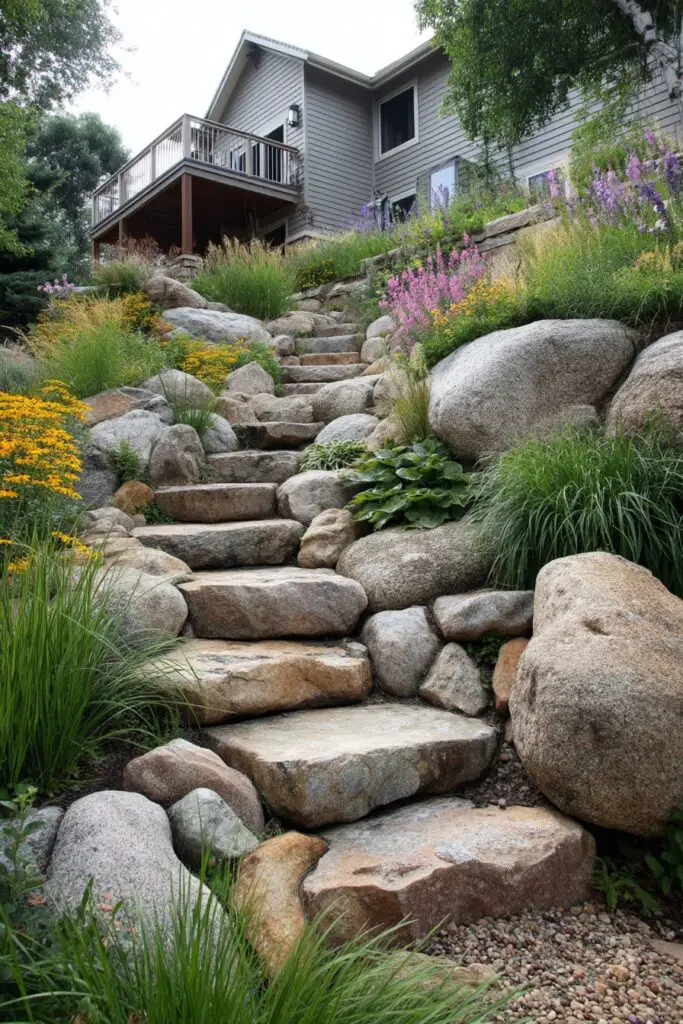
Boulders are not just decorative—they’re practical. In boulder landscaping, large rocks can double as structural elements, especially when managing uneven terrain or creating terraces. They help control erosion, define levels, and stabilize the ground, all while adding rugged beauty.
How to use boulders on slopes:
- Stack or stagger boulders to form retaining walls that hold back soil.
- Combine with plantings like groundcovers or trailing vines to soften the edges.
- Use larger, heavier stones at the base for stability, then layer upward.
- Mix in smaller rocks and gravel for a cohesive look and better drainage.
This approach is ideal for hillside gardens or plots with elevation changes. With the right placement, boulders create a terraced effect that feels natural, sculptural, and enduring.
5. Line a Path or Walkway with Boulders
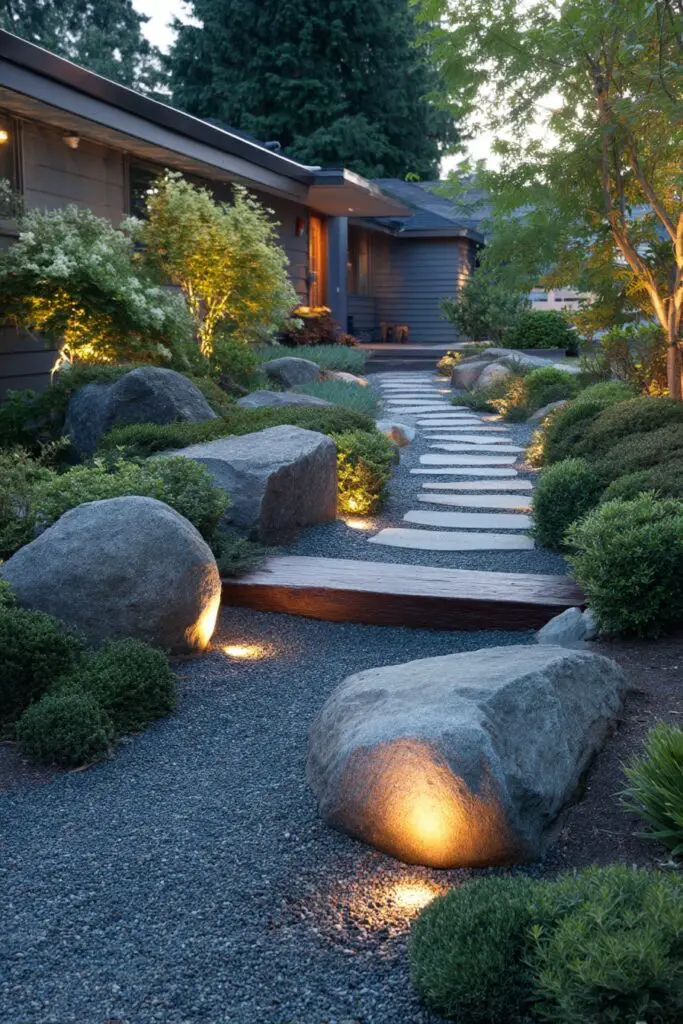
Incorporating boulders along paths is a bold way to define space and lead the eye. This boulder landscaping technique adds rhythm and substance to walkways, making even a simple gravel or stepping stone path feel grounded and intentional.
Ways to use boulders alongside paths:
- Place medium-sized boulders on alternating sides of a path to create a visual cadence.
- Use them to frame curves or entry points, subtly guiding movement.
- Pair with mulch, gravel, or groundcovers to create contrast and cohesion.
- Ensure enough clearance so boulders don’t impede foot traffic, especially in narrow walkways.
This method not only enhances flow through your garden but also helps unify hardscape and planting areas into a seamless, well-balanced landscape.
6. Create Natural Seating with Flat-Topped Boulders
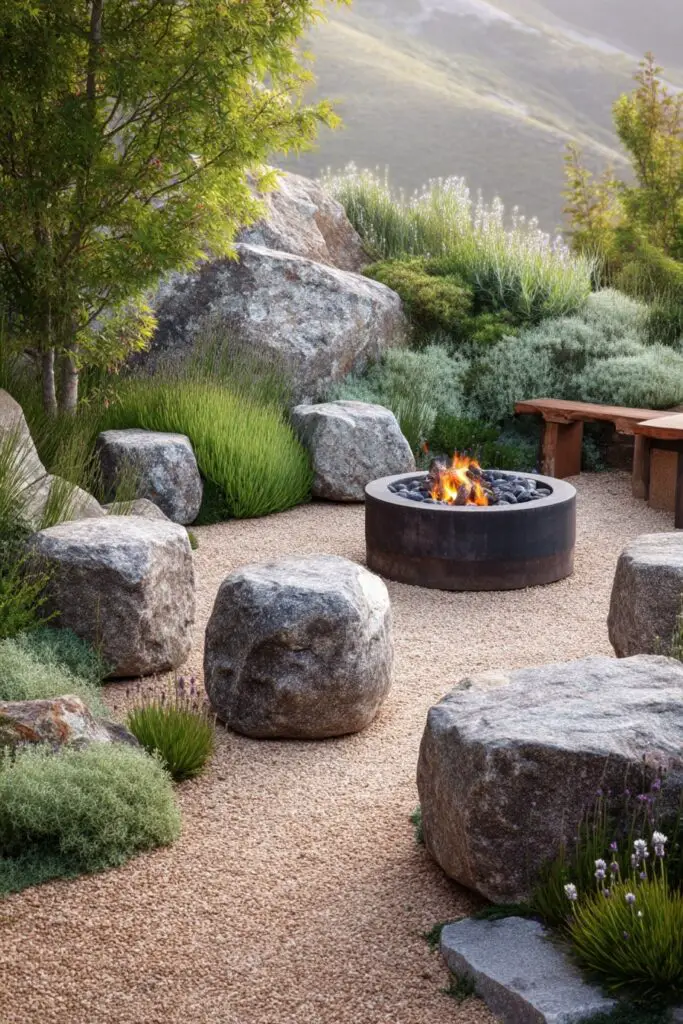
When it comes to multifunctional boulder landscaping, using flat-topped rocks as informal seating is both clever and stylish. These stone “benches” blend seamlessly into the garden while offering a place to rest, observe, or gather.
How to add boulder seating to your landscape:
- Select boulders with wide, flat surfaces that are naturally stable or can be leveled.
- Position them near gathering areas, fire pits, or scenic garden viewpoints.
- Keep seating boulders about 16–20 inches tall for comfortable height.
- Surround with soft foliage or gravel pads to define the space.
This approach is ideal for naturalistic or rustic gardens where traditional benches might look out of place. It’s a subtle way to encourage interaction with the landscape while adding durable functionality.
7. Combine Boulders with Water Features
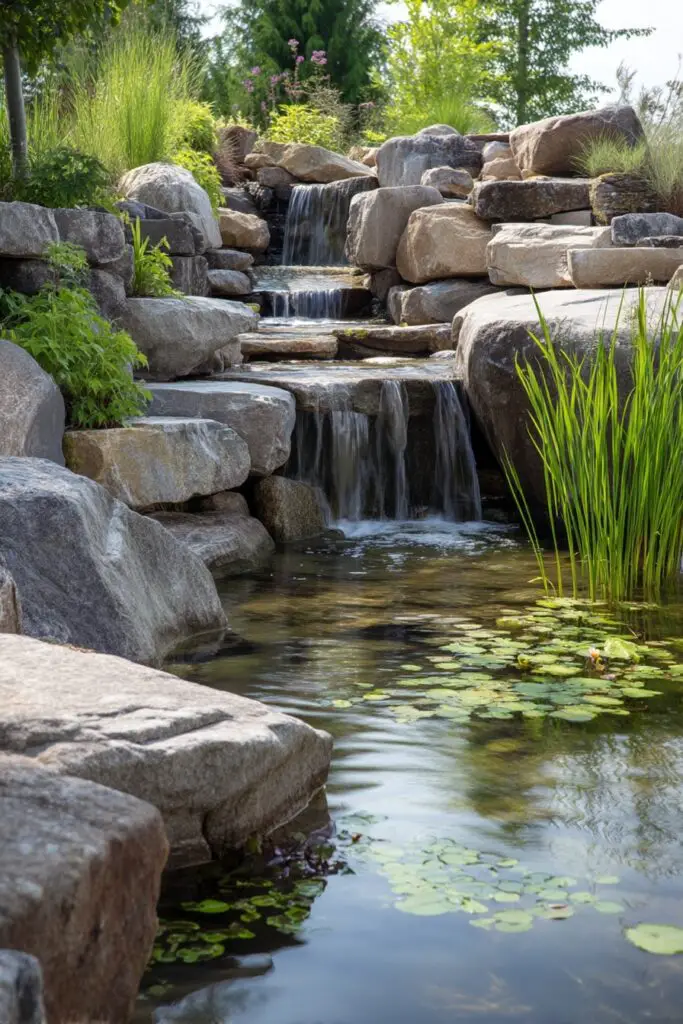
Nothing complements the solid, grounded presence of stone like the movement and sound of water. In boulder landscaping, integrating rocks into water features—like fountains, streams, or ponds—adds a calming, naturalistic feel to the garden.
Effective ways to pair boulders with water:
- Use boulders to edge a pond or define the border of a streambed.
- Stack them to create a natural waterfall or bubbling rock fountain.
- Mix various stone sizes for a layered, riverbank effect.
- Combine with aquatic plants or moss for a lush finish.
Water softens the look of boulders while highlighting their textures. Together, they create a multi-sensory focal point that enhances both visual beauty and atmosphere in your yard.
8. Anchor Plant Groupings with Boulders
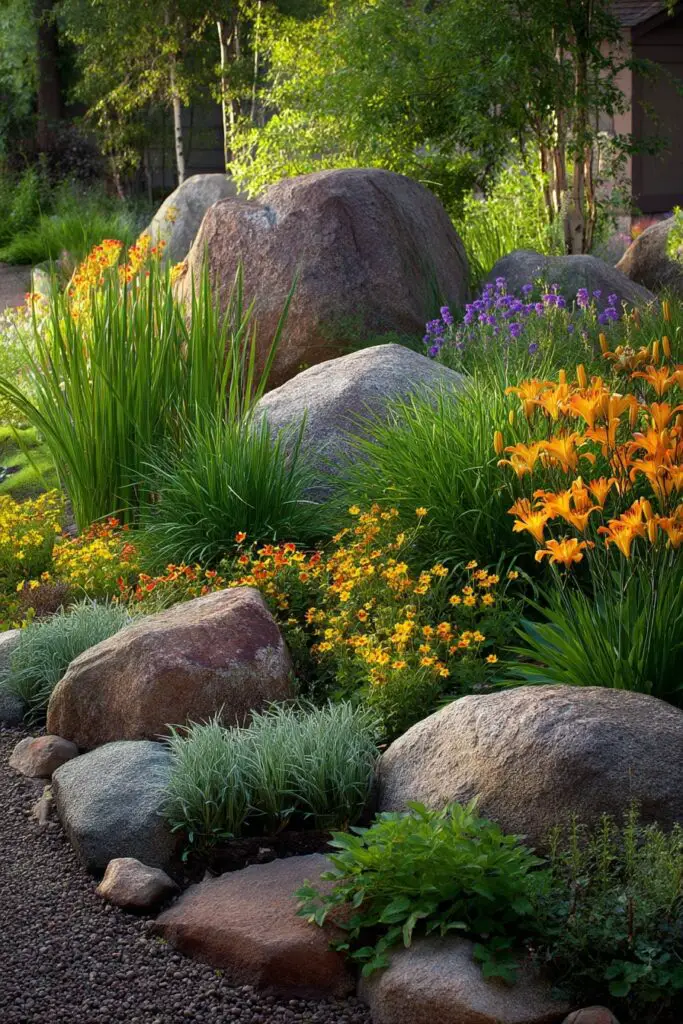
Boulders can act like visual punctuation marks in a garden, giving structure to free-form plantings. In boulder landscaping, using stones to anchor planting groups creates a balanced, grounded composition that looks intentional and artful.
How to anchor plants with boulders:
- Place boulders at the edges or corners of a planting bed to frame the space.
- Nestle small perennials or grasses close to the rock’s base for natural contrast.
- Use boulders to separate color zones or textures, enhancing garden flow.
- Choose plants that cascade or soften the stone’s edge, like creeping thyme or nepeta.
This trick is especially effective in naturalistic or meadow-style gardens, where strong vertical elements are needed to offset looser, flowing plant forms.
9. Use Boulders as Backdrops for Specimen Plants
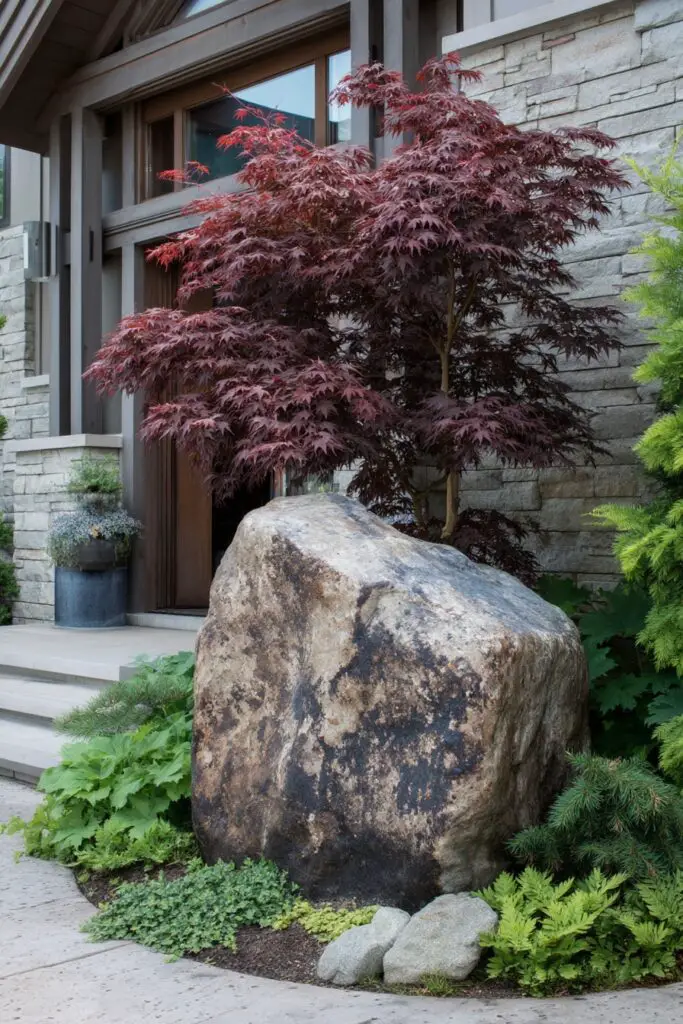
A well-placed boulder can make your prized plant stand out even more. In boulder landscaping, large rocks serve as natural stage settings, helping to highlight the form, color, or texture of standout shrubs or perennials.
Tips for using boulders as backdrops:
- Position a boulder behind a specimen plant to contrast leaf color or shape.
- Use neutral-colored stones to let bright blooms or foliage shine.
- Ensure the boulder doesn’t overshadow the plant—match scale carefully.
- Combine with mulch or groundcovers to tidy the base and define the vignette.
This technique is perfect for showcasing sculptural plants like Japanese maple, agave, or ornamental grasses. With a strong stone behind them, their shape and movement are more noticeable—and your planting design feels more intentional.
10. Let Boulders Stand Alone as Sculptural Features
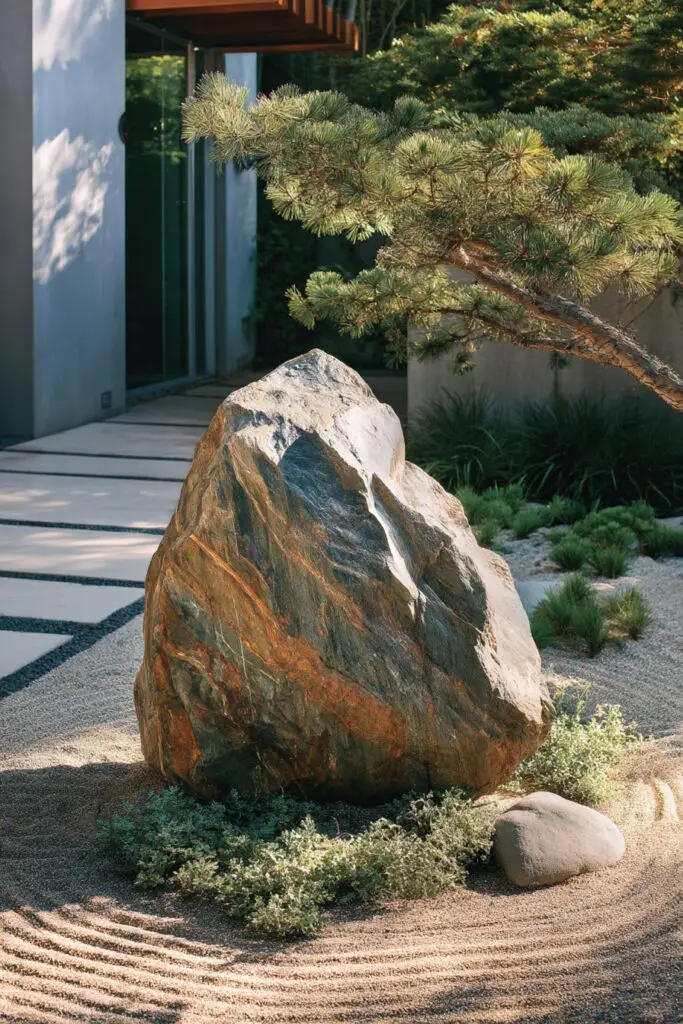
Sometimes, the boldest boulder landscaping move is doing less. A solitary boulder, carefully selected and placed, can function as a living sculpture—bringing shape, mass, and timeless beauty to the garden without competing for attention.
How to use a boulder as a sculptural feature:
- Choose a boulder with striking form, color striations, or weathered texture.
- Place it in an open space where it can be viewed from multiple angles.
- Set it into the soil so it looks naturally embedded, not perched.
- Leave room around it—negative space enhances its impact.
This minimalist approach works especially well in modern, Zen-inspired, or dry garden designs. With no distractions, the stone becomes a quiet focal point that grounds the landscape and invites reflection.
Final Thoughts on Boulder Landscaping
Well-placed boulders can dramatically enhance the structure, rhythm, and natural beauty of your garden. From anchoring plantings and edging pathways to acting as sculptural focal points, boulder landscaping offers a timeless way to shape space with permanence and character.
By choosing the right size, shape, and placement, boulders help you design landscapes that feel rooted and intentional. Whether you’re working with a slope, a water feature, or a minimalist bed, these ten techniques can turn rugged rock into refined garden art.