
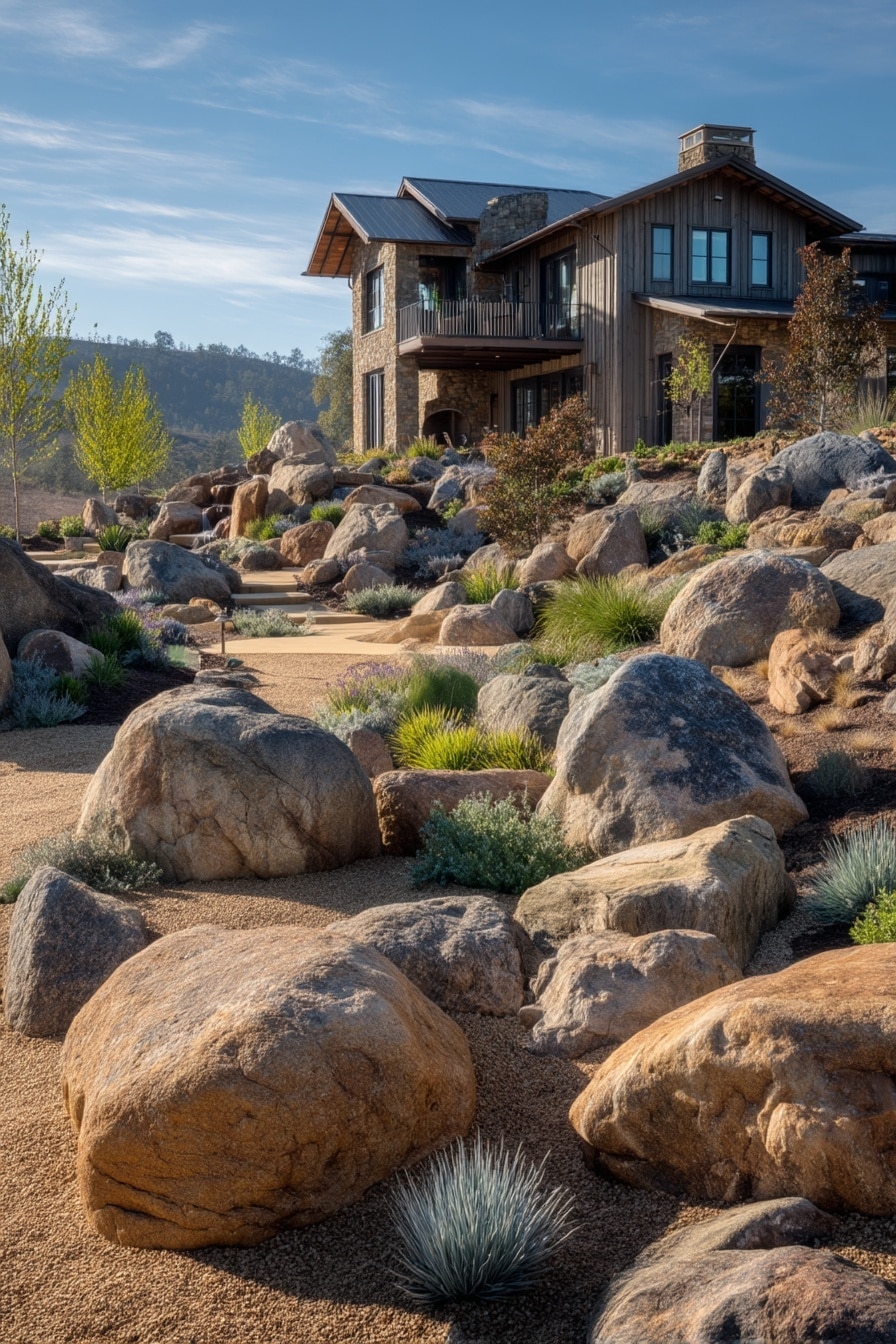
Landscaping with rocks brings a timeless, natural beauty to any outdoor space. Whether you’re working with a sloped yard, a dry climate, or a desire for low-maintenance design, rocks offer endless possibilities. They add texture, contrast, and structure, while reducing the need for frequent watering or mowing. From creating elegant borders to anchoring garden features, thoughtful rock placement can elevate the entire look of your yard. In this guide, we’ll explore five essential design principles that will help you make the most of landscaping with rocks—whether you’re revamping a corner bed or redesigning your entire front yard.
Table of Contents
1. Choose Rocks That Match Your Surroundings

One of the most important tips for landscaping with rocks is selecting stones that naturally blend with your existing environment. Mismatched colors or textures can make your landscape feel forced or artificial.
How to Pick the Right Rocks
- Match rock tones with your home’s exterior or nearby natural features
- Use local stone varieties for a more cohesive, eco-conscious look
- Choose weathered or smooth stones for a softer, aged appearance
When your rocks complement their surroundings, they create a seamless transition between garden beds, paths, and open spaces—adding to the overall harmony of your outdoor design.
2. Use Rock Sizes Strategically
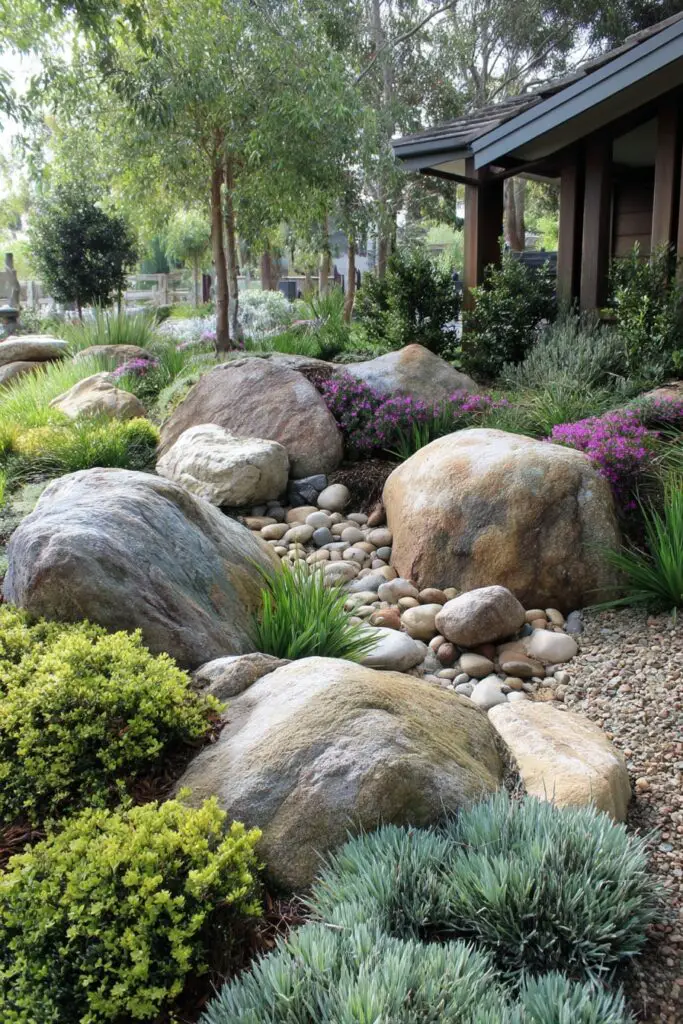
Scale matters when landscaping with rocks. Mixing different stone sizes creates depth and visual interest, while improper sizing can disrupt the balance of your design.
Smart Sizing Tips
- Use large boulders as focal points or anchors in open areas
- Place medium stones along paths or garden edges for structure
- Fill gaps with gravel or pebbles to tie the space together
Layering rocks by size helps guide the eye and adds dimension, making your landscape feel both natural and thoughtfully arranged.
3. Balance Hard and Soft Elements
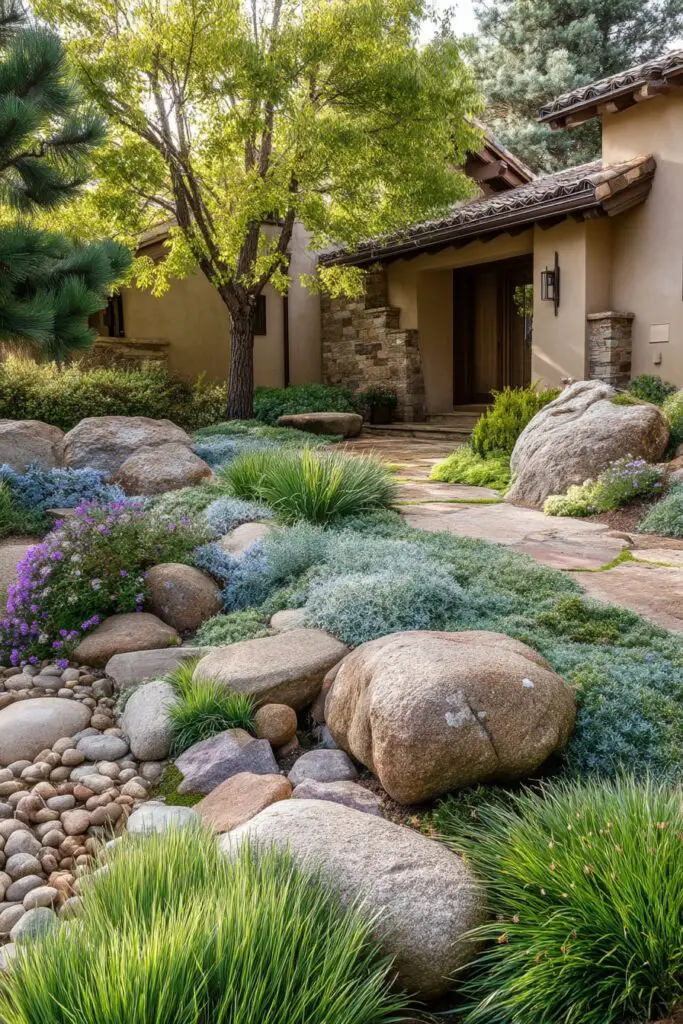
One of the most successful approaches to landscaping with rocks is blending them with softer textures. Without greenery or flowing forms, a rocky yard can feel cold or harsh.
Ways to Soften Rock Features
- Plant low-maintenance grasses between stones
- Surround boulders with flowering ground covers
- Incorporate creeping plants like thyme or sedum into rock crevices
This contrast between stone and plant life enhances both materials and brings balance to the space, making it more welcoming and vibrant.
4. Think About Drainage and Function
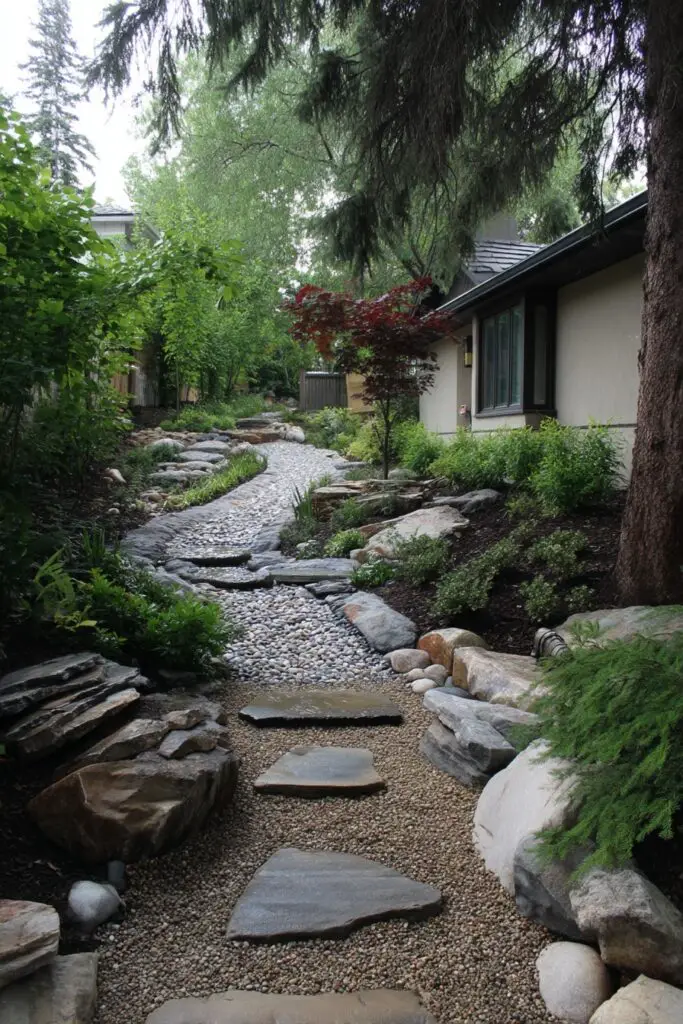
Beyond aesthetics, landscaping with rocks can solve practical issues like drainage, erosion, or uneven terrain. Designing with intention ensures your landscape looks good and works well.
Functional Rock Features
- Use gravel beds to direct rainwater away from foundations
- Create dry creek beds for runoff control on sloped properties
- Place flat stepping stones along walkways to keep feet dry and stable
Integrating rocks for both beauty and purpose helps your landscape thrive in all seasons—and reduces long-term maintenance needs.
5. Keep It Natural and Asymmetrical
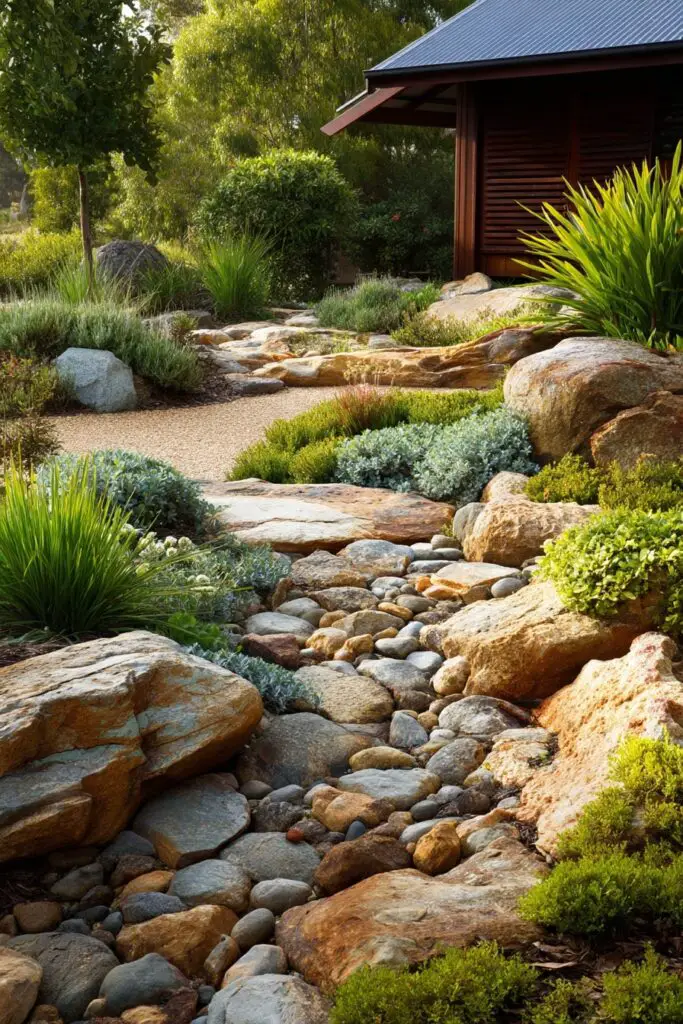
One of the most timeless principles in landscaping with rocks is to mimic nature. Overly symmetrical or rigid placements can feel artificial, while organic layouts create flow and realism.
Natural Design Techniques
- Avoid placing rocks in straight lines or perfect circles
- Group stones in odd numbers for visual balance
- Partially bury some rocks to make them appear naturally embedded
A loosely structured layout reflects the randomness found in nature, giving your landscape a more relaxed, enduring appeal.
Conclusion
With the right design principles, landscaping with rocks can bring texture, structure, and timeless charm to any outdoor space. Whether you’re working with a large yard or a compact corner, these five guidelines help you build a landscape that feels both natural and intentional. By balancing form and function, and choosing materials that reflect your surroundings, you can create a rock garden that looks beautiful year-round with minimal upkeep.