
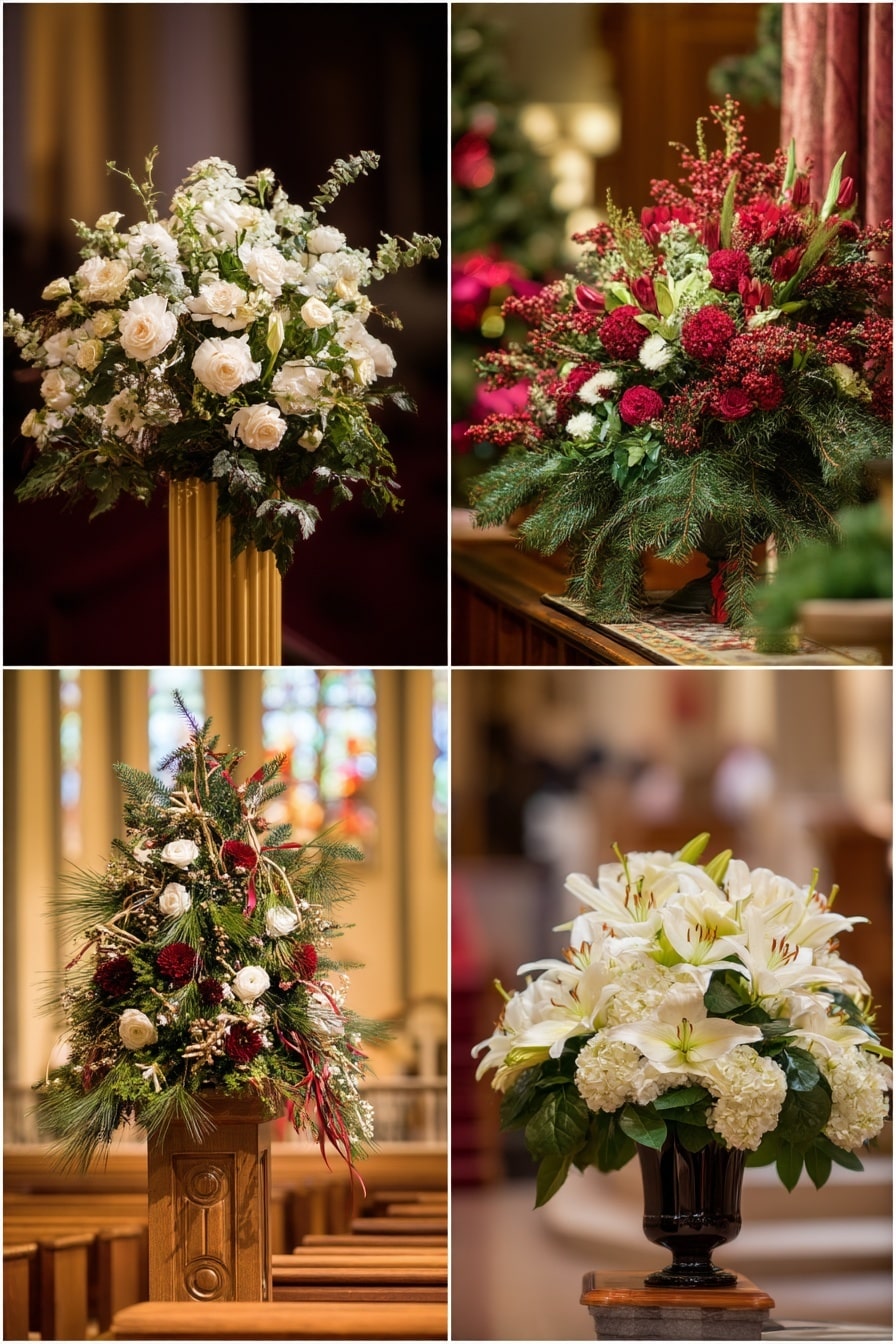
church floral arrangements set the tone for sacred spaces and meaningful celebrations, creating an atmosphere of reverence and beauty. Whether you’re preparing for a wedding, baptism, holiday service, or memorial, thoughtful floral design can enhance the architecture and emotional resonance of a church interior. Each arrangement should complement the space while respecting the solemnity or joy of the occasion. Carefully chosen flowers and greenery bring both visual balance and symbolic significance to your ceremony or service.
Table of Contents
Choosing the Right Flowers for the Church

When planning church floral arrangements, selecting the right flowers is essential to achieve both harmony and meaning. The goal is to enhance the church’s natural beauty without overwhelming it. Simplicity, symbolism, and seasonal availability should guide your choices.
Commonly used flowers in church settings include:
- Roses for love and reverence
- Lilies symbolizing purity and resurrection
- Hydrangeas for grace and abundance
- Carnations for their longevity and texture
- Baby’s breath and eucalyptus as versatile fillers
Always consider the liturgical season, as certain times of year may favor more subdued palettes (like Lent or funerals), while others allow for rich, colorful blooms (like Easter or weddings). Consult your clergy or church decorator to understand any guidelines or floral restrictions based on the sanctuary’s layout or religious tradition.
Placement and Arrangement Types
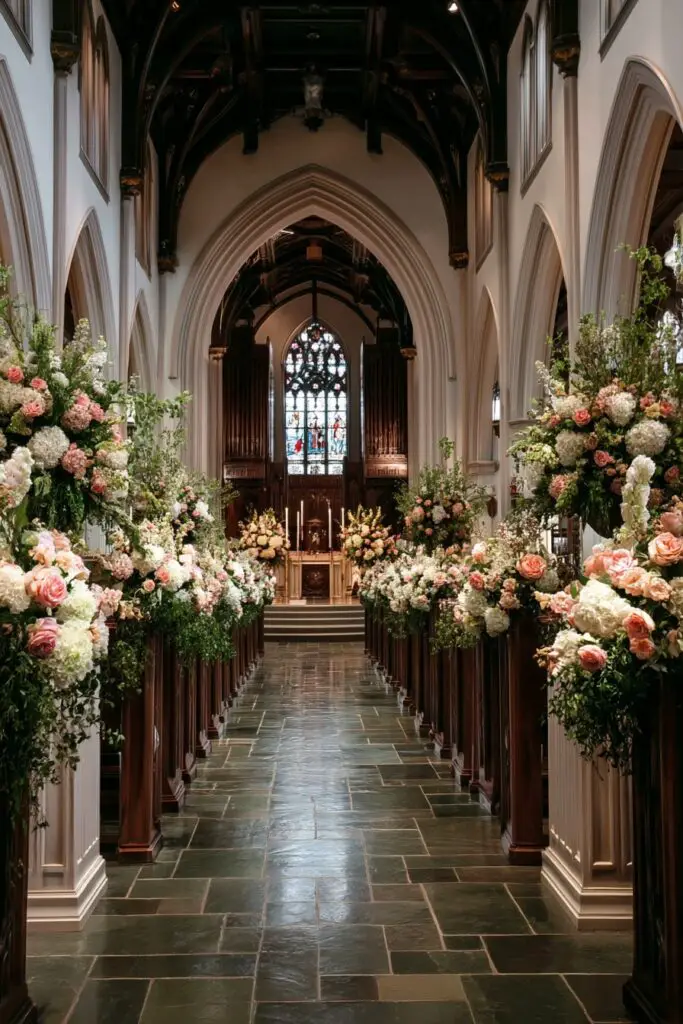
Effective church floral arrangements depend just as much on placement as on flower selection. Different areas of a church serve distinct purposes during services and ceremonies, so thoughtful arrangement positioning ensures that floral displays feel integrated, not intrusive.
Key areas to consider include:
- The altar: Often the focal point, arrangements here should be symmetrical and respectful of sacred objects.
- The aisle: Pew-end bouquets or garlands can frame the entrance and guide the processional path.
- The entryway or narthex: Welcoming floral displays set the tone as guests arrive.
- The pulpit or lectern: Small, non-distracting arrangements enhance visibility and ambiance.
Types of arrangements may include pedestal vases, cascading floral towers, wreaths, garlands, or standing sprays. Choose designs that suit the church’s interior—whether traditional stone, modern glass, or ornate baroque—ensuring each piece supports the solemnity or celebration of the moment.
Color Themes and Symbolism
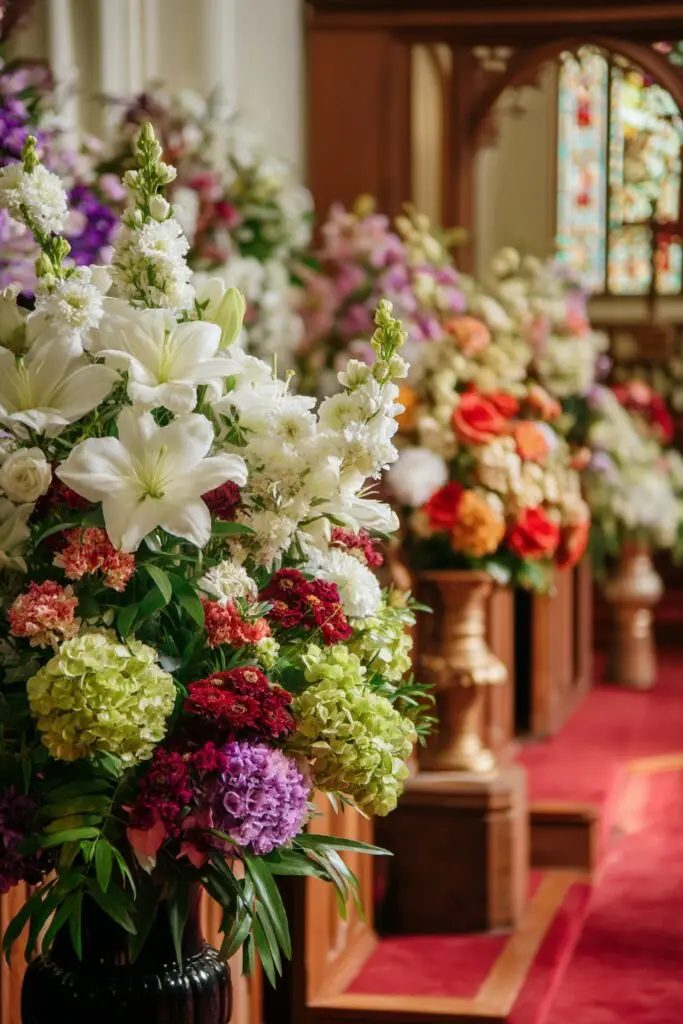
Color plays a powerful role in church floral arrangements, conveying emotion, enhancing spiritual symbolism, and aligning with liturgical traditions. Thoughtfully chosen color palettes can elevate both the aesthetic and the spiritual atmosphere of a religious setting.
Here are some meaningful color associations to consider:
- White: Purity, peace, and sacredness — ideal for weddings, baptisms, and Easter
- Red: Love, sacrifice, and the Holy Spirit — often used during Pentecost or martyr commemorations
- Purple: Reflection and penance — fitting for Lent and Advent
- Green: Renewal and hope — the color of Ordinary Time in many traditions
- Yellow and Gold: Celebration, joy, and divinity — excellent for feast days and festive services
Keep the church’s existing interior tones in mind to ensure your floral colors complement rather than clash with the surroundings. Soft, muted palettes typically offer elegance and timeless appeal, while brighter arrangements can energize a joyous occasion.
Seasonal Considerations
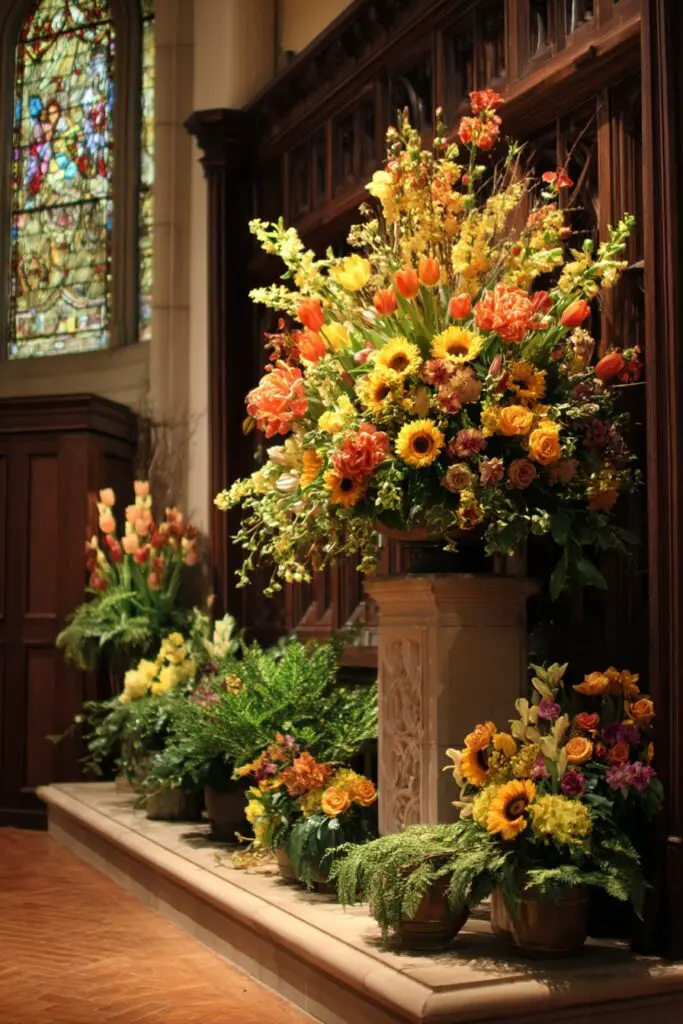
Seasonality is a key element in planning meaningful and sustainable church floral arrangements. Using flowers that are in season ensures better freshness, lower cost, and a natural connection to the time of year—something especially fitting for religious observances tied to the calendar.
Here’s a general guide to seasonal floral choices:
- Spring: Tulips, daffodils, hyacinths, lilacs — ideal for Easter and baptisms
- Summer: Roses, sunflowers, delphiniums, zinnias — perfect for weddings and community celebrations
- Autumn: Chrysanthemums, marigolds, dahlias, berries — suited for harvest services and memorials
- Winter: Amaryllis, poinsettias, evergreens, hellebores — great for Christmas and solemn liturgies
Using seasonal greenery—like pine in winter or eucalyptus year-round—can further root your arrangements in nature while offering texture and longevity.
By aligning your floral design with the natural rhythms of the year, you enhance both the aesthetic and spiritual significance of your arrangements.
Arrangements for Different Ceremonies
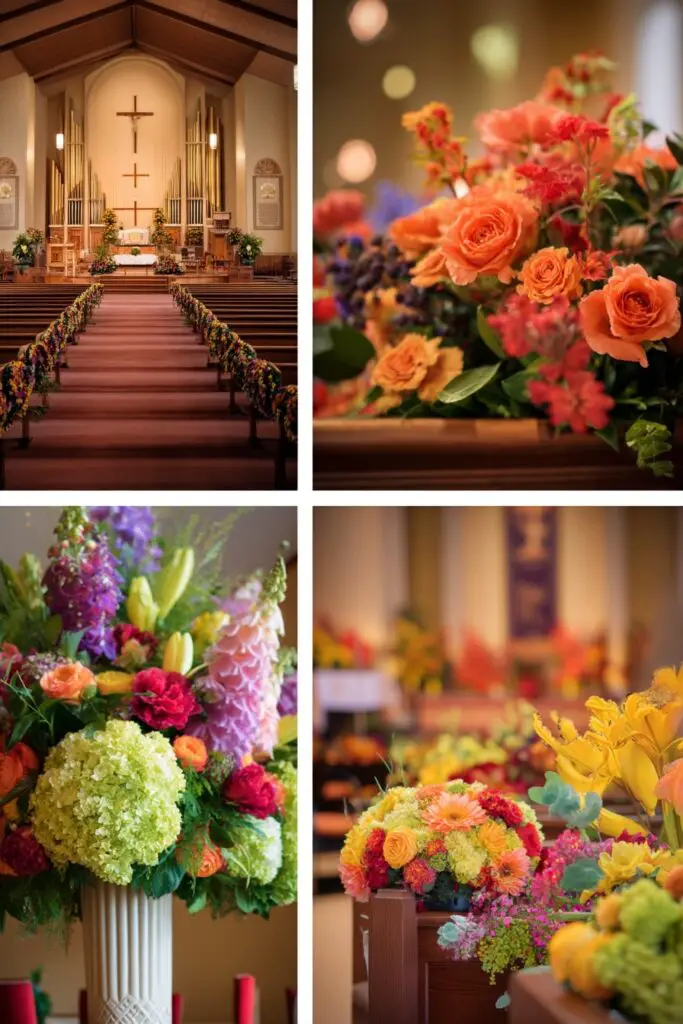
Different religious ceremonies call for tailored church floral arrangements that reflect the occasion’s tone, purpose, and traditions. Whether joyful or solemn, each event benefits from thoughtful floral choices that complement its sacred significance.
Weddings:
Elegant arrangements with roses, lilies, or hydrangeas are popular. White and soft pastels are common, symbolizing purity and unity. Pew flowers, altar displays, and arch florals enhance the space without overshadowing the ceremony.
Baptisms and Christenings:
Simple, light-colored flowers like daisies or baby’s breath are ideal. Keep arrangements delicate and fresh, reflecting innocence and spiritual new beginnings.
Funerals and Memorials:
Muted tones and respectful arrangements, such as standing sprays or altar bouquets, express sympathy and remembrance. Lilies, chrysanthemums, and carnations are traditional choices.
Holidays and Liturgical Seasons:
For Christmas, bold reds and greens with poinsettias or amaryllis bring festive energy. At Easter, use white lilies and spring blooms. Lent and Advent typically favor simpler, more contemplative designs.
Tailoring your arrangements ensures they resonate with the event’s emotional and spiritual tone.
🌸 Conclusion
Planning thoughtful church floral arrangements adds grace, meaning, and beauty to sacred ceremonies and seasonal services alike. By choosing flowers with symbolic value, matching colors to the occasion, and respecting the church’s unique setting, you can create arrangements that inspire peace and reverence. Whether you’re decorating for a wedding, baptism, or holiday service, your floral choices can uplift the space and deepen the spiritual experience for everyone present.