
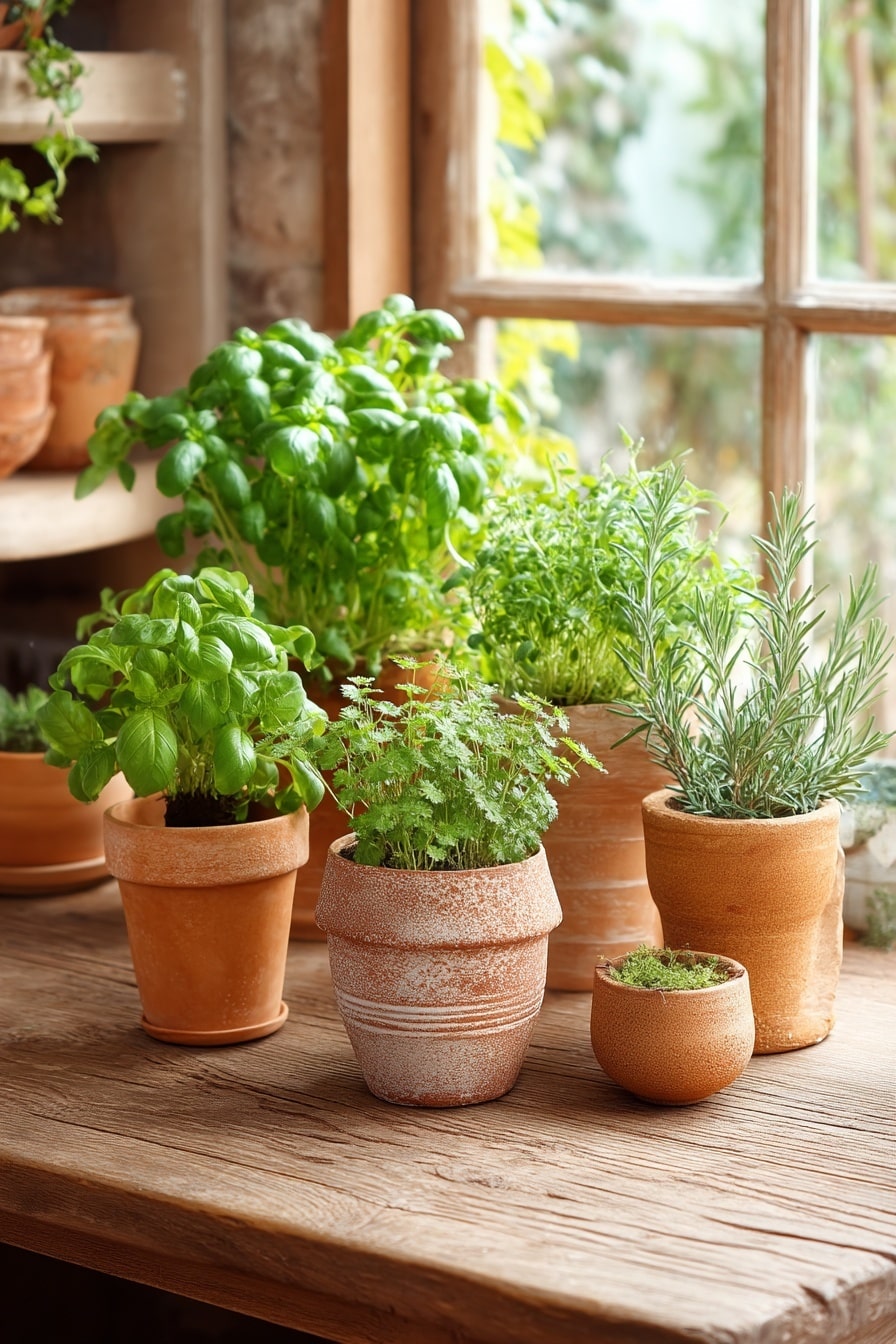
Indoor herb garden setups are the perfect way to bring fresh, homegrown flavor to your kitchen even when it’s freezing outside. While the outdoor garden sleeps under a blanket of snow, your windowsill or countertop can stay lively with basil, parsley, thyme, and more — ready to clip and toss into your favorite winter dishes. Growing herbs indoors isn’t just practical; it’s deeply satisfying. It brings greenery into your home, boosts your mood during the darker months, and ensures your meals never lack flavor. Whether you’re a seasoned gardener or a beginner, cultivating an indoor herb garden is easier than you think — and more rewarding than you’d expect.
Table of Contents
Choose the Right Herbs

The key to a successful indoor herb garden is starting with herbs that naturally adapt well to indoor conditions. Some herbs thrive under the lower light and limited airflow typical of indoor spaces, making them ideal for wintertime growing.
Best Herbs for Indoor Growing:
- Basil – Loves warmth and light; great for pasta, soups, and pizza.
- Parsley – Hardy and productive; perfect for garnishes and salads.
- Chives – Easy to grow and adds a mild onion flavor to dishes.
- Thyme – Aromatic, drought-tolerant, and great for roasted meals.
- Mint – Refreshing, fast-growing, but best kept in its own pot to avoid takeover.
- Oregano – Low maintenance with robust flavor, ideal for sauces and marinades.
Choose a few herbs you cook with often and that suit your space and light levels. Starting from small nursery plants can give you a head start over seeds, especially in winter months.
Select the Best Containers
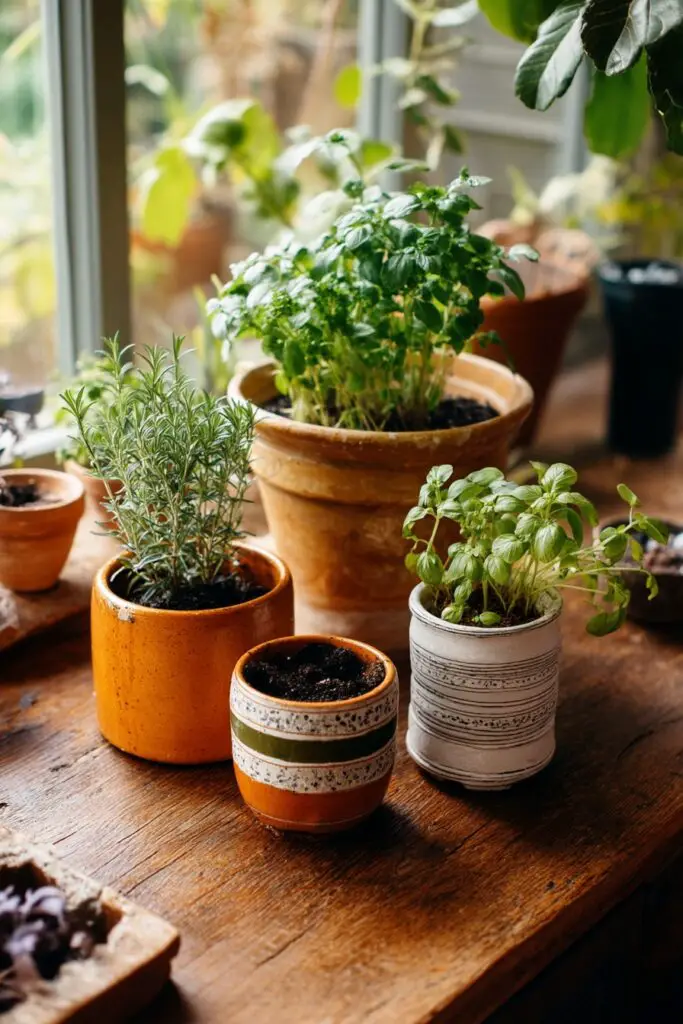
The right containers are essential for keeping your indoor herb garden healthy and productive. While herbs don’t need deep pots, they do require proper drainage and enough room for their roots to grow.
What to Look for in Herb Containers:
- Drainage Holes – Prevent root rot by allowing excess water to escape.
- Material – Terracotta breathes well but dries quickly; plastic retains moisture; ceramic offers balance and looks attractive.
- Size – A 6-8 inch pot is ideal for most herbs. Larger herbs like basil may need a bit more room.
- Individual vs. Grouped Pots – Planting herbs individually allows you to customize care, especially since some need more water than others.
Place saucers underneath pots to protect your surfaces, and consider self-watering planters if you prefer low-maintenance options.
Pick the Right Spot
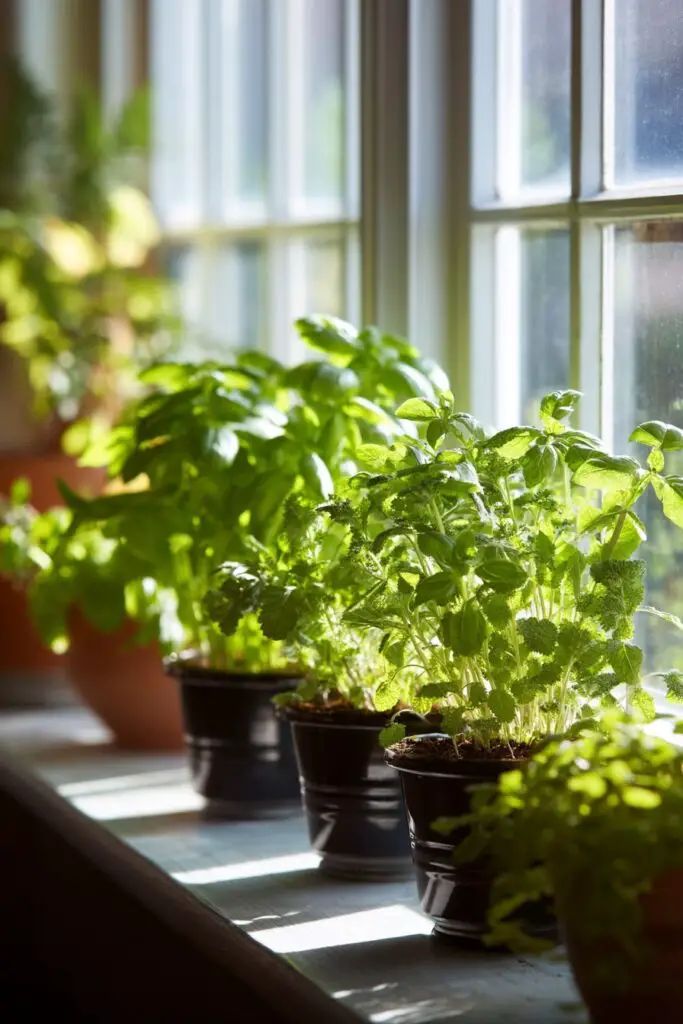
Light is one of the most important factors in maintaining a thriving indoor herb garden. Herbs love sunshine — most need at least 6 hours of direct light daily. If your indoor setup lacks strong natural light, don’t worry; there are workarounds.
Ideal Locations:
- South-facing windows get the most sunlight and are perfect for light-loving herbs like basil or oregano.
- East or west-facing windows can also work well, especially for herbs with moderate light needs like parsley or mint.
If Natural Light is Limited:
- Grow lights are a game-changer. Choose full-spectrum LED grow lights and position them about 6 inches above the plants.
- Use timers to mimic natural day/night cycles, typically 12–14 hours of light per day.
Keep herbs away from cold drafts or direct contact with heaters, as extreme temperature changes can stress the plants.
Water Smartly
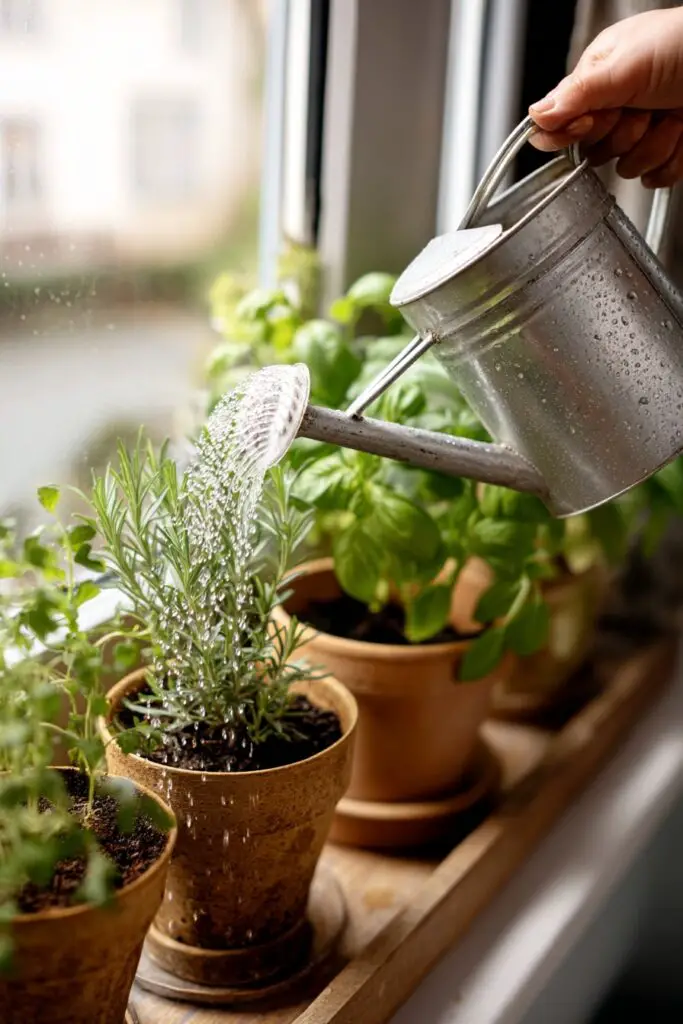
Overwatering is the most common mistake in any indoor herb garden, especially during winter when plants grow more slowly and use less moisture. Getting your watering routine right can mean the difference between thriving herbs and soggy disappointment.
Smart Watering Tips:
- Check the soil first – Stick your finger an inch into the soil; if it feels dry, it’s time to water.
- Avoid schedules – Let the plants guide you rather than watering on a fixed day.
- Use room temperature water – Cold water can shock plant roots, especially during winter.
- Drain excess water – Empty saucers after watering to prevent soggy roots.
- Bottom watering (setting the pot in a shallow dish of water for 10–15 minutes) can help roots absorb what they need without soaking the leaves.
Remember, different herbs have different water needs. For example, mint enjoys more moisture, while thyme and oregano prefer drier conditions.
Harvest Regularly
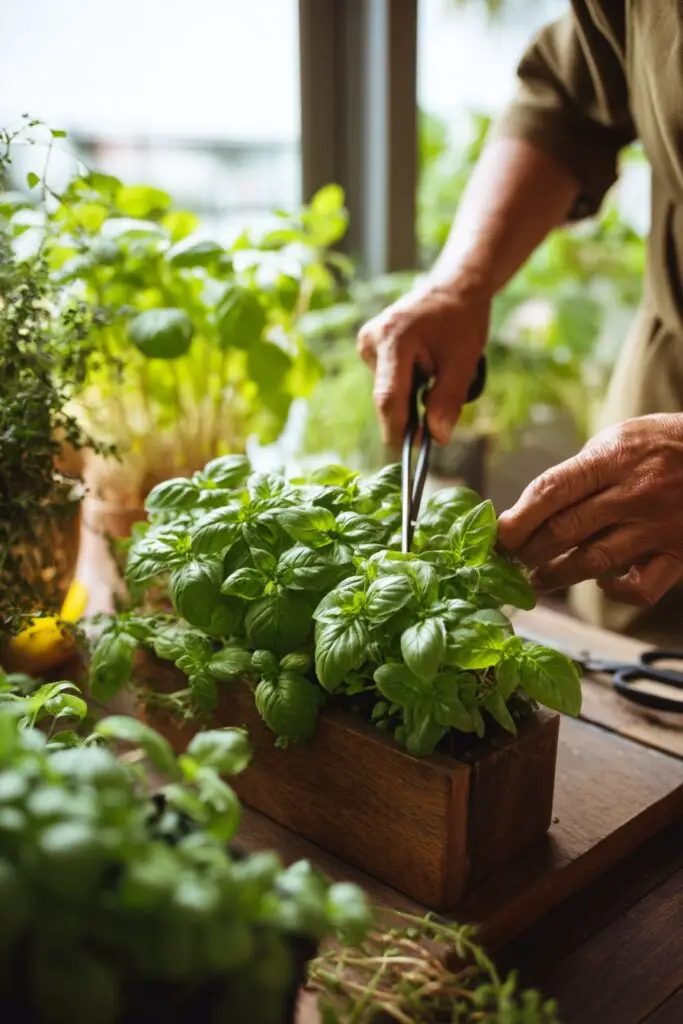
Frequent harvesting not only provides you with fresh flavors but also encourages your indoor herb garden to grow fuller and healthier. When done correctly, harvesting stimulates new growth and prevents your herbs from getting leggy or flowering too soon.
How to Harvest Smartly:
- Use clean, sharp scissors or pruners to avoid damaging the plant.
- Start from the top – Snip stems just above a leaf node (where leaves grow from the stem) to promote branching.
- Don’t overharvest – Only take about one-third of the plant at a time to allow for regrowth.
- Regular pinching – For fast growers like basil, pinch off the top set of leaves weekly to keep the plant compact.
Make it a habit to use your herbs often. Even a few sprigs for a salad or soup can keep your plants in great shape.
Monitor for Pests
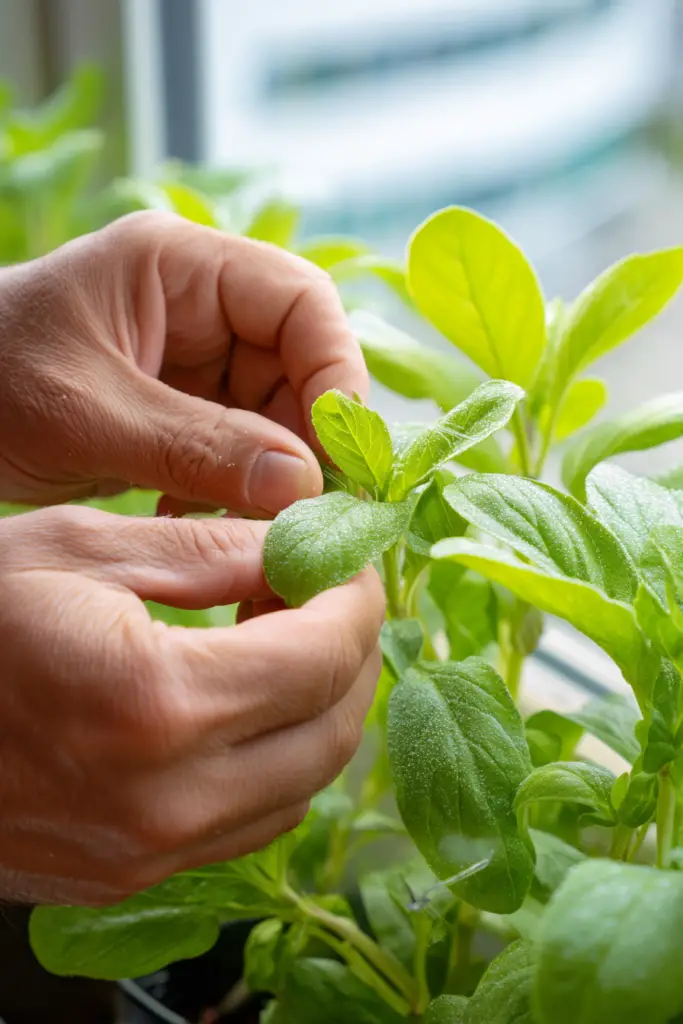
Even indoors, your indoor herb garden isn’t immune to pests. Common culprits like aphids, spider mites, and fungus gnats can sneak in and quickly affect plant health. Early detection is key to keeping your herbs healthy and safe to eat.
Pest Monitoring Tips:
- Inspect plants weekly, especially under leaves and around the soil surface.
- Look for signs such as yellowing leaves, sticky residue, webbing, or small flying insects.
- Rinse gently – If you spot aphids or mites, use a gentle stream of water to wash them off.
- Neem oil or insecticidal soap – These are safe, natural solutions for edible plants if infestations persist.
- Let soil dry between watering to deter fungus gnats, which thrive in moist environments.
Good air circulation and avoiding overcrowding will also help prevent pest buildup. Keeping your tools clean and using fresh potting mix goes a long way in prevention.
Bonus Tips for Indoor Herb Gardening
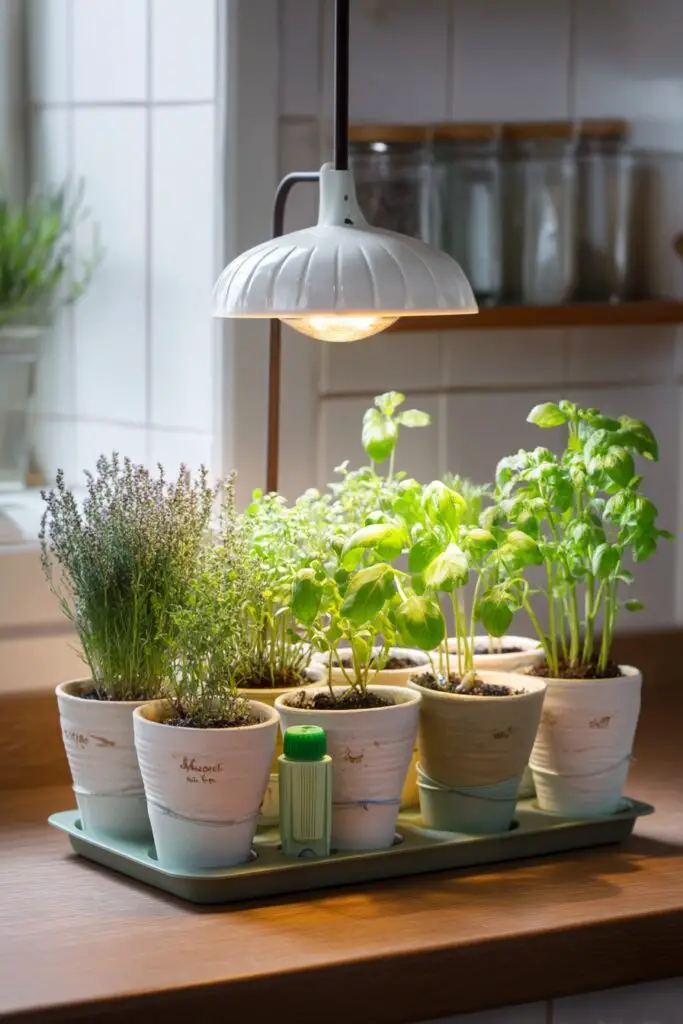
To get the most out of your indoor herb garden, a few extra techniques can make your winter gardening smoother and more rewarding. These small adjustments often lead to stronger plants and bigger harvests.
Extra Tips for Success:
- Rotate your pots every few days to ensure even light exposure and balanced growth.
- Fertilize sparingly – Use a diluted liquid organic fertilizer once a month during winter. Overfeeding can weaken herbs.
- Label your herbs to keep track of care needs and avoid mix-ups, especially when they’re young.
- Keep kitchen herbs close to your prep space for easy access — you’re more likely to use them regularly.
- Don’t crowd your windowsill – Give each plant enough airflow and light by spacing pots a few inches apart.
These final touches help you maintain a thriving, productive herb garden from the heart of your home — even in the dead of winter.
Conclusion
An indoor herb garden is one of the easiest ways to keep your cooking fresh, your home green, and your spirits high all winter long. With the right herbs, containers, location, and a bit of attention, you can grow flavorful favorites right in your kitchen—even when it’s snowing outside. Whether you’re nurturing basil by the window or trimming thyme for stew, the satisfaction of growing your own herbs indoors is hard to beat.