
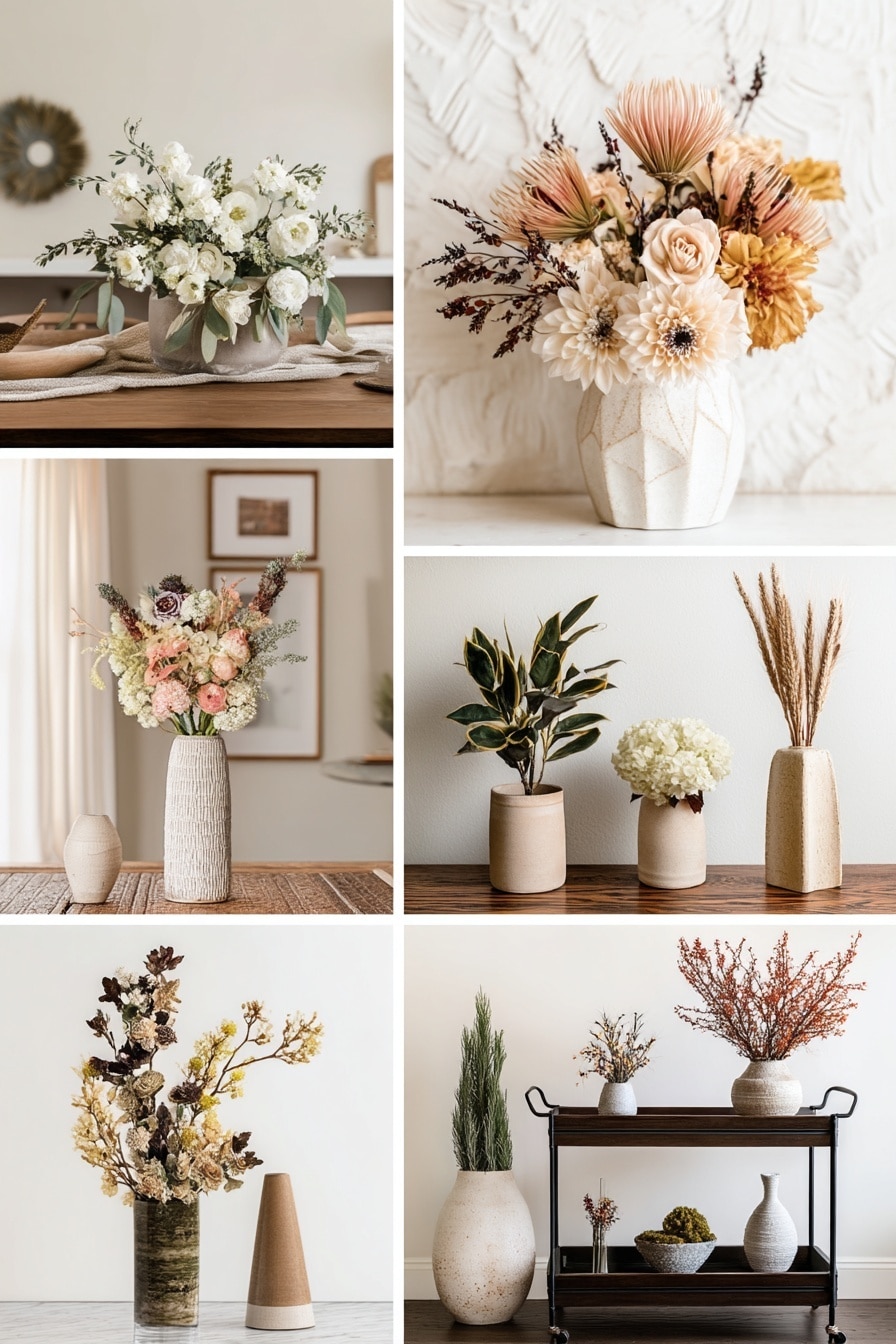
Flower design is more than just placing blooms in a vase—it’s an expressive, mood-lifting way to bring color, elegance, and life into your home. Whether you love bold arrangements or simple accents, a thoughtfully designed floral display can instantly transform any room and reflect your personal style.
From energizing your morning routine to welcoming guests with warmth and beauty, flower arrangement design offers both aesthetic and emotional benefits. With the right blooms, placement, and a bit of creativity, you can turn everyday corners into uplifting, inspiring spaces that feel as good as they look.
Table of Contents
How to Prepare for Flower Design at Home

Before you start creating a beautiful flower design, make sure you’re equipped with the right tools and know-how. Preparation is key to achieving arrangements that are both visually stunning and long-lasting.
Essential Tools and Materials
To begin, gather basic supplies like:
- Sharp floral scissors or garden shears
- Floral foam or sponge for structure
- Florist’s wire and tape
- Buckets for soaking and conditioning stems
- Decorative materials (ribbons, shells, stones, etc.)
These simple tools help ensure stability, balance, and ease during your arrangement process.
Cutting and Conditioning Flowers
Choosing and cutting your flowers properly is just as important as how you arrange them. Harvest flowers early in the morning or late evening, when they’re most hydrated. Cut stems at an angle to increase water absorption and immediately place them in a bucket of lukewarm water with a pinch of sugar or floral preservative.
Let them rest for a few hours to hydrate fully before arranging. This step extends their lifespan and keeps your designs fresh for days.
Choosing the Right Flower Arrangement Design
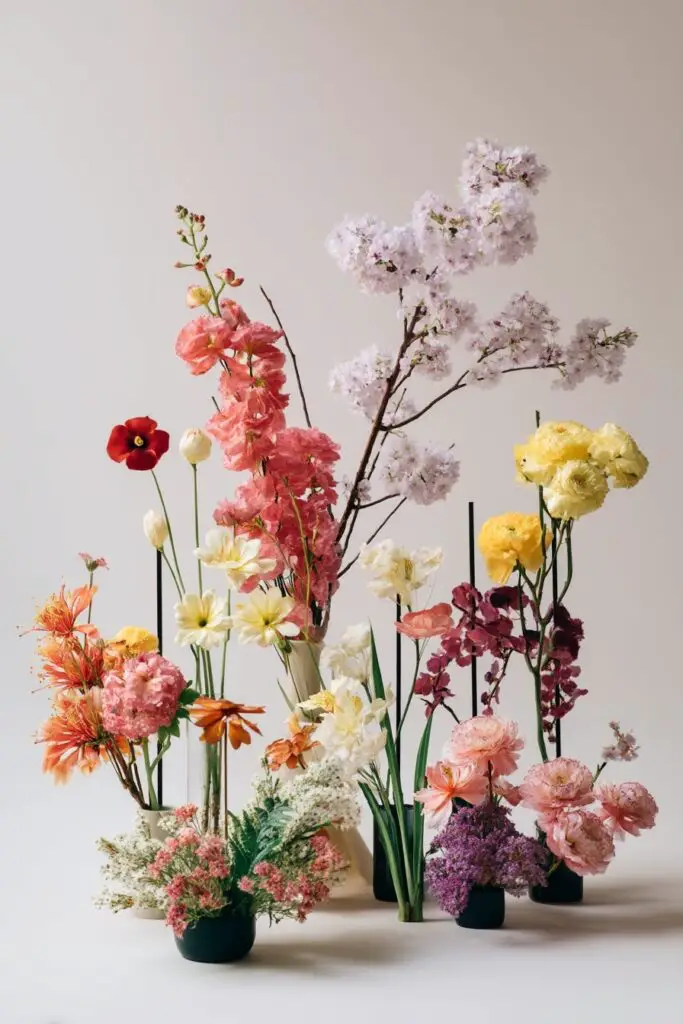
Selecting a flower design style isn’t just about matching your décor—it’s also about reflecting the mood, space, and personality you want your flowers to convey. From structured lines to natural clusters, the possibilities are as varied as the blooms themselves.
Types of Flower Arrangements
Your arrangement can follow different structural forms:
- Line arrangements – Tall and minimalist, great for modern interiors
- Mass arrangements – Full, rounded shapes using lush blooms
- Miniature – Small and compact, perfect for desks or nightstands
- Floating – Simple blooms placed in shallow bowls of water
- Japanese (Ikebana) – Minimalist and symbolic, focusing on balance and form
Styles to Consider
- Traditional: Classic shapes and symmetry, often with roses or lilies
- Modern: Asymmetry, bold lines, and unconventional materials
- Oriental: Emphasizes simplicity, space, and natural movement
Choose a style based on your flowers’ size, color, and texture—and don’t be afraid to mix styles or create your own. The best flower design feels intentional, even when it looks effortless.
Where to Place Your Flower Design at Home
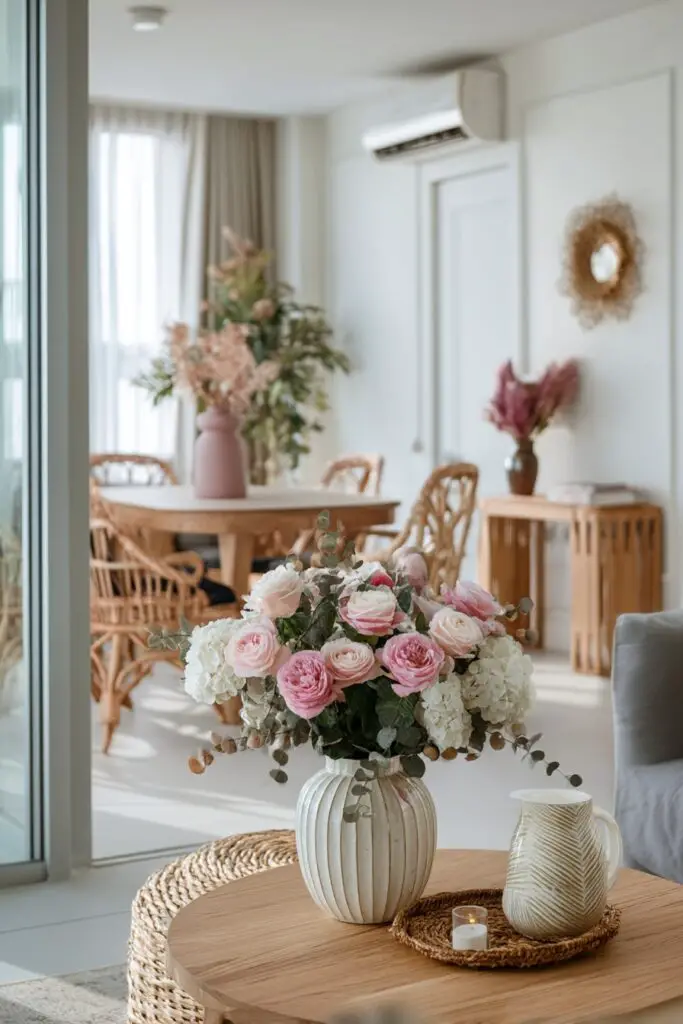
Once your flower design is ready, the next step is choosing the perfect place for it to shine. The right placement not only enhances the look of your arrangement—it also elevates the entire room.
High-Impact Spots for Floral Arrangements
- Living Room: Place a bold arrangement on a coffee table or console to welcome guests and bring life to your main gathering space.
- Dining Table: Use low, linear designs as centerpieces that don’t block conversation.
- Bedroom: Add a gentle touch with soft-colored blooms on your nightstand for a calming start and end to your day.
- Entryway or Hallways: Brighten up transitions and make a strong first impression.
- Bathroom: Small, fresh arrangements instantly add a sense of luxury and freshness.
Think about natural lighting, room colors, and how often the area is used. Let the arrangement enhance—not overwhelm—the space it’s in.
7 Flower Decoration Ideas to Elevate Your Interior
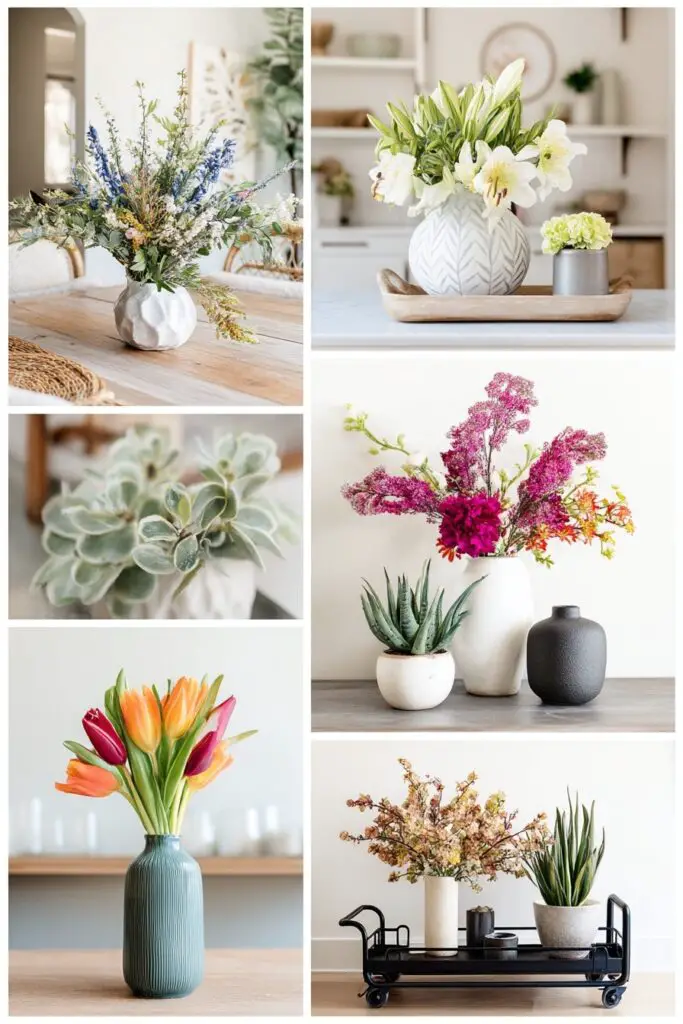
Incorporating flower design into your home doesn’t require extravagant arrangements. Sometimes, it’s about smart placement and creative styling. Here are seven thoughtful ways to use floral decor that instantly uplifts your space:
1. Frame Your Entryways
Place potted plants or vases near your front door or hallway entrance. This makes your home feel welcoming from the moment someone steps inside.
2. Line It Up on the Dining Table
Use two or three vases of varying heights down the center of your dining table. Mix seasonal flowers with fresh greenery for a balanced and inviting tablescape.
3. Classic Bedside Arrangement
Set the tone for your day with a small flower design on your nightstand. Soft colors and calming scents like lavender or eucalyptus can enhance rest and relaxation.
4. Group by Color and Texture
Create visual harmony by grouping flowers with similar shades or textures. This technique works well for shelf styling or minimalist modern interiors.
5. Display on a Rolling Cart
Use a bar or service cart to showcase a flower arrangement in an otherwise empty nook. It’s a stylish way to brighten unused corners with flexible decor.
6. Add to Bookshelves
Pair small floral vases with books and decorative items. A pop of floral color adds softness and breaks up the visual weight of stacked items.
7. Keep It Simple
Sometimes, a single stem in a narrow vase says more than a full bouquet. Don’t overthink it—let the natural beauty of flowers do the work.
Conclusion
A thoughtful flower design can transform the mood of your home—offering not just visual beauty but also emotional warmth, calm, and inspiration. Whether you’re creating a bold centerpiece or placing a few soft stems on a nightstand, floral arrangements have the power to elevate any space.
With just a bit of planning, the right flowers, and a touch of creativity, you can bring life, personality, and style into your home—all through the simple art of arranging flowers.